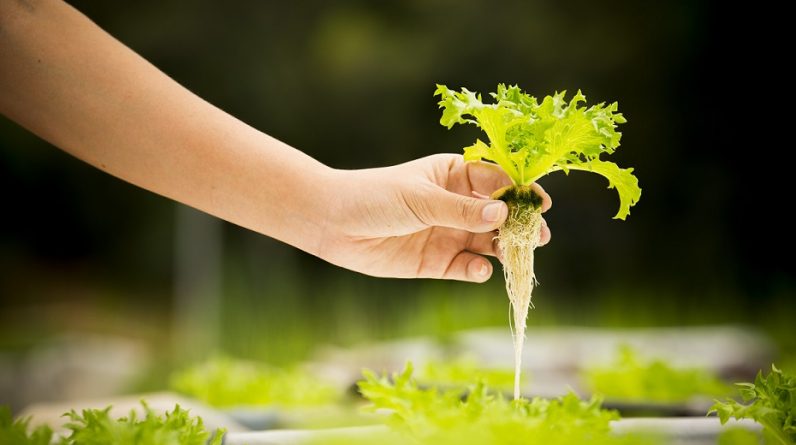
Select the best growing medium for vegetables by matching root-zone moisture and aeration to the vegetable, container, and irrigation method rather than choosing one material for every planting. Leafy greens usually suit fine, moisture-retentive blends, while tomatoes, peppers, and cucumbers need stronger drainage and physical support. Compare water-holding capacity, air-filled pore space, stability, cleanliness, and compatibility with drip, ebb-and-flow, or passive watering. Test a small batch before filling the system, because compacted media, trapped salts, and mismatched irrigation frequency can restrict oxygen even when nutrient strength and pH appear correct.
Match the Medium to Vegetable Roots
Vegetable type should narrow the choice before price, brand, or convenience enters the decision. Lettuce and many culinary greens have relatively compact root systems and short production cycles, so they can perform well in plugs or blends that remain evenly moist without collapsing. Fruiting vegetables such as tomatoes, peppers, eggplants, and cucumbers occupy containers longer, develop larger root systems, and become top-heavy. Their medium must retain usable water while preserving air spaces and anchoring the plant through repeated irrigation.
Water and oxygen compete for pore space around roots. Very small particles hold more water but can leave fewer air-filled pores after irrigation. Coarse particles drain quickly and admit air, yet they may dry before roots can replace transpired water. The useful balance changes with plant size, temperature, airflow, container depth, and watering frequency. A blend that stays suitably moist beneath young lettuce may remain saturated for too long around a pepper seedling in a large pot.
Root-zone support matters beyond moisture. A mature vine loaded with fruit can pull a lightweight net pot sideways or loosen an unstable aggregate. Coir blended with perlite can provide a more continuous root matrix than loose clay pebbles, while a bucket of coarse perlite may need plant clips, trellising, and carefully positioned emitters. Physical support should come from both the medium and the crop-support structure; packing a container tightly to hold a stem reduces the air space roots need.
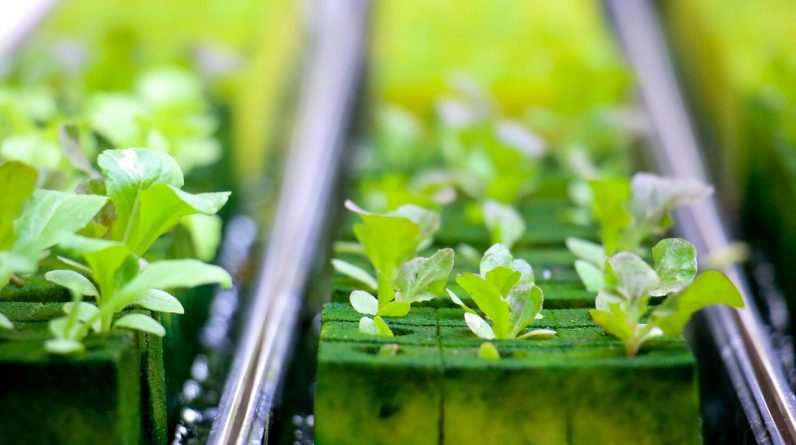
Seedlings impose a different set of requirements. Fine seeds need steady surface moisture and close contact with the propagation material. Large gaps between particles can let seeds fall too deeply or allow delicate roots to dry. Purpose-made propagation plugs, fine coir, or a suitable seed-starting blend is generally easier to manage during germination than coarse aggregate. After establishment, the plant can be transplanted into a medium selected for its mature root system.
A practical crop assessment should answer four questions: How long will the vegetable remain in the container? How rapidly will it use water at maturity? Does it require substantial anchorage? Will the roots tolerate brief drying better than prolonged saturation? These answers make how to select the best growing medium for vegetables a root-zone decision rather than a search for a universally superior product. A common mistake is choosing solely for germination convenience and then expecting the same structure to remain effective through months of fruit production.
Compare Common Growing Media
Each medium changes how frequently the root zone must be irrigated and monitored. Coco coir usually offers a useful compromise between water retention and aeration, making it adaptable to leafy and fruiting vegetables. Its texture supports roots more continuously than large aggregates. Coir quality varies, however, and poorly processed material may contain unwanted salts or inconsistent particle sizes. Hydrate it evenly, confirm that it is intended for horticultural use, and avoid compressing it into the container.
Perlite is porous, lightweight, and fast draining. It is valuable for increasing aeration in coir or peat-based mixtures and can also be used at high proportions in drip-fed containers. Its low weight makes containers easier to move but provides limited ballast for tall vegetables. Dry perlite can produce irritating dust, so it should be moistened before handling and used with appropriate care. Fine material may also migrate from drain holes or settle differently from coarser particles.
Expanded clay pebbles create large air spaces and suit recirculating arrangements where irrigation occurs frequently. They are reusable when properly cleaned, but reuse requires removing root debris and deposits rather than merely rinsing the surface. Their limited water reserve makes them less forgiving during pump interruptions than a moisture-retentive coir blend. Clay pebbles are therefore a better match for reliable, frequent watering than for a small drip system that may run only occasionally.
Rockwool provides consistent physical properties and is widely used for propagation and production. It can hold substantial water while retaining some air when irrigation is controlled correctly. Its initial pH characteristics require preparation according to the product instructions, and overwatering remains possible despite its reputation as a technical medium. Disposal and handling preferences also influence whether it is suitable for a home grower.
Peat-based soilless mixes hold moisture effectively and are familiar to container gardeners, but peat can become difficult to re-wet after excessive drying. Fine mixes may compact during a long vegetable cycle, especially when repeatedly saturated. Adding coarse perlite can improve drainage, although the final result depends on particle distribution rather than a fixed recipe. Garden soil is usually a poor substitute in hydroponic containers because it compacts, drains unpredictably, carries fine particles into equipment, and may introduce organisms or weed seeds.
Compare materials by function instead of asking which one is “best.” Coir-perlite blends offer a buffer against missed watering; clay pebbles favor rapid drainage and automation; rockwool favors uniform blocks and controlled irrigation; peat-based mixes suit growers comfortable managing moisture by container weight. The weak assumption is that a premium label guarantees appropriate structure. Particle size, storage condition, crop duration, and irrigation practice have more operational value than packaging claims.
Account for Irrigation and Container Design
The irrigation method determines how much moisture the medium must store between applications. A drip system can supply small amounts repeatedly, allowing a relatively free-draining substrate. Hand-watered containers need a larger moisture reserve because the interval between visits is longer. Passive systems require capillary movement from a reservoir, so a coarse material that barely wicks water may leave the upper root zone dry even while the bottom remains wet.
Container dimensions alter the same medium’s behavior. A shallow tray has a different distribution of saturated and aerated zones than a tall bucket. Water tends to remain near the bottom after drainage, and containers with blocked or undersized outlets can create a persistently wet layer. Increasing container depth or adding drainage openings may improve conditions, but a decorative layer of stones at the bottom does not reliably correct a fine, compacted mix. The transition between particle sizes can instead interfere with uniform movement of water.
Consider a tomato grown in a warm indoor space. A small pot filled with coarse perlite may need several precisely timed drip events as the plant matures. If the pump stops, the limited water reserve can produce rapid wilting. The same tomato in a larger coir-perlite container has more buffering capacity, but an emitter that runs too long can keep the lower root zone saturated and push nutrient solution to waste. Neither material is inherently wrong; the suitable option reflects equipment reliability, reservoir capacity, drainage, and the grower’s ability to observe the crop.
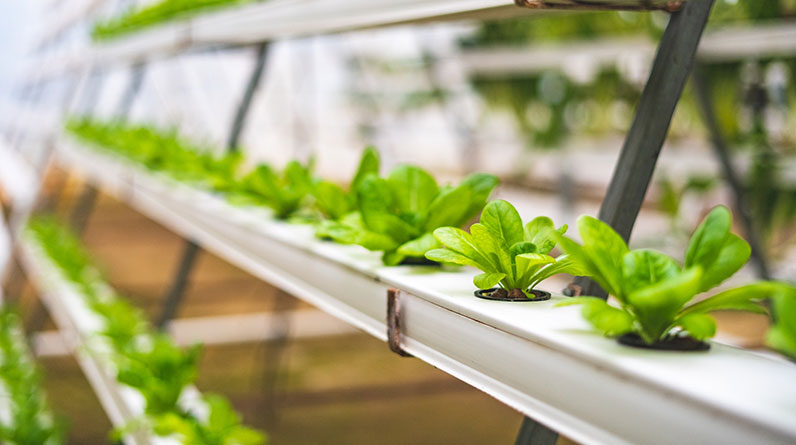
Recirculating systems add another constraint: loose fibers and fine particles can reach tubing, pumps, or channels. Media should be contained in appropriate pots or sleeves, and drains should remain accessible for inspection. Non-recirculating containers avoid returning debris to a reservoir but require a plan for runoff. A medium selected without considering runoff collection can turn routine irrigation into a sanitation and moisture problem around the growing area.
Use this compact compatibility check before committing:
- Estimate the longest safe interval between waterings. Account for mature plants and warm conditions, not only young transplants.
- Inspect the drainage path. Confirm that solution can leave every container without pooling.
- Match particle size to delivery. Place emitters where water spreads through the active root volume rather than down one narrow channel.
- Plan for interruptions. Decide how long the medium can protect roots if a pump, timer, or emitter fails.
Visible runoff alone does not prove uniform wetting. Water can follow gaps along container walls while the center stays dry, especially after some organic substrates shrink. Check moisture at several depths and locations. That observation is central to how to select the best growing medium for vegetables because irrigation performance must be judged inside the root volume, not at the drain outlet.
Evaluate a Medium Before Planting
A small wetting and drainage trial reveals more than a dry handful of material. Fill one representative container without pressing the medium down, apply the same volume and delivery rate planned for production, and observe where water appears. After drainage slows, check the upper, middle, and lower zones. The material should wet broadly, drain without leaving a swampy base, and retain enough moisture to bridge the intended irrigation interval.
Container weight is a practical monitoring tool. Lift or weigh the trial container when fully drained, then check it over time under typical airflow and temperature. The difference provides a repeatable indication of water loss without relying only on surface color. Surface dryness can be misleading: coir may look dry above an adequately moist root zone, while a fine mix can appear moist on top and remain oxygen-poor below. Root observations should eventually confirm the test. Healthy new roots are generally light colored and branching; persistent browning, soft tissue, stagnant odor, or slow recovery after irrigation warrants investigation.
Check product cleanliness and consistency before filling every pot. Unexplained odor, visible contamination, excessive dust, or a mixture dominated by particles much finer than expected can change drainage. If the supplier provides preparation directions, follow them. Some products require hydration or conditioning, while reusable aggregates require cleaning between crops. Reuse is not automatically economical when labor, water, damaged particles, and disease carryover are considered.
Monitor the nutrient solution as it enters and leaves the root zone when the system permits. A growing difference in electrical conductivity can indicate that salts are accumulating as plants remove water or as irrigation volume falls short. That does not mean the medium itself supplies excessive fertilizer; it means the combination of concentration, evaporation, plant uptake, and runoff needs adjustment. A rising root-zone reading, leaf-edge injury, or declining water uptake calls for checking the nutrient mix and irrigation pattern before replacing the substrate.
Change one variable at a time during a trial. Comparing three media while also changing container size and emitter flow makes the result difficult to interpret. Two or three representative plants can show whether the selected combination remains stable as roots fill the pot. Signs of a good match include even wetting, predictable drying, no standing solution, expanding roots, and manageable irrigation frequency. Warning signs include repeated wilting between scheduled events, algae encouraged by a constantly wet exposed surface, clogged drains, shrinking material, or a sour root-zone smell.
Cost should be calculated for the complete crop cycle rather than per bag. Include the volume required, shipping weight, preparation, irrigation demand, disposal or cleaning, and losses caused by system incompatibility. A slightly more expensive blend may be economical if it reduces hand watering, while inexpensive coarse aggregate may work well when dependable automation is already installed. Applying these checks to how to select the best growing medium for vegetables turns an uncertain purchase into a controlled container-scale test.
Frequently Asked Questions
Can one growing medium be used for every vegetable?
One medium can serve several vegetables when irrigation is adjustable, but leafy greens and long-season fruiting plants often need different container volumes, moisture reserves, and anchorage.
Is coco coir better than perlite for vegetables?
Coir retains more water and supports a continuous root mass, while perlite drains faster and adds aeration. A blend is often more forgiving than either material alone.
Can garden soil be used in a hydroponic container?
Garden soil commonly compacts, drains unevenly, and releases fine particles into equipment. A clean soilless substrate is generally easier to irrigate and monitor.
How can I tell if a medium holds too much water?
Look for a lower zone that stays saturated, slow container weight loss, stagnant odor, declining roots, and weak growth despite adequate nutrient solution.
Should growing medium be reused?
Durable aggregates may be reused after roots and deposits are thoroughly removed. Replace material that has broken down, compacted, remained contaminated, or cannot be cleaned reliably.
Conclusion
The strongest medium choice is the one that remains physically stable and predictably moist throughout the vegetable’s full production cycle. Begin with crop duration, mature water demand, root volume, and support needs, then compare those demands with the irrigation schedule and container drainage. Coir blends provide useful moisture buffering, coarse aggregates reward reliable automation, and uniform blocks suit tightly managed watering, but every option can fail when packed, irrigated, or contained incorrectly. Before purchasing enough material for the entire planting, run a representative container test and inspect moisture at multiple depths. Track drainage, container weight, root appearance, and salt accumulation after planting. If those signals remain stable as the vegetable grows, the medium and irrigation method are functioning as a compatible root-zone system.