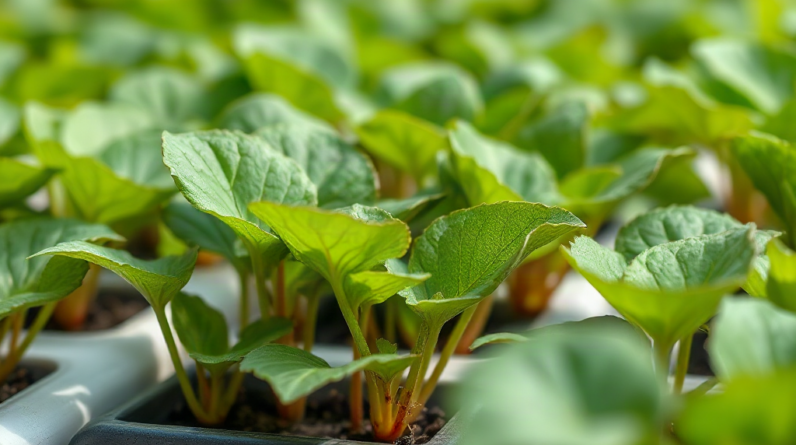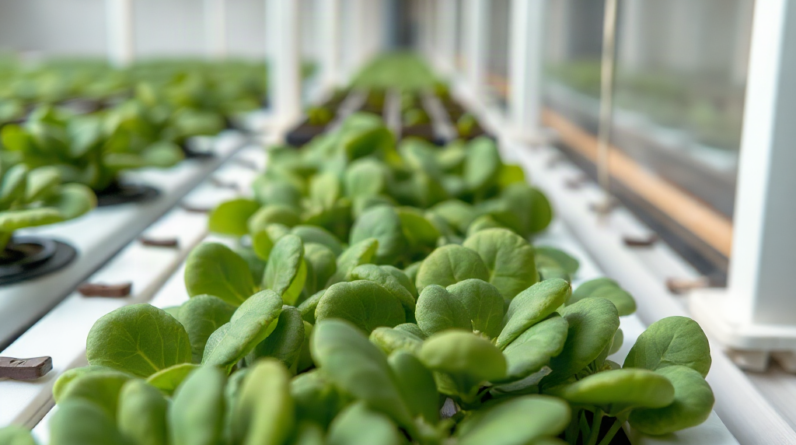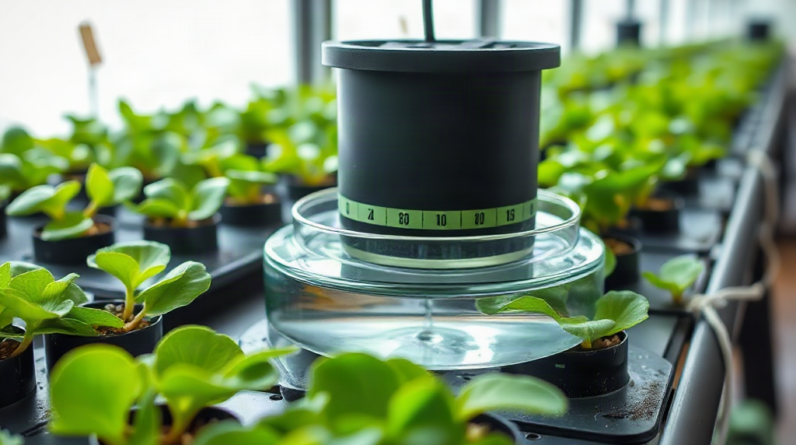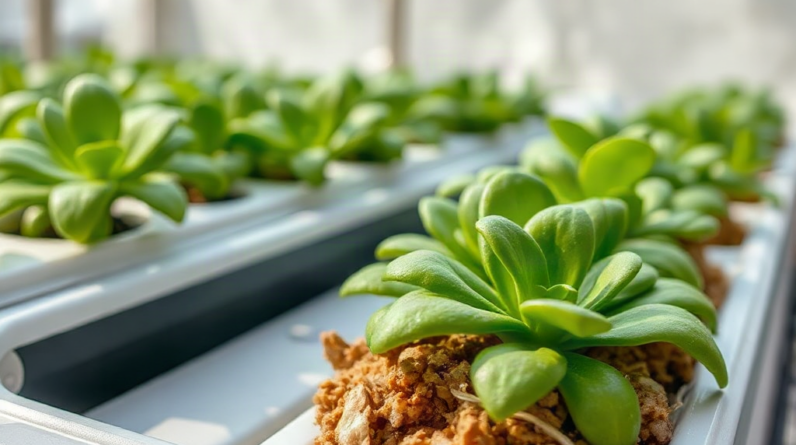
Moisture retention among hydroponic media ranges from high in rockwool, coco coir, and peat-based plugs to low in expanded clay pebbles and coarse perlite, but the best choice depends on irrigation method rather than capacity alone. Fine particles and internal pores hold more nutrient solution, while large air spaces improve drainage and root-zone oxygen. Wick systems favor absorbent media, drip systems benefit from balanced retention and drainage, and flood cycles generally suit materials that drain rapidly after saturation. Compare media under the intended container depth, crop demand, and irrigation interval, because excessive retention can cause persistent saturation while insufficient retention leaves roots vulnerable during pump interruptions.
How Hydroponic Media Hold and Release Water
Water-holding capacity describes only part of a medium’s behavior. Roots do not use every drop retained after irrigation, and two materials that remain equally heavy can differ sharply in how much air surrounds the roots. A useful comparison therefore considers total retention, drainage speed, capillary movement, and the amount of solution still available as the medium dries.
Small pores hold nutrient solution through capillary forces, while large pores drain and refill with air. Coco coir contains a mixture of pore sizes and can retain substantial moisture without behaving exactly like dense peat. Expanded clay pebbles create larger gaps, so they drain quickly and depend on frequent irrigation or contact with a shallow solution layer. Perlite falls between those behaviors, although grade matters: fine perlite holds more water than coarse, horticultural-grade particles.
Container shape changes the result. A shallow tray can maintain a wetter lower zone than a tall, narrow pot filled with the same material. Compaction also reduces air space. Loosely filled coco may provide a workable balance, but compressed or decomposed coco can remain saturated near the base of a container. Rockwool similarly holds both water and air when handled correctly, yet a cube left standing in deep runoff loses much of that useful balance.
Retention also changes during a crop cycle. Roots occupy pore space, organic fibers settle, and mineral deposits may alter wetting patterns. A medium that drained evenly at transplant can develop wet pockets or dry channels later. Observing the whole root zone is more informative than touching the exposed surface, which often dries before the interior.
The practical priority is not maximum storage. It is a predictable wet-to-dry pattern that supplies solution without excluding oxygen. The broader moisture retention comparison among hydroponic media becomes useful only when pore structure, container dimensions, and irrigation frequency are considered together.
Retention and Drainage by Media Type
Coco coir, rockwool, peat-based plugs, perlite, vermiculite, and expanded clay each occupy a different point between water storage and rapid drainage. Product grade, particle size, and packing density prevent any ranking from being absolute, but their typical behavior provides a sound starting point.
Coco coir generally offers high retention with better aeration than a densely packed, fine organic substrate. It is well suited to drip-fed containers because it spreads moisture laterally and gives roots a buffer between events. Fine coco or coco containing abundant dust stays wetter than coarse chips. Growers should also account for the material’s tendency to retain certain nutrient ions; moisture behavior alone does not determine how a coco crop should be fed.
Rockwool retains a large volume of solution while preserving air spaces when it is allowed to drain. Its uniform manufacture makes irrigation behavior relatively repeatable, which is useful for seedlings and precision drip culture. Uneven saturation can still occur if a dry block is not conditioned uniformly. Squeezing rockwool is another mistake because compression damages its pore structure and changes drainage.
Vermiculite has high water-holding and capillary capacity. Used alone, it may remain too wet for crops or systems receiving frequent irrigation. Blending it with perlite can increase water storage while retaining more air than a fine vermiculite bed. Perlite drains faster, especially in coarse grades, but small particles can migrate, compact, or stay wetter than expected at the bottom of a container.
Expanded clay pebbles provide low bulk retention and generous air space. Their surfaces and internal pores hold some solution, but large channels empty quickly. This behavior fits recirculating flood-and-drain or frequent-drip operation better than long intervals without pumping. A small net pot of clay pebbles exposed to warm, moving air can dry much faster than a large bucket filled with the same product.
Peat-based propagation plugs usually stay moist for long periods relative to their size. That buffer supports germination, yet seedlings can suffer when plugs remain in standing solution. For a quick decision, treat vermiculite and fine organic plugs as the wettest options, coco and rockwool as high-retention but manageable materials, perlite as grade-dependent, and clay pebbles as the fastest-draining choice. Blends shift these positions and should be assessed as their own media rather than assumed to average perfectly.
Matching Media to Drip, Wick, and Flood Irrigation
Irrigation design determines whether retention is a buffer or a liability. A medium should hold enough solution to bridge the normal interval between water deliveries while draining enough to restore oxygen after each event. Choosing solely from a retention ranking can produce either chronically wet roots or a system that depends on nearly continuous pumping.
Drip irrigation works well with coco, rockwool, and many perlite blends because the dose and interval can be adjusted separately. A tomato in a small coco slab may require several measured events as its canopy and root mass expand, whereas a young herb in a larger coco pot may need far fewer. Increasing emitter duration without checking drainage can create a saturated lower layer even when the surface looks dry. Multiple short applications may distribute solution more evenly than one large dose, but only if each event reaches enough of the root zone.
Passive wick systems require reliable capillary movement. Coco, vermiculite-containing blends, and suitable absorbent plugs can pull solution upward, while large clay pebbles provide weak continuity between particles. A wick setup using only coarse pebbles may leave the upper root zone dry even though the wick itself is wet. Conversely, a dense vermiculite blend can keep the container continuously saturated when the reservoir sits too close to its base.
Flood-and-drain systems favor media that saturate during the flood and release excess solution promptly afterward. Expanded clay is a common functional match because its large air spaces reopen rapidly. Coarse perlite can also work if it is physically contained and protected from entering plumbing. Highly absorbent cubes may be used within these systems, but flood height and frequency should not leave them submerged between cycles.
A compact matching sequence keeps the decision grounded:
- Identify the longest expected interval without irrigation, including overnight schedules and realistic pump interruptions.
- Estimate crop demand and container exposure, since large fruiting plants and warm airflow draw moisture faster than small seedlings.
- Select a drainage profile, then adjust irrigation around observed root-zone moisture rather than a fixed generic schedule.
- Plan a failure margin, especially where a power loss could dry coarse media rapidly.
A balanced moisture retention comparison among hydroponic media should therefore pair each material with a delivery method. High retention is useful in passive or interruption-prone installations; rapid drainage is valuable where irrigation is dependable and root aeration is the tighter constraint.
How to Test Moisture Behavior Before Planting
A simple container test reveals more than a label’s broad description. Test the actual medium, pot, irrigation hardware, and packing method intended for the crop. Comparisons made with loose handfuls do not reproduce perched water near a container base, preferential channels beneath an emitter, or evaporation from an exposed net pot.
Begin with equal dry volumes of each candidate medium in identical containers. Wet them slowly with the same volume of solution until drainage begins, then allow them to drain for a consistent period. Weighing each container before wetting, after drainage, and at regular intervals provides a practical record of retained and lost water. The values do not need laboratory precision; a kitchen scale can expose large operational differences between coarse clay, coco, and a perlite blend.
Next, inspect distribution rather than weight alone. Split or empty a test container after the planned irrigation interval. A wet bottom with a dry upper root zone suggests poor vertical distribution or excessive container depth. A saturated core surrounded by dry material points to emitter placement or channeling. Uniform dampness with open pore space and no stagnant odor is a more useful sign than a permanently heavy pot.
Run the test under representative airflow and temperature. Media lose water much faster on a warm shelf beneath circulating fans than in a cool room with still air. Include the longest period the crop will face without delivery. For example, if a drip system pauses overnight, test that full interval rather than measuring only one hour after irrigation. Coarse media may pass a daytime drainage check yet become too dry before the next morning event.
During production, combine weight trends with plant and root observations. Healthy new roots are usually light colored and branching, while persistent saturation may be accompanied by slow root expansion, darkened tissue, or stale-smelling solution. Wilting before the next scheduled event, rapid pot-weight loss, or dry zones beyond the emitter indicates insufficient storage or distribution. The testing approach in moisture retention comparison among hydroponic media is most valuable when it leads to a revised dose, interval, blend, or container—not merely a ranking.
Common Selection and Irrigation Mistakes
The most common selection error is treating a named material as a fixed specification. Coco can range from fine pith to coarse chips, perlite is sold in multiple grades, and expanded clay differs in particle size and internal porosity. Replacing one product with another under the same name may change how quickly a container drains and how widely an emitter wets it.
Another mistake is adding a high-retention component without reducing irrigation. Mixing vermiculite into perlite may extend the interval before drying, but keeping the old schedule can leave the lower root zone continuously wet. The opposite occurs when clay pebbles replace coco in a drip system: an irrigation program designed for absorbent fiber may not wet the pebbles frequently enough. Media substitutions should trigger a fresh container test and an early review of root conditions.
Surface appearance is a poor standalone irrigation signal. Coco and rockwool can look dry on top while retaining ample solution below. Clay pebbles may appear dry externally even though inner pores and sheltered roots remain moist. Lifting or weighing the container, checking drainage, and inspecting moisture at root depth provide a more reliable picture.
More runoff does not automatically correct uneven wetting. Solution can follow a narrow channel from emitter to drain while much of the medium remains dry. Moving or adding emitters, applying a slower pulse, or correcting compacted material may improve distribution more effectively than extending runtime. Persistent runoff should also be managed so containers do not sit in it.
Finally, retention cannot compensate indefinitely for unreliable equipment. A highly absorbent medium may buy time during a brief interruption, but pumps, emitters, timers, reservoir levels, and return lines still require routine checks. Signs of a successful setup include repeatable drainage, moderate container-weight change between events, active root growth, and no recurring wilt at the end of the irrigation interval. Repeated midday droop, sour root-zone odor, standing solution, algae favored by constantly wet surfaces, or sharply uneven plant growth indicates that the media-and-irrigation pairing needs adjustment.
Frequently Asked Questions
Which hydroponic medium holds the most water?
Fine vermiculite and peat-based materials are among the strongest water holders, while coco and rockwool also retain substantial solution. Particle grade, compaction, and container depth can change the practical result.
Which medium drains the fastest?
Expanded clay pebbles and coarse perlite generally drain fastest. They provide abundant air space but may require shorter irrigation intervals than coco, rockwool, or vermiculite blends.
Can coco coir stay too wet?
Yes. Fine or compacted coco can remain saturated when containers sit in runoff or irrigation events are too long or frequent. Check moisture below the surface before increasing water delivery.
Is a high-retention medium safer during a pump failure?
It usually provides a longer moisture buffer, but protection depends on crop size, airflow, container volume, and failure duration. Backup power or an alarm is more dependable than retention alone.
Should different hydroponic media use the same watering schedule?
No. Irrigation should reflect each medium’s drainage, capillary movement, container size, and root demand. Re-test the interval whenever the medium, crop stage, pot, or environment changes.
Conclusion
Media choice should be based on the moisture pattern a particular system can manage, not on the largest advertised water capacity. Coco and rockwool provide useful reserves for controlled drip applications, absorbent blends suit passive movement when saturation is managed, and clay pebbles or coarse perlite favor dependable, frequent delivery with rapid drainage. Test the intended medium in its actual container, measure how it behaves across the longest irrigation gap, and inspect moisture below the surface. After planting, use container weight, drainage consistency, root condition, and end-of-cycle wilt as adjustment signals. Change one variable at a time—dose, interval, emitter placement, or blend—so the effect is visible. The strongest setup is one that preserves both solution access and air space throughout the crop cycle.