
-
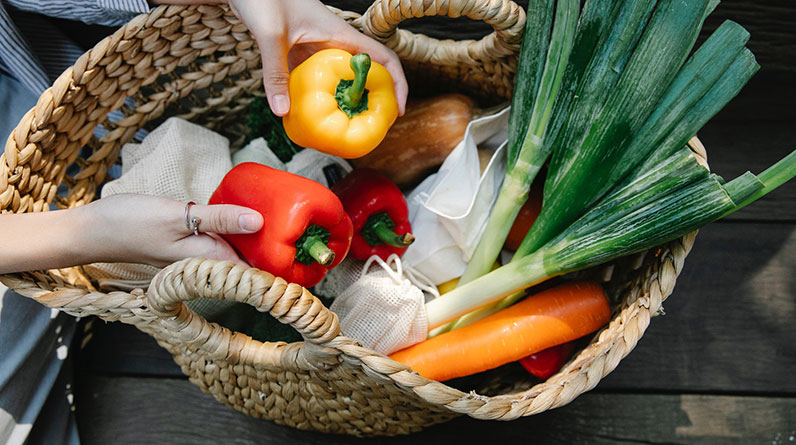
Harvesting and Storing Hydroponic Produce Hydroponic agriculture offers several advantages over soil-grown crops. For one thing, hydroponic systems don’t need soil-based nutrient solutions or pesticides and herbicides like their soil…
Continue Reading » -
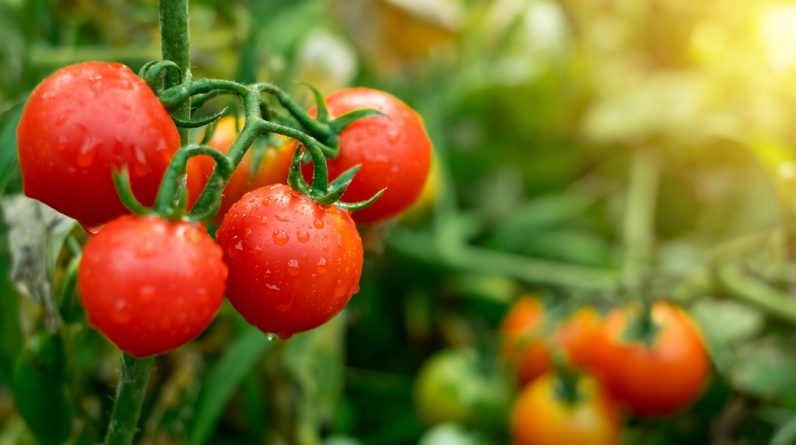
Why Grow Tomatoes in a Hydroponic Garden? Tomatoes are an excellent plant to grow in hydroponic garden because they are one of the most popular and widely consumed vegetables…
Continue Reading » -
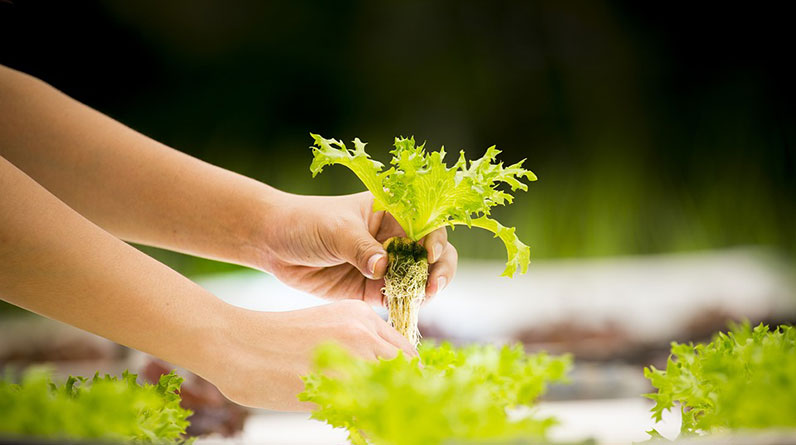
Can I build my own Hydroponic Gardening System? Yes, you can definitely build your own hydroponic gardening system. Hydroponic gardening is a method of growing plants in a nutrient-rich water…
Continue Reading » -
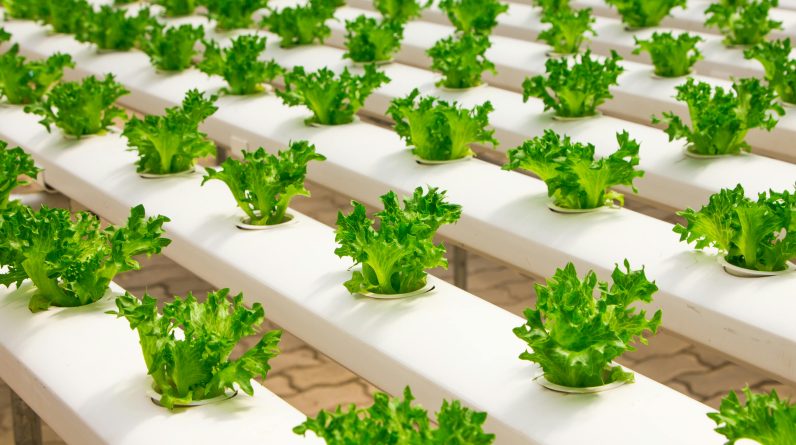
Discover why hydroponic leafy greens are superior to soil-grown varieties. Learn about the benefits and advantages of hydroponic systems for cultivating fresh produce.
Continue Reading »

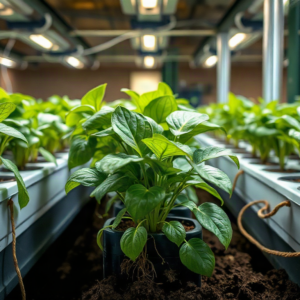
Moving Hydroponic Plants Into Soil Successfully With a 7-Day Transition Plan
Hydroponic plants can be moved into soil successfully by keeping their water-adapted roots moist, using an airy potting mix, and reducing light stress while new soil roots develop. Transplant healthy plants before they become root-bound, rinse away loose growing media, and place the roots in pre-moistened soil without compressing it.
Read More »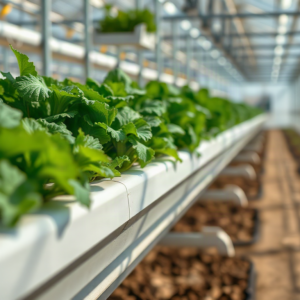
Comparing Hydroponic Farming Advantages and Disadvantages (Costs, Resource Use, and Risks)
Comparing hydroponic farming advantages and disadvantages shows a clear tradeoff: growers gain precise nutrient delivery, recirculated water, compact production, and protection from soil-borne problems, but accept higher startup costs, energy dependence, technical monitoring, and rapid system-wide failure risks.
Read More »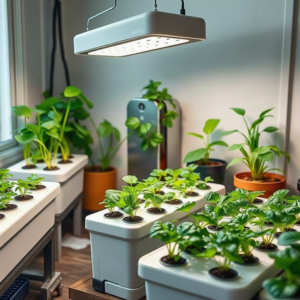
How to Make a Hydroponic Garden Indoors (A Room-by-Room Setup Plan)
To make a hydroponic garden indoors, place a small reservoir-based growing unit near electrical power and ventilation, add a full-spectrum grow light, and start compact crops in inert growing media rather than soil. Match the garden to the room by accounting for available height, water-spill risk, heat, and the ability…
Read More »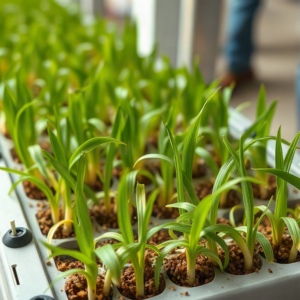
Hydroponic Barley Fodder for Small Livestock: Feeding Benefits, Risks, and Production Method
Hydroponic barley fodder for small livestock is a fresh supplemental feed produced by sprouting barley grain in shallow trays, usually without soil, until roots and green shoots form. Its high moisture content can improve feed palatability and provide animals with fresh forage, but the harvested mat contains less dry matter than its weight suggests.
Read More »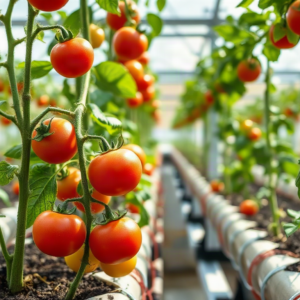
Hydroponic Tomato System Needs and Fruiting Support (Setup Checklist)
Hydroponic tomato system needs and fruiting support are best met with a large, aerated root zone, stable nutrient delivery, strong light, reliable trellising, and active pollination. Choose a drip-fed substrate system or well-managed recirculating setup that can handle mature roots without prolonged saturation.
Read More »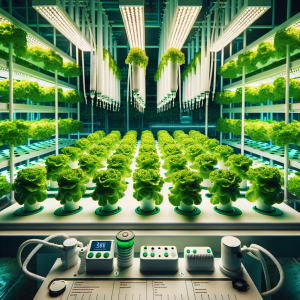
Harvesting Hydroponic Cucumbers at the Right Size: Variety Targets and Ripeness Signs
Harvest hydroponic cucumbers at the size specified for their variety, before the fruit becomes dull, swollen, or heavily seeded. Pickling types are commonly collected while short and firm, slicers at a longer marketable length, and compact cultivars according to the breeder’s stated target rather than one universal measurement.
Read More »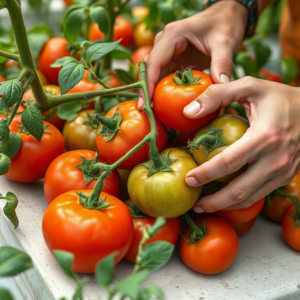
Harvesting Hydroponic Tomatoes at Color Break (Ripeness Checks and Picking Method)
Harvesting hydroponic tomatoes at color break means picking each fruit when its mature-green skin first shows a definite pink, red, orange, or yellow patch, then allowing ripening to continue off the vine. Confirm that the tomato has reached full size, developed a smoother surface and changed from hard green to…
Read More »
How to Select Hydroponic Systems for Budget Constraints: Cost Checklist and Tradeoffs
Select a hydroponic system for budget constraints by setting a total first-season spending limit, matching the growing method to the intended crops, and pricing every required component rather than comparing kit prices alone. Account for lights, pumps, nutrients, meters, replacement media, electricity, and backup parts before buying.
Read More » How to Manage Hydroponic Crop Transitions: Changeover Checklist and Reset Steps
Manage hydroponic crop transitions by scheduling the final harvest, removing roots and residue, cleaning the irrigation loop, and restoring the nutrient solution before new plants enter the system. Match the reset depth to the outgoing crop: leafy greens may leave fine roots in channels, while tomatoes or cucumbers can create…
Read More »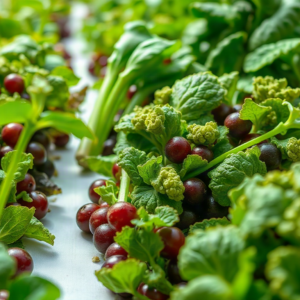
How Harvest Timing Affects Hydroponic Flavor Across Herbs, Greens, and Fruiting Crops
Harvest timing affects hydroponic flavor by determining the balance of sugars, acids, aromatic compounds, bitterness, and texture present when a crop is picked. Leafy greens harvested young are usually tender and mild, while delayed harvest can bring tougher leaves, stronger bitterness, or bolting; basil and other herbs often lose aromatic quality after flowering begins.
Read More »