Hydroponic leaves curling from environmental stress usually signal that transpiration and water uptake have fallen out of balance because of excessive light, high air temperature, low or high humidity, strong airflow, or rapid climate swings. Check leaf temperature and recent environmental changes before altering nutrients, since heat-stressed foliage can curl even when reservoir pH and electrical conductivity are acceptable. Correct the largest deviation gradually, protect roots from warm or poorly oxygenated solution, and avoid changing several controls at once. Improvement appears first as stable new growth; damaged leaves may remain curled after the growing environment is corrected.
What Curl Direction and Leaf Position Reveal
Leaf shape is a clue rather than a diagnosis. Upward-curled margins often accompany excessive leaf temperature, intense light, or dry moving air, while downward hooking may occur when roots cannot supply water at the rate demanded by the canopy. Cupping, edge rolling, and twisted new growth can look similar from a distance, so inspect several leaves under normal lighting instead of judging one damaged leaf.
Location on the plant narrows the possibilities. Curling concentrated on the upper canopy points toward the lamp, radiant heat, or airflow near the fixture. A plant at the edge of a tray may curl because it sits in the direct path of a fan, even though neighboring plants look normal. When the whole crop changes within hours, a room-level event such as an air-conditioning failure, heater cycle, dehumidifier overshoot, or abrupt lighting change deserves attention before nutrient composition.
Age also matters. Tender expanding leaves respond quickly to environmental instability because their tissues are still developing. Older leaves may retain the shape created during an earlier stress episode, making them poor indicators of current conditions. Mark or photograph the newest affected leaf, then compare the next leaves that emerge. That approach is more reliable than waiting for established leaves to flatten.
Color and texture add context. Dry, crisp margins support a heat, light, or low-humidity explanation. Soft leaves that droop along with curling suggest inadequate water delivery, impaired roots, or an interrupted pump cycle. Bleached patches nearest a lamp indicate light injury, whereas spotting, trails, webbing, or visible insects call for pest inspection. Distorted growth that continues under a stable climate may require investigation of pH, nutrient balance, contamination, or disease.
A common mistake is treating every curled leaf as a nutrient deficiency and increasing solution strength. That can raise osmotic pressure around the roots and make water uptake harder, especially during hot, dry conditions. Use the appearance of hydroponic leaves curling from environmental stress to decide what to measure, not as permission to add fertilizer without measurements.
How Light, Heat, and Humidity Produce Curling
Canopy stress develops from the combined effect of light, leaf temperature, humidity, and air movement. A bright lamp increases photosynthetic demand, but it also warms the leaf. If the surrounding air is dry or a fan strips away the humid boundary layer at the leaf surface, transpiration accelerates. Roots may not replace that water fast enough, so the margins roll or cup as the plant reduces exposed surface area.
Room temperature alone can hide the problem. Air measured at reservoir height may be comfortable while upper leaves run hotter beneath a close fixture. Check conditions at canopy height and, when possible, compare leaf-surface temperature with ambient air using a suitable infrared thermometer. Reflective walls, fixture hot spots, and uneven air circulation can create stress zones that a single wall-mounted sensor misses.
Humidity should be interpreted alongside temperature rather than treated as an isolated target. Warm, dry air creates stronger evaporative demand than cooler air at the same relative humidity. Very humid air presents a different constraint: transpiration may slow, nutrient movement through the plant can be reduced, and condensation risk rises when surfaces cool. The goal is a steady, crop-appropriate environment, not the highest humidity the room can hold.
Consider a lettuce shelf where only the center plants curl upward. If those plants sit directly beneath the brightest portion of an LED panel, raising or dimming the fixture slightly is a better first test than changing every plant’s solution. By contrast, curled leaves along one side of the shelf may indicate a fan aimed too directly at the crop. Fans should mix room air gently; leaves may move slightly, but they should not flutter continuously.
Make light changes gradually unless plants are being visibly scorched. A sudden large reduction can relieve heat while unnecessarily limiting growth. Adjust fixture distance, dimming, photoperiod, or cooling based on the actual source of excess exposure. Likewise, do not mist leaves as a routine response under intense lighting. It provides brief cooling but does not correct dry room air, and persistent wet foliage may create another set of problems.
Root-Zone Conditions That Intensify Environmental Stress
Environmental curling above the reservoir can be amplified by conditions below it. The canopy loses water through stomata, while roots must absorb and transport replacement water. Warm solution holds less dissolved oxygen than cool solution, and roots under oxygen stress cannot support a demanding canopy efficiently. A plant may therefore curl during the brightest part of the cycle and look partly recovered after lights-out.
Confirm that water is actually reaching every plant. In drip systems, compare emitter flow rather than assuming a running pump means uniform delivery. In nutrient-film channels, look for blocked inlets, uneven channel slope, or roots diverting flow. In deep-water culture, verify aeration and inspect whether the water level leaves an appropriate moist air space around established roots. A pump timer error can mimic heat stress because the symptom appears when transpiration is highest.
Electrical conductivity and pH remain relevant, but they should be interpreted rather than chased. Excessively concentrated solution makes it more difficult for roots to take up water, which can compound dry-air stress. A rapid rise in concentration as water disappears from the reservoir suggests plants are using proportionally more water than dissolved minerals. Correcting that condition generally means restoring the reservoir according to the crop and nutrient program, not adding a stronger concentrate.
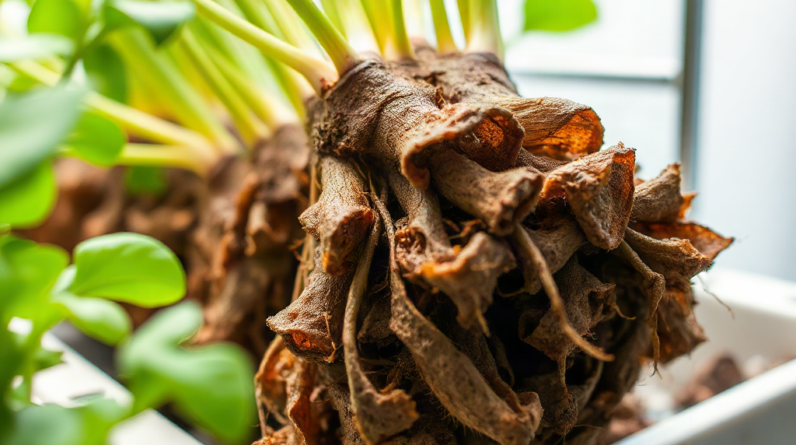
Root appearance helps separate a climate-only event from a combined problem. Healthy roots are commonly light-colored and firm, although nutrient products can stain them. Slime, fragility, persistent odor, or widespread tissue breakdown indicates that environmental adjustments above the canopy will not be enough. Root disease cannot be confirmed from leaf curl alone, so avoid diagnosing it solely from foliage.
The weak assumption is that an acceptable reservoir reading proves root function is normal. A reservoir can show reasonable pH and conductivity while individual emitters are blocked, solution is too warm at the channel, or aeration is inadequate in one container. When reviewing hydroponic leaves curling from environmental stress, pair canopy measurements with direct inspection of delivery, temperature, water level, and roots.
A Recovery Order That Avoids Conflicting Corrections
Recovery is easier to evaluate when corrections follow a controlled order. Record air temperature, relative humidity, canopy or leaf temperature, reservoir temperature, pH, conductivity, water level, pump operation, and the position of affected plants. Note recent events such as moving a lamp, changing its intensity, installing a fan, transplanting, pruning, or extending the light period.
Use the pattern of damage to choose the first intervention. A canopy-wide response after a hot afternoon justifies restoring cooling and moderating light exposure. Damage confined to the fan side calls for redirecting or reducing the air jet. One wilted site among healthy plants warrants a delivery check before changing the room. This distinction prevents a local mechanical failure from triggering unnecessary climate and nutrient adjustments.
A compact correction order is:
- Stop acute exposure: restore failed ventilation or irrigation and move scorching light or direct airflow away from foliage.
- Verify root delivery: check pumps, emitters, aeration, solution level, and root condition at affected sites.
- Stabilize the canopy climate: bring temperature and humidity toward the appropriate range without abrupt oscillation.
- Review solution readings: compare pH and conductivity with the crop’s established program before making measured adjustments.
- Observe new growth: hold other variables steady long enough to see whether the chosen correction is working.
Avoid stacking interventions such as flushing the reservoir, raising humidity, dimming lights, and adding supplements on the same day unless an urgent failure requires it. Multiple changes may help the plant, but they erase the evidence needed to identify the trigger. They can also create opposing effects: raising humidity may reduce transpiration while an aggressive nutrient increase makes water uptake more difficult.
Severely scorched leaves will not repair their dead margins. Remove foliage only when it is extensively damaged, obstructs airflow, or is deteriorating; excessive defoliation adds stress and reduces photosynthetic area. A measured response values stable new growth over cosmetic recovery of old leaves.
How to Judge Recovery and Prevent a Repeat
Successful recovery appears in the leaves produced after conditions stabilize. New foliage should expand with a more normal shape, maintain firmness through the light cycle, and avoid progressive edge damage. Existing leaves may soften their curl slightly, but mature tissue often preserves permanent distortion. Judging success by old leaves can lead to repeated adjustments after the original problem has ended.
Watch the timing of symptoms over several light cycles. Curling that intensifies near the end of the photoperiod and relaxes overnight still indicates that daytime demand is close to the plant’s limit. That pattern may call for modestly lower light intensity, better heat removal, gentler airflow, or improved root-zone oxygenation. Curling that worsens continuously despite a stable climate suggests the working diagnosis is incomplete.
Prevention depends on measurements taken where plants experience the environment. Place a calibrated temperature and humidity sensor near canopy height without exposing it to direct fixture heat or constant fan blast. Check more than one location in a larger rack. Keep reservoir probes clean and verify questionable readings with another instrument before making a major correction. Logging minimum and maximum conditions can reveal overnight humidity spikes and midday heat that a spot check misses.
Operational changes should be staged. After transplanting, increasing lamp output in smaller increments gives young roots time to support higher transpiration. As the canopy fills, reassess airflow because dense leaves redirect air and create pockets that did not exist earlier. Seasonal room changes matter too: heating can dry indoor air, while humid outdoor weather can overwhelm a ventilation plan that worked during another month.
If curling continues in fresh growth after environmental and root-zone conditions remain stable, broaden the inspection. Examine leaf undersides for pests, confirm meter calibration, review nutrient mixing order and water quality, and compare symptoms across varieties. Some cultivars naturally hold leaves differently, but a sudden change from their previous growth remains meaningful. The purpose of tracking hydroponic leaves curling from environmental stress is not to force every leaf flat; it is to detect whether the crop is moving toward stable development or accumulating damage.
Frequently Asked Questions
Can curled hydroponic leaves become flat again?
Young leaves may improve if stress is corrected early, but mature or scorched leaves often remain distorted. Use newly emerging foliage to judge recovery.
Does upward leaf curl always mean too much light?
No. Excessive light is one possibility, but high leaf temperature, dry air, direct fan exposure, or restricted root water uptake can produce a similar shape.
Should I change nutrients as soon as leaves curl?
Not without checking climate, water delivery, pH, and conductivity first. Increasing nutrient strength during heat or low-humidity stress may further restrict water uptake.
Why do leaves curl only near the end of the light cycle?
Late-cycle curling often means daytime transpiration demand is exceeding root supply as heat accumulates. Compare canopy temperature, humidity, airflow, solution temperature, and irrigation performance throughout the cycle.
How long should I wait after correcting the environment?
Keep conditions steady and evaluate the next developing leaves over several growth cycles. Continued distortion, spreading damage, or worsening wilt means another cause still needs investigation.
Conclusion
Curled foliage becomes useful diagnostic evidence when its position, timing, texture, and direction are matched with measurements from the canopy and root zone. Inspect localized airflow and irrigation failures before changing the entire grow room, and treat pH or conductivity only when readings support that response. Correct urgent heat, light, ventilation, or water-delivery failures first; then stabilize conditions and resist making several speculative changes together. Photograph affected growth, log environmental highs and lows, and assess the leaves formed after the correction rather than expecting old damage to disappear. If new foliage remains distorted under verified stable conditions, expand the investigation to pests, meter accuracy, water quality, nutrient preparation, and root health.