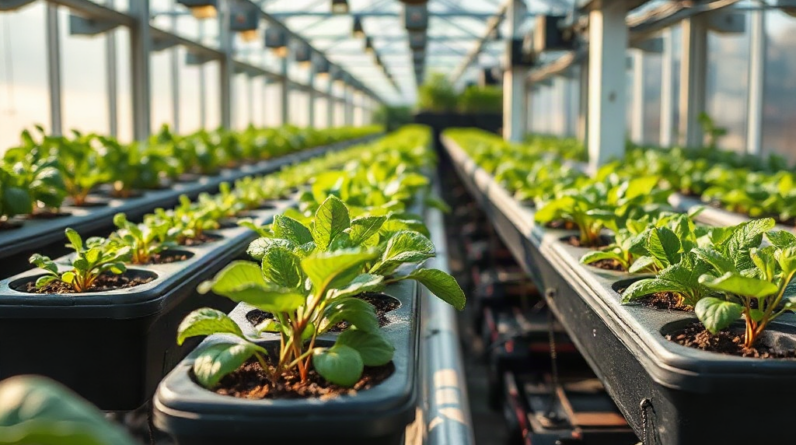
What Limited Sunlight Changes In A Hydroponic Garden
Limited sunlight reduces the energy available for photosynthesis, so plants may remain alive while producing little new growth. Hydroponic nutrients and well-oxygenated water cannot compensate fully for a weak light source. A plant uses light to convert water and carbon dioxide into the sugars that drive leaf expansion, root development, and, eventually, flowers or fruit.
A bright-looking room is not necessarily a bright growing location. Human eyes adapt quickly to indoor conditions, while plants respond to light intensity at the canopy. A window may provide useful daylight for a few hours, yet its output can change sharply with clouds, season, glass, curtains, and the direction the window faces. A shelf several feet from the glass may receive much less usable light than the leaves beside the window.
Watch the plant rather than judging the room. Long gaps between leaf nodes, thin stems leaning toward the window, pale new growth, and unusually slow water use can indicate inadequate light. Dark green leaves do not always mean the setup is healthy; some plants become dark and soft when growth is restricted by low light and excess nitrogen.
A practical comparison is a window-only system versus a window supplemented by an LED. The first costs less and may suit a small tray of shade-tolerant herbs, but growth can vary from week to week. The second uses electricity and creates heat, yet it gives the crop a more predictable environment. For an indoor shelf, consistency usually matters more than trying to extract every possible hour from weak daylight.
Place the growing system where the canopy can receive light evenly. A rotating tray may reduce one-sided growth under a window, while a flat LED fixture can cover several plants at once. Do not crowd taller basil or kale over shorter lettuce; the taller canopy can intercept much of the available light and leave lower plants stretched.
Choosing Crops That Match The Available Light
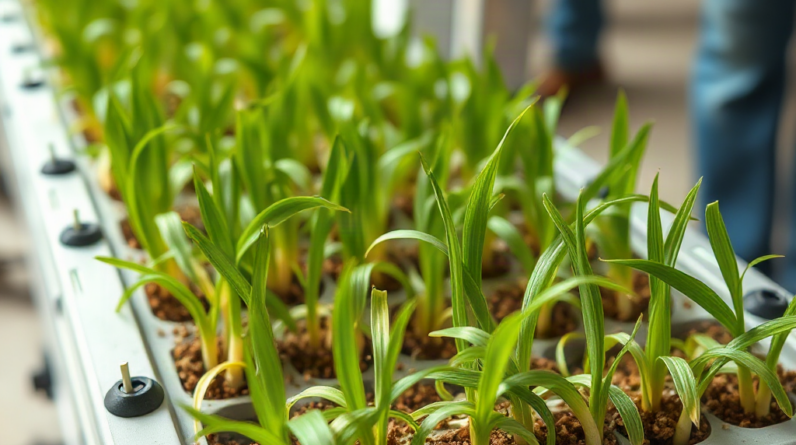
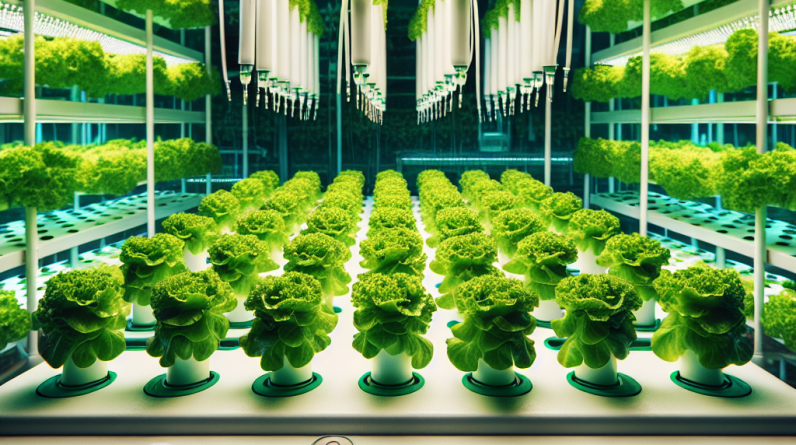
Leafy vegetables and culinary herbs are the most practical starting point when sunlight is limited. Lettuce, arugula, mustard greens, baby kale, Swiss chard, mint, parsley, cilantro, and basil can produce useful harvests under moderate supplemental lighting. Their harvestable parts are mainly leaves, so they do not need to sustain the long flowering and fruit-filling period required by tomatoes, cucumbers, or peppers.
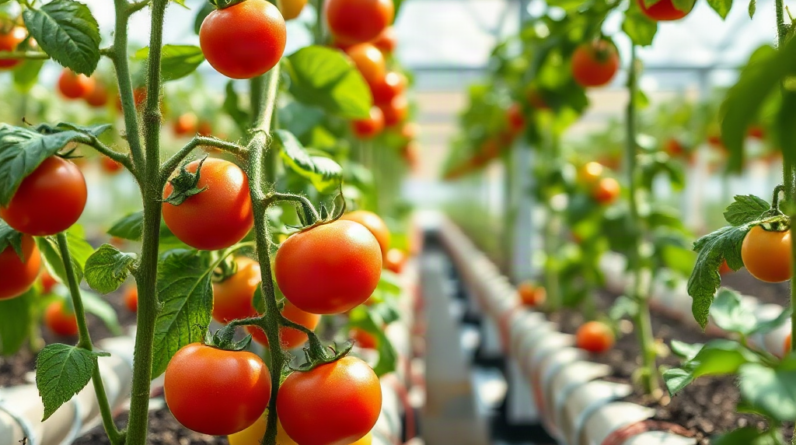
Fruiting crops are not impossible, but they raise the lighting requirement and the margin for error. A compact pepper may grow under a modest fixture yet flower slowly and set fewer fruits. Tomatoes can become tall and weak if the light is too distant, while cucumbers may outgrow a small shelf before their production potential is realized. Choosing a crop that fits the light is often more effective than increasing nutrients in an attempt to force growth.
For a first planting, use a mixed tray with mostly leafy crops and a small number of herbs. For example, loose-leaf lettuce can provide early harvests while basil occupies a separate site where its height can be managed. Arugula and mustard may grow quickly but can become sharper in flavor if heat or water stress develops. Mint grows vigorously, so isolate it if its roots or stems could crowd slower plants.
Seed packets provide useful maturity information, but indoor hydroponic timing will differ from outdoor soil production. Treat the listed days as an approximate comparison rather than a promise. Harvesting outer leaves early can keep lettuce productive, whereas allowing a crowded head to mature under weak light may encourage lower leaves to yellow.
Use Growing hydroponic vegetables with limited sunlight as a planning constraint, not merely a lighting problem. Select compact varieties, maintain enough spacing for air movement, and reserve the brightest position for plants with the highest light demand. If your goal is fruit rather than greens, a stronger dedicated fixture and a taller, ventilated growing area may be more appropriate than a windowsill system.
Building An Effective Supplemental LED Setup
A supplemental LED should deliver even coverage across the plant canopy, operate on a timer, and allow height adjustment as plants grow. Full-spectrum fixtures are commonly chosen for mixed indoor crops because they provide a broad light range suitable for vegetative growth and herbs without requiring separate colored bulbs.
Light placement matters as much as fixture selection. A lamp positioned too far away spreads light over a large area but leaves the leaves underpowered. A lamp placed too close can create bleached patches, curled edges, or excessive heat at the upper canopy. Follow the manufacturer’s hanging guidance when available, then observe new growth for several days rather than changing height repeatedly.
Reflective walls or a light-colored enclosure can direct stray light back toward the plants, but reflective material does not create additional light. It may also trap heat around the reservoir and leaves. Keep the fixture and electrical connections protected from splashes, provide ventilation, and leave enough clearance for the tallest plant.
Use a timer so the plants receive a repeatable day and night cycle. A schedule that changes constantly because the light is switched by hand makes it harder to interpret slow growth, leaf movement, and water consumption. The exact schedule depends on crop, fixture, and growing conditions; a moderate starting period followed by observation is safer than assuming longer illumination always produces better plants.
Consider coverage before wattage. A powerful light with a narrow footprint may grow one basil plant well while leaving the edges of a broad tray weak. A less intense but evenly distributed fixture can be more useful for lettuce and herbs. If the center plants are compact and the edge plants stretch, the issue may be coverage rather than insufficient nutrients.
One common mistake is using a decorative household bulb as the only source for a production crop. Such a bulb may illuminate leaves without supplying enough usable intensity at the canopy. It can be suitable for visibility or a very low-demand herb, but a purpose-designed grow fixture gives more reliable control. Related planning choices are covered in Growing hydroponic vegetables with limited sunlight, particularly when shelf space and electrical use must be balanced.
Managing Timing, Nutrients, And Plant Stress
Low-light hydroponic plants usually consume nutrients and water more slowly than vigorously illuminated plants. The reservoir may therefore remain concentrated if water evaporates while uptake lags. Adding fertilizer on a fixed calendar without checking the solution can push electrical conductivity upward and stress roots or leaf margins.
Measure the reservoir according to the needs of the system and crop, and make changes gradually. Check pH and nutrient strength with dependable meters or test methods, but interpret readings alongside plant appearance, water level, temperature, and root condition. A reading outside the preferred range can matter, yet correcting it aggressively may create a second problem through sudden chemical changes.
Heat from the light is a hidden constraint in small rooms. Warm nutrient solution holds less dissolved oxygen, and warm, stagnant water can make root problems more likely. Air movement should gently disturb the leaves without drying them. Keep the reservoir out of direct fixture heat, and inspect roots for healthy color and firm texture rather than relying only on the foliage.
Plants also need a dark interval. Extending the light continuously may seem like an easy response to weak sunlight, but uninterrupted illumination can complicate plant recovery and does not fix poor fixture coverage. A stable schedule, adequate darkness, and reasonable temperature control generally provide a better baseline for troubleshooting.
- First priority: provide even canopy light and a reliable timer.
- Second priority: match crop choice and plant spacing to the illuminated area.
- Third priority: monitor reservoir concentration, temperature, pH, and root appearance.
Weak assumptions create avoidable losses. Yellow leaves are not automatically a sign of fertilizer deficiency, and stretching is not corrected by stronger nutrient solution. A pale, elongated plant may simply need more light, while scorched edges may indicate excessive intensity or heat. Record light height, schedule, reservoir readings, and visible changes so each adjustment has a clear reason.
Diagnosing Slow Growth And Improving Results
Slow growth under limited sunlight should be diagnosed from the canopy downward. Start by checking whether new leaves are expanding, whether stems are stretching, and whether light reaches the edges of the planting area. Next inspect water movement, root appearance, reservoir temperature, and nutrient readings. This sequence prevents a grower from treating every symptom as a fertilizer problem.
If seedlings are thin and leaning, move the fixture closer within safe operating limits, improve coverage, or reduce the number of plants under it. If leaves develop dry pale patches directly beneath the lamp, raise the fixture or reduce intensity and check heat. If growth is compact but leaf color fades uniformly, review the nutrient solution and root-zone conditions rather than changing the light alone.
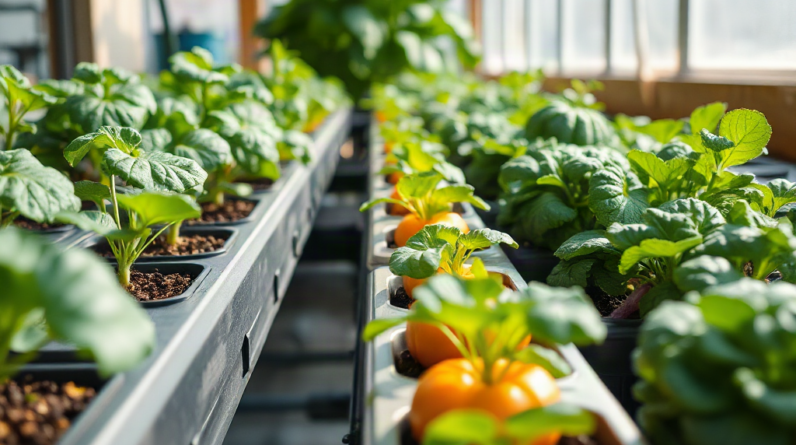
A useful household scenario is a lettuce raft placed on a kitchen counter. The window provides attractive daylight, but the plants closest to the glass grow upright while those behind them stretch. Adding a bar-style LED above the full raft and spacing the sites more widely can improve uniformity without increasing fertilizer. The result may still be slower than a commercial indoor farm, but it can be predictable enough for recurring harvests.
Harvest strategy also affects how limited light is used. Cut outer lettuce leaves rather than removing a whole head when the center remains healthy. Pinch basil above a leaf pair to encourage branching, but avoid removing so much foliage that the plant has little surface area left to capture light. A crowded tray may produce more seedlings initially yet yield less usable food once leaves compete for the same light.
Use a simple weekly checklist:
- Look for stretching, uneven color, leaf scorch, and crowded canopies.
- Confirm the timer is operating and the fixture has not shifted upward.
- Check water level, pH, nutrient strength, temperature, and root appearance.
- Remove damaged leaves and improve airflow around dense growth.
- Change one major variable at a time and observe new growth before judging the result.
For more system-specific planning, connect this topic with Growing hydroponic vegetables with limited sunlight while deciding whether a small herb shelf or a higher-output indoor garden matches your available light, space, and operating cost.
Frequently Asked Questions
Can hydroponic vegetables grow beside a window without a grow light?
Some herbs and leafy greens may survive and grow slowly, but a window-only setup is inconsistent. A supplemental LED is usually needed for compact, repeatable growth.
Which vegetables are easiest under limited sunlight?
Lettuce, arugula, baby kale, Swiss chard, basil, parsley, cilantro, and mint are practical choices. Fruiting crops generally need stronger, more evenly distributed light.
How far should an LED grow light be from hydroponic plants?
Use the fixture maker's recommended height as the starting point. Adjust based on canopy response: stretching suggests insufficient intensity, while bleaching or heat damage suggests excessive intensity.
Does low light mean hydroponic plants need more fertilizer?
Usually not. Low-light plants often use water and nutrients more slowly, so extra fertilizer can raise solution strength and stress roots or leaf margins.
Why are my hydroponic seedlings tall and weak?
Stretching most often indicates inadequate intensity, poor coverage, or excessive distance from the light. Correct the light arrangement before increasing nutrients.
Further Reading
Authoritative Sources
- Academy of Nutrition and Dietetics
eatright.orgProfessional nutrition guidance, healthy eating resources, and practical dietitian-reviewed advice.
- U.S. Department of Agriculture
usda.govOfficial food, nutrition, agriculture, and consumer guidance from the USDA.
- NIH Office of Dietary Supplements
ods.od.nih.govResearch-based fact sheets on nutrients, supplements, dietary intake, and safety considerations.
- International Society of Sports Nutrition
sportsnutritionsociety.orgEvidence-informed sports nutrition resources and position stands for active people and athletes.
Conclusion
A productive low-sunlight hydroponic garden depends on matching the crop to the light rather than trying to compensate with fertilizer. Begin with leafy greens and herbs, provide even LED coverage on a timer, and leave room to adjust fixture height as the canopy develops. Keep the reservoir cool enough for healthy roots, monitor nutrient concentration instead of dosing by habit, and treat stretching, scorch, and yellowing as clues that require different responses. A small, evenly lit tray will usually outperform a crowded system placed in a bright-looking but weak window. Start with a manageable planting, record the schedule and reservoir readings, and expand only after new growth is compact, evenly colored, and consistent.