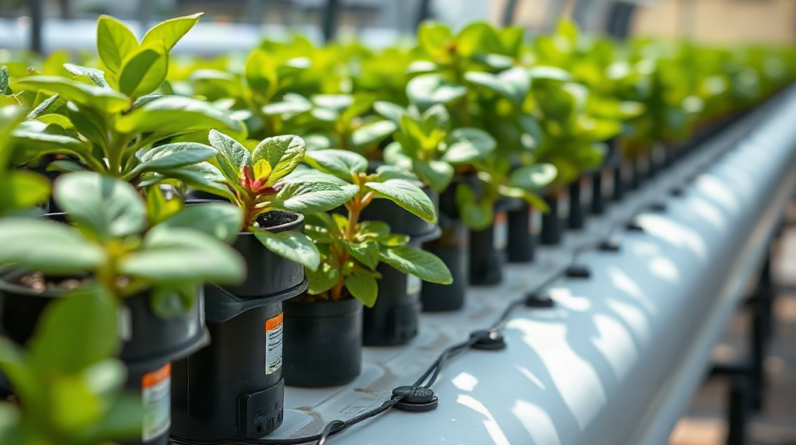
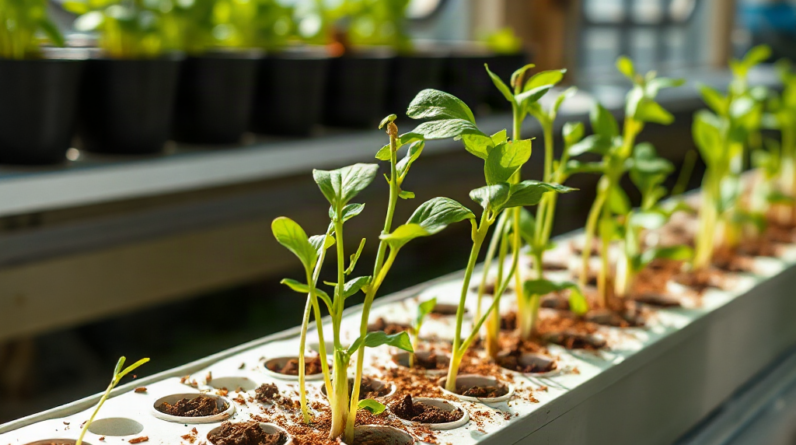
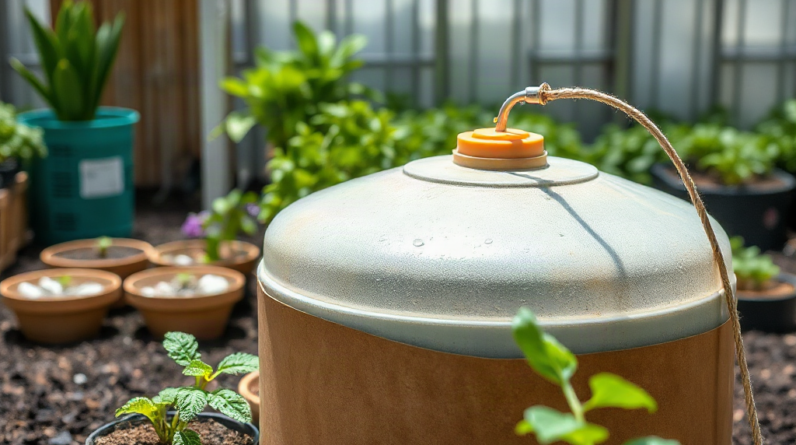
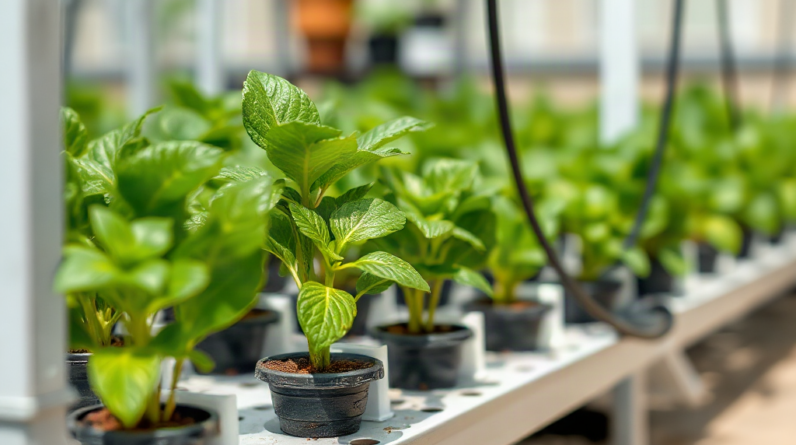
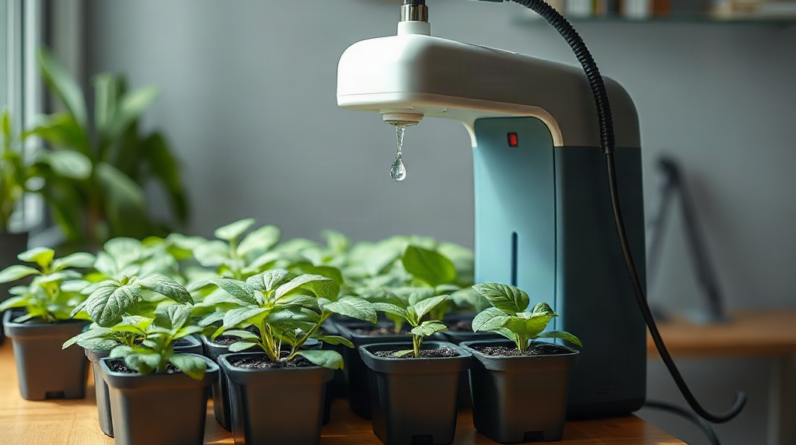
How to improve nutrient delivery in hydroponics is to combine accurate nutrient mixing with stable pH, adequate circulation, clean irrigation paths, and regular root-zone checks. Begin by testing source water, dissolving nutrients in the correct order, and verifying electrical conductivity after mixing rather than relying only on the label dose. Keep the reservoir moving so ions do not settle, inspect emitters and channels for uneven flow, and maintain conditions that allow roots to receive both oxygen and solution. A rising or falling EC reading can reveal plant uptake, evaporation, dilution, or dosing errors, while pH drift may indicate an imbalance or depleted solution. Adjust one variable at a time and record the response.
Build a Reliable Nutrient Solution
Effective nutrient delivery begins with a solution whose concentration and chemistry are known. Plants cannot use fertilizer efficiently when the source water already contains substantial minerals, when concentrates are mixed together incorrectly, or when the reservoir is measured before the solution is fully blended. A nutrient formula may be suitable for leafy greens but excessive for young plants, while fruiting crops may require a different balance as demand changes.
Test the starting water before adding fertilizer. Hard water can contribute calcium and magnesium, alter pH behavior, and make a standard formula deliver more of certain elements than intended. Very soft or filtered water may need a mineral supplement, depending on the nutrient product and crop. The useful question is not whether one water source is universally better; it is whether the formula accounts for what that water already contributes.
Mix concentrated products separately. Fill the reservoir with most of the required water, add each component according to the manufacturer’s sequence, and allow circulation between additions. Calcium-containing products can react with concentrated phosphate or sulfate components and form precipitates that plants cannot access. Adding concentrates directly on top of one another in a small volume creates a much greater reaction risk than diluting each product through the reservoir.
Measure EC after the solution reaches a consistent temperature and has circulated. EC indicates the solution’s overall ionic conductivity, not the exact amount of every individual element, so it should guide adjustments rather than replace a crop-specific formula. A reading below the intended range may reflect dilution or weak dosing; a high reading may indicate evaporation, excessive fertilizer, or poor water replacement. Correct the cause instead of repeatedly adding nutrients.
For a small garden, a written mixing record is more useful than estimating by memory. Note source-water EC, added volumes, final EC, pH, reservoir temperature, and the date. That record makes how to improve nutrient delivery in hydroponics a repeatable process rather than a series of guesses. Avoid chasing a perfect number when the crop, growth stage, and water supply have not been identified.
Improve Flow From Reservoir to Roots
Uniform circulation determines whether a properly mixed solution actually reaches every plant. A reservoir may test correctly while a distant channel receives less flow because of a restricted tube, a partially blocked emitter, an uneven drain line, or a pump that has lost capacity. Plants at the end of a system can then show weaker growth even though the central reservoir appears normal.
Inspect the complete path from pump intake to return line. The pump should remain submerged to avoid running dry, and its intake screen should be free of roots and debris. Tubing should not kink behind a rack or rise into an air pocket that interrupts delivery. In drip systems, compare emitters by observing output into identical containers for a fixed period. In nutrient film or channel systems, look for a continuous, shallow film rather than isolated puddles or dry patches.
More flow is not automatically better. Excessive velocity can disturb young roots, splash solution onto surfaces, increase noise, or overwhelm a drain. Deep stagnant pockets reduce oxygen exchange, while an overly thin film can leave roots exposed if the pump stops. The suitable flow rate is the one that distributes solution evenly while preserving drainage and a well-aerated root zone.
Consider system design when choosing corrective action. A single larger pump may increase delivery at one outlet while starving others if the plumbing is poorly balanced. A manifold with adjustable outlets can provide better control, but it adds more fittings to inspect. Shorter tubing runs may reduce resistance, whereas larger tubing may be more useful when several branches operate at once. These choices matter more than simply selecting a pump with a higher advertised flow rate.
Check delivery after cleaning, transplanting, and changing plant size. A root system that was small enough for an emitter last month may now enter the line and restrict it. Place collection cups beneath representative outlets and compare volumes, then inspect any branch that differs noticeably from the others. This simple test often reveals a mechanical delivery problem before leaf symptoms become widespread.
Use EC, pH, and Plant Signals Together
EC and pH are useful control points, but neither measurement explains the entire nutrient-delivery process. EC reflects dissolved ionic material, while pH affects the chemical availability of several elements and can shift as roots absorb ions. A reservoir can have an acceptable EC and still deliver unevenly if flow is poor, roots are oxygen-starved, or the solution is outside the crop’s preferred pH range.
Measure at consistent times and locations. Read the reservoir after circulation, and if possible compare it with drainage or return solution. A rising EC often suggests water is leaving faster than minerals are being taken up, although the pattern can also result from overfeeding. A falling EC may indicate strong nutrient uptake, dilution from added water, or a leak that is allowing fresh water into the system. The trend matters more than one isolated reading.
PH movement provides additional context. Small changes may be normal as roots absorb different charged nutrients, but rapid drift can point to low buffering capacity, an unsuitable source water, depleted solution, or biological contamination. Correct pH gradually and retest after mixing; repeatedly adding acid or base without investigating the pattern can create unstable chemistry and excessive salt accumulation.
Plant symptoms help locate the problem but should not be treated as a laboratory diagnosis. Pale new growth may be associated with iron availability, root-zone pH, or damaged roots. Brown leaf margins can follow excessive salts, irregular irrigation, or environmental stress. If only one branch is affected, inspect its flow before changing the entire reservoir. If every plant changes at once after a refill, review the mix, source water, and measurement process.
A useful monitoring sheet includes EC, pH, water level, solution temperature, pump condition, and visible root color or odor. The aim is to identify relationships: for example, whether EC climbs whenever the room is hot, or whether pH shifts after a particular nutrient addition. Use hydroponic nutrient delivery checks to narrow the cause before making a broad correction.
Prevent Delivery Failures and Root-Zone Stress
Clean equipment and oxygenated solution protect delivery as much as fertilizer choice does. Algae, sediment, biofilm, and loose root fragments can narrow emitters, coat pump parts, and change the effective flow rate. In warm reservoirs, biological growth can accelerate while dissolved oxygen declines, creating conditions in which roots become less capable of taking up the nutrients surrounding them.
Keep light out of the reservoir and exposed plumbing where practical. Cover unused openings, remove debris during routine inspections, and clean pumps and screens on a schedule matched to the crop and system. Do not assume a clear tube guarantees a clean internal surface; a thin film can still affect small emitters. Sanitizing between crops may be appropriate, but any cleaning product must be fully removed before plants return to the system.
Root-zone oxygen depends on system type. Aerated deep-water systems need functioning air pumps, suitable air stones, and adequate circulation around the roots. Drip and ebb-and-flow systems need a balance between wetting and drainage. Constantly saturated media with limited air space can produce sluggish roots even when nutrient concentration is correct. Conversely, irregular irrigation can leave roots dry and cause symptoms that resemble deficiency.
Power interruptions expose another tradeoff. A backup air pump may be more valuable than a larger nutrient pump in a deep-water setup, while a timed drain system may need protection against a stuck valve or blocked return. Test failure modes deliberately: unplug the pump briefly, observe how quickly roots lose access to solution, and confirm that the reservoir cannot overflow when a return line is restricted.
Replace solution when contamination, unexplained readings, or heavy debris makes correction unreliable. Topping off with water can restore volume but does not remove accumulated ions or dead material. A full change costs fertilizer and time, yet it may be safer than repeatedly adjusting a chemically unstable reservoir. After the change, clean the delivery path and reduce variables so the next readings are interpretable.
A Practical Nutrient Delivery Routine
A dependable routine separates measurement, observation, and correction. Begin with the reservoir because it establishes the baseline, then verify distribution at the plants. This order prevents a grower from changing nutrient strength when the real problem is a blocked line or a leaking fitting.
- Check the system physically: confirm pump operation, air movement where needed, water level, return flow, tubing, emitters, and signs of leaks.
- Measure the solution: record temperature, EC, and pH after circulation; compare the readings with the crop’s established target range rather than a generic number.
- Inspect the plants and roots: compare plants at the beginning and end of each channel, looking for uneven growth, wilting, odor, discoloration, or dry media.
- Correct one cause: dilute an over-concentrated solution, adjust pH cautiously, clean a restricted line, or improve aeration based on the evidence.
- Recheck the response: measure again after adequate mixing and record whether the pattern improves instead of making several simultaneous changes.
Prioritize uniform access before fine-tuning the formula. If half the plants receive weak flow, a more sophisticated nutrient blend will not solve the distribution problem. If flow is even but readings drift, investigate evaporation, plant uptake, water additions, and reservoir age. If readings are stable but roots smell sour or appear damaged, focus on oxygen, temperature, sanitation, and drainage rather than increasing fertilizer.
Beginners often respond to pale leaves by adding more nutrients. That can worsen salt stress when the underlying issue is high pH, poor oxygenation, or an obstructed line. Experienced growers can use crop-specific targets and substrate measurements, but advanced monitoring still depends on calibrated meters and consistent sampling. The practical goal is not maximum concentration; it is a stable, evenly delivered solution that matches plant demand.
For a deeper reference point, keep your nutrient delivery notes alongside irrigation changes, pruning, lighting adjustments, and room temperature. A crop that suddenly drinks more water may require more frequent checks, while a small seedling system may need gentler strength and lower flow. Let the plant stage and system behavior determine the adjustment.
Frequently Asked Questions
Does higher EC deliver more nutrients?
No. Higher EC means more dissolved ions overall, not necessarily a better balance. Excess concentration can make water uptake more difficult and may damage roots or leaf margins.
Why is one hydroponic plant weaker than the others?
Check its emitter, channel position, root condition, and local light before changing the whole reservoir. Uneven flow commonly affects individual plants.
How often should nutrient solution be mixed?
Mix whenever preparing a new reservoir or adding a measured correction, then allow full circulation before testing. Avoid adding concentrated products directly together.
Can pH alone show whether plants receive nutrients?
No. pH indicates acidity, not distribution or complete nutrient availability. Pair it with EC, flow inspection, root observation, and plant growth patterns.
When should a reservoir be replaced instead of adjusted?
Replace it when contamination, heavy debris, unexplained drift, or repeated corrections make the chemistry unreliable. Clean the system before preparing the next batch.
Conclusion
Improving nutrient delivery is primarily a consistency problem: the solution must be mixed correctly, moved evenly, monitored with reliable measurements, and presented to roots in an oxygenated zone. Test source water and final EC, verify pH after circulation, and inspect outlets rather than assuming a working pump provides equal distribution. Treat changing readings as clues about uptake, evaporation, dilution, or dosing errors, not as automatic instructions to add fertilizer. Clean restrictions promptly, protect reservoirs from light and debris, and match irrigation and aeration to the system design. A short log of readings and corrections will reveal patterns that a single visual symptom cannot. Prioritize uniform flow and healthy roots first; formula refinements become more useful once those foundations are stable.