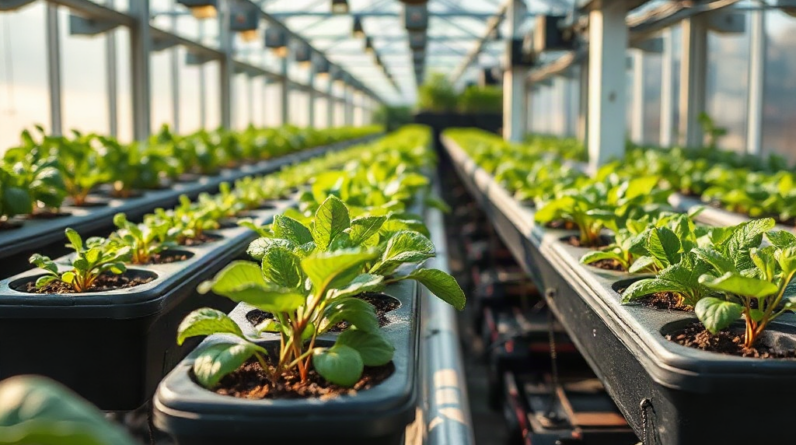
Issues with hydroponic crop spacing usually arise when mature canopy width, root volume, airflow, and equipment access are underestimated at planting. Crowded crops shade lower leaves, trap humid air, restrict inspection, and may cause roots to obstruct channels or compete for dissolved oxygen. Excessively wide spacing wastes illuminated growing area and can reduce output per shelf or square foot. Set spacing from the crop’s expected harvest size rather than seedling size, then verify it by checking leaf overlap, canopy-level airflow, root-zone clearance, and access for pruning or harvesting. Staggered planting, movable sites, and timely thinning can correct developing problems before the canopy becomes inaccessible.
Why Spacing Problems Develop
Planting holes are fixed early, but the space each crop occupies changes throughout the production cycle. A lettuce transplant may fit comfortably beside its neighbors during establishment and then form a broad head that closes every gap before harvest. Fruiting crops add another dimension: stems can be trained upward, yet side shoots, leaves, flowers, and support hardware still occupy horizontal space. A layout based on young transplants therefore gives a misleading picture of the mature canopy.
Light distribution is often the first limiting factor. When neighboring leaves overlap heavily, the upper canopy captures most of the available light while older leaves remain shaded. Adding more light does not necessarily solve the geometry problem; the upper leaves may receive excessive intensity while the lower canopy remains blocked. Wider spacing can improve distribution, but spacing crops too far apart leaves portions of the illuminated bench unused. The useful target is enough canopy closure to capture light without creating thick, inaccessible layers of foliage.
Air movement creates a second constraint. Fans may circulate air across the room while little air passes through a dense crop. Leaves release moisture into small pockets between plants, and overlapping foliage slows its removal. The result can be persistent leaf wetness after splashing, condensation, or foliar work. Crowding does not create every disease problem, but it can produce the humid, slow-drying conditions in which damage spreads unnoticed.
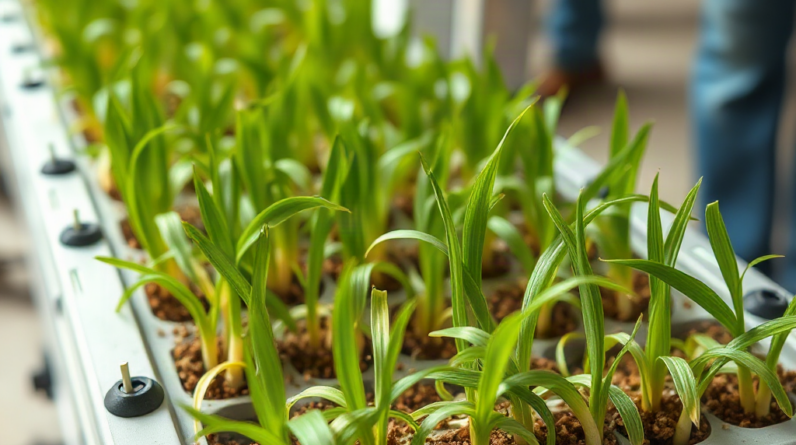
Root architecture also matters, especially in nutrient film technique channels, small deep-water reservoirs, and compact drip containers. Neighboring roots may intertwine, collect debris, narrow return paths, or surround drains. A productive canopy can therefore hide declining solution movement beneath it. In a recirculating channel, one large root mass may back up the nutrient film and alter delivery to downstream sites. In individual buckets, the canopy may be the tighter constraint even though roots remain separated.
A common mistake is treating the number of planting sites supplied with a system as the number that should always be occupied. Site count indicates physical capacity, not necessarily suitable capacity for every species or harvest stage. Reviewing issues with hydroponic crop spacing requires looking beyond hole count to mature plant width, planned harvest timing, airflow pathways, root behavior, and working access.
Symptoms Above and Below the Canopy
Spacing trouble appears as a pattern across neighboring crops rather than as one isolated damaged leaf. Strong leaf overlap, leaning toward open areas, uneven head formation, and pale or deteriorating lower foliage indicate that plants are occupying the same light space. Crops along an outer edge may outperform those in the center because they receive light and moving air from more directions. That edge-to-center difference is a useful clue when nutrient concentration and irrigation are shared.
Inspect the canopy at its thickest point instead of judging it from above. Looking horizontally through the foliage reveals whether air and light can reach inner leaves. Check shortly before harvest, when crowding is greatest, and after the lights have been operating long enough for the crops to transpire. Leaves that remain pressed together, damp contact points, or a still pocket beneath an apparently moving canopy suggest that nominal room airflow is not reaching the crop interior.
Below the canopy, lift access covers safely and examine roots without pulling heavily on them. Watch for roots bridging return fittings, bunching at channel outlets, or filling narrow passages. Uneven solution depth between otherwise level channels may indicate a developing restriction. Plants downstream from an obstruction can experience intermittent delivery even when the pump and reservoir appear normal. Cutting roots aggressively is not a universal remedy because damaged tissue can create additional debris and stress; restoring a clear flow path and reducing future crowding is usually the more durable response.
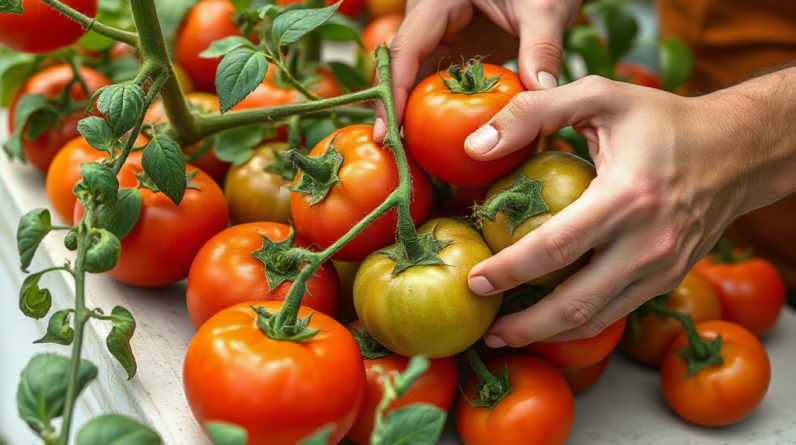
Operational symptoms are equally revealing. If harvesting one plant damages two neighbors, routine inspection requires bending stems, or sanitation cannot be completed without moving the entire canopy, spacing is too tight for the chosen workflow. Trellised tomatoes or cucumbers may look orderly at eye level while their lower leaves, clips, and irrigation emitters remain unreachable. Practical spacing must reserve room for hands, tools, support lines, and removal of mature produce.
Use a compact weekly check rather than waiting for obvious decline:
- Canopy: compare center crops with edge crops and note persistent leaf overlap.
- Air: verify gentle movement within the foliage, not only above it.
- Roots: inspect outlets, drains, and return paths for encroachment.
- Access: confirm that leaves, emitters, and supports can be reached without breakage.
- Uniformity: record whether size or quality declines in the densest part of the layout.
The weak assumption to avoid is that healthy-looking top leaves prove the spacing works. Upper foliage can remain vigorous while shaded leaves, blocked plumbing, and inaccessible crop interiors deteriorate. Those hidden conditions often become expensive near harvest, when moving large crops is hardest.
Setting Spacing by Crop and System
Spacing should be selected from mature crop habit, production duration, and system limitations rather than from a universal distance. Compact herbs harvested repeatedly have different requirements from full-head lettuce, while a vertically trained vine demands a different layout from a sprawling dwarf fruiting crop. Cultivar descriptions can provide a starting estimate of mature spread, but the actual footprint changes with light direction, pruning, temperature, harvest style, and the length of time plants remain in the system.
Short-cycle leafy crops often suit staged spacing. Seedlings can begin close together in a nursery or propagation area, then move into wider finishing positions as leaves expand. This uses early-stage space efficiently without forcing mature crops to remain crowded. The tradeoff is labor and handling risk: every move takes time and can disturb roots. Fixed channels may favor leaving alternate holes empty during finishing, whereas movable rafts or modular gutters make redistribution easier.
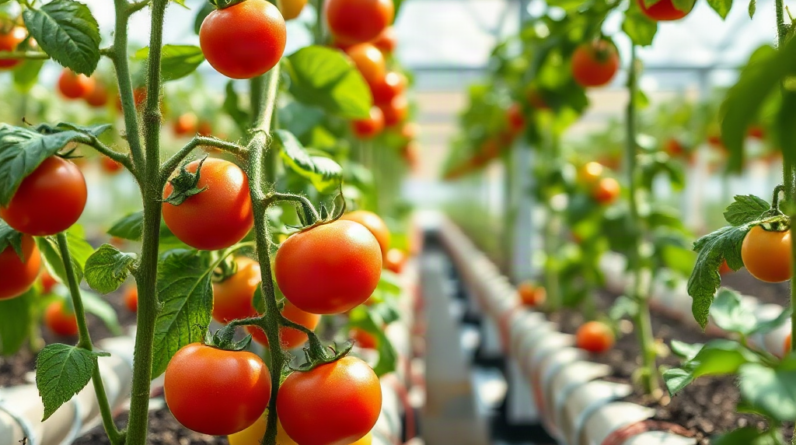
For basil and other branching herbs, harvest method changes the calculation. Frequent cutting can keep the canopy compact, but missed harvests allow branches to close gaps quickly. Full-head lettuce needs enough final room to form a marketable shape without neighboring leaves deforming the head. Tomatoes, cucumbers, and peppers depend more on pruning and training, yet their broad leaves can still form dense walls. Vertical training reduces floor-area use; it does not remove the need for lateral air lanes or worker access.
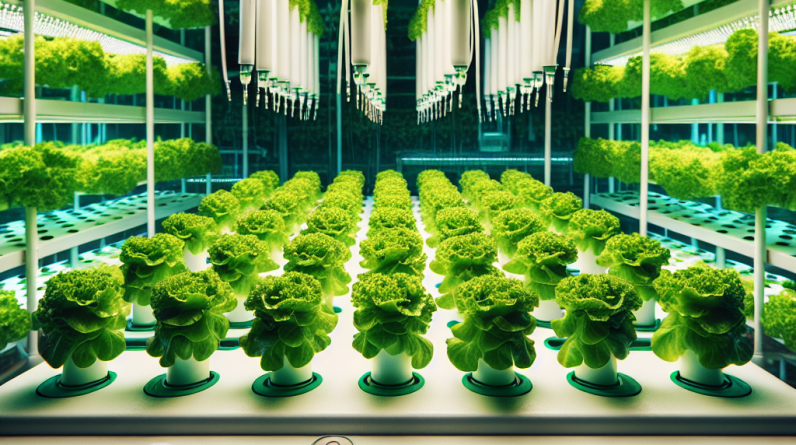
The hydroponic system sets hard boundaries. Narrow NFT channels require attention to both leaf spread and the channel’s internal root capacity. Deep-water rafts can support broad roots, but closely packed openings may create a continuous canopy that is difficult to inspect. Dutch buckets separate root zones and permit wider row layouts, although trellis position and service aisles then become central. Tower systems concentrate planting sites vertically, so upper foliage can shade lower sites and leaves may interfere with emitters or harvesting around the column.
A practical spacing trial is more reliable than committing an entire setup at once. Mark a small group at the proposed density and compare it with a slightly wider group through the intended harvest stage. Keep cultivar, lighting, irrigation, and harvest age consistent. Photograph both groups from above and from canopy level, then compare crop uniformity, lower-leaf condition, access time, and root clearance. Yield per plant alone can be misleading: wider spacing may increase individual size while reducing the number of harvestable units in the same area.
For a new layout, prioritize decisions in this order:
- Define the harvest stage and expected mature footprint.
- Reserve unobstructed irrigation returns, drains, and inspection points.
- Provide air paths through the crop and access for routine work.
- Test plant density against usable yield per illuminated area.
This method makes issues with hydroponic crop spacing measurable rather than subjective. A successful density produces a reasonably even canopy while preserving crop quality, solution movement, and service access through the final harvest.
Correcting an Overcrowded Hydroponic Setup
Correct crowding in stages so that the remedy does not create abrupt stress or damage the shared system. Begin by identifying whether the limiting factor is foliage, roots, access, or several constraints at once. A fan cannot correct a blocked return, and pruning cannot create a service aisle where none exists. Address plumbing restrictions first because interrupted circulation can affect multiple plants quickly.
Where planting sites are removable, relocate smaller crops before their roots become extensively intertwined. Support the root mass, avoid allowing it to dry, and match the destination solution conditions as closely as practical. Mature crops in fixed channels are harder to move safely. In that situation, harvesting selected plants early or removing weak plants may protect the remaining crop better than trying to extract every root intact. Empty sites can be covered with suitable opaque inserts to limit light entering the reservoir or channel.
Selective pruning can reopen air paths around fruiting crops and repeatedly harvested herbs, but it is not a substitute for adequate spacing. Remove damaged, senescent, or strategically obstructive leaves with clean tools rather than stripping a large portion of healthy foliage at once. Lettuce and similar head crops generally cannot be pruned into a properly spaced form; thinning whole plants is more appropriate. For vining crops, adjust clips and trellis lines gradually so stems are not sharply bent or crowded against fixtures.
Airflow adjustments should follow canopy changes. Position circulation so leaves move gently and air passes through the crop instead of blasting one edge. Strong direct airflow can increase drying at exposed margins while leaving the center stagnant. Check conditions at several canopy heights with the crops in place. If dense rows repeatedly require aggressive fan settings, the layout itself needs more open lanes.
Do not add new transplants immediately to every opening created by harvest. That common response restores the original problem before the remaining plants finish. Use the cleared positions to evaluate whether leaf quality, drying, access, and uniformity improve. Record which sites were empty, moved, or harvested early so the next cycle can begin with a deliberate pattern rather than relying on memory.
Signs that correction is working include faster drying at leaf-contact points, easier inspection, fewer damaged leaves during harvest, stable solution movement, and more even development among interior and edge crops. Continued leaning, recurring drain obstruction, wet foliage inside the canopy, or repeated need for severe pruning indicates that the site density remains too high. If the same pattern returns each cycle, revise hole occupancy, transplant timing, cultivar choice, or harvest stage instead of treating crowding as a temporary maintenance problem.
Budget also shapes the remedy. Replacing fixed channels or benches may not be practical, but alternating occupied sites, using a compact cultivar, harvesting younger, or separating nursery and finishing stages can improve the fit without rebuilding the room. The best correction is the one that preserves reliable operation and saleable or usable output—not simply the largest number of plants.
Frequently Asked Questions
Can hydroponic plants be spaced closer than soil-grown plants?
Sometimes, because water and mineral delivery do not depend on soil volume, but leaves still need light, moving air, and working clearance. Root channels and drains may also impose tighter limits than soil beds.
How can I tell whether lettuce is planted too closely?
Look for heavy overlap, misshapen heads, pale lower leaves, damp contact points, and smaller plants in the center of the raft or channel. Compare those crops with plants along an open edge.
Should every opening in a hydroponic channel be planted?
No. The suitable occupancy depends on crop size and harvest age. Alternate openings may need to remain empty for finishing crops, with unused holes covered to keep light out of the channel.
Can pruning solve hydroponic spacing problems?
Pruning can maintain air lanes in herbs and trained fruiting crops, but repeated severe pruning signals excessive density. Head-forming leafy crops are usually better corrected by thinning or earlier harvesting.
When should crop spacing be evaluated?
Check it during layout, after rapid canopy expansion, and near the intended harvest stage. The final-stage inspection is decisive because seedling spacing rarely represents the crop’s largest footprint.
Conclusion
Effective spacing balances usable density with canopy function and reliable system operation. Base the layout on the crop’s harvest-stage footprint, then verify that light reaches useful foliage, air moves within the canopy, roots leave circulation paths open, and routine work can be completed without damaging neighboring crops. A small side-by-side density trial provides better evidence than filling every available site by default.
For an existing setup, inspect drains and returns first, then thin, relocate, harvest, or prune according to crop type. Track whether interior plants become more uniform and whether foliage dries and remains accessible. If crowding returns at the same stage, change the next planting pattern, cultivar, or harvest timing. Treating spacing as a production variable—not a fixed dimension—makes the system easier to manage from transplant through harvest.
Further Reading
Authoritative Sources
- Why Your Second Hydroponic Grow Fails (And How to Fix It ...
rootsandrouteshydro.comLighting Shifts Change Plant Performance. Lighting issues are another often overlooked cause of second grow problems. Even if your light ...
- Hydroponics: Factors influencing the growth of the plants
academia.eduFor example, high temperatures can decrease oxygen solubility in water, and overcrowded plants can lead to uneven oxygen distribution [207-212].
- Troubleshooting Common Hydroponic Issues: Tips & Tricks ...
hyalite.co.nzA guide to help you fix and prevent the most common issues experienced in hydroponics.