Measuring root zone moisture in hydroponics works best by combining a calibrated moisture sensor with reservoir level, irrigation timing, and direct inspection of the growing medium. Probe readings show whether a media-based system is drying between irrigation events, while runoff, emitter flow, and root appearance reveal whether moisture is actually reaching the root zone evenly. Coconut coir, rockwool, clay pebbles, and mixed substrates hold and release water differently, so a single target reading cannot suit every system. Take readings at consistent depths and times, compare several plants, and avoid reacting to one number before checking drainage, airflow, temperature, and pump operation.
What Root Zone Moisture Means in a Hydroponic System
Root zone moisture is the water held around the roots in a substrate, not simply the volume of solution in a reservoir. In a deep-water culture setup, roots may remain continuously surrounded by nutrient solution, so a conventional moisture reading has limited value. In drip, ebb-and-flow, drain-to-waste, and soilless container systems, moisture changes between irrigation events can strongly affect oxygen availability, nutrient movement, and plant stability.
A wet medium is not automatically a healthy medium. Water occupies pore spaces that roots also need for air exchange. When a container remains saturated after irrigation, oxygen movement slows and roots may become vulnerable to stress even though the plant never appears thirsty. A medium that dries too far creates a different problem: salts can become more concentrated, fine roots lose contact with water films, and leaves may wilt before the next scheduled irrigation.
Interpret readings alongside physical evidence. A sensor result deserves more confidence when it agrees with container weight, drainage volume, emitter output, and root appearance. For example, a coir bag showing a falling reading may be behaving normally if irrigation is frequent and runoff is consistent. The same reading in a rockwool slab could signal that the slab is approaching an excessively dry point, depending on its size, plant stage, and irrigation history.
Readers comparing approaches to Measuring root zone moisture in hydroponics should first identify the system type. Continuous-flow systems are usually managed through water level, flow, dissolved oxygen, and root inspection; substrate systems benefit more directly from repeated moisture measurements. Treating every hydroponic design as if it has the same root-zone behavior is a common source of poor irrigation decisions.
Choosing Sensors and Taking Repeatable Readings
Capacitance sensors, resistance probes, and handheld substrate meters can all provide useful information, but they do not measure the same thing with equal reliability. Capacitance devices estimate changes in the medium’s dielectric properties and are often less affected by dissolved fertilizer than simple resistance probes. Resistance-based tools can be inexpensive, yet nutrient concentration, probe contact, and substrate composition may distort their readings. A meter is useful only when its limitations are understood.
Place the probe where active roots are likely to be, rather than immediately beside a dripper or against the container wall. A reading beside an emitter may represent a recently wet pocket, while a reading near the edge may reflect faster drying. Use the same depth and general location each time. For larger beds or slabs, sample more than one point because moisture can vary substantially between an inlet, center, and drain end.
Calibration matters. Follow the instrument maker’s procedure, inspect the probe for residue, and verify that the display changes when the probe moves from a dry reference medium to a wetted one. Do not assume that a factory percentage represents actual volumetric water content in every substrate. Many consumer meters display a relative index that is valuable for trend tracking but unsuitable as a universal target.
A repeatable routine is more informative than occasional random testing:
- Record the time since the last irrigation.
- Measure before irrigation and again after the medium has redistributed water.
- Use several representative plants instead of relying on one container.
- Note temperature, airflow, plant size, and drainage observations.
Handheld meters are appropriate for a small collection when the grower can take consistent readings. Fixed sensors become more useful in a larger installation, but they require careful placement, protection from direct emitter streams, and periodic comparison with manual checks. A sensor that never moves may miss a blocked line or a dry section elsewhere in the crop.
Interpreting Moisture Changes Across Growing Media
Growing media determine how a moisture reading translates into plant access to water. Rockwool can hold substantial water while retaining air, but its moisture gradient may differ from the top to the bottom of a slab. Coir can show useful drying cycles, although fiber structure, particle size, and compression affect water retention. Expanded clay pebbles drain quickly and provide large air spaces, making a typical soil-style moisture scale a poor fit. Perlite blends, peat-free mixes, and other substrates each need their own baseline.
Establish a crop-specific reference rather than chasing a generic percentage. Measure a representative container shortly after a known irrigation event, then again near the point when the plant begins to show reduced turgor or growth. The purpose is not to force visible wilting; it is to learn the range in which the crop remains stable. Compare those readings with container weight and drainage behavior. A lightweight container with a high meter value may indicate a calibration issue or uneven probe contact.
Root-zone temperature and air movement also change the meaning of moisture data. Warm air and strong circulation can increase plant water use, while cool, stagnant conditions may leave the medium wet for longer. A reading that appears low after a bright, warm day may be expected. The same reading after a dark period, paired with slow drainage, suggests that irrigation frequency or substrate structure may need attention.
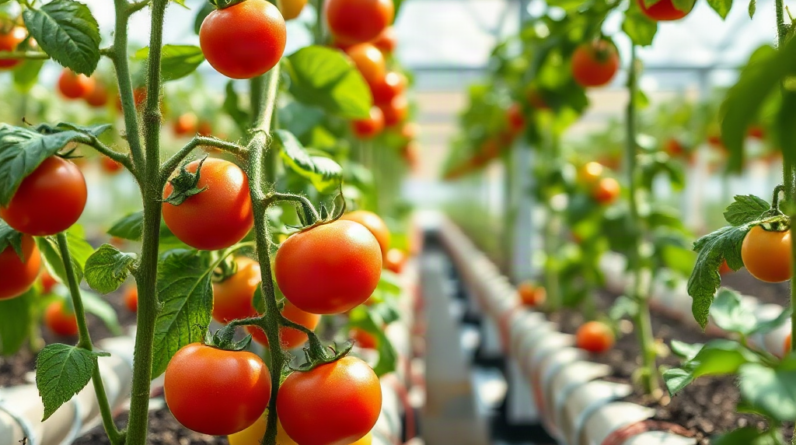
Consider a tomato in a coir bag receiving drip irrigation. The top may feel reasonably dry while the lower section remains saturated. Measuring only at the surface could prompt unnecessary watering and reduce air-filled pore space below. A second reading lower in the bag, combined with runoff timing, offers a better picture. Conversely, measuring only at the bottom can hide a dry upper root zone in a tall container. The practical answer is a consistent sampling map, not a single “correct” depth.
Use root zone moisture measurements as trend data. A gradual decline between irrigations is often more actionable than one isolated number. Sharp swings may point to short irrigation events, poor distribution, excessive drainage, or a sensor positioned in an unrepresentative pocket.
Using Measurements to Adjust Irrigation Safely
Moisture data should change irrigation only after the grower confirms that delivery equipment is working. Inspect emitters, pump cycles, filters, drain paths, and reservoir levels before changing the schedule. A dry reading caused by a clogged emitter cannot be corrected reliably by increasing the duration of every irrigation zone.
When the medium dries too far between events, increase water delivery in a controlled way. Depending on the system, that may mean adding a short pulse, extending an existing event, or reducing the interval between events. Make one adjustment at a time and observe the next full cycle. If the substrate remains wet long after irrigation, shorten the event, increase the gap between events, improve drainage, or investigate compaction and blocked outlets.
Runoff is a useful companion signal in drain-to-waste systems. Little or no runoff may indicate insufficient delivery, although a low-runoff design may be intentional. Excessive runoff can waste water and nutrients without proving that the root zone is uniformly wet. Compare runoff from several containers and check whether the first and last emitters in a line behave alike.
Moisture management also involves a tradeoff between precision and complexity. A small home garden may gain more from weighing a container, marking irrigation times, and checking a few plants than from installing a network of sensors. A larger garden may justify permanent probes and automated logging, but automation can amplify a bad sensor position or an incorrect threshold. Manual verification remains useful when readings suddenly diverge from plant appearance.
Prioritize adjustments in this order:
- Confirm that water reaches every intended plant.
- Check whether drainage and air exchange are adequate.
- Compare readings at consistent locations and times.
- Change one irrigation variable and record the response.
Signs of a useful adjustment include a smoother moisture decline, consistent drainage, stable leaf posture, and no prolonged saturation. Persistent wilt despite a wet reading points toward root damage, heat load, disease pressure, or poor oxygenation rather than an automatic need for more water.
Common Measurement Errors and a Practical Monitoring Routine
The most common mistake is treating a meter’s number as a plant diagnosis. Sensors estimate conditions at a small point, while roots occupy a changing three-dimensional space. Probe contact, media texture, fertilizer concentration, and temperature can all affect the result. A second mistake is comparing readings from different substrates as though the scales were interchangeable.
Do not insert a probe repeatedly into the same delicate root area, and do not leave a corrosion-prone probe in nutrient solution unless it is designed for that use. Clean equipment according to its instructions and keep records that identify the container, depth, time, and irrigation status. Without those details, a sequence of numbers may look precise but reveal little about cause and effect.
A simple weekly review can expose patterns that daily reactions miss. Look for containers that dry faster than their neighbors, lines with uneven output, readings that remain high overnight, or moisture changes that coincide with temperature and lighting shifts. Photographing the plant canopy and recording root or drainage observations can help distinguish a moisture problem from a nutrient, environmental, or mechanical issue.
Use a short decision check whenever a result seems surprising:
- Was the probe inserted at the usual depth and angle?
- Was the reading taken at the same point in the irrigation cycle?
- Does another plant show the same pattern?
- Do container weight, runoff, and plant condition agree?
- Could a blocked emitter, leak, or drain restriction explain the change?
For a small system, a logbook and one dependable meter may be sufficient. For a commercial or highly automated system, multiple sensors, flow monitoring, and alarms provide stronger coverage, but only after baseline behavior is documented. The goal is not maximum instrumentation; it is earlier recognition of uneven watering and prolonged saturation. A measured trend paired with equipment checks is more trustworthy than a precise-looking number viewed in isolation.
Frequently Asked Questions
Can a soil moisture meter be used in hydroponics?
Some handheld meters can provide rough trend information in soilless media, but their scales may not be calibrated for rockwool, coir, or clay pebbles. Use consistent readings and verify them against container weight and irrigation observations.
Where should a moisture sensor be placed?
Place it in the active root zone at a consistent depth, away from the immediate stream of a dripper and the container wall. Larger beds usually need multiple sampling points.
How often should root zone moisture be checked?
Check at consistent points in the irrigation cycle, such as before and after a scheduled event. Daily checks are useful while establishing a baseline; stable systems may need less frequent manual verification.
Why does a wet reading occur when a plant is wilting?
Wilting with wet media can reflect poor oxygenation, root damage, high heat demand, disease pressure, or a sensor reading from a wetter pocket than the roots are using. Check drainage, roots, and other plants before adding water.
Should moisture readings control an automated irrigation system?
They can contribute to automation after sensor placement, calibration, and baseline behavior are verified. Keep flow checks and safety limits in place because a faulty sensor should not be allowed to run or stop irrigation without another safeguard.
Further Reading
Authoritative Sources
- Academy of Nutrition and Dietetics
eatright.orgProfessional nutrition guidance, healthy eating resources, and practical dietitian-reviewed advice.
- U.S. Department of Agriculture
usda.govOfficial food, nutrition, agriculture, and consumer guidance from the USDA.
- NIH Office of Dietary Supplements
ods.od.nih.govResearch-based fact sheets on nutrients, supplements, dietary intake, and safety considerations.
- International Society of Sports Nutrition
sportsnutritionsociety.orgEvidence-informed sports nutrition resources and position stands for active people and athletes.
Conclusion
Reliable root-zone monitoring comes from interpreting several signals together. Use a sensor to follow moisture trends, but pair each reading with irrigation timing, substrate type, drainage, container weight, and plant condition. Establish separate baselines for coir, rockwool, clay pebbles, and other media rather than applying one universal meter target. When a reading changes abruptly, check emitters, pumps, probe placement, and drainage before changing the schedule. Small gardens can achieve useful control with a consistent manual log; larger systems may benefit from fixed sensors and flow monitoring after the system has been characterized. The next practical step is to select representative plants, mark a repeatable probe depth, record readings through one full irrigation cycle, and adjust only one variable when the evidence points to a genuine moisture imbalance.