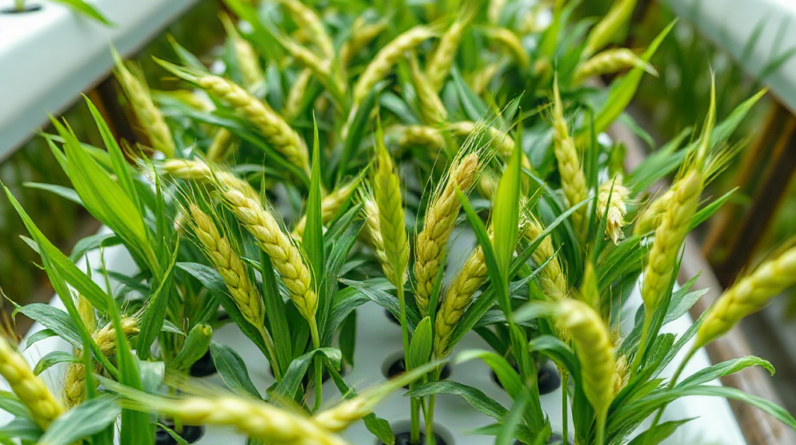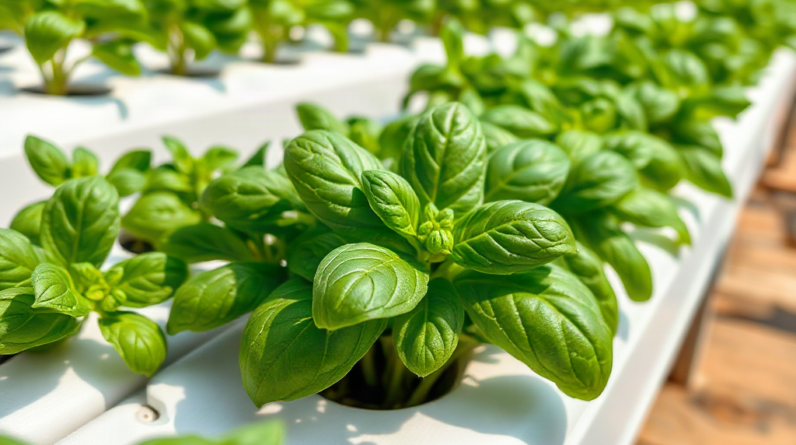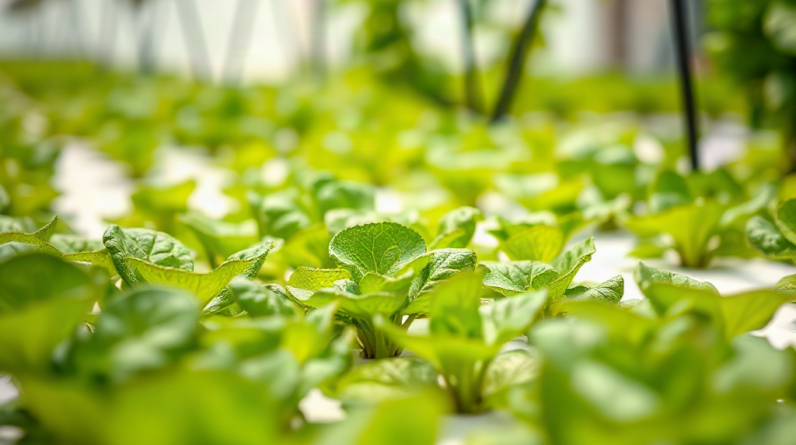
A safe hydroponic reservoir temperature is generally 65–72°F (18–22°C), with about 68°F (20°C) serving as a practical target for many leafy greens, herbs, and fruiting plants. Water in this range retains useful dissolved oxygen while allowing roots to absorb water and mineral nutrients effectively. Warmer solution holds less oxygen and can favor root pathogens, especially where circulation or sanitation is weak. Colder solution may slow root metabolism, nutrient uptake, and early growth.
Temperature Targets and Acceptable Variation
The useful target is a stable root-zone environment rather than a single perfect thermometer reading. For a mixed home garden, holding the nutrient solution near 68°F (20°C) gives a workable balance between root activity and dissolved-oxygen capacity. A broader range of 65–72°F (18–22°C) is normally manageable for common lettuce, basil, tomato, pepper, cucumber, and similar crops, provided the solution is aerated and the root system remains healthy.
Crop stage and species affect how tightly that range should be managed. Cool-season leafy greens often perform well toward the lower end, while established warm-season plants may tolerate the upper end without obvious stress. Tolerance does not mean that warmer water is preferable. A tomato plant may continue growing at 74°F (23°C), for example, but the smaller oxygen margin makes pump interruptions, dense root mats, and accumulated organic debris more consequential.
Short movement outside the target is different from a reservoir that remains hot or cold for most of the day. A temporary rise during the final hours of the light cycle may cause no visible damage if temperature falls promptly and aeration is strong. Repeated daily peaks above roughly 75°F (24°C), however, deserve correction because warm water carries less dissolved oxygen and creates a more favorable setting for several root-zone problems. Sustained readings below about 60°F (16°C) can noticeably slow uptake and growth even when leaves still look healthy.
The number on the thermometer should therefore be interpreted with duration, oxygenation, crop type, and root condition. Deep water culture exposes roots continuously, so temperature control has a particularly direct effect. In drip systems, media can buffer brief changes, although a hot reservoir still sends warm solution through the root zone. Nutrient film technique has little water volume in the channels and may change temperature quickly when pumps stop or channels receive radiant heat.
A grower reviewing the Safe operating range for hydroponic reservoir temperature should prioritize repeated readings over isolated events. Record the minimum and maximum across the light and dark periods for several days. That pattern distinguishes harmless fluctuation from a predictable heat load caused by lights, pumps, windows, warm floors, or undersized water volume.
Why Warm and Cold Reservoirs Affect Roots Differently
Warm nutrient solution reduces the operating margin available to roots. As water temperature rises, its capacity to retain dissolved oxygen declines while root and microbial respiration continue. Roots can then face higher oxygen demand at the same time that less oxygen is available. Weak circulation, clogged air stones, oversized root masses, and decaying plant material make that mismatch more severe.
Early heat stress may appear as unexplained wilting during the light period even though the reservoir contains enough water. Roots can become tan, slippery, or unusually soft, and the solution may develop an earthy or unpleasant odor. These observations are warnings rather than a diagnosis: nutrient staining can darken roots, and wilting may also come from excessive light, high vapor pressure deficit, or damaged pumps. Check temperature, aeration, flow, smell, and root texture together before deciding what failed.
Consider a small deep water culture bucket beside a sunlit window. The room may remain at 72°F (22°C), but direct sunlight can heat the dark bucket and nutrient solution well beyond room temperature. Adding more fertilizer will not correct the resulting wilt and can raise osmotic stress. Blocking the sunlight, insulating the container, restoring vigorous aeration, and removing dead root material address the actual root-zone pressure.
Cold solution creates a different problem. Roots generally absorb water and dissolved minerals more slowly as metabolic activity declines. Seedlings and newly transplanted plants may establish slowly, while mature plants can show reduced growth or nutrient-deficiency-like discoloration despite an acceptable electrical conductivity. Raising nutrient strength in response can backfire: salts may accumulate while cold roots remain unable to use them at the expected rate.
Temperature also changes how other measurements should be read. Electrical conductivity meters with automatic temperature compensation improve the consistency of the instrument reading, but compensation does not make cold roots absorb nutrients normally or restore oxygen to warm water. Likewise, an air pump can reduce oxygen risk but cannot fully cancel the biological effects of chronically hot solution.
The common mistake is treating reservoir temperature as an isolated number. A reading near the upper limit may be workable in a clean, vigorously aerated reservoir with healthy young roots, yet risky in a crowded container with biofilm and interrupted flow. Root appearance, water movement, pump reliability, and daily temperature duration provide the context needed to judge whether the system is actually stable.
How to Measure Reservoir Temperature Reliably
Reliable control begins with measuring the nutrient solution at a representative location. Place the probe below the surface, away from a heater, chiller outlet, return line, air stone, or reservoir wall receiving direct light. Those locations can be several degrees different from the bulk solution and may lead to unnecessary adjustments. In a large or poorly mixed tank, compare readings at opposite ends to identify temperature layering.
A simple waterproof digital thermometer is adequate for manual checks, while a min/max thermometer or data logger reveals changes that happen when the garden is unattended. Continuous monitoring is especially useful when lights run overnight, equipment shares a timer, or the reservoir sits in a garage or greenhouse. The highest reading often occurs late in the lighting period, not when the grower checks the garden in the morning.
Verify suspicious readings before changing the system. Compare the installed sensor with a second thermometer in a cup of well-mixed reservoir solution. Inspect the probe for mineral deposits, water intrusion, loose connections, or contact with a warm container wall. Consumer probes can drift, and a false high reading may prompt excessive cooling that slows the crop.
A short operating log provides more value than sporadic measurements. Record four items at consistent times:
- Solution temperature: Capture a reading near the beginning and end of the light period.
- Room temperature: Note whether reservoir movement follows the surrounding air.
- System status: Confirm that circulation and aeration equipment is running normally.
- Root observations: Record color, firmness, odor, and any sudden plant wilt.
For example, a reservoir that reaches 74°F (23°C) every afternoon but returns to 68°F (20°C) overnight has a different control problem from one that stays at 74°F continuously. The first may respond to shading the reservoir or shifting the light schedule. The second may need insulation, relocation, lower pump heat, greater water volume, or active cooling.
Do not rely on leaf temperature, room thermostats, or the temperature displayed by a nearby climate controller as substitutes. Canopies experience light and airflow, while the reservoir gains heat from submerged pumps, return water, and surrounding surfaces. Direct measurement is central to maintaining the Safe operating range for hydroponic reservoir temperature because the root zone can diverge substantially from the room.
Correction Steps for an Unstable Reservoir
Correct the heat source before adding cooling equipment. Keep opaque reservoirs out of direct sun, separate them from hot ballasts or dehumidifier exhaust, and insulate surfaces exposed to warm floors or greenhouse air. Confirm that a submerged pump is not oversized for the required flow; its electrical energy ultimately contributes heat to the water. Increasing reservoir volume can also reduce rapid swings, although it will not overcome a consistently hot location.
When temperatures rise only modestly, improve aeration and circulation while reducing external heat gain. Vigorous bubbling does not chill the water reliably, but it helps protect roots as oxygen capacity declines. A reflective or insulated cover can limit radiant heating, while moving the lighting period into cooler nighttime hours may reduce the daily peak. Keep openings covered so that light control does not compromise sanitation.
Frozen water bottles offer inexpensive temporary cooling for small reservoirs. Seal them securely, clean their exterior, and rotate them rather than adding ice directly to the nutrient solution. Direct ice addition changes water volume, nutrient concentration, and potentially sanitation. Avoid forcing a rapid temperature drop; cooling a small root zone by several degrees in a short period can exchange heat stress for abrupt cold stress.
A thermostatically controlled aquarium or hydroponic chiller is more appropriate when high temperatures persist, the crop value justifies the cost, or the system contains a large exposed root mass. Select equipment based on reservoir volume, ambient heat, pump heat, and desired pull-down rather than tank capacity alone. Chillers release heat into the surrounding room, so poor ventilation can make them run longer and raise energy use.
Cold reservoirs require equally measured correction. Insulate the tank from concrete floors, move it away from cold exterior walls, or use a guarded, thermostatically controlled water heater rated for the reservoir volume. Position heating equipment where roots cannot rest against it, and maintain circulation to prevent hot spots. Raising room temperature may be preferable when both the root zone and canopy are cold.
Use this order when correcting a recurring problem:
- Confirm the reading with a second instrument and identify when the drift occurs.
- Check pumps, air delivery, return flow, root crowding, and accumulated debris.
- Remove avoidable heat or cold exposure through shading, relocation, or insulation.
- Apply gradual temporary correction while watching plant and root response.
- Add thermostatic cooling or heating only when passive control cannot hold the target.
Success means the daily temperature curve becomes narrower, roots remain firm and normally colored, and plants no longer wilt solely during reservoir peaks. Failure is indicated by continuing temperature escalation, odor, soft roots, unstable water level, or equipment cycling without reaching its set point. Reassess heat load and equipment sizing rather than repeatedly adding frozen bottles or changing nutrients. A practical Safe operating range for hydroponic reservoir temperature depends on stable operation, not constant manual rescue.
Frequently Asked Questions
Is 75°F too warm for a hydroponic reservoir?
A brief rise to 75°F (24°C) may be tolerated, but repeated or sustained exposure reduces the dissolved-oxygen margin. Check aeration, root condition, heat sources, and the duration of the peak rather than judging the number alone.
Can hydroponic nutrient solution be too cold?
Yes. Solution below about 60°F (16°C) can slow root metabolism, water uptake, and nutrient acquisition. Correct the cause gradually before increasing fertilizer strength in response to slow growth or pale leaves.
Does an air stone lower reservoir temperature?
An air stone mainly increases gas exchange and water movement. It may produce slight evaporative cooling under some conditions, but it should not be treated as a dependable substitute for shading, insulation, or a chiller.
Where should a reservoir temperature probe be placed?
Submerge it in well-mixed solution away from walls, direct light, heaters, chiller outlets, and pump discharge. Compare multiple locations if the reservoir is large or circulation is uneven.
How quickly should an overheated reservoir be cooled?
Reduce temperature progressively rather than forcing a sudden large drop. Remove the heat source, increase aeration, and use controlled cooling while monitoring roots and plants for improvement.
Conclusion
Reservoir management should focus on the pattern behind the reading: how high or low the solution moves, how long it stays there, and whether oxygen delivery and root condition are deteriorating. Begin by verifying the thermometer and checking the system near the end of the light period, when hidden heat accumulation is easiest to detect. Address sunlight, warm equipment, cold floors, weak circulation, and insufficient water volume before buying active temperature-control equipment.
Use aeration as protection against reduced oxygen availability, not as a replacement for cooling chronically warm water. Make temperature changes gradually, keep the reservoir clean and opaque, and track daily minimums and maximums after each adjustment. If passive measures cannot maintain a stable root zone, choose thermostatically controlled heating or cooling based on the actual reservoir volume and environmental heat load.