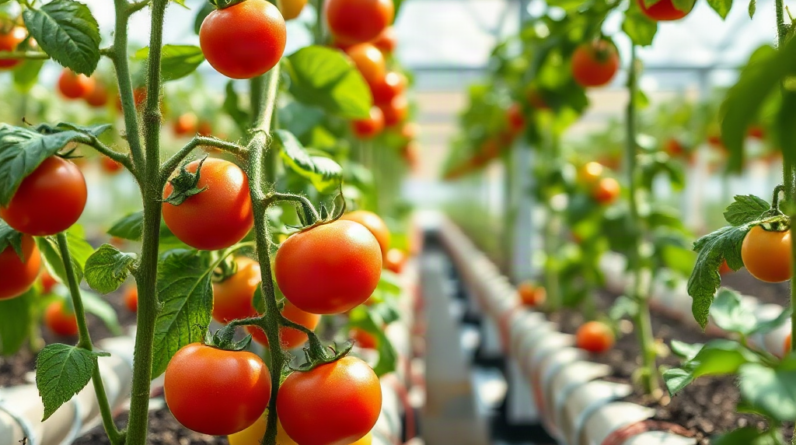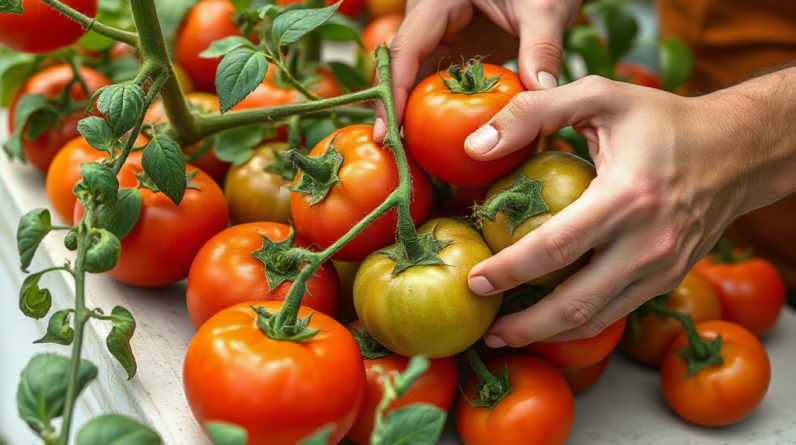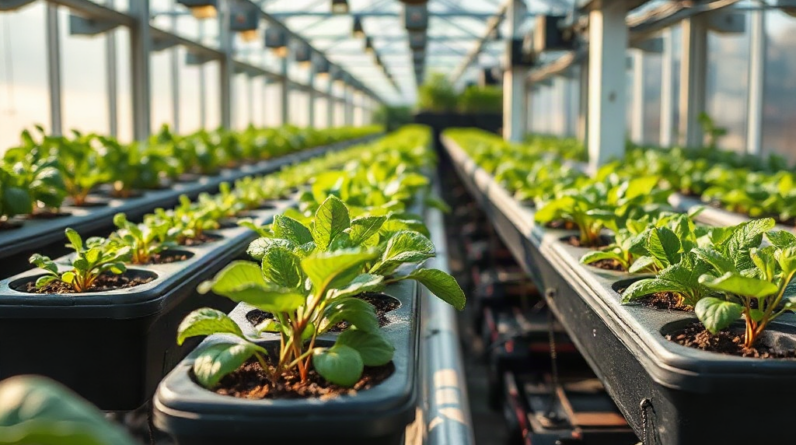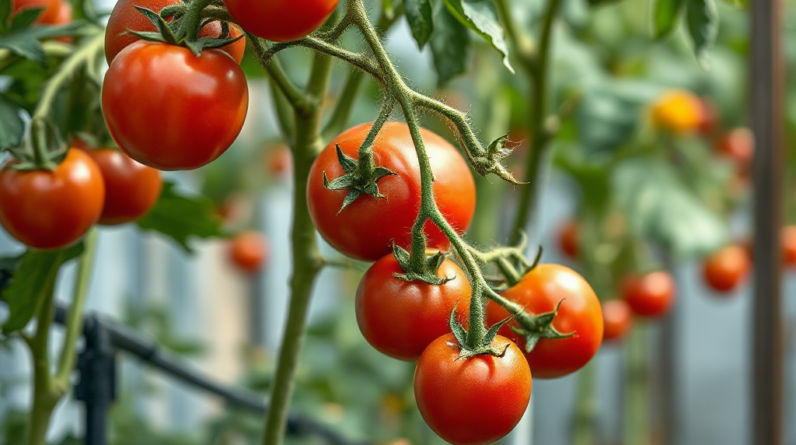
Supporting heavy hydroponic tomato branches works best with early trellising, soft ties, and separate support for fruit-loaded clusters rather than relying on the plant stem alone. Attach the main vine to a stable overhead line or vertical trellis, use loose clips or adjustable ties at regular intervals, and add slings beneath developing trusses as tomatoes gain weight. Prune competing suckers and remove damaged foliage carefully so the plant’s structure remains balanced without exposing fruit to excessive light. Inspect supports after watering and whenever a cluster enlarges, because wet stems, tight knots, and sudden fruit weight can cause splitting or snapping before the plant visibly droops.
Why Tomato Branches Become Difficult to Support
Heavy tomato branches usually fail because weight is concentrated at fruit clusters while the plant is being held at only a few points. In a hydroponic garden, rapid growth can make that imbalance appear quickly: a vine may look sturdy in the morning and bend sharply after several large fruits develop. The problem is not limited to the total weight of the plant. Long stems create leverage, crowded foliage catches air movement, and a cluster hanging far from the main support places extra strain on a narrow section of branch.
Indeterminate tomatoes are especially prone to this issue because they continue extending upward while producing new trusses. A single overhead string may hold the main stem, yet side branches can sag outside the support line. A fruit truss also has its own weak point where the stem joins the vine. If that junction bends repeatedly, vascular tissue can crease or split even when the main plant remains upright.
Hydroponic conditions can intensify the growth pattern. Consistent water and nutrient availability may produce vigorous stems and broad leaves, but strong vegetative growth does not automatically create a well-balanced canopy. A plant receiving abundant light at the top can carry more fruit than its lower branches were prepared to hold. The support plan should therefore be established before the first heavy clusters mature, not after a branch begins hanging.
Consider two plants of the same variety. One is trained around a vertical string with clips placed near each truss. The other is allowed to spread from a single stake. Both may grow well initially, but the second plant develops unsupported lateral weight and is more likely to kink at a branch joint. The first plant may still need slings, but its load is distributed rather than transferred to one bend.
Inspect the plant for bowed joints, pale pressure marks, rubbing, and a truss that pulls downward on its attachment point. Those signs call for support before visible cracking occurs. A common mistake is to tighten a tie around a sagging branch; that can crush expanding tissue. Lift the branch gently first, then secure it with room for continued growth.
For related planning, see Supporting heavy hydroponic tomato branches alongside the trellis arrangement used in your growing area.
Choosing Trellis Clips, Ties, and Fruit Slings
The best support material depends on whether it carries the main vine, a side branch, or an individual fruit cluster. Tomato clips are convenient for guiding a stem along a fixed string, while soft adjustable ties are more useful when a branch changes position as it enlarges. Mesh slings or small fabric hammocks are suited to trusses whose fruit load is pulling away from the stem. Treating all three jobs as though they need the same hardware often creates either insufficient support or damaging pressure.
For the main vine, use a stable overhead line, trellis cord, or support frame that can tolerate the mature plant’s combined foliage and fruit load. The anchor matters as much as the tie. A cord attached to a lightweight light fixture, loose shelf, or flexible pipe may shift when the plant becomes heavy. A rigid frame or properly secured overhead rail gives the support point enough resistance that the tie can guide the vine instead of dragging the whole structure sideways.
Soft plant tape, reusable silicone ties, and broad fabric strips reduce abrasion compared with thin wire or hard plastic. Leave a small loop rather than fastening directly against the stem. The loop should hold the branch near its intended position while allowing the stem to thicken. A figure-eight arrangement is useful because it keeps the support material from sawing into the plant during fan movement or routine handling.
Fruit slings are a separate solution. Place one under a developing truss when the cluster is still manageable, then attach the sling to the trellis or a nearby support cord. Do not suspend the entire load from the fruit stems. The sling should cradle the cluster broadly and leave enough space for air movement, pollination access, and harvesting. A breathable fabric is preferable to a sealed plastic pocket, which can retain moisture around fruit and foliage.
Choose between a fixed clip and an adjustable tie based on movement. A clip works well on a straight, predictable vine where the stem needs gentle guidance. An adjustable tie is better for a side branch that must be raised gradually. A sling is the right choice when the branch itself is healthy but the truss has become a pendulous weight. Supporting every branch with rigid hardware may restrict natural movement and make pruning or harvesting awkward.
- Main stem: overhead string, trellis clips, or broad reusable ties.
- Side branch: adjustable tie attached to a nearby structural line.
- Fruit truss: breathable sling or a secondary support cord beneath the cluster.
Never use adhesive tape directly on a growing stem, and avoid thin metal ties that can cut tissue. A support that looks strong but leaves a narrow pressure point is a delayed failure, especially in a humid indoor canopy.
A Practical Support Routine for Fruit-Loaded Vines
Support work is easiest when performed as a short routine rather than an emergency repair. Begin by tracing the plant from its root-zone crown to the newest growing tip. Identify the main stem, the strongest lateral branches, and each truss carrying enough fruit to pull downward. This quick survey shows whether the plant needs a stronger primary line or only targeted cluster support.
First, stabilize the main stem. Place a loose clip or tie below a branch junction rather than directly across a fruit truss. The lower attachment gives the stem a stable path while leaving the junction free to flex. Add another support point above a heavy lateral branch, using a separate cord when possible. Two independent lines are safer than forcing every load onto one tie near the plant’s base.
Next, raise sagging branches in small movements. Lift until the branch returns to a natural angle; do not pull it sharply upright. Older stems can become less flexible, particularly where they have already carried fruit, and a sudden correction may produce a crack. If a branch has partially split, support both sides without squeezing the wound and consider removing the damaged section if its connection is no longer reliable.
Install a sling before the fruit reaches its maximum size. For example, a truss carrying several enlarging tomatoes may appear acceptable at the green stage but bend substantially over the following week. A sling fitted early distributes the load before the truss stem becomes sharply angled. Recheck its position as the fruit expands so the fabric does not press against a single tomato or trap leaves underneath.
After each adjustment, look for practical signs that the arrangement is working. The branch should remain lifted without a tight tie mark, the truss should not swing into nearby equipment, and leaves should still receive airflow rather than being folded against the cord. If a support line is pulling the vine toward one side, reposition the anchor instead of adding more tension.
- Trace the plant and identify the load-bearing stems.
- Secure the main vine to a firm overhead structure.
- Give large side branches their own loose support point.
- Cradle heavy trusses with breathable slings before full ripeness.
- Inspect ties, clips, and contact points during routine plant care.
A common misconception is that more ties always mean more security. Excessive attachment points can limit stem movement, complicate canopy work, and hide pressure injuries. Use the fewest supports that keep the vine aligned and the fruit clusters from hanging on vulnerable joints.
Pruning, Inspection, and Failure Prevention
Pruning affects support demand because every retained branch adds foliage, flowers, and potential fruit weight. Removing weak suckers early can keep the plant’s load within the capacity of its trellis. That does not mean stripping the canopy aggressively. Leaves contribute to fruit development, and excessive removal can expose fruit to intense grow-light radiation or leave the plant with a long, poorly protected stem.
Prioritize branches that are crossing, rubbing against equipment, or growing beyond the available support geometry. If a lateral has already produced a substantial truss, support it before deciding whether to remove it. Cutting a loaded branch because it was not planned into the trellis may waste developing fruit; retaining it without support may risk a larger break. The practical choice depends on branch health, fruit maturity, available anchors, and how much the canopy is already crowded.
Check the system after reservoir work, pruning, and strong fan adjustments. Moving a plant to access tubing can shift a clip or pull a cord across a stem. Increased airflow is useful for a dense canopy, but a branch that was barely stable may sway repeatedly against a hard support. Replace damaged clips and loosen ties that have begun leaving indentations. Inspecting only when the plant looks wilted is too late because mechanical damage can occur while leaves remain fully hydrated.
Watch for several failure signals: a branch joint that stays sharply bent, fruit trusses touching the growing media or reservoir lid, a tie embedded in the stem, and a support anchor that moves when lightly tested. These problems have different remedies. A bent joint needs gradual repositioning, a low truss needs a sling or secondary line, an embedded tie must be replaced immediately, and a moving anchor needs structural correction rather than another plant clip.
Sanitation also matters when repairing a split branch. Clean hands and clean cutting tools reduce the chance of transferring contaminants between plants, although no support method can guarantee recovery after severe damage. Avoid wrapping wet, damaged tissue tightly. A loose support that keeps the wound from opening further is safer than a sealed binding that holds moisture against the stem.
Use this priority order when time is limited:
- Prevent a loaded branch from contacting water, lights, fans, or walkways.
- Remove pressure from ties that are cutting into tissue.
- Support fruit trusses that are bending their attachment stems.
- Correct unstable trellis anchors before adding more clips.
- Prune only after the plant’s structural load is secure.
That order separates urgent mechanical risks from cosmetic canopy adjustments. A neatly pruned plant can still fail if its fruit load is unsupported, while a slightly untidy plant may remain productive when its major stems are aligned and protected.
University cooperative extension gardening resources and USDA plant-science materials can provide additional background on tomato training, pruning, plant structure, and protected growing environments. Match general recommendations to the cultivar, trellis design, and indoor climate rather than assuming every tomato responds identically.
Frequently Asked Questions
When should support be added to a hydroponic tomato plant?
Install the main trellis before the vine becomes tall, then add branch ties and fruit slings as side growth and clusters develop. Early support avoids bending mature stems into position.
Can one overhead string hold every tomato branch?
Usually not. One string may guide the main stem, but wide lateral branches and heavy trusses often need separate ties or slings attached to nearby structural points.
What is the safest tie material for tomato stems?
Broad, soft, reusable ties or flexible plant tape are generally safer than wire or narrow cord. Leave a loose loop so the stem can thicken without being constricted.
Should a heavy branch be pruned immediately?
Not automatically. Support the branch first, then assess whether it is healthy, overcrowded, or outside the trellis. Removing a loaded branch may sacrifice fruit, while retaining it may require a secondary support line.
How can I tell whether a fruit sling is working?
The cluster should stay elevated without pressure on one fruit or its attachment stem. Check that the fabric remains breathable, does not rub the plant, and leaves enough room for fruit expansion.
Further Reading
Authoritative Sources
- Academy of Nutrition and Dietetics
eatright.orgProfessional nutrition guidance, healthy eating resources, and practical dietitian-reviewed advice.
- U.S. Department of Agriculture
usda.govOfficial food, nutrition, agriculture, and consumer guidance from the USDA.
- NIH Office of Dietary Supplements
ods.od.nih.govResearch-based fact sheets on nutrients, supplements, dietary intake, and safety considerations.
- International Society of Sports Nutrition
sportsnutritionsociety.orgEvidence-informed sports nutrition resources and position stands for active people and athletes.
Conclusion
Reliable branch support comes from distributing weight before a tomato vine begins to bend, not from tightening a tie after damage appears. Give the main stem a firm overhead path, support lateral branches independently when they extend beyond that path, and cradle heavy trusses with breathable slings as fruit enlarges. Keep ties loose, inspect contact points frequently, and correct moving anchors instead of piling on more clips. Pruning should serve the structure: remove competing or poorly placed growth, but avoid stripping leaves simply to make the plant look orderly. During each routine check, look for pressure marks, sharp bends, low-hanging clusters, and support lines touching equipment. Those observations tell you whether to reposition, add a sling, replace a tie, or prune selectively before a productive branch becomes a repair problem.