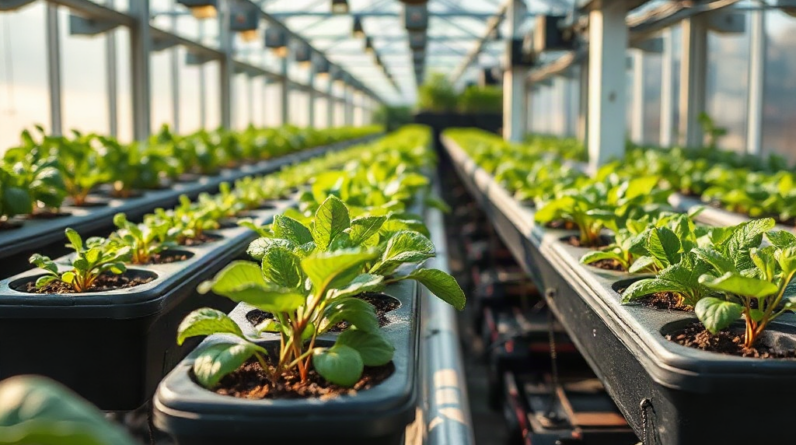
Supporting hydroponic peppers without stem damage requires flexible ties attached to a separate stake, trellis, or overhead line rather than pulling the plant against a rigid support. Leave room for stem thickening, secure branches below fruit clusters, and inspect every few days for rubbing, pinching, or a tie becoming tight. Soft horticultural tape, hook-and-loop strips, and loose clips are safer than wire, zip ties, or narrow string. Add support before heavy peppers bend the canopy, correct unstable root-zone equipment, and redistribute weight instead of forcing one stem to carry every branch.
Why Pepper Stems Fail Under Support
Pepper plants grown in hydroponic systems often develop a compact, leafy canopy with rapid new growth. Their stems may look sturdy while young, yet fruit clusters create leverage at the branch junctions. A plant that is stable in a small vegetative canopy can begin leaning once several peppers hang from lateral branches. The support problem is therefore not simply a matter of keeping the plant upright; it is a matter of controlling force without constricting living tissue.
Damage usually begins at a predictable pressure point. A tight loop compresses the outer stem, a rough clip abrades the surface as the plant moves, or a rigid stake creates a sharp bend when the upper canopy shifts. Nutrient or environmental stress can make the situation worse. Weak, elongated growth may follow insufficient light, while a saturated or poorly anchored root zone can leave the whole plant moving at the base. Supporting Supporting hydroponic peppers without stem damage starts with correcting those sources of instability instead of fastening every branch more tightly.
Consider a pepper with a main stem divided into three branches. If one cord is tied above the split, the cord may hold the whole canopy but concentrate force at that junction. A better arrangement uses one vertical support for the main stem and separate, lightly tensioned supports for branches carrying fruit. This distributes load and allows ordinary air movement without turning each stem into a fixed hinge.
A common mistake is waiting until a branch is already bent. A partially split branch is harder to stabilize because its tissues have been stretched or cracked. Install a support when the plant is still movable, particularly before a known heavy-fruiting period. The support should guide the plant, not straighten it by force. If the stem must be pulled sharply to reach the support, reposition the support or add an intermediate attachment point.
Choosing Safe Supports and Attachment Points
Soft, adjustable materials are the safest starting point for most indoor pepper systems. Horticultural tape, silicone-coated plant ties, fabric strips, and hook-and-loop fasteners spread pressure across a wider area than thin wire or monofilament. Their advantage is not softness alone: they can be loosened as the stem expands and are less likely to cut into the epidermis when the plant sways.
Use a support structure that matches the container and the crop layout. A bamboo stake or fiberglass rod works for a single plant if it is anchored outside the root mass or secured to the reservoir frame. A vertical trellis line is useful for several plants, while an overhead grid can carry branches with minimal contact near the stem. In a recirculating system, avoid placing a stake where it can disturb a net pot, block inspection of roots, or press against tubing and fittings.
Attachment location matters as much as material. Fasten the main stem below a branch fork when the goal is upright stability, then support fruit-bearing branches farther along their length. A tie around a branch should form a loose loop, not a clamp. Leave visible space between the stem and the tie; the plant should be able to move slightly when a fan runs. For a young stem, a figure-eight arrangement can prevent direct rubbing against a stake because the tie separates the stem from the rigid surface.
Small clips can be convenient, but they are not automatically gentle. A narrow spring clip may pinch a tender branch, and a clip fitted too close to a node can damage expanding tissue. Choose broad clips with smooth edges and use them on a support cord rather than closing them tightly around the stem. Wire ties and zip ties are poor choices for permanent attachment because their tension is difficult to judge and their diameter does not expand with the plant.
Budget and access affect the decision. A soft strip attached to a fixed frame may be safer than an expensive trellis installed in a cramped grow cabinet. Advanced growers may prefer overhead strings because they can separate branches and preserve access, but strings require reliable anchoring and routine adjustment. The best support is the one that can be inspected without moving the plant or disconnecting the hydroponic equipment.
A Low-Damage Support Installation Method
Install support in stages so the plant never has to absorb a sudden change in position. First, identify the plant’s center of mass and the branches already carrying fruit. Next, place the primary stake, frame, or trellis so its base is independent of the fragile stem. Only then attach the plant with loose ties. This sequence avoids using the stem as a lever to pull a misplaced support into position.
For a single pepper, begin with one loose attachment below the main fork. Add a second point higher on the stem only if the upper growth still sways excessively. Branches with developing peppers can receive separate supports near, but not directly on, the fruit cluster. The support should carry some downward force while allowing the branch to retain a natural curve. A stiff, straightened branch may appear orderly but can crack when the plant grows or the fruit gains weight.
A practical installation sequence is:
- Anchor the support to the frame, container stand, or an overhead structure rather than relying on the stem.
- Place the first loose tie below a fork or node with enough clearance for thickening.
- Support heavy lateral branches independently instead of hanging them from one central loop.
- Move leaves and fruit away from rough edges, hot lights, and moving fan blades.
- Record the installation date and inspect the attachments during the next irrigation or reservoir check.
Do not tie a pepper tightly to compensate for a weak structure. If the plant continues to rock, check whether the reservoir, bucket, net pot, or external frame is moving. In a deep-water culture setup, an unstable lid can transfer repeated motion into the stem. In a drip arrangement, a loose container or uneven drain line can create similar movement. Structural correction is more durable than adding multiple restrictive ties.
Pruning and support should be coordinated. Removing a crowded, weak lateral may reduce the load more safely than adding another attachment. At the same time, aggressive pruning can expose branches and alter the plant’s balance, so avoid making several major changes while the plant is already stressed. When using branch support for hydroponic peppers, make one adjustment, observe the canopy, and then decide whether another support point is actually needed.
Inspecting Growth, Fruit Weight, and Support Stress
Support is a maintenance task, not a one-time installation. Examine each tie and clip at least every few days during fast growth and fruit enlargement. Look for a flattened section, pale or darkened tissue, a groove beneath the tie, abrasion, or a branch that cannot move when nearby leaves move. These signs indicate pressure or friction even when the plant has not visibly wilted.
Fruit weight changes the load gradually, which makes failures easy to miss. A branch may remain upright in the morning and sag later as leaves lose some firmness or as the fruit pulls downward. Check the plant after the lights have been on for a while and again after a period of active growth. If one branch is carrying several large peppers, give it a sling or secondary cord before the stem bends sharply. A sling should cradle the branch or fruit cluster from below without rubbing the fruit surface.
Air movement provides a useful test. A supported plant should sway slightly rather than remain rigid. Excessive movement suggests that the main support is too distant, the base is unstable, or the tie points are too low. No movement at all can mean the ties are too tight. Fans should not strike the canopy hard enough to make a branch repeatedly slap against a stake, since repeated abrasion can be as damaging as a single tight loop.
If tissue is already split, do not keep tightening the support. Reduce movement with a broad, soft brace, keep the damaged area dry, and remove fruit or foliage only when its weight clearly exceeds what the injured branch can carry. A severely broken branch may not recover, while a shallow bend can sometimes remain productive if it is supported without compression. Avoid applying household tape, adhesives, or unverified treatments directly to a wound.
Use this inspection priority when time is limited:
- Check tightness at forks and nodes first.
- Inspect branches with the largest fruit clusters.
- Confirm that the support base and hydroponic container are stable.
- Look for rubbing where stems contact rigid stakes or trellis hardware.
- Loosen, reposition, or replace any attachment leaving a mark.
Signs that the arrangement is working include a stable canopy, gradual branch movement, unobstructed fruit development, and no new marks on the stem. Signs of failure include increasing lean, repeated contact with hardware, a tie disappearing into the stem, or a branch that sags despite a support. Those observations are more useful than judging the setup by appearance alone.
Matching Support to Plant Size and Growing Style
Small pepper plants usually need only a primary stake and one or two loose guidance points. Adding a full trellis too early can clutter the growing area and make pruning or reservoir access difficult. Larger plants with multiple fruiting branches benefit from a distributed arrangement: a stable central support, separate branch ties, and occasional slings for unusually heavy clusters.
Compact varieties and plants kept under a moderate canopy may be managed with clips and a short stake. Tall, vigorous plants are better suited to an overhead string or grid because the support can continue above the lower branches. The tradeoff is maintenance: overhead systems provide better load distribution but require more planning around lights, ventilation, and access. A stake is simpler, yet it can create concentrated pressure if every branch is attached to the same point.
Hydroponic conditions also influence how quickly adjustments are needed. Rapid vegetative growth can make a safe-looking loop restrictive within a short period. Strong lighting, a well-managed nutrient solution, and adequate root-zone oxygen may produce a canopy that outgrows its original support sooner than expected. That does not mean the plant should be tied more aggressively. It means the inspection interval and available support height should match the growth rate.
For a first-time grower, a soft tie system with visible loops is easier to evaluate than a dense trellis. An experienced grower managing several plants may save labor with a grid, provided each attachment remains accessible. Avoid copying a support layout from a different pepper variety or cabinet without accounting for plant height, fruit size, container stability, and airflow. A system that works for a short chili may be inadequate for a tall plant carrying large sweet peppers.
Documenting changes improves decisions. Note where a tie was added, whether the branch was already leaning, and whether marks appeared afterward. That simple record reveals which supports carry useful load and which merely restrict movement. For more crop-management context, see this hydroponic pepper support reference alongside routine checks of light, roots, and equipment stability.
Frequently Asked Questions
What is the safest material for supporting a pepper stem?
Soft horticultural tape, fabric strips, silicone ties, and hook-and-loop fasteners are generally safer than thin wire or rigid plastic ties because they spread pressure and can be adjusted.
Should a pepper plant be tied tightly to a stake?
No. Leave a small amount of clearance so the stem can thicken and move slightly. A tight tie can create a groove, restrict tissue, and cause damage even if the plant remains upright.
Where should support be attached?
Attach the main stem below a branch fork and support heavy lateral branches separately. Avoid placing clips directly on tender nodes or forcing a branch into a sharp bend.
How often should pepper supports be checked?
Inspect them every few days during rapid growth and fruit enlargement. Check more often if the plant is tall, the fruit is heavy, or the canopy moves against a stake or trellis.
What should be done when a branch has already split?
Stop tightening the attachment, reduce the branch load if necessary, and use a broad, soft brace or sling to limit movement. A badly broken branch may not recover and should not be forced upright.
Further Reading
Authoritative Sources
- Academy of Nutrition and Dietetics
eatright.orgProfessional nutrition guidance, healthy eating resources, and practical dietitian-reviewed advice.
- U.S. Department of Agriculture
usda.govOfficial food, nutrition, agriculture, and consumer guidance from the USDA.
- NIH Office of Dietary Supplements
ods.od.nih.govResearch-based fact sheets on nutrients, supplements, dietary intake, and safety considerations.
- International Society of Sports Nutrition
sportsnutritionsociety.orgEvidence-informed sports nutrition resources and position stands for active people and athletes.
Conclusion
Safe pepper support depends on distributing weight while preserving room for stem growth. Anchor the structure independently, use broad adjustable materials, and support fruit-bearing branches rather than pulling the entire canopy from one central tie. Stability at the reservoir, net pot, or container frame matters just as much as the attachment itself. Inspect forks, nodes, clips, and slings as fruit enlarges; a small groove or rub mark is an early warning, not a cosmetic detail. Choose a simple stake for a compact plant and a distributed trellis or overhead line for a tall, heavily loaded canopy. Make adjustments before bending becomes splitting, and judge success by healthy movement, unobstructed growth, and clean stem surfaces rather than by how rigid the plant looks.