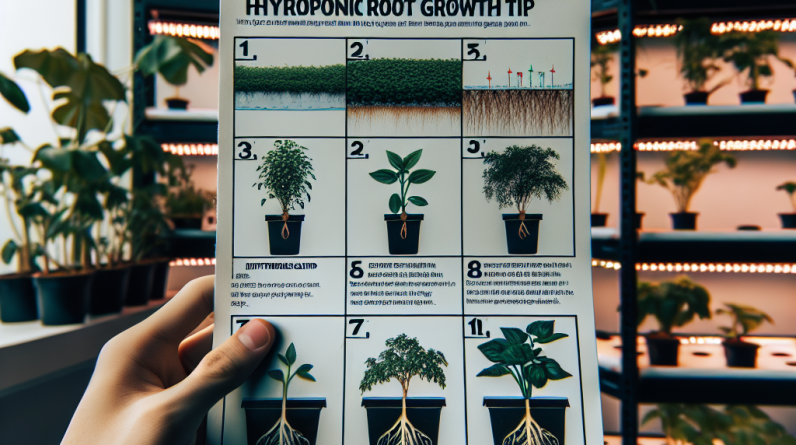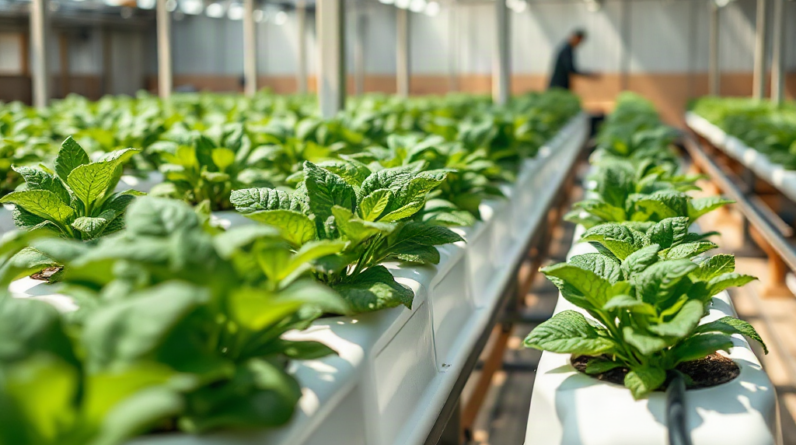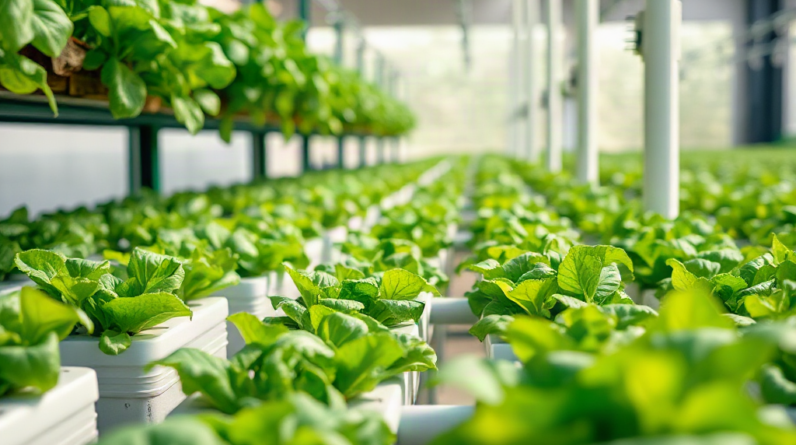
For limited vertical space, choose hydroponic crops with compact canopies, shallow root zones, short harvest cycles, and growth habits that tolerate close light placement. Leaf lettuce, arugula, baby kale, basil, chives, and dwarf Asian greens usually use shelf height more efficiently than tomatoes, cucumbers, or full-size leafy plants. Judge each option by its mature height, required lamp clearance, root volume, and whether repeated cutting will extend production. Avoid assuming that a small seedling remains compact; flowering, bolting, sprawling stems, and dense foliage can quickly consume the space assigned to neighboring plants.
Measure the Usable Growing Envelope
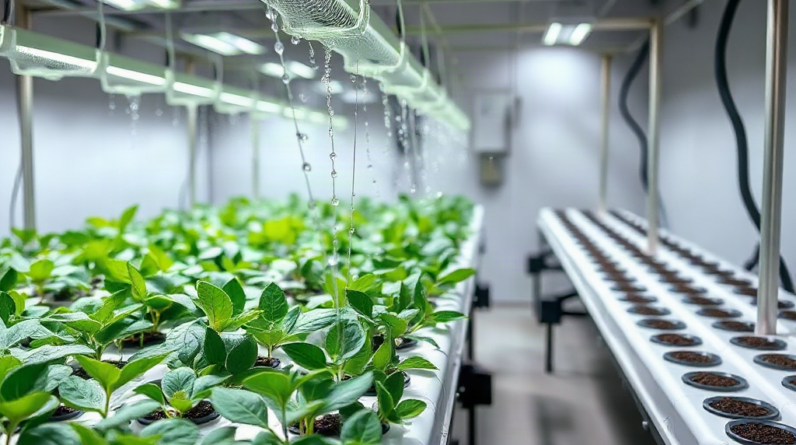
Shelf height is not the same as plant height. A tier that measures 45 centimeters from one shelf to the next must also accommodate the reservoir or channel, net cup, exposed crown, mature foliage, light fixture, and a safe gap between leaves and the lamp. Once those elements are deducted, the crop may have less than half the advertised shelf clearance available for upward growth.
Measure from the point where the stem emerges from the plug to the lowest safe position of the light. Then subtract a working margin for airflow and routine access. The correct lamp gap depends on the fixture, heat output, intensity, and crop response, so the manufacturer’s specifications and visible plant condition matter more than a universal distance. Leaves that curl upward, bleach, develop dry margins, or feel unusually warm may be receiving excessive light or heat. Long, weak stems leaning toward the fixture suggest the opposite problem.
Horizontal area matters at the same time. A basil plant may fit below a lamp yet spread far enough to shade two lettuce sites. Dense foliage also slows air movement around leaves, increasing persistent moisture after splashes or foliar contact. Measure the usable width and depth of each tier, not merely the number of planting holes. A channel with eight sites is not automatically capable of carrying eight mature plants.
Root space creates a less visible limit. Lettuce and many herbs can perform in relatively modest root zones when oxygenation, flow, and nutrient conditions remain stable. Larger fruiting plants develop heavier root masses that can obstruct narrow channels or compete for dissolved oxygen. A small canopy at transplant does not reveal that later demand.
Create a simple growing-envelope record before buying seed. Note the maximum crown-to-light height, unobstructed canopy width, planting-site spacing, channel or container depth, and access needed for harvesting. This turns Choosing hydroponic crops for limited vertical space into a fit calculation rather than a guess based on seed-packet photographs. Recheck measurements after installing hangers, fans, tubing, and timers, because these components often occupy the margins that looked available on paper.
Match Crop Form to Available Height
Growth habit predicts space use more reliably than the broad label “leafy green” or “herb.” Crops that form low rosettes, upright clusters, or compact tufts generally suit stacked shelves. Vining, branching, heading, and fruiting habits demand more room even when a variety is marketed as compact.
Loose-leaf lettuce is particularly adaptable because outer leaves can be harvested before the plant forms a large head. Butterhead types may also fit, but they need enough width to develop their characteristic rosette. Romaine grows more vertically and can work under moderate clearance, while full-size heads may become too tall for a very short tier. Harvesting romaine as baby leaves changes the space calculation considerably.
Herbs require closer examination by species. Chives remain narrow and recover after cutting. Cilantro can be harvested young, although it may stretch and bolt under warm conditions or increasing day length. Basil produces valuable repeated cuts, but standard varieties branch widely after the growing tip is pinched. Compact or small-leaf basil is usually easier to contain. Mint tolerates cutting but spreads aggressively through roots and runners, making an individual container safer than a shared channel.
Asian greens illustrate why harvest stage matters. Tatsoi forms a low, broad rosette, so it needs width more than height. Mizuna has narrow leaves and can be cut young, but an older plant develops a substantial crown. Bok choy ranges from miniature cultivars to large mature plants; the crop name alone does not establish its final dimensions. Seed descriptions that specify mature spread, height, and days to the intended harvest are more useful than photographs.
Use three classifications when reviewing candidates:
- Low and compact: baby lettuce, arugula, chives, dwarf bok choy, and young tatsoi.
- Manageable with cutting: basil, cilantro, parsley, mizuna, and baby kale.
- Space-intensive: indeterminate tomatoes, cucumbers, pole beans, mature Swiss chard, and sprawling squash.
The common mistake is selecting a crop because it can germinate in the system. Germination proves almost nothing about mature fit. Base the choice on the plant’s dimensions at the planned harvest stage and on how quickly it regrows after cutting.
Compare Productive Crops for Short Shelves
The most productive crop is the one that delivers usable harvests without monopolizing light, root volume, or neighboring sites. Yield per plant can be misleading in a compact installation. A large plant may produce more than a small one while producing less food per shelf over several planting cycles.
Loose-leaf lettuce is a dependable reference crop for short tiers. It develops quickly, remains relatively compact when harvested young, and can be grown either for individual heads or repeated outer-leaf cuts. It also reveals crowding clearly: overlapping leaves and pale lower growth show that site spacing is too tight. Arugula is another efficient option, especially for baby-leaf harvests, though warm conditions can accelerate flowering and produce a stronger flavor.
Baby kale uses substantially less vertical room than kale carried to full maturity. The same principle applies to mustard greens and mizuna. Harvesting at a young stage shortens occupancy and prevents broad canopies from overtaking a shelf. The tradeoff is a smaller harvest from each individual plant, so staggered sowing becomes more valuable.
Compact culinary herbs can provide higher practical value than their harvested weight suggests. Chives can occupy narrow edge positions where a lettuce rosette would interfere with the frame. Small-leaf basil works where there is enough room to pinch stems and maintain branching below the light. Parsley remains fairly contained above the crown but is slower to establish, so it ties up a planting site longer than baby greens.
A mixed shelf might place low lettuce beneath the most uniform portion of the fixture, chives near an edge, and compact basil where slightly greater clearance is available. That layout uses differences within the shelf rather than treating every site as identical. It also limits the damage if one species dislikes the shared nutrient strength or temperature.
Crop compatibility still has limits. Plants sharing one reservoir receive the same nutrient solution, root-zone temperature, and irrigation schedule. Combining quick leafy greens with a fruiting crop can force compromises as the fruiting plant matures. For a first compact setup, crops with similar growth rates and environmental preferences are easier to manage than a visually diverse mixture. A focused planting plan often produces more consistent harvests than filling every opening with a different seed packet.
Plan Spacing, Harvests, and Crop Turnover
Vertical efficiency comes from scheduling as much as cultivar selection. A crop occupying 15 centimeters for four weeks may use the shelf more effectively than one occupying 25 centimeters for three months, even if the latter gives a larger single harvest. Record the time from transplanting to usable harvest and the recovery time after each cut.
Choose the harvest method before setting plant spacing. A single-cut baby-leaf crop can be planted more densely because it leaves before crowns expand fully. Cut-and-come-again lettuce needs enough room to rebuild leaves without constant overlap. Whole-head production requires the widest final spacing, but it can simplify harvesting and cleaning between cycles. Mixing these methods without a plan often produces inaccessible plants at the back of the tier.
Staggering starts prevents a shelf-wide glut followed by an empty period. For example, transplant a small group of lettuce at regular intervals rather than filling every site on one day. The oldest group can be harvested as the next group expands. Keep seedlings outside the production tier until their roots and leaves are ready for the system, but do not hold them so long that they become stretched or root-bound.
A compact operating checklist keeps the layout realistic:
- Mark the mature canopy boundary around each planting site.
- Assign a target harvest stage and likely removal date.
- Reserve access for pruning, inspection, and cleaning.
- Check weekly for leaves touching lamps, walls, or neighboring crowns.
- Remove weak plants rather than allowing an unproductive site to shade others.
Signs of a successful plan include even light exposure, dry leaf surfaces between irrigation events, accessible crowns, and predictable harvest intervals. Warning signs include repeated pruning merely to keep foliage away from the fixture, pale shaded leaves, roots blocking flow, and outer plants leaning toward open space. Those symptoms indicate that capacity has been exceeded even if every plant remains alive.
Keep notes for at least one complete cycle. Record cultivar, transplant date, harvest method, spread, height, and reason for removal. This practical history is more valuable than a generic plant count because two cultivars of the same species can behave differently. The resulting measurements can refine a future Choosing hydroponic crops for limited vertical space plan for the exact fixture and room.
Screen Out Crops That Outgrow the Space
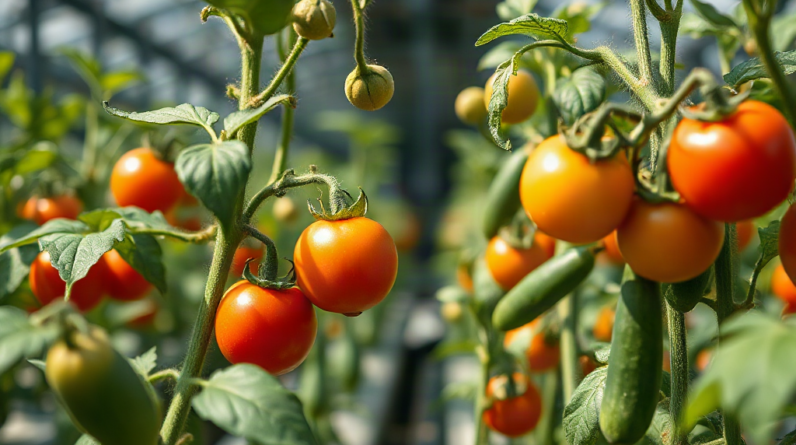
Fruiting crops usually deliver poor space efficiency on closely stacked shelves. Tomatoes, cucumbers, peppers, beans, and strawberries are not impossible to grow hydroponically, but their flowers, branching stems, pollination needs, fruit load, and longer occupancy create demands that compact greens do not. A dwarf label reduces size; it does not remove the need for adequate light, support, roots, and airflow.
Indeterminate tomatoes continue extending until pruned or stopped by conditions, making them unsuitable for a low fixed tier. Determinate or micro-dwarf varieties are more contained, yet their fruiting canopy still needs strong, well-distributed light. Cucumbers can be trained horizontally or upward, but leaves and vines soon cross neighboring sites. Moving these crops to a dedicated tall bay is generally more practical than forcing them beneath a short shelf.
Root vegetables also require careful interpretation. Radishes can work in supportive media with sufficient depth, but a narrow channel designed for lettuce may not hold the developing root properly. Carrots need suitable depth and uniform moisture around the storage root; foliage height is only part of their space requirement. Beets consume both root-zone volume and canopy width when grown to maturity. Growing any of these crops solely for edible leaves changes the decision.
Do not treat aggressive pruning as a universal solution. Pinching basil promotes useful branching, while repeatedly removing large portions of a fruiting plant can reduce the leaf area supporting flowers and fruit. Constant pruning also adds labor and creates more wounds. If containment requires weekly structural correction rather than normal harvest cuts, the crop and tier are poorly matched.
Run a small trial before committing the entire shelf. Grow two or three plants through the intended harvest stage, then measure their actual footprint and inspect roots, lower leaves, and neighboring light levels. A failed fit should lead to a shorter harvest stage, wider spacing, a genuinely smaller cultivar, or relocation to a taller system—not progressively harsher pruning. That trial protects the remaining sites from a crop whose mature behavior was unclear.
Frequently Asked Questions
Which hydroponic vegetables need the least vertical space?
Baby lettuce, arugula, dwarf bok choy, tatsoi, baby kale, and young mustard greens fit short tiers well when harvested before full maturity. Check cultivar dimensions because mature size varies within each crop.
How much clearance should remain above hydroponic plants?
Leave enough room for the mature canopy, the fixture’s specified lamp distance, airflow, and harvesting access. Calculate clearance from the top of the growing plug rather than from the shelf surface.
Can tomatoes grow in a low vertical hydroponic rack?
Most tomatoes need more height, root volume, light, and support than a low rack provides. Micro-dwarf varieties may fit a dedicated tier, but they should be trialed before occupying the whole shelf.
Is dense planting better when shelf space is limited?
Only when crops will be harvested young. Excess density in mature plants causes shading, restricted airflow, uneven growth, and difficult inspection, so spacing should follow the intended harvest stage.
Should different crops share one hydroponic reservoir?
Crops with similar nutrient, temperature, irrigation, and growth-rate needs are the easiest combination. Large fruiting plants and quick leafy greens often make poor reservoir partners because their demands diverge over time.
Conclusion
A productive short rack is designed around the usable crown-to-light distance, not its outside dimensions or number of planting holes. Measure the installed system, select cultivars by mature form and intended harvest stage, and favor low rosettes, upright tufts, baby greens, and herbs that recover predictably after cutting. Treat width, roots, airflow, and access as firm capacity limits alongside height.
Begin with a small set of compatible crops and record their actual spread, cycle length, and response to repeated harvests. If foliage continually touches the fixture, shades adjacent sites, or requires structural pruning, change the spacing or move that crop to a taller bay. A short trial with two or three plants will provide better decisions than filling every site from the outset.