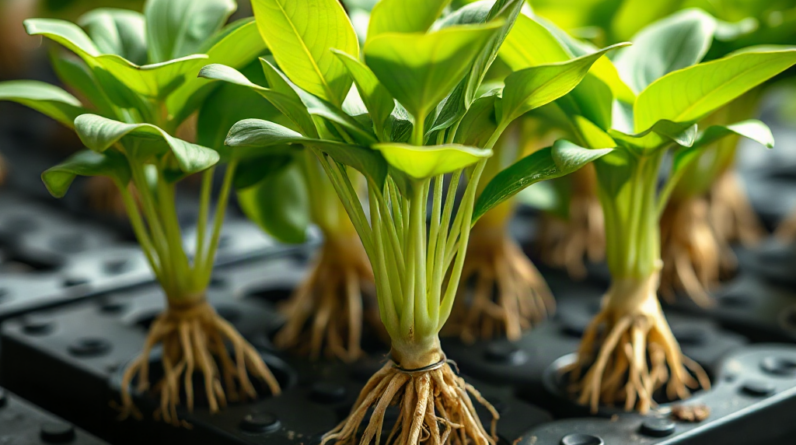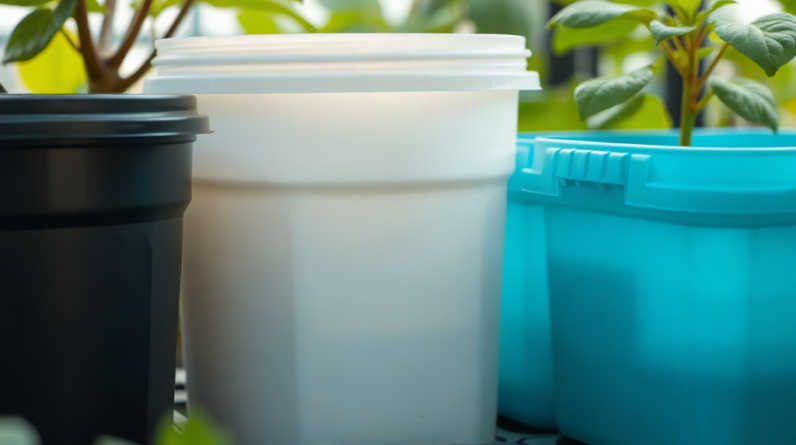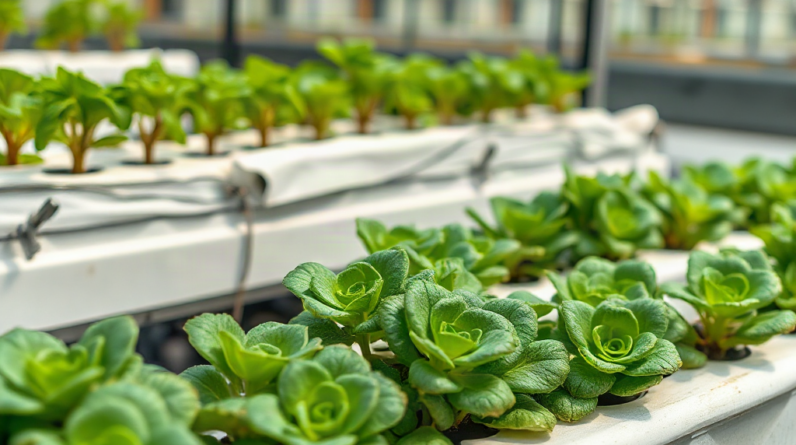
Label hydroponic reservoirs and plantings by assigning each reservoir a permanent ID and each crop group a linked planting ID, then recording the cultivar, sowing or transplant date, nutrient batch, and expected harvest window. Put water-resistant labels where they remain readable without opening lids or disturbing roots. Use the same identifiers in a paper log or digital record so pH, electrical conductivity, water changes, and crop observations can be traced to the correct unit. Avoid relying on crop names alone, because repeated varieties and staggered sowings quickly become indistinguishable. Replace damaged labels immediately, but retain the original ID throughout the crop cycle.
Build a Reservoir and Planting ID System
A useful labeling system separates the identity of the equipment from the identity of the crop. Reservoirs, channels, buckets, rafts, and trays may be reused for many cycles, while plantings change every few weeks or months. Giving both layers their own identifiers prevents a permanent reservoir label from becoming confused with a temporary crop label.
Keep reservoir IDs short and unique. A grower with three nutrient tanks might use R01, R02, and R03. If one tank serves a particular rack, the rack can carry a related but distinct code, such as RK02. Avoid labels such as “lettuce tank” or “herb reservoir.” The crop connected to a vessel may change, and an equipment name based on its current use soon becomes inaccurate.
Planting IDs should identify a specific sowing or transplant group rather than every individual plant. A compact code can combine a crop abbreviation, date, and sequence number. For example, BAS-260315-A could identify the first basil group started on March 15, 2026. Date formatting should remain consistent and unambiguous; year-month-day keeps records in chronological order and avoids confusion between month-day and day-month conventions.
The planting code should follow the crop through propagation, transplanting, and harvest. If BAS-260315-A moves from a seedling tray into net pots connected to R02, its ID remains unchanged. The record then states that the planting was assigned to R02 on the transplant date. Creating a new planting ID at every move breaks continuity and makes it harder to compare germination notes with later growth or harvest results.
For a small countertop unit, a plain-language approach may be enough: reservoir R01 and planting LET-260401-A. Larger installations benefit from location codes, but extra complexity should earn its place. A code containing room, rack, shelf, channel, crop, cultivar, and date may be difficult to copy accurately. Store changing details in the log rather than forcing all of them onto the physical tag.
A workable hierarchy usually includes:
- Permanent equipment ID: reservoir, rack, channel, or bucket number.
- Temporary planting ID: one seed lot or crop group started together.
- Location record: the current connection between that planting and the equipment.
Test the convention with two crops started on the same day and the same cultivar planted again a week later. If every group can be distinguished without inventing exceptions, the structure is sound. The central principle behind How to label hydroponic reservoirs and plantings is stable identity: equipment retains its code, and a crop retains its code even when its location changes.
Choose Label Materials That Survive a Wet Growing Area
Hydroponic labels must tolerate splashes, condensation, nutrient salts, cleaning, light exposure, and frequent handling. Ordinary paper and water-soluble ink often remain readable during setup but fail precisely when a grower needs historical identification. Material choice should match the expected crop duration and cleaning routine rather than the appearance of a fresh label.
Plastic plant tags written with an outdoor-rated paint marker are practical for net pots, rafts, and propagation trays. The writing should be allowed to cure before the tag enters a humid area. For reservoirs and racks, laminated labels or compatible synthetic label tape usually provide a cleaner permanent identifier. A clear overlay may protect handwriting, but it should not cover a surface that is still damp or contaminated with nutrient residue.
Adhesive labels need special attention. Condensation, curved containers, textured plastic, and repeated sanitation can loosen their edges. Before labeling, clean the application area using a method compatible with the reservoir material, let it dry fully, and place the label above routine splash lines. Do not position adhesive labels inside a nutrient reservoir or where loose fragments could enter pumps and irrigation lines.
Reusable options have tradeoffs. Grease pencils can write on some smooth plastics and tolerate moisture, but accidental rubbing may erase the record. Hook-and-loop tags or hanging tags are easy to move, yet a movable tag can be attached to the wrong vessel. Chalkboard-style labels may look convenient but are poorly suited to surfaces that are wiped or splashed. Permanent equipment codes should therefore be difficult to relocate, while temporary crop tags should be removable only when the crop is finished.
Color can support identification but should never carry the entire meaning. Green tape might denote leafy greens and blue tape might denote herbs, for example, but faded colors, low light, and color-vision differences can defeat the scheme. Print the actual alphanumeric ID on every colored marker. The text remains authoritative; color is only a visual shortcut.
Placement affects usability as much as durability. Put a reservoir ID on an outward-facing wall where it can be read while taking pH or electrical conductivity measurements. Add a second matching identifier near the lid or access point if hoses or surrounding plants can hide the main label. Crop tags should sit above foliage or at the end of a channel rather than inside the root zone. They must not block light, trap moisture against stems, or interfere with raft seating.
Before adopting a label stock throughout the garden, make a sample and expose it to normal conditions for a full maintenance interval. Wipe it using the same cleaning process used on the equipment. Smearing, curling, adhesive lift, or brittle plastic signals that the material is unsuitable. Replacing a failed test label is easier than reconstructing the identity of several mature plantings.
Record the Details Needed to Trace Each Crop
A physical label should identify the correct record, not attempt to hold the entire growing history. Small tags become unreadable when crowded with nutrient measurements, dates, and observations. Put the short ID and the few details needed for immediate recognition on the tag, then maintain changing information in a notebook, spreadsheet, or growing application.
A reservoir label normally needs its permanent ID and, where useful, its capacity or system connection. The linked log can hold the nutrient-mixing date, product or formula used, target settings, measured pH and electrical conductivity, water additions, complete solution changes, cleaning events, and unusual observations. Record actual readings rather than writing only “normal.” A later comparison requires values and dates.
A planting tag should show the planting ID, crop, cultivar, and sowing or transplant date, depending on which date drives the workflow. The companion record can include seed source or lot information when available, germination notes, propagation medium, transplant date, reservoir assignment, losses, harvest dates, and yield observations. Home growers do not need commercial paperwork, but preserving the cultivar and start date makes side-by-side comparisons far more useful.
Consider two basil batches sharing one rack. The first was transplanted earlier and came from a different seed packet, but both are labeled only “basil.” If leaf appearance changes, the grower cannot confidently connect the difference to age, seed source, location, or nutrient exposure. Distinct IDs allow observations to remain attached to the right group even if the net pots are later rearranged.
Record relationships explicitly. A useful entry might read: “BAS-260315-A assigned to R02, channels C03 and C04, on 2026-03-29.” If the planting moves, close the first location entry and add the new one rather than overwriting the old location. That preserves a timeline for diagnosing exposure to a pump interruption, nutrient imbalance, high solution temperature, or other system-specific event.
Paper and digital logs solve different problems. A waterproof notebook near the garden is quick during wet work and does not depend on a charged device. A spreadsheet is easier to search, duplicate, sort by date, and back up. Some growers use a simple hybrid: write readings on a reservoir sheet during the week, then transfer them into a digital file. The weak point is delayed transcription, so set a fixed transfer schedule and retain the original sheet until the digital entries are checked.
QR codes may link directly to a digital record, but they should supplement visible text rather than replace it. Condensation, damaged printing, poor lighting, or a missing phone can make a code temporarily inaccessible. Print the reservoir or planting ID beneath the code. Readers refining How to label hydroponic reservoirs and plantings should prioritize legibility and traceability before adding automation.
Place, Update, and Audit Labels During the Crop Cycle
Labels remain trustworthy only when maintenance is part of routine crop work. The best time to create a planting ID is when seeds are sown, not after several similar trays have germinated. Label the tray before moving to the next cultivar, then copy the same code onto replacement tags prepared for transplanting.
At transplant, verify three things together: the plant tag, the destination equipment ID, and the location entry in the log. Do not carry a tray to the growing area, distribute every seedling, and plan to reconstruct the arrangement afterward. Similar cultivars may be visually indistinguishable, and an interruption can leave half the positions undocumented. Moving and recording one defined group at a time reduces that risk.
Reservoir servicing creates another common failure point. A lid may be exchanged, a tank may be rolled to a cleaning area, or hoses may be reconnected in a different order. Permanent IDs belong on the reservoir body rather than solely on removable lids. If lids, pumps, or dosing lines also require identification, label those components separately and verify their assigned reservoir during reassembly.
Use a compact inspection sequence during each regular system check:
- Confirm that every active reservoir and crop group has a visible ID.
- Compare the physical location with the latest log entry.
- Check labels for fading, loosened adhesive, salt deposits, or hidden placement.
- Replace damaged media while copying the original identifier exactly.
- Mark harvested groups as closed rather than deleting their records.
Signs that the method is working are operational: a nutrient reading can be assigned to one reservoir without guessing, plants can be traced to their start date, and a replacement worker can distinguish adjacent batches. Warning signs include handwritten nicknames appearing in the log, two active groups sharing a code, tags moving independently of plants, or old labels remaining beside new crops. Those failures create false histories, which can be more misleading than having no record.
When a crop is harvested, remove its temporary tags and close the record with the final harvest or disposal date. Do not immediately reuse the planting ID. Unique historical IDs make it possible to compare later cycles without merging their notes. Permanent equipment codes remain in place after cleaning; only their maintenance record changes.
A monthly audit is usually sufficient for a small stable setup, while frequently replanted gardens should check labels at every sowing, transplant, reservoir service, and harvest. The goal is not clerical perfection. It is enough reliable continuity to connect a crop outcome with the correct planting history and nutrient environment. A concise convention followed consistently outperforms an elaborate database that users stop updating.
Frequently Asked Questions
What information should go directly on a hydroponic reservoir label?
Show a permanent reservoir ID and, if useful, its capacity or connected growing zone. Keep nutrient dates and changing measurements in the linked log so the physical label stays readable.
Should every hydroponic plant have its own label?
Usually not. Plants sown together from the same cultivar and managed as one group can share a planting ID. Label individuals only when comparing treatments, tracking parent plants, or recording plant-level results.
Can a QR code replace written plant labels?
A QR code is useful for opening detailed records, but visible text should remain underneath it. Moisture, glare, damage, or lack of device access can prevent scanning at the moment identification is needed.
Which date belongs on a planting tag?
Use the sowing date when crop age begins at seeding, and add the transplant date to the log. If purchased starts are used, display the transplant date and record any known supplier or age information separately.
How should old hydroponic labels be handled?
Remove temporary crop labels after harvest, close the corresponding record, and avoid reusing its ID. Leave permanent reservoir labels attached unless the equipment is retired or the entire ID convention is deliberately revised.
Conclusion
A dependable labeling method preserves the identity of equipment and crops without crowding every detail onto a small tag. Assign permanent codes to reservoirs and temporary unique codes to planting groups, then connect both through dated location and maintenance records. Choose label media only after testing it against condensation, nutrient splashes, light, and routine cleaning.
Begin by marking every active reservoir, then assign IDs to current plantings before adding new batches. Check those identifiers during sowing, transplanting, solution changes, and harvest rather than treating labeling as a separate occasional task. If a tag becomes unreadable or a crop moves, update the record immediately while the correct information is still known. Consistency, visible text, and an intact history provide more value than complicated codes or technology that cannot be maintained.