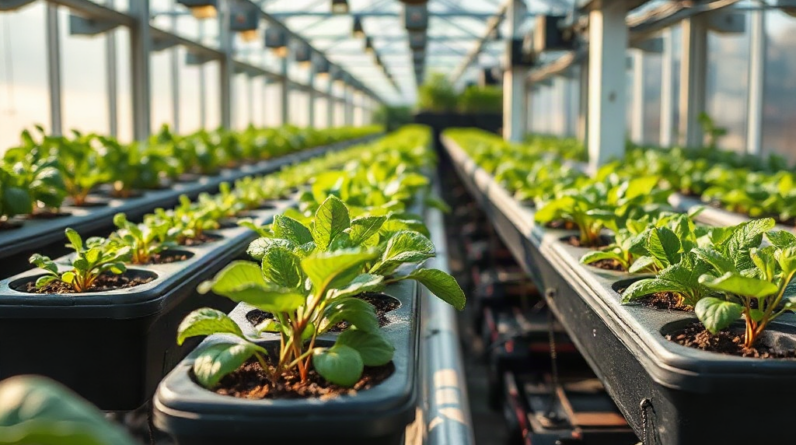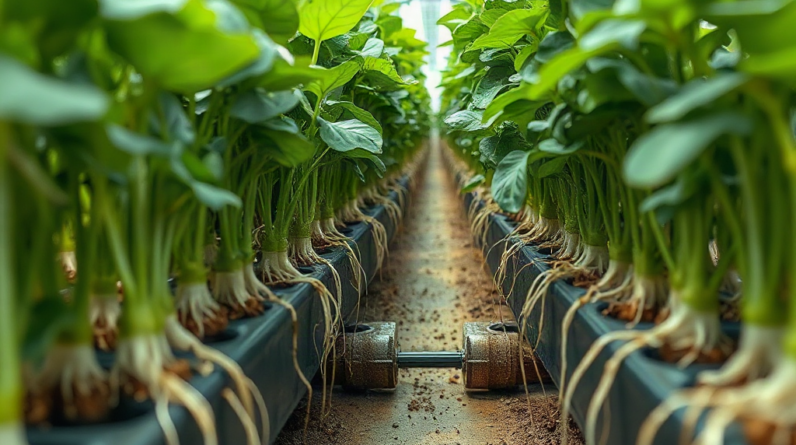
Deal with root competition in hydroponics by reducing plant density, matching crop size to the channel or container, and preserving an open path for oxygenated nutrient solution around each root mass. Inspect roots before foliage declines, then separate removable plants, prune only healthy roots when the system permits it, or harvest crowded crops early. Check return lines, emitters, dissolved oxygen, pH, and solution temperature because congestion can restrict circulation and create stagnant pockets. If mature roots repeatedly fill the available space, redesign the layout rather than relying on frequent cutting, which can stress plants and spread disease through shared water.
Recognize Root Competition Before Growth Slows
Root competition becomes harmful when neighboring root systems occupy enough of the same physical space to interfere with circulation, oxygen exposure, or access to a reasonably uniform nutrient solution. Roots touching or intertwining are not automatically a problem. A productive raft bed may contain overlapping roots while maintaining good growth because water moves beneath the plants and aeration remains adequate. Trouble begins when the combined root mass exceeds what the channel, bucket, pipe, or reservoir can support.
Inspect the root path rather than judging crowding from the canopy alone. In nutrient film technique channels, dense roots can flatten across the floor, raise the solution depth behind them, and leave downstream plants with weaker flow. In recirculating deep-water culture, roots may enter connecting pipes and reduce circulation between buckets. In drip systems, several plants sharing a small slab or container can consume water at different rates while their roots compress the available air spaces.
Early physical signs include roots wrapping tightly around adjacent net pots, a thick mat spanning a return outlet, uneven water levels, slower drainage, or emitters surrounded by roots. Plant symptoms may include one plant outgrowing its neighbor, midday wilting despite an adequate reservoir, uneven nutrient stress within the same run, or a downstream decline that follows the direction of flow. These symptoms are not proof by themselves. A failing pump, blocked emitter, warm solution, incorrect pH, or root disease can produce a similar pattern.
Use a simple comparison to separate crowding from a system-wide issue. Compare plants of the same type and age at the inlet, middle, and outlet. Check whether solution movement changes when the root mat is gently lifted away from the channel floor or plumbing opening. Examine roots for color, firmness, and odor. Healthy roots are generally firm and crop-appropriate in color; tan staining can come from nutrients, while slimy tissue and an unpleasant odor point toward root damage rather than ordinary competition.
A common mistake is assuming that raising nutrient strength compensates for more plants. Extra fertilizer does not create root space or restore oxygen to a stagnant section. It may increase osmotic stress or push the solution outside the crop’s suitable range. When evaluating how to deal with root competition in hydroponics, prioritize physical obstruction, flow consistency, and root condition before changing the nutrient formula.
Reduce Crowding Without Damaging the Crop
Corrective action should remove the smallest amount of plant material needed to restore space and circulation. The safest option depends on crop age and system design. Young plants in separate net pots can often be moved before their roots become extensively entangled. Mature plants with interwoven roots are harder to separate; pulling one out may strip healthy tissue from several neighbors and release debris into the circulating solution.
Begin by identifying plants that can be harvested, transplanted, or removed with the least disruption. In a channel of leafy greens, harvesting every second mature head may immediately open the root path and improve light distribution. In a bucket system holding fruiting crops, moving an established tomato or cucumber is rarely practical. The better short-term choice may be removing a weaker companion plant and protecting the stronger root system from disturbance.
Root pruning is a limited corrective tool, not a substitute for adequate capacity. It is most suitable when healthy roots are entering a drain, pump intake, or connecting pipe and a small trim can preserve water movement. Use clean, sharp tools, stop circulation if needed to keep cut fragments out of the system, and remove only the obstructing portion. Avoid cutting close to the crown or removing a large share of the root system at once. Plants with soft, discolored, or foul-smelling roots should not be treated as a routine pruning case because cutting can distribute damaged material through shared water.
A practical correction sequence is:
- Map the obstruction: locate the point where roots alter flow, drainage, or access to an outlet.
- Choose the least disruptive removal: harvest a ready plant, relocate a young one, or trim only the roots entering hardware.
- Capture loose material: keep fragments away from pumps, emitters, and downstream channels.
- Restore and verify circulation: confirm that water levels and return flow normalize before leaving the system unattended.
- Watch the crop: check for wilting, leakage, renewed blockage, or deteriorating roots over the following days.
Do not aggressively comb apart a mature root mat merely to make it look tidy. Fine feeder roots are easily torn, and the temporary loss of uptake can be more damaging than the original overlap. Success is shown by stable plants, unobstructed plumbing, and even flow—not by complete separation of every root system.
Keep Water, Nutrients, and Oxygen Moving
Circulation determines whether shared root space remains productive or turns into a low-oxygen bottleneck. A dense root mass slows water locally and creates pockets where oxygen is consumed faster than it is replenished. Warm solution holds less dissolved oxygen than cool solution, while decaying root fragments add biological demand. Crowding therefore becomes more consequential when solution temperature is elevated, aeration is marginal, or the pump already operates near its practical limit.
Check flow at the point of use, not only at the pump. A pump may sound normal while a root-filled return line restricts actual circulation. Observe the depth and speed of solution in each channel, compare bucket water levels, and inspect accessible manifolds, drains, and screens. If flow falls again soon after roots are cleared, the plumbing diameter or layout is probably undersized for the crop’s mature root volume.
Aeration can provide a buffer, but it cannot correct a solid blockage. Adding an air stone to a reservoir may improve oxygenation of the bulk solution, yet water still needs to reach roots trapped in a stagnant channel section. In deep-water systems, place aeration so bubbles and water movement serve the occupied root zone rather than one empty corner. Keep air pumps outside humid splash zones and use equipment appropriate for the reservoir arrangement.
Nutrient monitoring should focus on stability and distribution. Record pH and electrical conductivity at consistent times, but interpret them alongside reservoir level and plant demand. A crowded crop can lower the water level quickly, concentrating dissolved salts even when the plants are not receiving balanced access. Topping up or adjusting the reservoir without fixing uneven delivery can make the readings look acceptable while downstream roots remain underserved.
For a concrete test, consider an NFT channel where plants nearest the inlet look vigorous but those at the outlet wilt in the afternoon. Before increasing pump output, lift the accessible root mat and inspect the outlet. If normal drainage returns, remove only roots blocking the exit and install a removable guard that does not dam the channel. If the entire channel is tightly packed, reducing plant count is safer than forcing deeper flow, which can submerge more root tissue and reduce air exposure.
The useful operating target is consistent delivery with enough open area for return water and gas exchange. Guidance on how to deal with root competition in hydroponics should therefore connect root density to hydraulic performance rather than treating spacing as a purely visual concern.
Redesign the System for Mature Root Volume
Repeated congestion signals a design mismatch between mature plants and available root space. Seedling spacing can look generous during installation, then become inadequate once roots extend through net pots and follow the moving solution. Plan around harvest-size root systems, crop duration, and plumbing access rather than the canopy size on transplant day.
Short-cycle leafy greens can be planted relatively close when they are harvested on schedule and channels remain serviceable. Fruiting crops such as tomatoes, cucumbers, and peppers occupy the system much longer and develop larger root masses. They generally need individual sites with greater solution volume, stronger structural support, and plumbing that can be inspected without lifting the plant. Mixing a fast leafy crop and a long-lived fruiting crop in one narrow run also complicates spacing, nutrient management, and harvest timing.
Match the correction to the recurring failure. Wider channels provide more lateral room but require attention to even solution distribution. Larger buckets increase root volume but consume floor space and solution. Bigger connecting pipes resist blockage longer, although fittings and seals may cost more. Separate reservoirs isolate root problems and allow crop-specific management, but they add pumps, monitoring points, and maintenance. No single upgrade replaces routine inspection.
Access is part of capacity. Use removable lids, reachable drains, guarded pump intakes, and connections that can be opened without cutting established roots or dismantling the whole crop. Avoid fine screens directly in the root path; they may catch fragments but can clog quickly and create a new restriction. A coarse, serviceable guard positioned where it can be cleaned is more useful than an inaccessible barrier.
Before the next planting, review four decisions: the expected harvest date, the number of plants sharing each flow path, the narrowest plumbing opening, and how roots will be removed at crop turnover. Staggered planting can reduce the moment when every plant reaches maximum root volume, but it may also make sanitation harder because old and young crops remain connected. Batch planting creates a larger peak demand, yet it allows complete cleaning between cycles.
The common design mistake is counting planting holes as capacity. A lid may accept six net pots even though the reservoir and return line can support only four mature plants of the chosen crop. Treat unused holes as optional positions, not an instruction to fill every site. Long-term control comes from aligning plant count, crop duration, water movement, and maintenance access.
Frequently Asked Questions
Can hydroponic roots touch each other safely?
Yes. Contact and some intertwining are normal in shared channels or reservoirs. Intervention is warranted when roots restrict water movement, enter plumbing, crowd a small container, or contribute to uneven plant performance.
Is it safe to trim hydroponic roots?
Small, targeted cuts to healthy roots obstructing equipment may be tolerated, but heavy pruning can reduce water uptake and stress the plant. Use clean tools, remove debris, and avoid pruning roots that already appear diseased.
Does a larger reservoir stop root competition?
A larger reservoir improves solution volume and stability, but it will not fix narrow channels, crowded planting sites, blocked return lines, or poor circulation around the roots.
Should crowded hydroponic plants receive stronger nutrients?
No. Higher nutrient concentration does not replace physical root space or oxygen. Verify flow, reservoir level, pH, electrical conductivity, and root condition before changing the feed strength.
How can root blockage be prevented between inspections?
Use crop-appropriate spacing, accessible plumbing, removable coarse guards, and a predictable inspection schedule. Check outlets and connecting pipes more often as long-duration crops approach maturity.
Conclusion
Healthy roots may overlap, so the decision to intervene should rest on circulation, oxygen availability, plant performance, and access to plumbing rather than appearance alone. Inspect the narrowest points first: channel outlets, bucket connections, emitters, drains, and pump intakes. Harvest or relocate plants when that can be done cleanly, and reserve root pruning for limited obstructions involving otherwise healthy tissue.
If congestion returns during each crop cycle, change the layout. Reduce the number of mature plants sharing a flow path, enlarge the limiting container or connection, and make root removal possible without dismantling the system. Record when blockage begins relative to planting and harvest dates; that timing reveals whether earlier harvest, wider spacing, or greater hydraulic capacity is the most practical next step.
Further Reading
Authoritative Sources
- How to counter root rot in hydroponic systems
verticalfarmdaily.comInfected plants may have stunted growth and reduced fruit production, and it's possible the infection will kill plants that are stressed or not ...
- How to Hydroponics: All the Different Types of Systems ...
franshydroponics.com.auThe flooding process helps stop salt buildup and helps achieve uniform root pH and EC. The flooding action purges stale oxygen from the roots ...
- Hydroponic Gardening: Common Mistakes and Avoid Them
hgshydro.comOverwatering can lead to root rot and stunted plant growth in a hydroponic garden. Tips for proper watering include monitoring the moisture ...
- Troubleshooting Common Issues in Hydroponics
kryzen.comWe will explore the causes, symptoms, and prevention strategies for root diseases, including proper sanitation, maintaining oxygenation, and using beneficial ...