Improve crop resilience in hydroponic systems by stabilizing the root zone before trying to accelerate growth: maintain crop-appropriate nutrient strength and pH, protect dissolved oxygen, control solution temperature, and prevent abrupt environmental changes. Track reservoir level, electrical conductivity, pH, water temperature, flow, and plant appearance as trends rather than isolated readings. Build redundancy into pumps, aeration, power, and water supplies so a single failure does not immediately deprive roots of oxygen or moisture. When stress appears, correct the limiting condition gradually, remove damaged tissue only when necessary, and restore steady root function before increasing light or nutrient concentration.
Stabilize the Root-Zone Environment
Root-zone stability determines how well a hydroponic crop tolerates heat, equipment interruptions, nutrient changes, and short periods of unfavorable weather. Roots need a dependable combination of moisture, oxygen, suitable temperature, and nutrient availability. A plant may look healthy above the canopy while oxygen loss or temperature stress is already reducing root function below it.
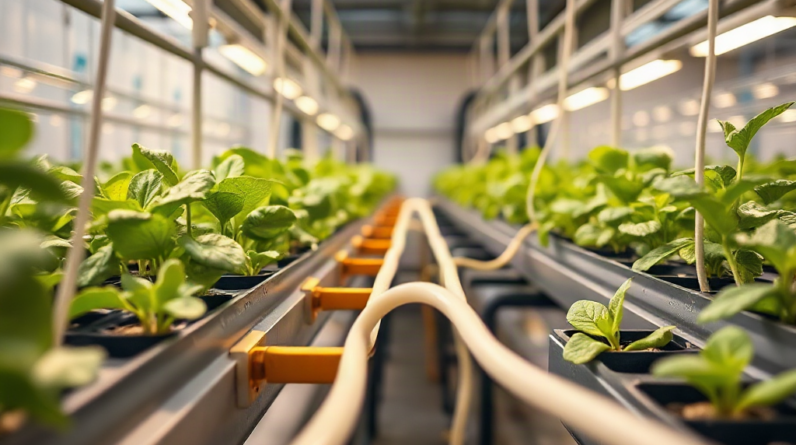
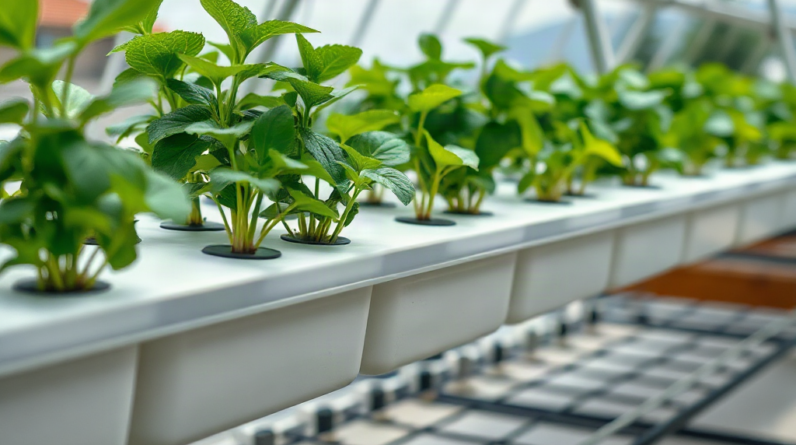
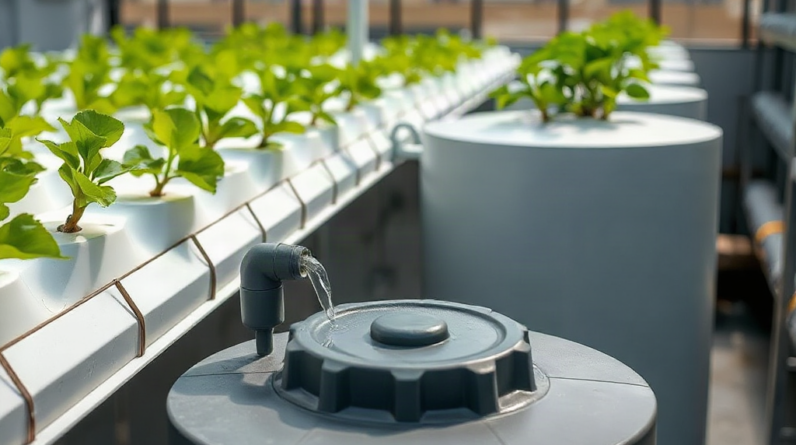
Dissolved oxygen deserves particular attention because roots consume oxygen during respiration. Warm nutrient solution generally holds less oxygen, while larger plants and root-associated microorganisms increase demand. In deep-water culture, weak aeration can therefore become dangerous during warm conditions even if it appeared adequate when plants were small. In nutrient film technique, oxygen may remain available around the thin solution film, but a stopped pump can leave roots without sufficient moisture surprisingly quickly.
Check solution temperature at the warmest part of the day and inspect roots without relying on color alone. Healthy roots are typically firm and well branched, but nutrient staining can make them darker without indicating decay. Sloughing tissue, unpleasant odor, reduced water uptake, and wilting despite a wet root zone are more useful warning signs. Air stones should produce vigorous, well-distributed movement rather than bubbles concentrated in one corner. Channels and return lines should deliver consistent flow without pooling or leaving distant plants under-supplied.
Correct unstable conditions without causing a second shock. If a reservoir is too warm, reduce heat gain with shading, insulation, cooler room air, or controlled chilling rather than repeatedly adding ice of uncertain cleanliness. If flow is weak, inspect filters, roots, emitters, tubing, and pump intake before installing a larger pump. Excessive flow can disturb young roots, create leaks, and shorten contact time in some layouts.
A useful root-zone check covers four priorities:
- Moisture: Verify that every plant receives solution, including the farthest site.
- Oxygen: Confirm aeration or solution movement under peak crop demand.
- Temperature: Measure the solution itself, not just room air.
- Sanitation: Remove dead roots and accumulated debris without damaging healthy tissue.
The common mistake is chasing ideal numbers while overlooking variation within the installation. A single reservoir reading cannot reveal a pinched line, blocked channel, or poorly aerated corner. Improving how to improve crop resilience in hydroponic systems begins with checking what roots actually experience at multiple plant sites.
Match Nutrition to Water Quality and Crop Demand
Reliable nutrition comes from controlling concentration and balance while accounting for the source water. Electrical conductivity indicates the total concentration of dissolved ions, but it does not identify which nutrients are present. Two reservoirs can show the same conductivity while having very different nutrient balance, especially after repeated topping up or when the water supply contributes substantial minerals.
Begin with a water test when source-water quality is uncertain or inconsistent. High alkalinity can cause pH to rise repeatedly, while water containing appreciable calcium, magnesium, sodium, or chloride changes how a fertilizer formula behaves. Reverse-osmosis water offers greater control but adds equipment cost, maintenance, reject water, and a need to rebuild mineral content deliberately. Acceptable tap water is often simpler for a small garden if its characteristics are known and stable.
Measure pH and conductivity at a consistent time, record the reservoir volume, and interpret the readings together. If water level falls while conductivity rises, plants may be taking up proportionally more water than nutrients. If both water level and conductivity fall, nutrient uptake may be comparatively strong. A stable conductivity reading is not proof that the formula remains balanced because plants do not absorb every ion at the same rate.
For example, aggressively increasing fertilizer concentration during hot weather can compound stress. Transpiration may rise, yet root function may be constrained by warm solution and reduced oxygen. A stronger solution increases osmotic pressure, making water acquisition more difficult precisely when the canopy needs it. A moderate, crop-appropriate concentration with stable delivery is usually safer than pushing feed strength in response to pale or slow growth without diagnosing the cause.
Reservoir correction also requires restraint. Adjust pH in small increments, allow the solution to circulate, and measure again before adding more. Never combine concentrated stock solutions directly unless the formulation specifically permits it; highly concentrated calcium and phosphate or sulfate sources can precipitate and become unavailable. Calibrate meters with appropriate standards, rinse probes, and replace or service them when readings drift or respond slowly.
Complete solution replacement may be preferable to endless correction when nutrient balance is unknown, contamination is suspected, or accumulated additions have made the reservoir difficult to interpret. Topping up is economical and convenient, but it can conceal selective ion buildup. The practical aim is not a perfectly fixed reading every minute. It is a controlled range, a known water source, and changes small enough that roots and shoots can adjust without abrupt stress.
Reduce Environmental and Biological Stress
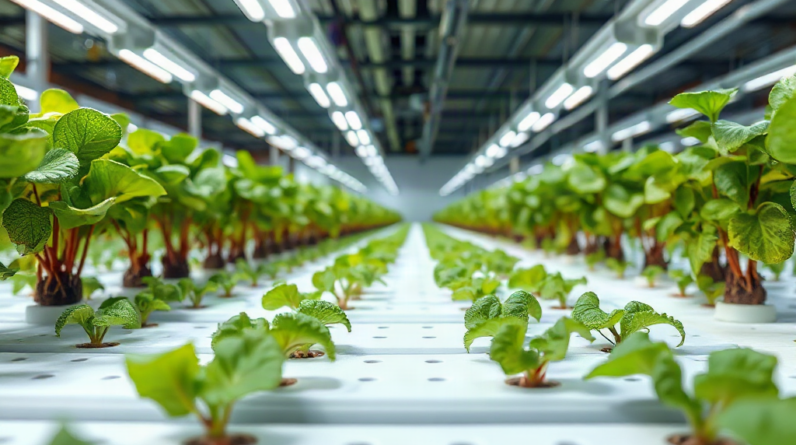
Canopy conditions should change slowly enough for plants to regulate water loss and maintain photosynthesis. Light intensity, air temperature, humidity, and airflow interact: changing one alters the effect of the others. High light under suitable root and climate conditions can support growth, but the same light becomes stressful when roots are warm, flow is restricted, or humidity and airflow cause excessive water loss.
Use leaf response and environmental measurements together. Upward leaf-edge curling, midday wilt, bleaching near fixtures, or dry margins can indicate excessive light or transpiration, but they are not diagnoses by themselves. Similar symptoms can result from root damage or high nutrient concentration. Compare affected plants by location. Damage concentrated beneath a fixture suggests a different cause from symptoms beginning at the end of an irrigation line.
Young plants need gradual acclimation after propagation or transplanting. Moving tender seedlings directly under full production lighting increases water demand before roots occupy the new growing site. Reduce initial intensity or increase fixture distance where the equipment allows, then raise exposure in measured stages as roots establish. Mature plants can tolerate more demand, but dense foliage may create humid, stagnant pockets even when room-level readings appear acceptable.
Air movement should gently move foliage rather than continuously buffet it. Strong airflow directed at one row may produce localized drying and distorted growth, while weak circulation encourages condensation and uneven canopy temperatures. Plant spacing matters as much as fan capacity. Pruning or repositioning leaves can improve circulation, but removing too much healthy foliage reduces photosynthetic area and creates wounds.
Biological resilience depends heavily on exclusion and early detection. Inspect incoming seedlings, tools, growing media, and nearby houseplants before they enter the production area. Examine leaf undersides and growing points because early pest populations may be localized. Remove plant debris promptly, keep floors and reservoir covers clean, and prevent light from entering nutrient solution where algae can develop. Algae competes for resources, obstructs components, and creates organic material that complicates sanitation.
Sterile and biologically managed root zones are different operating choices. Sanitizing systems seek to limit microbial load through clean equipment and controlled inputs. Biological approaches deliberately use compatible microorganisms and require conditions that sustain them. Combining disinfectants with microbial products can defeat the intended biological program. Growers researching how to improve crop resilience in hydroponic systems should choose a coherent method rather than switching reactively between incompatible treatments.
Build Monitoring, Redundancy, and Recovery Procedures
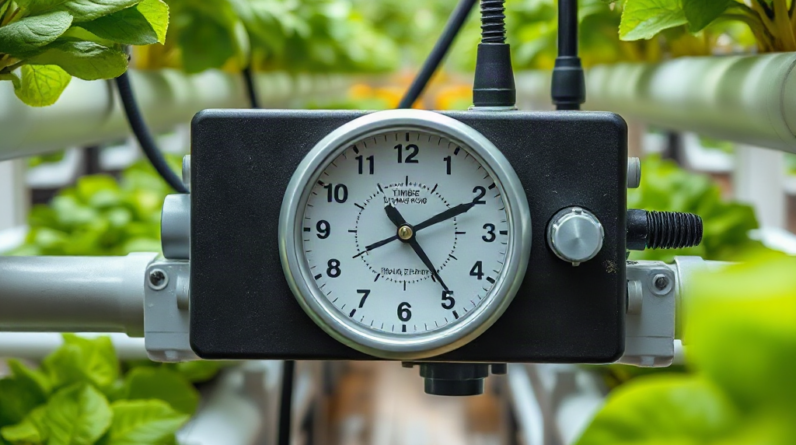
Resilient installations detect drift early and continue protecting roots when a component fails. Automation can improve consistency, but an alarm or controller is not redundancy if it depends on the same outlet, sensor, pump, or network connection as the equipment it monitors. Map each critical dependency, including electricity, water, aeration, circulation, drainage, dosing, and communication.
Start with a simple operating log. Record pH, conductivity, reservoir level, solution temperature, room conditions, additions, crop stage, and visible symptoms. The value comes from patterns. A pH change after every refill may point to source-water alkalinity, while a sudden conductivity change with no recorded addition may indicate a faulty meter, dosing error, leak, or unexpected water loss. Logs also prevent multiple people from correcting the same issue twice.
Set inspection frequency according to failure speed. Deep-water roots may have some moisture continuity during a circulation problem if aeration remains active, whereas a small nutrient-film channel can dry rapidly after pump failure. Drip-grown plants in moisture-retentive media often provide a longer response window than bare-root systems, but blocked emitters can affect individual plants without changing the reservoir reading. Faster consequences justify more frequent checks and stronger alarms.
Useful safeguards include a spare compatible pump, independent aeration, clean backup water, replacement tubing and emitters, battery-powered alerts, and a written manual-watering method. A generator or battery system may be justified where outages are frequent, but its useful runtime must be tested under the actual load. Prioritize root survival equipment over lighting during a short emergency; maintaining oxygen and moisture generally has more immediate value than preserving full light output.
When plants show stress, use a controlled recovery sequence:
- Confirm whether delivery, aeration, temperature, pH, or concentration is outside its normal range.
- Verify suspicious readings with a calibrated instrument or second measurement.
- Restore moisture and oxygen first when roots are at immediate risk.
- Correct chemistry gradually or replace the solution when its composition is no longer trustworthy.
- Reduce canopy demand temporarily if root function remains impaired, then restore normal conditions in stages.
Signs of recovery include renewed water uptake, firm new roots, stable readings, and healthy new growth. Old leaf damage usually will not reverse, so judge progress at growing points rather than waiting for injured tissue to look normal. Continued wilting, worsening odor, spreading root breakdown, or repeated meter drift indicates that the cause remains unresolved. The most damaging response is making several large changes at once; that obscures cause and effect and can turn a manageable fault into compounded stress.
Frequently Asked Questions
Which measurement should be checked first when hydroponic plants suddenly wilt?
Confirm solution delivery and root-zone moisture first, then check aeration, solution temperature, electrical conductivity, and pH. Wilting with a full reservoir can still result from a stopped pump, blocked line, warm solution, or damaged roots.
Does stronger nutrient solution make crops more resistant to stress?
No. Excessive concentration can make water uptake harder and may injure roots. Use a range suited to the crop and growth stage, and diagnose light, temperature, oxygen, and delivery problems before increasing fertilizer strength.
How often should a hydroponic reservoir be completely replaced?
Replacement timing depends on reservoir size, crop demand, water quality, and nutrient management. Replace it when balance is uncertain, contamination is suspected, corrections become excessive, or the crop repeatedly develops unexplained nutrient symptoms.
What is the most useful backup for a hydroponic power outage?
Protect root moisture and oxygen first. Depending on the design, that may mean battery aeration, backup circulation, a generator, or a manual watering procedure. Test the backup under realistic load rather than assuming its rated runtime is sufficient.
Can stressed hydroponic plants recover completely?
Plants may resume healthy growth when the cause is corrected before severe root or growing-point damage occurs. Evaluate new roots and leaves; existing burns, dead margins, and bleached tissue generally remain visible even after recovery.
Conclusion
Crop resilience is built through stable operating ranges, early detection, and a recovery plan that protects roots before yield-focused settings. Check conditions at individual plant sites, not only at the reservoir, and interpret pH, conductivity, temperature, water use, and plant appearance as connected signals. Match nutrient management to source-water chemistry, introduce environmental changes gradually, and keep sanitation practices compatible with the chosen root-zone approach. Next, document the system’s fastest failure points and test backups for circulation, aeration, and manual watering. A short trial under controlled conditions will reveal weak alarms, undersized backup power, inaccessible valves, and missing spare parts before an actual interruption puts the crop at risk.