Comparing hydroponic farming advantages and disadvantages shows a clear tradeoff: growers gain precise nutrient delivery, recirculated water, compact production, and protection from soil-borne problems, but accept higher startup costs, energy dependence, technical monitoring, and rapid system-wide failure risks. Hydroponics is especially useful where land or water is constrained and high-value crops can justify the infrastructure. It is less compelling where electricity is unreliable, skilled labor is scarce, or inexpensive soil production already works well. A sound decision should compare total operating costs, marketable yield, crop suitability, water quality, backup capacity, and access to replacement equipment rather than treating yield alone as proof of profitability.
Where Hydroponics Has a Production Advantage
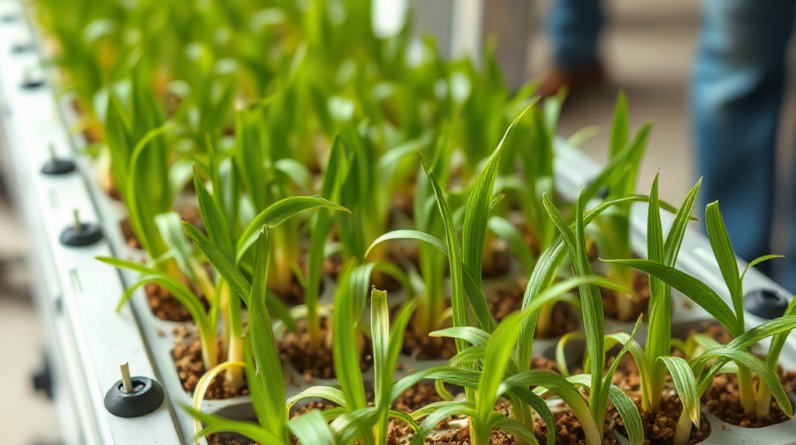
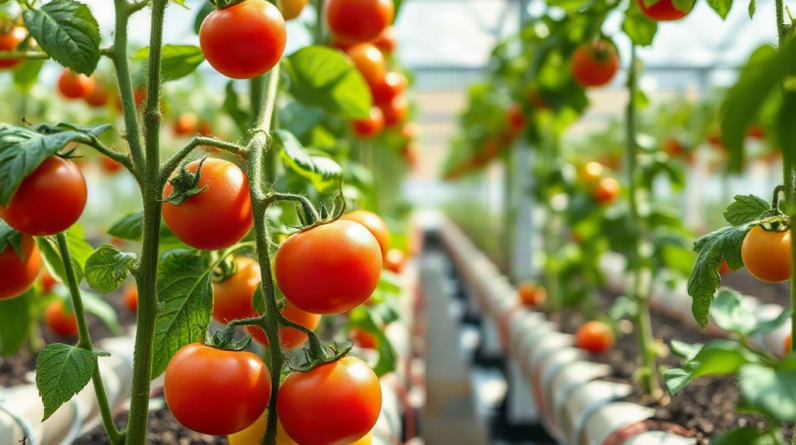
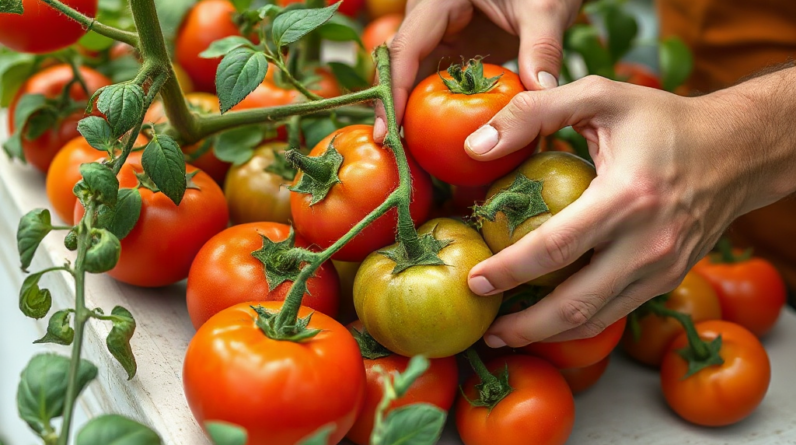
Hydroponic production gives the grower unusually direct control over the root zone. Water, dissolved mineral nutrients, oxygen, and acidity can be adjusted without waiting for soil conditions to change. That control is valuable for leafy greens, culinary herbs, tomatoes, cucumbers, and other crops whose quality and growth can respond quickly to consistent root-zone conditions.
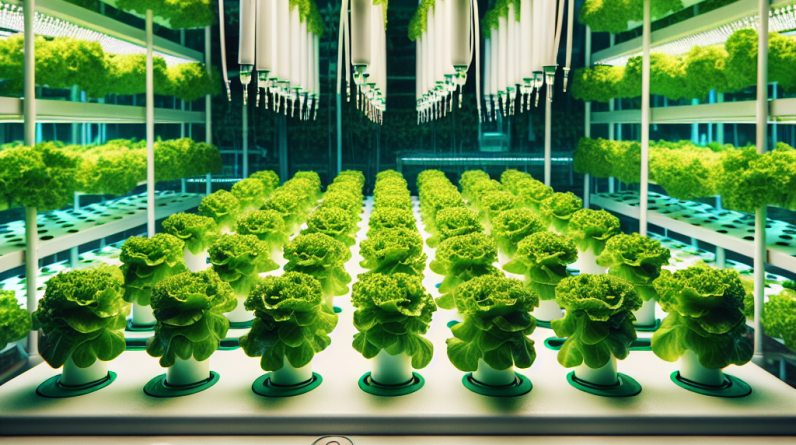
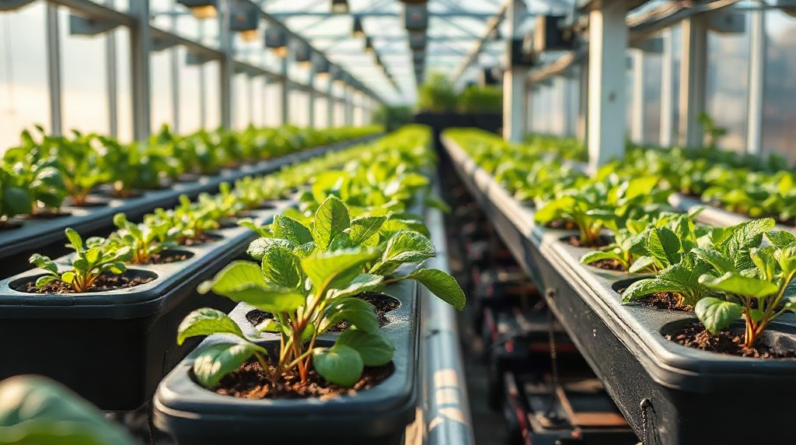
Recirculating systems can capture and reuse nutrient solution instead of allowing each irrigation event to drain beyond the roots. Production can also be placed in greenhouses, converted buildings, or urban locations where fertile land is unavailable. Vertical arrangements increase the number of plants occupying a given floor area, although stacking plants does not remove their need for adequate light, airflow, and working space.
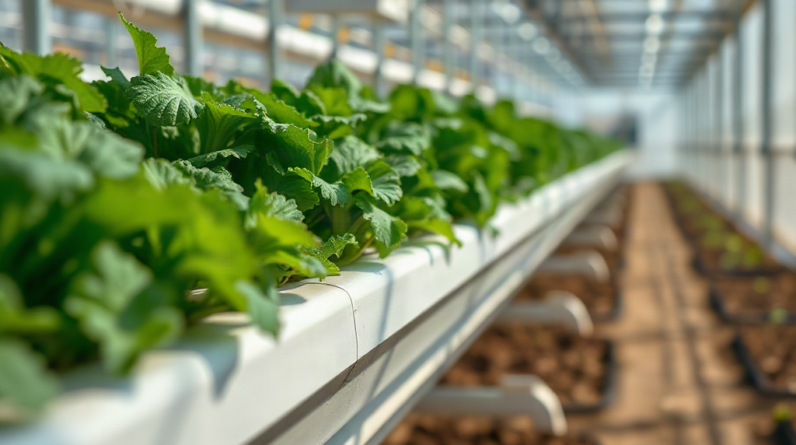
Consistency is another practical advantage. A lettuce operation can use standardized channels, transplant sizes, nutrient targets, and harvest schedules across repeated production cycles. Compared with field soil, the root environment is less affected by compaction, variable fertility, weeds, or soil-borne pathogens already present at a site. Cleaner root-zone management may reduce some problems, but it does not make the crop pest- or disease-free. Aphids, thrips, powdery mildew, root pathogens, and sanitation failures can still disrupt production.
The strongest production benefit is therefore control, not automatic yield. A well-managed system may produce uniform crops and frequent harvests, while a poorly balanced system can expose every plant to the same nutrient or irrigation error. Anyone reviewing Hydroponic farming advantages and disadvantages compared should distinguish the potential created by equipment from the results achieved by daily management.
A common misconception is that hydroponics makes climate irrelevant. Root-zone precision cannot compensate indefinitely for excessive heat, inadequate light, weak pollination, or high humidity. Indoor farms may address those constraints with lighting and climate equipment, but that adds operating expense. Greenhouses use sunlight more directly, yet weather still affects temperature, humidity, and seasonal output. The production advantage becomes meaningful only when the entire growing environment supports the crop.
Capital, Energy, and Labor Disadvantages
Hydroponic farms usually place more financial risk into infrastructure before the first sale. Reservoirs, pumps, plumbing, growing channels or containers, water-treatment equipment, environmental controls, sensors, and backup components all carry acquisition and installation costs. A protected structure or indoor room adds another layer of expense. Soil farming may require substantial machinery and land investment, but a simple field or market-garden plot can often begin with fewer interconnected components.
Operating costs deserve as much attention as the purchase price. Pumps consume electricity, while indoor lighting and cooling can become major expenses. Greenhouses may need ventilation, heating, evaporative cooling, or dehumidification according to local weather. Nutrient concentrates, filters, testing supplies, replacement emitters, growing media, sanitation materials, and packaging must also be included in the cost of each crop cycle.
Labor does not disappear; it changes form. Hydroponic operations reduce tasks such as weeding and soil cultivation but add solution testing, equipment inspection, reservoir cleaning, transplant handling, leak detection, and preventive maintenance. Workers must recognize when a drifting pH reading reflects a genuine chemical change and when it signals a dirty or poorly calibrated instrument. Technical errors can be expensive because they affect many plants at once.
For example, a small greenhouse selling basil directly to restaurants may justify close monitoring and protected production because freshness and regular delivery command value. The same equipment may be difficult to justify for a low-margin commodity sold into a distant wholesale market. A projected high yield per square foot does not guarantee an acceptable return if electricity, labor, crop losses, and distribution absorb the revenue.
Before investing, build a crop-cycle budget rather than relying on an equipment quote. Include expected plant losses, seasonal price changes, downtime between crops, loan costs where applicable, and replacement intervals for pumps and lamps. Stress-test the budget against a weaker selling price or a utility increase. A proposal that works only under perfect yields and premium prices has little resilience. The usual mistake is comparing hydroponic output with soil output while excluding the cost of maintaining the controlled environment that enables it.
Water Efficiency, Inputs, and Environmental Tradeoffs
Hydroponics can use water efficiently when drainage is collected, measured, treated as needed, and returned to the crop. Water is delivered directly to the roots, and covered reservoirs or channels can limit evaporation. This makes recirculating production attractive in water-constrained locations, provided the source water is suitable and the system has disciplined leak control.
Water efficiency is not the same as low environmental impact. The full comparison must include electricity sources, heating and cooling loads, fertilizer production, replacement plastics, growing media, and disposal of spent nutrient solution. A sunlit greenhouse with modest pumping requirements has a different resource profile from a sealed vertical farm relying on electric lighting throughout the crop cycle. Neither can be judged from water consumption alone.
Source-water chemistry can also weaken the apparent advantage. Water containing high alkalinity or unwanted salts may require acid adjustment, filtration, blending, or reverse osmosis. Treatment may create a concentrated waste stream and increase both water and energy use. In contrast, clean source water simplifies nutrient preparation and extends the useful life of recirculated solution. Testing the water before choosing equipment is more reliable than assuming any municipal or well supply will work.
Nutrient management requires similar care. Plants may remove individual elements at different rates, so topping up a reservoir based only on electrical conductivity can allow the nutrient balance to drift. Periodic replacement may be necessary, but dumping concentrated solution onto soil or into storm drains can waste fertilizer and create pollution concerns. Disposal should follow applicable local requirements and account for the solution’s nutrient and salt content.
A practical resource assessment should examine four linked questions:
- Water: Is the supply clean enough to recirculate without costly treatment?
- Energy: Which loads are continuous, seasonal, or vulnerable to price increases?
- Materials: Can channels, containers, and media be cleaned, reused, or responsibly replaced?
- Discharge: Where will old solution and sanitation water go?
The mistake to avoid is using “soil-free” as a synonym for sustainable. A more credible comparison measures resources per unit of marketable produce and includes rejected crops, climate control, and transport. Local hydroponic production may reduce travel distance in one project, while another may use more energy than seasonal field production. Site conditions determine which advantage matters most.
Crop Health and System-Wide Failure Risks
Hydroponic crops can avoid weeds and many soil-related constraints, but their roots depend continuously on engineered water, nutrient, and oxygen delivery. That dependence compresses the response time available when equipment fails. A blocked dripper, stopped pump, depleted reservoir, or incorrect concentrate can cause damage faster than many soil systems, where stored moisture and nutrients provide some buffering.
System design changes the nature of the risk. Deep-water roots may retain access to solution during a short pump interruption, although dissolved oxygen can decline. Nutrient-film channels can dry quickly if flow stops. Substrate systems may provide temporary moisture storage, with the buffer depending on the medium, container volume, plant size, and weather. Selecting a design therefore requires asking how long the crop can tolerate an outage, not merely which design has the highest advertised production capacity.
Recirculation creates another tradeoff. Sharing water conserves inputs, but it can distribute root pathogens, chemical contamination, or an incorrect nutrient mixture throughout the farm. Sanitation, tank covers, clean transplant material, temperature management, and prompt removal of diseased roots reduce exposure. Sterilizing equipment between crops is more effective than trying to recover after contaminated water has reached every channel.
Monitoring should focus on trends and plant response rather than isolated readings. Check reservoir volume, solution temperature, pH, electrical conductivity, flow at the far end of irrigation lines, root appearance, and leaf growth. Calibrate meters on a defined schedule and keep a manual record so gradual drift is visible. A meter that displays a number is not necessarily producing an accurate measurement.
Failure planning should match the system’s weakest point. Keep a compatible spare pump, know how to provide temporary aeration or irrigation, install alarms where response is possible, and avoid placing all critical equipment on one unprotected circuit. Watch for slowing flow, uneven plant size, warm solution, browning roots, unexplained pH movement, or repeated emitter blockage. These are operational warnings rather than problems to postpone until harvest.
The lesson from Hydroponic farming advantages and disadvantages compared is not that hydroponics is unusually fragile in every setting. Its risk is concentrated in shared infrastructure. Redundancy and fast diagnosis can manage that risk, but both add cost and require trained attention.
When Hydroponic Farming Is the Better Choice
Hydroponics is most defensible when its control solves a specific production or market constraint. Limited arable land, expensive water, demand for dependable local supply, protected year-round production, or a market for high-value fresh crops can all support the case. The model is weaker when land is affordable, rainfall is dependable, field production suits the crop, and buyers will not pay enough to cover additional infrastructure.
Crop choice is central. Fast-turning greens and herbs can use protected space repeatedly and may reach nearby customers with minimal delay. Fruiting crops can also perform well but demand more light, support, pollination, pruning, and time before revenue. Staple grains and bulky field crops generally offer less value per unit of controlled space, making intensive soil-free production harder to justify commercially.
Scale should follow evidence rather than ambition. A pilot area can reveal actual labor hours, local climate loads, water-treatment needs, pest pressure, product quality, and buyer reliability. Record marketable yield rather than total biomass, and separate recurring expenses from one-time purchases. Several successful crop cycles provide a stronger expansion signal than one favorable harvest.
Use this decision sequence before selecting a system:
- Confirm a crop and buyer combination with realistic volume, quality, and price requirements.
- Test source water and estimate site-specific heating, cooling, lighting, and pumping loads.
- Choose a root-zone design whose outage tolerance matches staffing and backup capacity.
- Calculate cost per marketable unit under conservative yield and price assumptions.
- Run a pilot through the most difficult local season before expanding.
Signs the approach is working include uniform growth, stable solution trends, predictable harvest timing, manageable labor, low rejection rates, and repeat sales at the assumed price. Warning signs include constant emergency adjustments, unexplained nutrient drift, frequent pump or emitter problems, excessive climate-control expense, and unsold perishable produce.
Soil production remains the better alternative when it reaches the target market with lower risk and adequate consistency. Hybrid farms can use hydroponics for premium greens while retaining soil beds or fields for crops better matched to those conditions. The correct comparison is not technology versus tradition; it is whether each production method converts local resources, labor, and market access into reliable saleable crops.
Frequently Asked Questions
Is hydroponic farming more profitable than soil farming?
It can be for high-value crops with reliable buyers, but profitability depends on energy, labor, infrastructure, crop losses, and selling price. Higher output per square foot alone does not establish profit.
Does hydroponics always use less water?
Well-managed recirculating systems can use water efficiently. Leaks, frequent reservoir disposal, poor source water, or treatment waste can reduce that advantage.
What is the biggest operational risk?
Dependence on shared pumps, electricity, and nutrient solution can turn one failure into a crop-wide problem. Spare equipment, alarms, inspections, and an outage procedure reduce exposure.
Which crops are best suited to hydroponic farming?
Leafy greens, herbs, tomatoes, cucumbers, and some other high-value crops are common choices. Suitability still depends on local demand, climate-control costs, production time, and required labor.
Is hydroponic produce organic?
Soil-free production does not automatically make produce organic. Organic labeling depends on the applicable certification rules, allowed inputs, and verification requirements in the market where it is sold.
Conclusion
The best production method is the one that fits the site, crop, operator, and buyer under conservative assumptions. Hydroponics deserves serious consideration where precise root-zone control, water recirculation, protected production, or space efficiency solves a measurable constraint. Its value falls when energy is costly, technical support is unavailable, low-margin crops dominate, or equipment failures cannot be addressed quickly.
Start with source-water testing, a crop-specific budget, and confirmed market requirements. Then select a design based on outage tolerance and operating skill rather than maximum theoretical output. A limited pilot should prove marketable yield, labor demand, resource consumption, and sales through difficult seasonal conditions. Expand only when those records show that added control produces dependable value after maintenance, climate management, rejected crops, and backup capacity are fully counted.