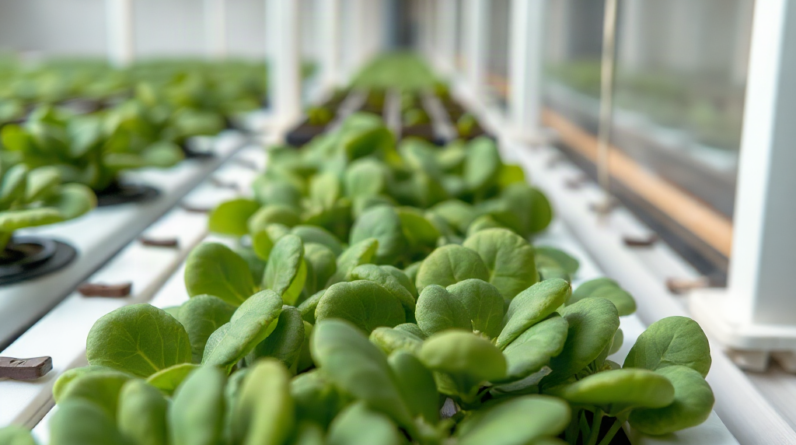
Hydroponic nutrient deficiencies versus pH lockout are separated by checking whether nutrients are actually absent or merely unavailable because root-zone pH has moved outside the crop’s usable range. Compare new and old leaf symptoms, verify pH and electrical conductivity with calibrated meters, inspect roots, and review recent nutrient additions before changing the solution. A true shortage usually corresponds with low concentration, an incomplete formula, or crop demand, while lockout may occur despite adequate fertilizer. Correct abnormal pH gradually, replace questionable solution when needed, and confirm improvement through healthy new growth rather than expecting damaged leaves to recover.
How Deficiency and pH Lockout Differ
A nutrient deficiency means the plant is receiving too little of an essential element, whereas pH lockout means an element may be present but is not being taken up effectively. Both conditions can produce pale leaves, dead tissue, weak growth, or distorted foliage, so appearance alone rarely identifies the cause. The useful distinction is found in the reservoir, root zone, fertilizer history, and location of symptoms on the plant.
True deficiencies can develop when a grower uses an incomplete formula, mixes below the concentration needed for the crop, omits a component from a multi-part product, or repeatedly tops up with plain water without restoring the nutrient balance. Crop stage matters as well. A fruiting plant may consume potassium differently from a young leafy crop, while rapidly expanding foliage places substantial demand on nitrogen and other mobile elements. A low electrical conductivity reading can support a shortage diagnosis, but EC measures total dissolved ions rather than the amount of each individual nutrient.
Lockout is a root-zone availability problem. Nutrient ions change in availability as pH changes, and several elements become harder for plants to acquire when the solution remains too acidic or alkaline for the crop and fertilizer system. Iron-related chlorosis in young growth, for example, can appear even when iron is included in the formula if pH stays too high. Root injury, low oxygen, salt accumulation, or incompatible concentrates may also impair uptake and imitate pH lockout, which is why the label should not be applied to every symptom accompanied by an unusual pH reading.
Reservoir pH is only part of the picture. In recirculating systems, the solution around roots or inside the growing medium may differ from the main tank. Evaporation, plant uptake, microbial activity, and deposits in media can create local conditions that a reservoir sample misses. A drain-to-waste setup introduces another constraint: runoff can help reveal accumulation, but its values do not always match the solution touching every root.
The common mistake is adding more fertilizer as soon as leaves yellow. If the formula already contains enough nutrients, increasing concentration raises osmotic stress and may worsen uptake. Treat hydroponic nutrient deficiencies versus pH lockout as a question of supply, availability, and root function—not as a contest between two leaf-color charts.
What Leaf Symptoms Can—and Cannot—Tell You
Symptom position provides a useful clue because plants can move some nutrients from older tissue more readily than others. Shortages of mobile nutrients often become visible on older leaves first as the plant reallocates resources to new growth. Problems involving less-mobile elements tend to show earlier in young leaves or growing points. This distinction narrows the possibilities, but it does not prove that the reservoir lacks the suspected element.
Uniform paling that starts on lower foliage may suggest inadequate nitrogen supply, especially when growth is generally slow and the solution concentration has been kept unusually low. Interveinal chlorosis on older leaves can point toward magnesium-related stress. Pale new leaves with greener veins may be consistent with limited iron uptake, while deformed young tissue or damaged growing points can involve calcium delivery. Calcium symptoms also deserve environmental scrutiny because weak transpiration, excessive humidity, or root stress can limit movement to new tissue even when the solution contains calcium.
Patterns should be read across the plant rather than from one damaged leaf. A leaf touching a lamp, exposed to a fan, splashed with concentrated solution, or injured by pests can resemble a mineral disorder. Root disease may produce broad yellowing and wilting because damaged roots cannot maintain water and ion uptake. Several deficiencies appearing at once are more suspicious for pH, root health, mixing, or concentration trouble than for multiple unrelated omissions in a reputable complete formula.
Consider two lettuce reservoirs using the same fertilizer. In the first, lower leaves gradually lose color, EC remains below the intended crop range after repeated plain-water additions, pH is stable, and roots remain pale and firm. Insufficient concentration is plausible. In the second, young leaves become chlorotic while EC stays near its normal target, pH has remained above the crop’s preferred range, and the formula includes iron. Availability is the stronger lead, though meter error and root condition still need checking.
Do not expect damaged tissue to become a perfect diagnostic record after correction. Necrotic patches will not regenerate, and severely chlorotic leaves may remain discolored. Mark the affected leaf, photograph the growing tip under neutral light, and judge the next several days of growth. Healthier emerging foliage, resumed expansion, and stable root-zone readings are more reliable signs of progress than cosmetic improvement in old leaves.
A Diagnostic Sequence for the Root Zone
A disciplined diagnosis begins with measurement quality, because an inaccurate pH meter can turn a small nutrition issue into a series of unnecessary corrections. Calibrate the meter with fresh, appropriate buffer solutions, rinse the probe correctly, and confirm that it has been stored according to its instructions. Check the EC meter as well. Test strips can provide a rough cross-check, but their color resolution may be insufficient for fine reservoir management.
Measure the reservoir after it has circulated and mixed thoroughly. Record pH, EC, solution temperature, water level, and the time since the last nutrient addition or water change. Then inspect the root zone. Healthy roots vary by crop and nutrient staining, but slimy texture, tissue sloughing, sour odor, or severe browning shifts attention toward oxygenation and root health. A plant with compromised roots may show apparent deficiencies even after reservoir pH is corrected.
Use this compact sequence before adding a single element:
- Verify the instruments. Calibration and probe condition come before interpreting a surprising number.
- Map the symptoms. Note whether old leaves, new leaves, margins, veins, or growing points are affected.
- Review the formula. Confirm every component was added at the intended dilution and in the manufacturer’s mixing order.
- Compare pH and EC trends. One reading is less informative than several readings linked to water use and plant growth.
- Inspect roots and equipment. Look for low aeration, blocked flow, deposits, excessive solution temperature, or failing pumps.
- Change one major variable. Record the correction and evaluate new growth instead of making daily reactive adjustments.
Trend interpretation prevents weak assumptions. Falling water level with rising EC can mean plants are taking up proportionally more water than dissolved salts, leaving the solution concentrated. Falling EC may indicate active nutrient uptake, dilution, or measurement variation. Rapid pH drift after repeated adjustment can reflect alkalinity in the source water, biological activity, an undersized reservoir, or an unstable root environment. None of these patterns independently identifies a specific elemental deficiency.
If only one cultivar or one plant is affected in a shared reservoir, check its root access, emitter, planting depth, and local airflow before reformulating the tank. When every plant develops a similar pattern, a shared factor such as solution preparation, pH, concentration, temperature, or equipment failure becomes more likely. This whole-system comparison makes hydroponic nutrient deficiencies versus pH lockout easier to distinguish without relying on guesswork.
Correcting the Cause Without Creating a Second Problem
Corrections should restore a stable root environment rather than force the leaves to change quickly. When pH is outside the crop-appropriate range, adjust it with a product intended for hydroponic use and allow the solution to circulate before retesting. Large, repeated doses made minutes apart can overshoot the target, increase dissolved salts, and produce unstable swings. The appropriate target depends on the crop, fertilizer formulation, system, and growing medium, so a single narrow value should not be treated as universal.
A fresh solution is often the cleanest response when the reservoir history is uncertain, EC is far from the intended range, ingredients may have been omitted, or repeated corrections have accumulated. Drain and clean according to the system’s needs, prepare nutrients in clean water, add each concentrate separately at the specified dilution, mix thoroughly, and adjust pH after the fertilizer is incorporated unless the product instructions state otherwise. Never combine concentrated stock solutions directly; calcium-containing concentrates can react with phosphates or sulfates and form precipitates that remove nutrients from useful circulation.
If evidence supports a genuine shortage, restore the complete formula to a suitable concentration before reaching for a single-nutrient supplement. A targeted supplement may be reasonable when source-water chemistry, crop demand, or a known formulation gap justifies it, but it can distort ratios and raise EC. Adding magnesium because an older leaf resembles an online photograph is risky when the actual problem is high salinity, damaged roots, or an uncalibrated pH reading.
Correction also has a biological lag. Root-zone values may improve within a mixing cycle, yet new leaves need time to form. During that interval, track pH and EC at consistent times, maintain aeration and flow, and avoid removing so much foliage that the plant loses productive leaf area. If symptoms continue to spread into new growth despite stable measurements, revisit root health, environmental conditions, and formula preparation rather than escalating the same treatment.
A successful response produces stable readings, functioning roots, and healthier new tissue. Failure appears as continued damage at the growing point, worsening root texture or odor, recurring pH drift, or EC moving sharply after each correction. Those signals justify replacing the solution, checking source-water alkalinity and equipment, or seeking crop-specific analysis. For recurring problems, laboratory testing of water or nutrient solution can reveal individual ion levels that EC cannot separate.
Frequently Asked Questions
Can pH be correct while a plant still shows nutrient lockout?
Yes. A current reservoir reading may be normal even if the root zone recently experienced damaging pH, salt accumulation, low oxygen, or precipitation. Check trends, roots, mixing history, and the solution within the medium where practical.
Should I add nutrients when hydroponic leaves turn yellow?
Not until pH, EC, formula completeness, roots, and symptom location have been checked. Extra fertilizer can worsen salt stress when yellowing is caused by poor uptake rather than inadequate supply.
Will damaged leaves recover after pH is corrected?
Mild chlorosis may improve, but dead margins and necrotic spots will not regenerate. Use the color, shape, and expansion of new leaves to judge whether the correction worked.
Does a normal EC reading rule out a nutrient deficiency?
No. EC reports total ionic concentration, not the concentration of each element. A solution can have a normal EC while one component is missing, unavailable, precipitated, or poorly balanced.
How quickly should pH lockout symptoms stop spreading?
The root-zone reading can stabilize quickly, but visible recovery depends on crop growth rate and damage severity. Continued injury in newly formed tissue after stable conditions warrants another review of roots, measurements, and solution preparation.
Conclusion
Reliable diagnosis comes from connecting plant symptoms with measured root-zone conditions and recent management. Identify whether damage begins on old or new growth, confirm pH and EC with calibrated instruments, inspect roots, and verify that every fertilizer component was mixed correctly. A complete solution with abnormal pH calls for an availability correction, while low concentration or an omitted ingredient points toward inadequate supply. Root injury, salinity, precipitation, and environmental limits can imitate both.
Make the smallest evidence-based correction that restores stability, then assess emerging leaves rather than repeatedly treating old damage. If the solution’s history is unclear or several variables are wrong, replacing it is usually easier to interpret than stacking adjustments. Consistent records of readings, additions, water use, and photographs turn the next symptom from a guess into a manageable comparison.