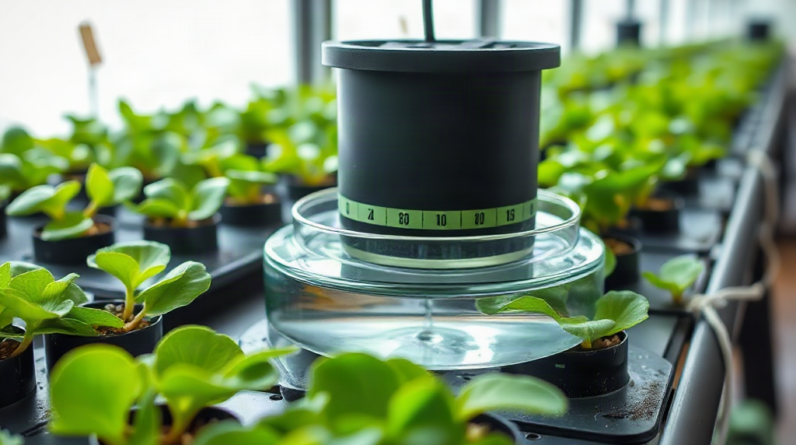
When hydroponic EC rises while the water level falls, plants are usually removing water faster than dissolved nutrients, leaving the reservoir progressively more concentrated. Heat, low humidity, strong airflow, an overly concentrated starting solution, or restricted nutrient uptake can produce this pattern. Confirm the change with a clean, calibrated EC meter, then check reservoir temperature, pH drift, root condition, and the rate of water loss. Top up gradually with plain or lightly fertilized water rather than adding more nutrients.
What Rising EC and Falling Water Reveal
EC describes the electrical conductivity of the solution, which generally rises as the concentration of dissolved fertilizer ions increases. It does not identify individual nutrients or prove that the solution remains balanced. A reservoir can display an acceptable EC while containing an unfavorable ratio of nitrate, potassium, calcium, sodium, or other dissolved ions.
When the water level drops and EC climbs, the crop is taking up proportionally more water than mineral ions. Imagine a reservoir falling from 40 liters to 34 liters while most of its dissolved salts remain behind. Even without adding fertilizer, the remaining solution becomes more concentrated. Evaporation from an uncovered tank can amplify the effect, although plant transpiration is often the larger water pathway in a vigorous indoor crop.
The direction and speed of the change matter more than a single reading. A small daily increase may simply show that the starting feed is slightly stronger than current plant demand. A rapid rise accompanied by wilt, leaf-edge burn, stalled growth, or discolored roots points toward a more urgent uptake problem. Young plants and recently transplanted crops usually consume fewer nutrients than established plants, so a concentration that worked later in a previous crop may be excessive now.
Do not assume rising EC means the plants are “feeding heavily.” Heavy nutrient uptake tends to hold EC steady or pull it downward relative to water use. A rising value indicates that water is leaving faster than measured ions. The useful question is whether this comes from normal environmental demand, an unnecessarily strong feed, or roots that cannot absorb nutrients effectively.
The paired trend can be interpreted as follows:
- Water down, EC stable: water and nutrient uptake are reasonably matched.
- Water down, EC down: nutrient removal is proportionally greater, and the crop may tolerate a modestly stronger refill.
- Water down, EC up: the solution is concentrating, so adding more fertilizer is usually the wrong first response.
This interpretation is a starting point rather than a diagnosis. Compare readings taken at the same time each day, after the solution has circulated, to distinguish a real pattern from temporary mixing or temperature effects.
Rule Out a Misleading EC Reading
A suspect measurement should be eliminated before the reservoir is altered. Dried nutrient residue on the probe, an aging calibration solution, incomplete circulation, or testing immediately after a top-up can produce a value that does not represent the root-zone solution. Correcting a false high reading by adding large amounts of water can leave the crop underfed.
Rinse the probe with clean water and follow the meter manufacturer’s cleaning instructions. Check it against fresh conductivity standard within the instrument’s normal measuring range. Calibration fluid should not be returned to its bottle after use because contamination changes its reference value. If two repeated measurements in the same mixed sample differ noticeably, resolve the meter or sampling issue first.
Sampling location matters in larger or recirculating installations. Nutrient concentrate introduced near a return line may create a locally strong pocket, while a sample from a quiet corner can differ from the solution reaching plant roots. Run circulation long enough to mix the tank, then measure from a consistent location. In a drip system, occasionally compare the reservoir with collected root-zone drainage; accumulated salts in slabs, coco, or other media may not be obvious from the tank alone.
Temperature compensation also deserves attention. Many digital meters compensate automatically, but that feature cannot correct a dirty probe or badly stored instrument. Record solution temperature beside EC because warm conditions affect both meter behavior and plant physiology. A reservoir becoming warmer each afternoon may coincide with higher water use and lower dissolved oxygen, creating a genuine EC rise even if the instrument itself compensates properly.
Check the water-level measurement with equal care. A tilted tank, cycling float valve, or temporarily filled plumbing can make the apparent volume change misleading. Marking known volumes on the reservoir gives more useful data than judging depth by eye. For additional context on the paired readings, keep the measurement method consistent whenever reviewing Hydroponic EC rising while water level falls.
The common failure here is chasing every fluctuation. Measure after mixing, under similar operating conditions, and with a verified instrument. A repeatable daily trend supports intervention; a single unusual value calls for confirmation.
Check the Growing Environment and Root Zone
High atmospheric water demand can make a healthy crop empty the reservoir while leaving a larger share of fertilizer behind. Hot air, low relative humidity, intense lighting, and direct fan exposure increase transpiration. Under those conditions, water use can accelerate without an equivalent increase in nutrient demand, particularly around midday.
Look for timing clues. If EC rises mainly during the light period and moderates after a plain-water top-up, the feed strength may be too high for the room’s water demand. A plant directly beneath a powerful fixture or in a fan stream may show marginal leaf damage before plants elsewhere. Raising humidity blindly is not the answer, however; excessive humidity can suppress transpiration and create other crop-management problems. Correct strong heat, harsh airflow, or an uncovered reservoir rather than forcing the entire room toward an arbitrary humidity value.
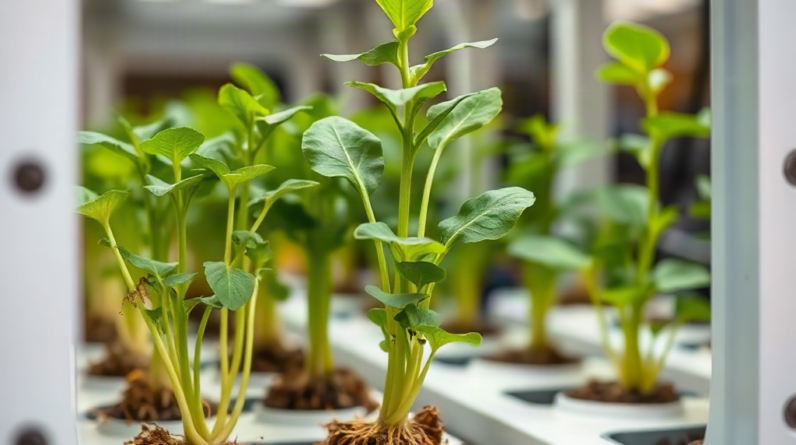
Root impairment produces a more concerning version of the same reservoir pattern. Warm, oxygen-poor solution, blocked irrigation, damaged roots, or disease can reduce ion uptake even while leaves continue losing water. Healthy roots are generally firm and appropriately colored for the system and nutrient formula. Sloughing tissue, persistent odor, unusual darkening, or a sudden loss of fine roots warrants attention. Root staining from some additives should not be mistaken for decay, so texture, smell, plant response, and oxygenation are more informative than color alone.
Confirm that every plant is actually receiving solution. A partially blocked dripper can leave one plant water-stressed while the main tank still records falling volume. In deep-water culture, inspect air delivery and verify that roots are not crowding or obstructing circulation. In nutrient film systems, check flow at both the inlet and outlet rather than assuming pump operation guarantees adequate delivery across every channel.
Reservoir pH adds another diagnostic layer. A pH outside the crop’s intended range can limit the availability or uptake of particular ions even when EC appears ample. Avoid repeatedly forcing pH with large correction doses; abrupt swings and accumulated correction products can complicate solution chemistry. Measure the trend, verify the probe, and make modest adjustments.
The practical priority is to separate normal concentration from impaired uptake. Vigorous plants with clean roots and predictable daytime water use usually call for a gentler feed or different refill strength. Stalled plants, abnormal roots, poor irrigation, or rapidly worsening leaf injury require correction of the root-zone problem before the fertilizer target is reconsidered.
Correct the Reservoir Without Overreacting
Gradual dilution is usually safer than an abrupt formula change when plants otherwise appear healthy. Add source water in stages, allow thorough circulation, and recheck EC and pH after each addition. Water quality matters: tap water with appreciable background conductivity is not equivalent to reverse-osmosis water, so its EC contribution must be considered when judging the final mixture.
Use the crop’s recent trend to choose the refill. If EC is only creeping upward and plants look vigorous, plain water may bring the tank back toward its working target. If a large amount of water has been consumed over several days, a lightly fertilized top-up may preserve nutrient balance better than repeatedly adding only water. The objective is not to drive EC to the lowest possible value; it is to stop progressive concentration while maintaining an appropriate supply for the crop and growth stage.
A practical correction sequence is:
- Verify EC, pH, solution temperature, and actual reservoir volume.
- Inspect roots, pumps, air delivery, emitters, and return flow.
- Add a measured amount of source water and circulate completely.
- Recheck EC before adding any fertilizer or pH correction.
- Observe the next full light cycle rather than judging the result within minutes.
A full solution replacement is more appropriate when EC has climbed far beyond the intended range, the nutrient history is unknown, sodium or other unwanted ions may have accumulated, or repeated top-ups no longer produce stable behavior. Replacement resets concentration but also uses more water and fertilizer. It cannot repair failing aeration, excessive root-zone heat, or blocked irrigation, so those causes must be corrected at the same time.
Avoid adding nutrients merely because the tank level is lower. That response increases the concentration already indicated by the meter and can intensify osmotic stress, making water uptake harder. Large volumes of pH adjuster are another poor substitute for reservoir management. If the solution repeatedly needs substantial correction, examine source-water alkalinity, tank size, biological activity, and the suitability of the formula.
After adjustment, stable or gently moving EC with continued water use is a positive sign. Continued rapid EC rise, worsening wilt, or new root symptoms means dilution addressed the reading but not its cause. The corrective details in Hydroponic EC rising while water level falls should therefore be applied alongside root and environmental checks, not as a meter-only exercise.
Track the Trend and Prevent Recurrence
A simple reservoir log turns isolated numbers into a usable crop signal. Record EC, pH, water temperature, volume added, and whether the reading was taken before or after topping up. Note major changes such as transplanting, pruning, a warmer day, lighting adjustments, or a new nutrient batch. Consistency matters more than collecting readings at random intervals.
Daily water consumption should be interpreted relative to plant size and reservoir capacity. A small tank attached to a mature crop can change concentration quickly, while the same crop in a larger tank has more buffering. Increasing reservoir volume can reduce abrupt swings, but it also makes complete changes heavier and more expensive. Automated top-off equipment stabilizes volume, yet it can conceal leaks or dilute the solution continuously unless EC and water use remain monitored.
Set a response threshold based on the crop’s normal behavior rather than reacting to the last decimal place on the display. For example, if EC predictably rises a little during the light cycle and returns near target after a measured refill, the pattern may be manageable. If the daily increase becomes larger under unchanged conditions, inspect roots, pumps, temperature, and meter calibration before merely weakening every future batch.
Feed strength should also follow growth stage. Seedlings, recent transplants, and plants recovering from root stress generally have less capacity for nutrient uptake than a rapidly expanding canopy. Later, flowering or fruiting crops may have different demand, but a higher nominal target is not automatically better. The crop response and reservoir direction together provide more information than a feed chart alone.
Prevention comes from controlling the rate of change: cover the tank to limit evaporation and light exposure, keep solution temperature within a suitable range for the crop, maintain circulation and aeration, clean delivery components, and calibrate meters on a regular schedule. Change only one major variable at a time when possible. Simultaneously lowering EC, altering pH targets, moving lights, and changing airflow makes it difficult to identify what corrected—or aggravated—the pattern.
The approach is working when water use remains steady, EC stops climbing rapidly, roots retain sound texture, and new growth develops without increasing edge burn or wilt. It is failing when dilution provides only brief relief, pH becomes unstable, or plant water use suddenly drops. Those signs justify a deeper inspection rather than another automatic top-up.
Frequently Asked Questions
Should I Add Plain Water When EC Rises?
Usually, provided the meter reading is verified and the plants and roots appear healthy. Add water gradually, circulate the solution, and recheck EC and pH rather than filling the tank all at once.
Does Rising EC Mean My Plants Are Taking Up More Nutrients?
No. Rising EC while volume falls generally means water is being removed faster than dissolved ions. Strong nutrient uptake is more likely to hold EC steady or make it decline.
Can Evaporation Raise Reservoir EC?
Yes. Water evaporates while most fertilizer salts remain, concentrating the solution. Covering the reservoir reduces evaporation, light entry, and debris without interfering with normal plumbing or aeration.
When Should I Replace the Entire Nutrient Solution?
Consider replacement when concentration is far outside the intended range, solution history is uncertain, unwanted ions may have accumulated, or gradual dilution repeatedly fails to restore stable behavior.
Why Does EC Keep Rising After I Dilute the Reservoir?
Persistent increases can reflect excessive heat or airflow, a starting formula that remains too strong, root damage, low oxygen, blocked irrigation, or inaccurate measurements. Check those conditions before diluting again.
Conclusion
Treat the reservoir trend as evidence of how water use and ion uptake are interacting, not as an instruction to add fertilizer. Begin by validating the meter and volume change, then examine temperature, airflow, pH, irrigation delivery, aeration, and root condition. Healthy plants with predictable water use often need a measured plain-water or low-strength refill; stressed plants require correction of the environmental or root-zone restriction first.
Record the result through at least one normal light cycle. Stable EC, continued water consumption, firm roots, and unaffected new growth indicate that the adjustment is moving in the right direction. If concentration rebounds quickly or plant condition worsens, replace the solution when appropriate and resolve the underlying heat, oxygen, water-quality, or delivery issue before returning to the previous feeding strength.