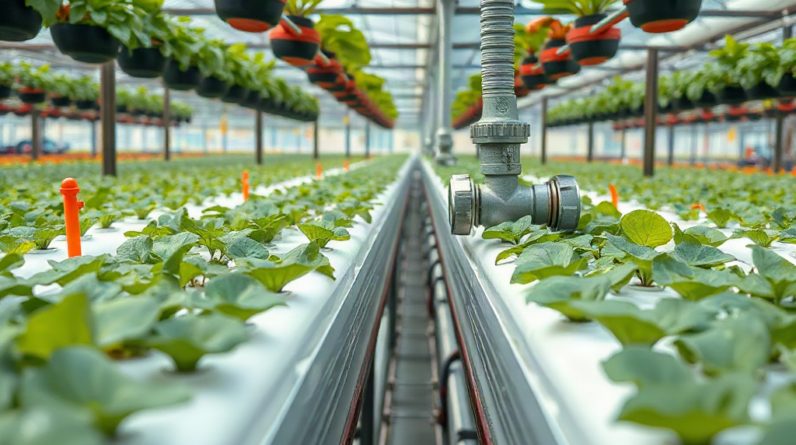
Clearing airlocks from hydroponic return lines without losing pump prime requires slowing or stopping the pump, opening the highest accessible point, and filling or lowering the trapped section until air can escape toward the reservoir. Check for tubing that rises and falls, submerged return outlets, restrictive fittings, and insufficient pipe slope before restarting at low flow. A successful purge produces a steady, bubble-free return without surging, gurgling, or rapid reservoir-level changes. Never let a non-submersible pump run dry, and avoid repeatedly increasing pump speed because greater suction can enlarge the trapped pocket or pull air through a loose fitting.
How Air Becomes Trapped in a Return Line
An airlock forms when a pocket of gas occupies a high section of return plumbing and the available water pressure cannot move that pocket to an outlet. The usual trigger is not air entering the nutrient solution; aerated reservoirs normally contain bubbles without blocking a drain. The problem develops when pipe geometry gives separated air a place to collect, particularly in tubing that climbs over a support, sags between clips, or crosses above the normal water level before descending.
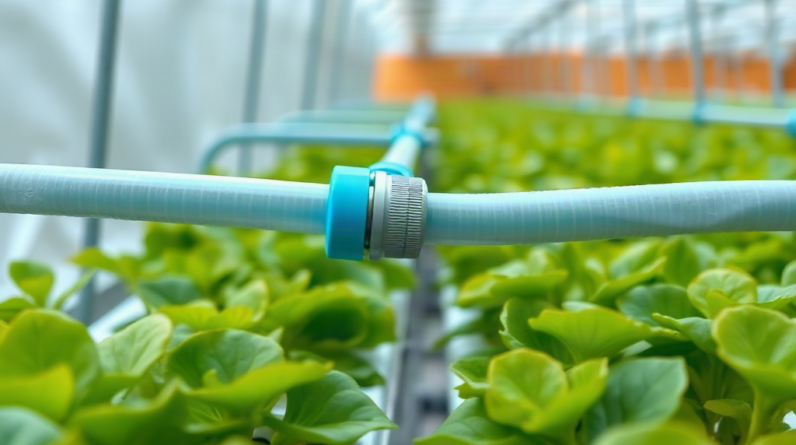
Flexible hose is especially prone to hidden high points. A line may look level while empty but sag after it fills, creating an inverted U followed by a low pocket. Water then approaches the elevated section from one side while trapped air resists displacement on the other. Small return lines, elbows, reducers, root fragments, and mineral deposits make the restriction more consequential because they reduce the pressure available to push the pocket onward.
A submerged return outlet can complicate the same condition. If the outlet sits well below reservoir water level, air cannot leave freely when flow begins. The line may alternate between carrying water and compressing the pocket, producing a characteristic surge-pause-surge pattern. Raising the reservoir level does not necessarily solve this; it can increase backpressure at the discharge and conceal the route through which air needs to escape.
Flow symptoms should be interpreted together rather than in isolation. Gurgling may indicate an airlock, but it can also come from a drain that intentionally carries both air and water. A blocked line is more likely when the grow bed or channel level rises while reservoir return flow falls. A pump-side prime problem is different again: the pump becomes noisy, discharge weakens, and visible bubbles may appear downstream even though the return route is open.
Before disturbing the installation, trace the entire return from the plant site to the reservoir. Look from the side rather than from above, and support flexible tubing temporarily to reveal rises and dips. Confirm that valves are open, strainers are clear, roots have not entered the fitting, and the reservoir level still covers any pump intake that must remain submerged. That distinction matters because clearing airlocks from hydroponic return lines will not correct a clogged outlet or an intake that is drawing air.
A Controlled Purge Sequence That Protects Pump Prime
The safest purge changes pressure gradually while preserving water at the pump inlet. Disconnect electrical power before opening plumbing, moving hoses near electrical equipment, or placing hands in the reservoir. If the system uses a non-submersible pump, close any available isolation valve only as directed by the pump arrangement; trapping a running pump between closed valves can damage equipment. Keep nutrient solution in a clean container if a line must be drained so it is not contaminated by the floor, tools, or untreated water.
Start with the least disruptive correction. Straighten the return route and lift any low sag while lowering the unwanted high point toward the reservoir. In a gravity return, this often lets the air pocket migrate naturally while water follows behind it. Place the outlet above the reservoir surface temporarily when practical, because an open discharge gives escaping air a direct path rather than forcing it through a submerged end.
- Reduce or stop inflow. Prevent the bed, tray, or channel from overflowing while return capacity is limited.
- Protect pump prime. Verify that the pump housing and suction line remain flooded if the pump design requires priming.
- Create an escape path. Open a designed bleed point, loosen a union at the high spot with power off, or reposition flexible tubing so air moves toward the outlet.
- Fill the line slowly. Restart at the lowest practical flow or admit solution gradually until water displaces the remaining air.
- Restore normal operation. Tighten opened connections, return the outlet to its intended position, and increase flow while watching both ends of the circuit.
Opening a union is appropriate only when the fitting is accessible and the released solution can be contained. Do not loosen a glued joint, electrical pump connection, or fitting under uncontrolled pressure. Where no serviceable high-point connection exists, manually pre-filling a removable return hose may be safer: detach it with the system off, fill it with reservoir solution, reconnect it without introducing a large bubble, and then start at reduced flow.
For a simple gravity drain, blowing into the line or applying compressed air is a poor default. It can push debris toward a narrower fitting, aerosolize nutrient solution, contaminate the system, or create pressure beyond what thin tubing and seals tolerate. A wet/dry vacuum used at the outlet is similarly aggressive unless the plumbing is isolated and designed for that procedure. Repositioning, venting, and slow flooding provide more control.
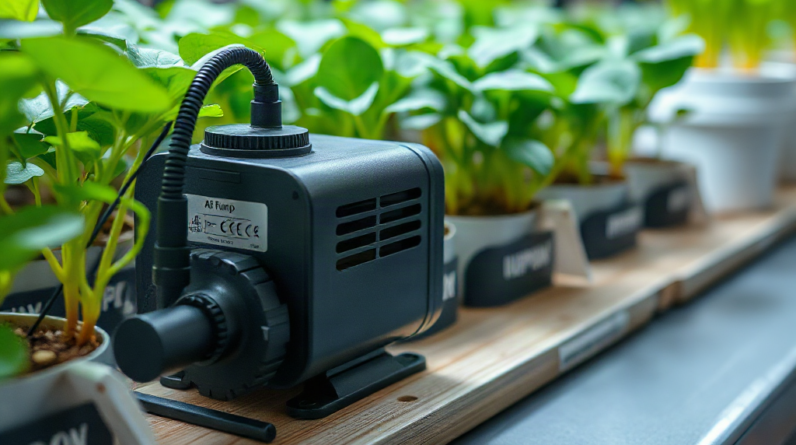
If the pump loses prime during the purge, stop immediately rather than waiting for flow to recover. Refill the pump casing or suction line according to its operating instructions, inspect the intake connection for air leaks, and restart only after the pump has a continuous water supply. The objective is to move air out of the return, not to use a dry-running pump as the purge force.
How to Confirm the Airlock Is Actually Gone
A cleared return carries stable flow at the system’s normal operating level, not merely during the first minute after restart. Observe at least one complete irrigation or flood-and-drain cycle where applicable. The liquid level in a channel or tray should stop climbing unexpectedly, and the reservoir should recover at a repeatable rate. A few bubbles immediately after service are normal; recurring large bursts accompanied by interrupted flow indicate that air is still collecting or being drawn into the circuit.
Use simple observations before changing hardware. Mark the normal reservoir level with removable tape, then compare the level at the same point in successive cycles. Watch the return outlet for an unbroken stream if it is designed to run full, or for consistent mixed flow if it is an open gravity drain. Listen near high sections: a brief hiss followed by steady water suggests successful venting, whereas repeated gulping indicates that the pocket is reforming.
A practical test is to reduce pump output and then return it gradually to the intended setting. If the return remains stable across that range, the purge likely restored the path. If flow collapses only at high output, the line may be undersized, partially obstructed, or routed with too little fall. That is a capacity problem rather than an air pocket alone. Conversely, a line that fails only at very low flow may lack enough water velocity to carry separated bubbles through an unavoidable rise.
Check plant-site water levels as well as the reservoir outlet. For example, a nutrient film technique channel can appear to drain while the upstream end slowly deepens because one branch receives more inflow than its return can release. A recirculating bucket system may show uneven bucket levels when one return contains air or roots. Comparing neighboring branches helps isolate a local plumbing fault from a system-wide pump or reservoir issue.
Do not declare success by sound alone. Gurgling can disappear when a line becomes completely blocked, and a quiet pump can still be starved of water. The strongest confirmation combines visible return flow, stable growing-site levels, a flooded pump intake, and no leaks at fittings disturbed during service. Recheck those fittings after the system reaches operating temperature because flexible tubing can soften and a union seal may settle.
If flow becomes erratic again within the same cycle, stop repeating the purge and identify where the new air enters or accumulates. The next useful step is usually a routing or vent correction, not greater pump speed. Repeatedly forcing the line may temporarily move the pocket while leaving the underlying elevation change untouched.
Permanent Corrections for Recurring Airlocks
Recurring airlocks indicate that the return layout permits air accumulation or that the line cannot pass the required mixture of water and air. The most durable correction is a continuous fall toward the reservoir. Support flexible hose at short enough intervals to prevent loaded sections from sagging, and avoid routing it over bench rails or reservoir rims when a lower path is available. A small consistent slope is more dependable than a steep drop interrupted by one upward loop.
Where a high point cannot be removed, a serviceable vent may be appropriate. The vent must be located where air actually gathers, remain above the maximum liquid level, and be arranged so nutrient solution cannot spill or admit contaminants. An open-ended tube installed carelessly can become a leak, an overflow route, or a path for debris. Purpose-designed air admittance or standpipe arrangements should match whether the return operates by gravity, siphon, or pressure; those systems do not behave interchangeably.
Pipe diameter also affects reliability. Increasing diameter reduces resistance and gives a gravity return more room to carry water without sealing the entire cross-section, but oversized pipe does not correct a reverse slope. A large sagging hose can still trap a substantial air pocket. Before replacing plumbing, clean strainers and fittings and inspect reducers, because a short narrow connector may control the capacity of the whole run.
Return outlets should discharge where air can leave without excessive backpressure. Keeping an outlet above the reservoir surface simplifies venting but may add splashing, noise, and evaporation. Submerging it reduces noise yet can make startup purging harder. A compromise is to position the outlet near the surface or use a larger open discharge arrangement that remains vented while limiting splash. The correct choice depends on reservoir access, sound constraints, and whether the return is intended to run full.
Maintenance should focus on changes that alter the internal shape of the line. Roots can pass through guards, biofilm can narrow small fittings, and tubing clips can loosen after repeated handling. At each reservoir service, inspect high spots, squeeze flexible hose gently to detect internal buildup, and verify that supports have not shifted. Compare the current return pattern with the established normal level rather than waiting for an overflow.
A useful priority order is geometry first, obstruction second, venting third, and pump adjustment last. Increasing flow may move a bubble temporarily, but it also raises the water level upstream and reduces the margin before a spill. Reducing flow can hide inadequate drainage without correcting it. Readers applying clearing airlocks from hydroponic return lines should therefore treat pump settings as a balancing tool after the physical return path has been corrected, not as the primary repair.
Frequently Asked Questions
Can an airlock stop a gravity return completely?
Yes. A trapped pocket at a high point can resist the limited pressure available in a gravity drain, especially when the line is narrow, submerged at the outlet, or partly restricted.
Should I increase pump speed to force the air out?
Not as the first response. Higher inflow can overflow the growing area and may compress rather than release the pocket. Correct the slope, obstruction, or vent path before readjusting flow.
Why does the return gurgle after every restart?
Repeated startup gurgling usually means air is collecting in a raised or sagging section, or the submerged outlet is delaying its escape. Inspect the route while the tubing is full.
Can roots cause symptoms that resemble an airlock?
Yes. Roots can narrow a bulkhead, screen, elbow, or return hose and create surging flow. Isolate power, inspect accessible fittings, and remove roots without damaging the plant or seal.
When should a return line be replaced?
Replace it when permanent kinks, internal deposits, cracking, an unsuitable diameter, or an uncorrectable route prevent stable drainage. Replacing sound tubing will not help if the new line follows the same high-and-low path.
Conclusion
Reliable return flow depends more on plumbing geometry and a clear escape route for air than on brute pump force. Trace the loaded line, remove sags and upward loops, confirm that roots or deposits are not restricting fittings, and give trapped air a controlled path toward an open outlet or serviceable high point. During purging, protect the pump’s water supply and restore flow gradually while watching growing-site and reservoir levels.
Afterward, verify performance through a complete operating cycle rather than relying on a brief stream or quieter plumbing. If the pocket returns, correct the route, outlet depth, venting, or restrictive connector before changing pump output. A stable slope, supported tubing, accessible connections, and routine inspection turn repeated emergency purges into a preventable maintenance issue.