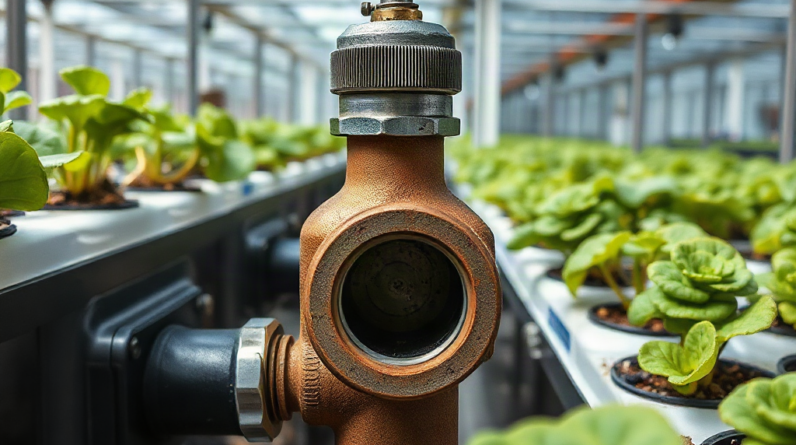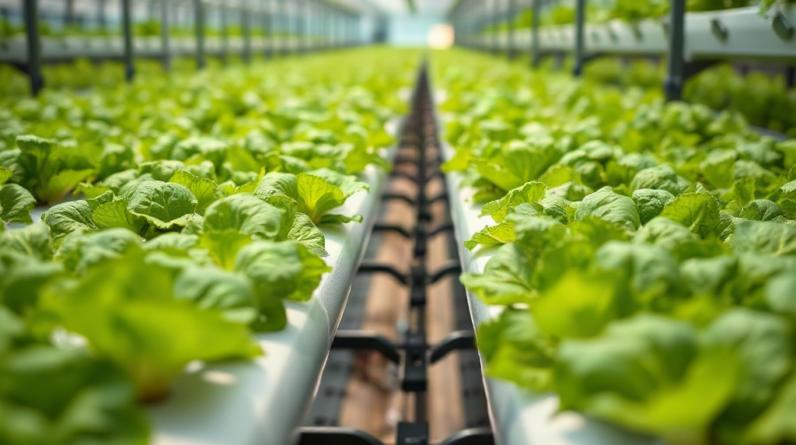
Identify What Is Entering the Drain
A useful blockage-control plan begins by identifying the material collecting at each drainage point. Hydroponic drains do not clog for a single reason: expanding roots, pieces of growing media, detached leaves, algae, mineral deposits, and accumulated crop residue behave differently inside a return path. A screen may capture clay pebbles but do little against roots growing through its openings. Acid cleaning may loosen mineral scale but cannot correct a pipe that sags and traps debris.
Location provides an early clue. Material gathered directly below a net pot usually points to roots or loose media. Green or brown growth in a light-exposed channel suggests algae and trapped organic residue. A restriction concentrated at an elbow, reducer, or nearly level pipe often indicates that solids are settling where water velocity falls. If every drain slows at once, inspect the shared return line, reservoir inlet, and pump intake rather than cleaning individual channels repeatedly.
Flow behavior also matters. A partially restricted drain may appear functional while the pump is off, then back up once irrigation resumes. In a nutrient film technique channel, the upstream water depth may rise while plants near the outlet receive a deeper, less oxygenated root zone. In a flood-and-drain table, slow emptying can leave containers saturated beyond the intended drain period. A drip system may show intermittent pooling if roots or media fragments move around and temporarily cover an outlet.
Inspect the recovered material before discarding it. Soft root fragments accompanied by tan, slimy residue warrant a review of root condition, water temperature, aeration, and sanitation. Firm white roots at the outlet may simply be healthy growth reaching an inviting flow path, which calls for a physical root barrier rather than aggressive chemical treatment. Hard crust around a fitting is more consistent with nutrient residue or mineral scale and should be addressed with system-compatible cleaning between crops.
The common mistake is treating every slow drain as a dirty pipe. Before changing equipment, isolate a section, observe water depth, inspect removable fittings, and compare flow with a known-clear path. This cause-first approach makes Drain blockage prevention in hydroponic systems more reliable than repeatedly flushing an unidentified obstruction downstream.
Keep Roots and Growing Media Out of Return Lines
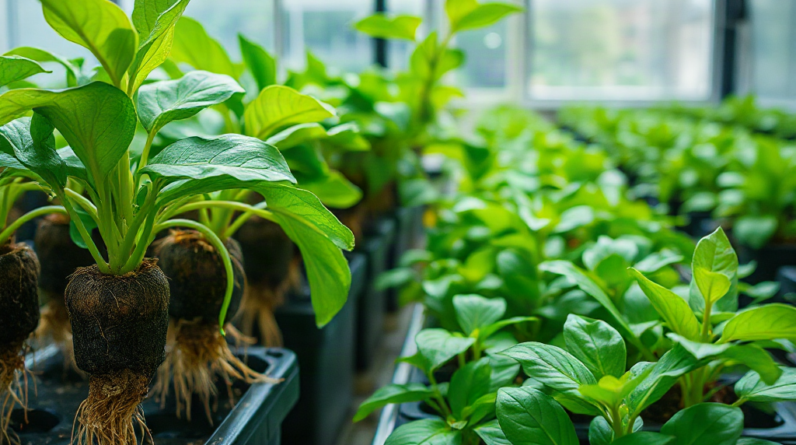
Roots and media should be intercepted at the growing area, where they remain visible and removable. Once either enters an enclosed return line, it can lodge at a fitting and collect smaller debris until the passage narrows. Root masses are especially troublesome because they continue expanding around screens, through slots, and toward moving nutrient solution.
Choose an outlet guard with openings smaller than the media pieces but large enough to pass the expected flow without creating excessive water depth. A perforated standpipe cover can work in a flood table, while a removable root guard may suit an NFT channel. Fine mesh catches more debris, but it fouls faster than a coarse, rigid screen. The better choice is not automatically the smallest opening; it is the coarsest barrier that reliably excludes the material present and can be removed without disturbing the crop.
Placement affects performance. A screen pressed tightly against a small outlet has little usable surface area, so a thin layer of roots can stop it. A larger cage-shaped guard provides water with multiple entry surfaces even when one side becomes covered. Leave enough clearance around the guard to inspect and lift it. Gluing a fine filter into an inaccessible channel may produce a clean installation initially, but maintenance becomes difficult once mature roots surround it.
Media containment starts above the drain. Secure loose clay pebbles in correctly sized net pots, avoid overfilling containers where irrigation can wash particles over the rim, and remove broken pieces during crop changes. Fibrous media should not hang into an unprotected return opening. If small particles routinely escape, a settling area or removable prefilter near the reservoir may be more practical than placing very fine mesh on every channel.
Root management requires restraint. Trimming roots near a drain can restore clearance, but cutting a large portion of the root system at once may stress the plant and release fragments into circulation. Redirect or contain roots early, inspect outlets before the canopy hides access, and sanitize cutting tools if pruning is necessary. Never pull forcefully on roots disappearing into a pipe; they may be wrapped around a fitting, and tearing them can leave the obstructing portion behind.
A barrier is working when the drain maintains its normal water level and captured material remains easy to remove. It is failing when water rises around the guard, flow becomes uneven, or roots grow through rather than around it. Treat the guard as a serviceable component, not a permanent cure.
Design Drainage for Reliable Flow and Access
A drain path should carry the system’s full return flow while remaining accessible at its predictable restriction points. Pipe capacity alone is not enough. Long horizontal runs, unnecessary elbows, abrupt reducers, poorly aligned fittings, and low spots can slow solids and create collection zones even when the nominal pipe diameter appears adequate.
Gravity returns need a continuous fall toward the reservoir. A sagging flexible hose forms a trap where sediment and root fragments settle between irrigation cycles. Support the line and verify its slope when it is full, because water weight can change the shape of an apparently straight empty hose. Where rigid pipe is used, sweeping bends generally present less resistance and fewer snag points than closely spaced sharp turns. Avoid reducing the drain diameter downstream unless the smaller section has been confirmed to carry peak flow with reserve capacity.
Peak flow must be evaluated under operating conditions. For example, several flood trays may drain acceptably one at a time but overwhelm a shared return when their cycles end together. Likewise, a channel outlet may cope with normal flow yet back up after a pump adjustment increases delivery. Test the system with all relevant zones running, observe the highest water level, and then repeat the observation with screens partly loaded. A design that works only when freshly cleaned has too little operating margin.
Access points convert a difficult clog into routine maintenance. Removable end caps, unions, cleanout tees, and visible reservoir returns allow sections to be inspected or flushed without dismantling the crop area. Position them near bends, junctions, and the end of long runs. If the pipe disappears behind a wall or fixed bench immediately after an outlet, even a minor obstruction can require disruptive disassembly.
Light exclusion is another structural control. Opaque channels, covered reservoirs, and light-tight tubing limit algae growth inside wet passages. Merely adding algaecide or increasing cleaning frequency does not correct light leakage, and chemical additions may not be appropriate for the crop or system. Check around net pots, inspection lids, translucent hoses, and poorly seated covers; small illuminated wet areas can support growth that later detaches and travels to a strainer.
When revising a layout, prioritize continuous slope, adequate return capacity, removable interception, and reachable cleanouts. These physical measures usually provide more dependable Drain blockage prevention in hydroponic systems than relying on stronger flushing to force debris through an unsuitable line.
Use a Blockage Inspection and Cleaning Routine
Inspection frequency should follow crop growth and debris load rather than a fixed calendar alone. Newly transplanted plants may produce little root interference, while mature crops can reach an outlet rapidly. Leaf drop may increase after pruning or harvest, and algae can accelerate after a cover is displaced. Check more often during those changes, then adjust the interval according to what the inspections reveal.
Record a simple normal-flow reference for each zone. Useful indicators include water depth at a marked point, the time a flood table takes to empty, the appearance of the reservoir return, and whether every channel clears evenly after the pump stops. Exact instruments are not always necessary; a repeatable visual mark and timed drain-down test can expose gradual deterioration that daily familiarity might hide.
A compact inspection sequence keeps maintenance focused:
- Stop or isolate flow safely: prevent a loosened obstruction from causing an overflow or sending debris into the pump.
- Remove visible material: lift leaves, roots, media pieces, and algae from outlet guards rather than pushing them into the line.
- Inspect known catch points: check screens, elbows, reducers, junctions, reservoir inlets, and pump prefilters.
- Restore flow and compare: confirm that water depth, return volume, and drain-down time have returned to the established baseline.
- Correct the source: repair light leaks, contain media, redirect roots, or support a sagging line so the blockage does not immediately recur.
Cleaning should move debris out of the system, not merely relocate it. Flushing an outlet toward the reservoir without protecting the pump can transfer a clog to an impeller or irrigation manifold. Catch discharged material in a removable container or temporary filter, and clean that filter before restarting normal circulation. Follow equipment instructions before using any cleaning agent, and keep incompatible products away from living roots and nutrient solution.
Escalate maintenance when warning signs persist after cleaning. Recurring backups at the same fitting suggest a layout problem. Rapidly coating screens may indicate excessive root access, media breakdown, algae, or unhealthy root residue. Gurgling, fluctuating channel depth, a weaker reservoir return, and uneven table emptying all justify stopping to investigate before a full blockage causes overflow or exposes the pump to a low reservoir level.
The weakest routine is cleaning only after water appears on the floor. A better schedule combines quick operating checks with more thorough inspections at crop transitions. Photographs of clean outlets and notes on drain-down time give growers a practical comparison point, especially when more than one person maintains the system.
Frequently Asked Questions
How often should hydroponic drains be checked?
Check visible outlets during normal system rounds and inspect guards, shared returns, and pump prefilters more closely as roots mature. Increase the frequency after pruning, media disturbance, algae growth, or any change in water depth or drain-down time.
Can a finer screen prevent every drain clog?
No. Fine screens capture smaller debris but block sooner and may raise water levels around the outlet. Use the coarsest removable screen that excludes the problem material while passing peak flow with some debris already present.
Should roots near a drain be cut?
Small, careful trimming may restore clearance, but removing a large root mass can stress the crop and release fragments. Containing or redirecting roots before they enter the outlet is preferable, and cutting tools should be kept clean.
Why does a hydroponic drain keep clogging in the same place?
Repeated obstruction at one point commonly indicates a sharp fitting, pipe sag, reducer, low-flow zone, inaccessible screen, or root entry point. Cleaning treats the immediate restriction; changing the geometry or interception point addresses recurrence.
Can drain lines be flushed while the system is running?
Isolating the affected section is safer and gives better control over released debris. If loosened material reaches the reservoir during flushing, capture it before it can enter the pump or recirculate into emitters and channels.
Conclusion
Reliable drainage comes from controlling debris at its source and preserving a clear, observable route back to the reservoir. Identify whether roots, media, algae, crop residue, scale, or poor pipe geometry is responsible before selecting a remedy. Use removable guards with enough surface area, maintain continuous fall in gravity returns, exclude light from wet passages, and provide access near bends and junctions.
Next, establish a normal water-level or drain-down reference and inspect more frequently as crops mature. If cleaning restores flow only briefly, redesign the recurring catch point instead of accepting repeated emergency flushing. The most dependable system is not the one with the finest filter; it is the one that captures predictable debris without restricting peak return flow and allows every critical component to be checked before an overflow develops.