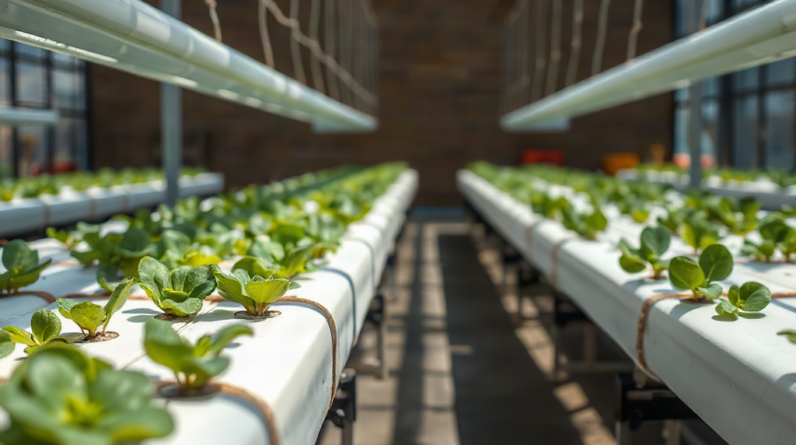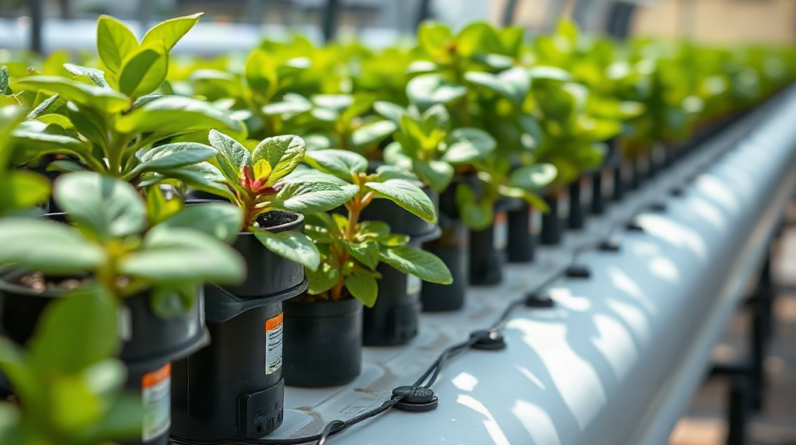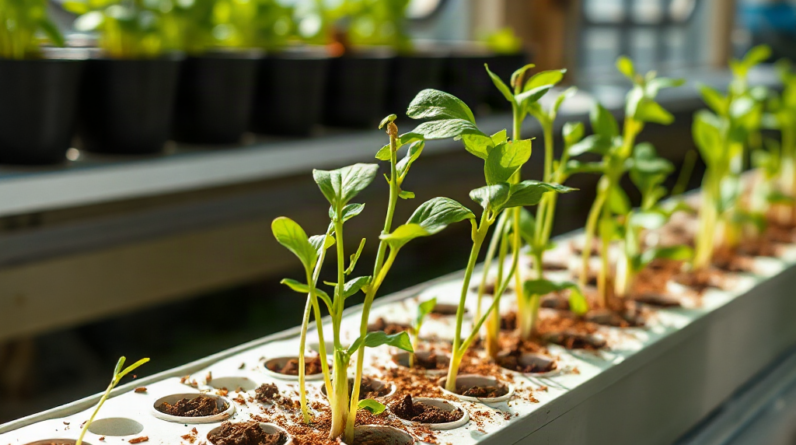
Handle hydroponic plant overgrowth by first restoring light and airflow, then pruning crowded shoots gradually rather than removing a large share of foliage at once. Begin with dead leaves, damaged growth, inward-facing stems, and foliage touching the reservoir, channels, lights, or neighboring plants. Use clean tools, support heavy fruiting branches, and adjust spacing or training before lowering nutrients, because excessive nitrogen is only one possible cause of rapid growth. Complete major cuts during vegetative growth when possible, monitor water uptake and new growth afterward, and avoid combining severe pruning with transplanting, root trimming, or abrupt environmental changes.
Identify What Is Driving the Overgrowth
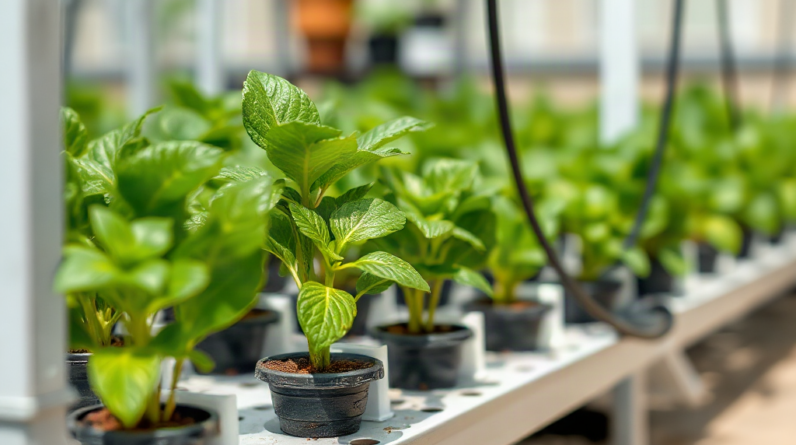
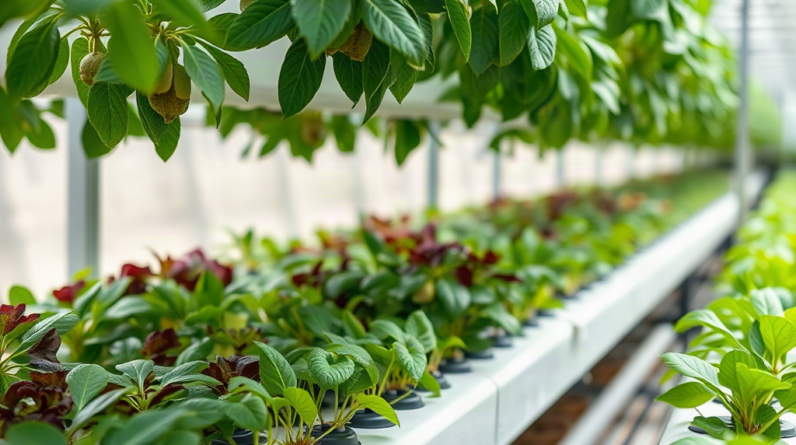
Hydroponic overgrowth becomes a problem when foliage exceeds the space, light coverage, airflow, or structural support available to the crop. Fast growth by itself is not necessarily harmful. A healthy basil plant filling its intended canopy is different from basil stems shading adjacent plants, pressing against a lamp, and trapping damp leaves beneath the canopy. The practical threshold is reached when growth begins interfering with plant access, equipment, or productive flowering and fruiting.
Start by examining the shape and location of the excess growth. Long stems with wide gaps between leaves commonly indicate insufficient light intensity, excessive distance from the fixture, or competition caused by poor spacing. Dense, soft, dark foliage may reflect a vigorous vegetative response to the crop’s nutrient balance, especially when nitrogen availability is high relative to the plant’s current stage. Crowding can also result from leaving too many side shoots on tomatoes, planting leafy greens too close together, or growing a large cultivar in a channel designed for compact plants.
Measure the physical constraints before making cuts. Check the distance between the highest leaves and the light, whether neighboring canopies overlap, and whether air can move beneath and through the foliage. Inspect hidden leaves for persistent moisture, pale tissue, spotting, or decay. Confirm that stems are not obstructing emitters, return lines, drains, fans, or reservoir access. Roots deserve attention too: an oversized canopy draws substantial water and may expose a reservoir that is too small for peak demand.
A common mistake is assuming that every crowded plant has been overfed. Cutting nutrient strength sharply without checking light, plant spacing, cultivar size, and growth stage can create deficiencies while leaving the spatial problem unchanged. Compare current electrical conductivity and pH with the appropriate range for the particular crop rather than responding to appearance alone. A plant growing quickly under strong light may be using its nutrients efficiently.
Prioritize immediate hazards first. Move foliage away from hot fixtures, clear blocked drains and emitters, and separate wet leaves. Then decide whether the plant needs pruning, training, wider spacing, or a combination. That diagnosis makes how to handle hydroponic plant overgrowth a crop-management decision rather than an indiscriminate cutting exercise.
Prune in the Right Order
Effective pruning opens the canopy while preserving enough healthy leaf area to power continued growth. Begin with material that contributes little: yellow leaves, damaged tissue, weak shoots under deep shade, and leaves resting on wet surfaces. Next, remove stems growing toward the center of the plant or directly into neighboring canopies. Productive outer leaves and branches should remain unless they create a clear access, light, or airflow conflict.
Use clean, sharp scissors or pruners that match the stem size. Crush damage from dull blades leaves a larger wound than a clean cut, while unclean tools can move plant material and potential pathogens between sites. Sanitize tools before starting and between plants when disease is suspected. Make cuts close to the point where the unwanted shoot joins the main stem without slicing into the main stem itself. Remove cut foliage from channels and reservoirs immediately so it cannot obstruct plumbing or decompose in the nutrient solution.
A practical order of work is:
- Remove dead, diseased-looking, broken, or submerged foliage.
- Clear leaves and stems blocking lights, fans, emitters, drains, and inspection access.
- Thin congested interior shoots to create airflow and light paths.
- Shorten or remove nonproductive growth competing with flowers, fruit, or harvestable leaves.
- Pause, reassess the canopy, and postpone optional cuts if the plant has already lost substantial foliage.
Crop type changes the pruning decision. Indeterminate tomatoes often tolerate planned removal of side shoots and lower leaves, provided enough foliage remains to support fruit and protect it from excessive light. Basil can be cut just above a healthy node to encourage branching and produce usable harvests. Lettuce is usually better managed through timely harvest, wider spacing, or removal of whole crowded plants; repeated structural pruning can reduce head quality. Cucumbers require careful training because removing the wrong growing point may change the plant’s productive structure.
Severe pruning offers fast clearance but carries a higher cost. Removing a large proportion of active foliage abruptly reduces photosynthetic capacity and changes water demand. Fruit can become newly exposed to intense light, while soft stems may lose support previously supplied by surrounding growth. Staged pruning is slower but allows the plant and reservoir management to adjust.
Avoid major pruning immediately after transplanting, during visible wilting, or while correcting a root-zone problem. Combining several stresses makes it difficult to identify why a plant declines. If urgent clearance is necessary near a lamp or blocked drain, make only the safety-critical cuts and complete the remaining work after the plant stabilizes.
Train and Space Plants Before Cutting More
Training often solves canopy congestion with less loss of productive foliage than additional pruning. Trellises, soft ties, clips, stakes, and horizontal supports redirect stems into unused space and keep heavy branches away from channels. The goal is not to compress more foliage into the same volume; it is to distribute leaves so that light reaches multiple canopy levels and air can pass between plants.
Attach supports to a stable frame rather than pulling against a net pot or lightweight channel lid. Use broad, soft ties and leave room for stem expansion. Tight wire or thin cord can cut into a rapidly thickening stem. Check attachment points regularly because hydroponic crops can outgrow a tie quickly. Fruiting tomatoes and cucumbers may need separate support for loaded branches so their weight does not twist the main stem or lift the root support.
Consider a mature tomato that has reached the light while side shoots occupy the aisle. Removing every long branch would sacrifice productive leaf area. A better response may be to lower and redirect the main vine if the setup permits, remove selected side shoots, and secure fruiting trusses. By comparison, a compact herb shelf with overlapping basil plants may benefit more from harvesting the tallest stems and moving or removing entire plants. The appropriate method follows plant architecture and available space.
Spacing corrections can be difficult once roots have intertwined. Do not pull plants from shared channels merely to create a neater canopy if doing so will tear neighboring roots. Where individual buckets or movable modules are used, repositioning plants is usually less disruptive. In fixed channels, thin selected plants at the stem base or harvest them rather than forcing tangled root systems apart.
Raising a light can provide temporary clearance, but height alone is not a complete solution. Increasing the distance may reduce light intensity at the canopy, encouraging further stretching unless fixture output and coverage remain suitable. Bending stems sharply is equally risky; gradual repositioning over several sessions is safer than forcing mature tissue into a tight angle.
The failure sign to watch for is continued overlap after training. If ties merely stack leaves against one another, the canopy has not actually been opened. Successful training produces visible gaps, stable stems, accessible equipment, and more even illumination. Readers assessing how to handle hydroponic plant overgrowth should treat pruning and training as complementary tools, not interchangeable fixes.
Correct the Growing Conditions Behind Excess Growth
Canopy control will remain temporary if the environment continues encouraging weak extension or unmanaged vegetative growth. Review lighting, nutrient concentration, temperature, humidity, airflow, planting density, and cultivar size as connected variables. Changing only one setting without observing the others can replace overgrowth with stress.
Check whether the fixture supplies even coverage across the planted area. Plants at the edge may lean inward and stretch, while central plants form a dense mass directly below the light. Repositioning fixtures or rotating movable modules can improve distribution. Keep foliage within the fixture manufacturer’s safe clearance and watch for bleaching, curled margins, or heat damage after any change. Moving a lamp much closer may shorten internodes, but it can also create excess intensity at the canopy top.
Review nutrient data rather than diluting the reservoir by guesswork. Compare electrical conductivity and pH trends with crop-specific targets and consider the water source. A falling reservoir level with rising conductivity suggests water is being removed faster than dissolved minerals; falling conductivity can indicate proportionally greater nutrient uptake. These patterns provide more useful context than a single reading. If the solution is outside the crop’s suitable range, adjust it progressively and verify the meter’s calibration before blaming nutrient strength for the canopy.
Airflow should move leaves gently without keeping them in constant, forceful motion. A fan aimed at one plant may dry that plant rapidly while leaving a stagnant pocket behind it. Circulating air above and below the canopy is generally more useful than blasting the outer leaves. Remove obstructions around fan intakes, but do not assume stronger airflow compensates for plants physically packed together.
Plant density is often the least convenient but most decisive variable. A channel that looks underused at transplanting can become overcrowded when each plant reaches mature width. Stagger planting dates, reserve wider positions for large cultivars, and use compact varieties where vertical or horizontal clearance is limited. If production goals demand dense planting, plan for earlier harvests rather than expecting each plant to reach full size.
Do not perform root pruning merely because the top growth is large. Cutting healthy roots introduces stress and may reduce water uptake at the same time the canopy has high demand. Root intervention is better reserved for specific mechanical problems, such as roots obstructing a drain, and even then only the obstructing material should be addressed carefully. Canopy management, crop selection, and spacing are safer first-line controls.
Monitor Recovery and Prevent Another Crowded Canopy
Post-pruning observation determines whether the intervention restored balance or imposed too much stress. Inspect plants later the same day and over the next several growth cycles. Mild temporary drooping can occur, but persistent wilting, rapidly drying media, stem collapse, or spreading discoloration calls for a check of roots, pumps, emitters, water temperature, pH, and nutrient concentration rather than more cutting.
Water use may decline after foliage is removed because fewer leaves are transpiring. Continue logging reservoir level and concentration instead of topping up according to the previous schedule. Automatic dosing and refill systems should also be watched closely; their earlier consumption pattern may no longer represent current demand. At the same time, exposed sections of the reservoir or channels should remain covered to limit light reaching the solution.
Signs that canopy management is working include separated leaves, unobstructed airflow, stable new shoots, accessible plumbing, and light reaching productive growth without obvious bleaching. New growth should be sturdy rather than unusually long and pale. If the canopy closes again within a short interval, revisit spacing, cultivar choice, fixture coverage, and shoot-selection practices. Repeated heavy pruning indicates that the underlying layout does not match the crop’s mature habit.
Create a simple weekly inspection tied to plant development rather than a rigid pruning calendar. Check canopy height, overlap between plants, damp interior foliage, support ties, equipment access, and drain clearance. Pinching a small unwanted shoot early is less disruptive than removing a mature branch later. For fruiting crops, review supports as fruit gains weight; for herbs, use regular harvests to maintain the intended height.
Photographs taken from the same angle can reveal gradual crowding that is difficult to notice day by day. Pair images with brief notes on pruning, light height, reservoir readings, and water use. The record helps distinguish a cultivar that naturally fills space quickly from an environmental adjustment that changed its growth pattern.
The common failure mode is treating every regrowth cycle as a signal to prune harder. Plants naturally replace leaf area, and some regrowth is desirable. Prevention means choosing which stems will form the productive canopy early, maintaining usable spacing, and harvesting on schedule. A measured approach to how to handle hydroponic plant overgrowth preserves yield potential while keeping the installation serviceable.
Frequently Asked Questions
How much of an overgrown hydroponic plant can I prune at once?
Remove dead or hazardous material first, then thin healthy growth conservatively. The safe amount varies by species, growth stage, and plant condition, so stage substantial pruning across multiple sessions rather than relying on a universal percentage.
Should I lower nutrient strength when plants grow too quickly?
Not automatically. Verify electrical conductivity, pH, light, spacing, cultivar size, and growth stage first. An abrupt nutrient reduction can cause deficiencies without correcting stretching or crowding.
Is it better to prune or raise the grow light?
Prune when foliage blocks equipment or creates a dense canopy; adjust the light when clearance or coverage is unsuitable. Raising it alone may reduce intensity and encourage additional stretching, so confirm the fixture’s recommended operating distance.
Can overgrown hydroponic roots be trimmed too?
Avoid routine root trimming simply to match a pruned canopy. Address roots only when they create a specific obstruction, such as blocking a return line, and minimize cuts because root damage can impair water and nutrient uptake.
When is the best time to prune hydroponic plants?
Make structural cuts during active, healthy vegetative growth when possible. Avoid combining heavy pruning with transplanting, severe wilting, root problems, or major reservoir and environmental changes.
Conclusion
Overgrown plants need selective intervention, not indiscriminate removal of foliage. Diagnose whether the canopy is responding to weak light distribution, excessive planting density, unmanaged shoots, unsuitable cultivar size, or an actual nutrient imbalance. Clear immediate hazards, make clean cuts in stages, and preserve productive leaves wherever training or repositioning can create the needed space.
Afterward, track reservoir demand, new growth, canopy gaps, and equipment access. Recurring congestion usually points to a layout or crop-selection mismatch rather than a need for progressively harder pruning. The next practical step is to inspect the canopy from top and side views, remove compromised material, secure useful stems, and record current light clearance and reservoir readings. That measured sequence protects plant function while restoring a manageable growing area.