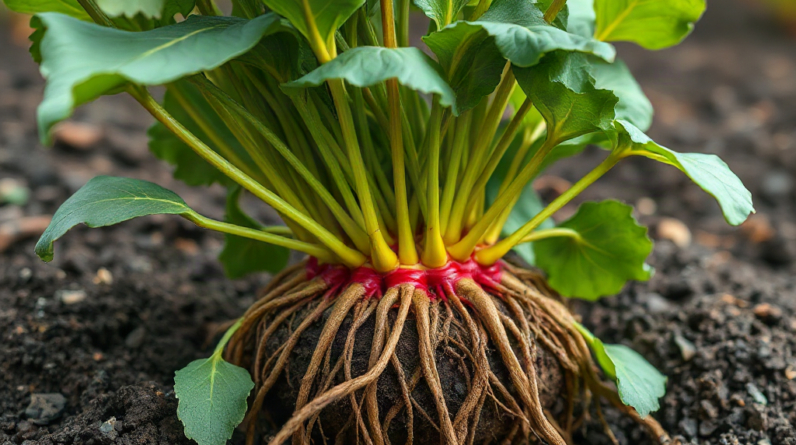
Manage root health for crop productivity by keeping the root zone oxygenated, maintaining crop-appropriate pH and nutrient strength, controlling solution temperature, and removing conditions that favor decay. Inspect root color, texture, odor, branching, and new growth alongside reservoir trends rather than judging roots by color alone. Correct low dissolved oxygen, excessive heat, clogged irrigation, or unstable nutrient concentration before adding treatments. Healthy roots are generally firm and actively branching, while persistent slime, tissue softness, stalled water uptake, or a sour odor calls for immediate investigation. Record adjustments and change one variable at a time so the response can be measured without creating additional stress.
Read Root Condition Before Growth Declines
Root inspections are most useful when they combine direct observation with changes in water use, nutrient solution behavior, and shoot growth. A single visual feature rarely proves that roots are healthy or diseased. Nutrient staining, growing media, crop species, and beneficial microorganisms can all affect appearance. Firmness, smell, active branching, and the presence of pale new root tips usually provide more decision value than color by itself.
Healthy roots should remain structurally intact when handled gently. In crops such as lettuce, fine roots may form a dense, light-colored mass, while tomato and cucumber plants develop thicker roots with extensive lateral branching. Tan staining can occur from certain nutrients or organic inputs without causing damage. By comparison, roots that feel soft, shed their outer tissue, carry slippery buildup, or smell sour indicate that root-zone conditions need prompt attention.
The canopy provides additional evidence. A plant with damaged roots may wilt even when water is present because impaired tissue cannot move enough water to the leaves. Slow nutrient uptake can produce pale foliage, weak new growth, or apparent deficiencies that do not respond to a stronger feed. Raising nutrient concentration in that situation may increase osmotic stress and make water uptake harder. The better first move is to inspect circulation, temperature, oxygen availability, and root texture.
Set a repeatable inspection schedule rather than waiting for visible collapse. Lift an accessible plant or open a service point at the same time of day, preferably before heat and transpiration peak. Note reservoir level, pH, electrical conductivity, solution temperature, flow at the farthest outlet, and any odor or debris. Compare affected plants with vigorous plants from another channel or bucket. A problem confined to one location points toward blocked flow, uneven aeration, or a damaged emitter; similar symptoms throughout the system suggest a shared reservoir or environmental cause.
A practical record for how to manage root health for crop productivity should distinguish observations from assumptions. Write “roots soft near net pot and outlet flow reduced,” not simply “root rot.” That wording keeps the next action tied to evidence and makes it easier to see whether restored flow produces firmer new roots.
Control Oxygen, Temperature, and Moisture Together
Root respiration depends on access to oxygen, and the delivery method differs by system. Deep-water culture supplies oxygen mainly through aeration and surface movement. Nutrient film systems rely on a thin moving solution and exposed root surfaces. Drip systems must balance irrigation frequency with air-filled space in the substrate. Treating all three systems alike creates avoidable root stress.
Warm solution deserves attention because warmer water holds less dissolved oxygen while root and microbial respiration may increase. The result can be a rapid shift from apparently normal growth to drooping, reduced uptake, and tissue breakdown. Cooling the growing room, shading reservoirs and plumbing, insulating exposed containers, and keeping pumps from adding unnecessary heat may be more dependable than repeatedly adding chilled water. Sudden temperature changes can stress plants and make reservoir conditions harder to interpret.
Aeration equipment must move enough water and air across the actual root mass, not merely create bubbles near one corner. As plants mature, roots can surround air stones, obstruct return lines, or create stagnant pockets. Check whether circulation reaches every container and whether air output has declined because of a clogged stone, kinked line, worn diaphragm, or failing pump. Redundancy is valuable in water culture because a single pump failure can affect roots faster than it would in an aerated substrate.
More irrigation is not automatically safer in coco coir, rockwool, or other substrates. Frequent pulses can keep salts more even, but the medium still needs drainage and pore space. A saturated slab with restricted drainage excludes air, while an undersized or overly dry root volume produces large swings in moisture and electrical conductivity. Adjust pulse timing to plant size, light period, container volume, and observed drainage rather than following a fixed schedule through the entire crop cycle.
Use this compact root-zone check when water uptake slows:
- Confirm delivery: inspect pump operation, emitters, returns, and the end of each channel.
- Check heat: compare solution temperature with recent normal readings and identify heat sources.
- Assess oxygen movement: look for reduced aeration, stagnant pockets, or roots blocking circulation.
- Review moisture: verify that substrate is neither persistently saturated nor drying unevenly.
The common mistake is changing aeration, irrigation frequency, and nutrient concentration simultaneously. That may temporarily alter symptoms but conceals the cause. Restore failed delivery first, then evaluate the plant’s response through new root tips, firmer tissue, stable water use, and renewed shoot growth.
Keep pH and Nutrient Strength Within a Stable Working Range
Stable root-zone chemistry matters more than chasing a perfect reading after every small movement. pH affects the chemical availability of mineral nutrients, while electrical conductivity indicates the total dissolved ion concentration rather than the concentration of each individual nutrient. Both measurements are valuable, but neither can identify root disease or confirm a balanced formula on its own.
Use targets appropriate to the crop, growth stage, water source, and fertilizer label. Young seedlings generally tolerate a milder solution than mature fruiting plants. Leafy greens and heavy-fruiting crops also differ in demand. A concentration that suits a large tomato canopy may stress newly transplanted lettuce, particularly under low light when transpiration and nutrient use are limited. Stronger feed should never be the default response to slow growth without checking roots and environmental conditions.
Trends reveal how plants and the reservoir interact. If the water level falls while electrical conductivity rises, plants may be removing proportionally more water than nutrients, or evaporation may be concentrating the solution. If water use and conductivity both decline steadily, active nutrient uptake may be occurring. Abrupt readings can also result from an uncalibrated meter, incomplete mixing, or sampling near a dosing point. Confirm suspicious values with a cleaned, calibrated instrument before making a major correction.
Large pH adjustments can expose roots to concentrated acid or base and can destabilize nutrient availability. Dilute adjustment products as directed, add them to moving solution away from roots, allow thorough mixing, and retest before adding more. Never combine concentrated fertilizer components together before dilution because precipitation can remove nutrients from usable solution and leave deposits in irrigation hardware.
Water quality sets the background for every nutrient decision. High alkalinity can push pH upward repeatedly, while a source with appreciable dissolved salts leaves less room for fertilizer before the desired conductivity is reached. A laboratory water analysis is more informative than assuming clear tap water is chemically simple. Growers using recirculating systems should also recognize that topping up replaces water and selected nutrients unevenly; periodic reservoir replacement may be needed when ion balance becomes uncertain.
The strongest approach to how to manage root health for crop productivity is conservative correction supported by records. Track what was added, how much solution remained, and how the crop responded over the next irrigation cycles. A stable trend and vigorous new roots are better evidence than forcing each reading back to a target several times per day.
Prevent Root-Zone Contamination and Irrigation Failures
Sanitation protects roots by limiting the transfer of decaying material, algae, and plant pathogens through shared water. It does not compensate for low oxygen, excessive temperature, or dead zones. A clean reservoir can still produce poor roots if circulation fails, while aggressive disinfectant use can damage root tissue or conflict with a system intentionally managed with beneficial organisms.
Exclude light from nutrient solution wherever possible. Light entering reservoirs, channels, tubing, or net-pot openings supports algae, which can consume oxygen, alter pH behavior, coat surfaces, and contribute organic debris as it dies. Cover gaps with opaque, cleanable materials, repair translucent plumbing, and remove established growth physically during system cleaning rather than relying only on additives.
Keep tools and plant handling practices from moving problems between zones. Remove dead roots and dropped leaves before they decompose. Clean measuring equipment after contact with the reservoir, and avoid returning sample solution to the tank. If one plant has extensive soft tissue and poor recovery prospects, isolating or removing it may protect neighboring plants in a shared recirculating system. The tradeoff is lost production from that plant versus continued exposure of the remaining crop.
Irrigation distribution should be tested under operating conditions. A pump may run while distant channels receive inadequate flow, and an emitter may drip without delivering the intended volume. Collect discharge from representative outlets for the same timed interval and compare results. Inspect filters, manifolds, return lines, and root intrusions. In a row where plants nearest the inlet thrive but those at the end remain small, uneven delivery is a stronger first hypothesis than a reservoir-wide nutrient deficiency.
Choose one root-zone management philosophy and operate it consistently. Sterile or low-microbial programs require compatible sanitation products, dosing discipline, and attention to label directions. Biologically managed programs depend on appropriate products and conditions that do not kill the organisms being introduced. Combining microbial inoculants with incompatible oxidizing treatments wastes inputs and makes outcomes unpredictable. Neither approach overrides the need for oxygen, sensible temperatures, clean hardware, and removal of decaying tissue.
A preventive routine should cover reservoir surfaces, pump intake screens, aeration devices, emitters, drain paths, and areas where roots accumulate. Cleaning only the visible tank leaves biofilm and debris elsewhere in the circuit. Document the interval and shorten it when filters clog faster, flow becomes uneven, or organic residue builds between crop cycles.
Use a Root Recovery Sequence That Protects the Crop
Root recovery should begin with the failed physical condition, not a collection of unverified additives. Confirm that every plant receives water, restore aeration or drainage, correct excessive heat gradually, and remove dead plant material. These actions address the conditions that continue damaging tissue. Products cannot rescue roots while a pump remains off or a return line stays blocked.
Separate localized problems from system-wide problems before replacing the reservoir. One wilted plant in a multi-channel installation may have a pinched supply line, stem injury, or compacted media. Replacing all solution would add cost without fixing that obstruction. Widespread odor, unstable chemistry, heavy debris, or similar root decline across connected plants makes a full-system response more reasonable.
Avoid cutting away large portions of living roots simply because they are stained. Remove tissue only when it is clearly dead, detached, or decomposing, and handle remaining roots gently. Damaged roots have reduced capacity, so the canopy may need lower short-term demand through moderated heat and light rather than a stronger nutrient solution. Do not make severe environmental changes that introduce a second stress.
Measure recovery through new growth rather than expecting old roots to regain their original appearance. Useful signs include firm pale root tips, resumed lateral branching, steadier water uptake, improved leaf posture, and new leaves expanding normally. Continued softening, spreading odor, repeated wilting, or falling uptake indicates that the cause remains active or the plant has insufficient viable root tissue.
Use a 24- to 48-hour observation window where crop condition permits, but respond immediately to stopped irrigation, failed aeration, or rapidly collapsing plants. Log the original symptoms, the correction, and the next readings. If multiple changes are unavoidable during an emergency, record all of them and avoid claiming that one product produced the recovery.
Long-term how to manage root health for crop productivity depends on turning the event into an operational correction. Add a pump alarm, reposition an air stone, increase return-line capacity, shield a warm reservoir, or revise inspection frequency according to the failure found. Recovery saves the current planting when possible; correcting the underlying system protects later plantings.
Frequently Asked Questions
What do healthy hydroponic roots look like?
Healthy roots are generally firm, actively branching, and free of slippery decay or sour odor. Color varies with crop, fertilizer, media, and microbial inputs, so texture and new root growth are more dependable than whiteness alone.
Can brown roots still be healthy?
Yes. Nutrient staining and organic inputs can darken otherwise firm roots. Browning becomes more concerning when it appears with softness, shedding tissue, slime, odor, reduced water use, or wilting.
Should nutrient strength be increased when plants wilt?
Not until water delivery, root condition, temperature, and oxygen are checked. Wilting with wet roots can reflect impaired uptake, and raising nutrient concentration may increase stress rather than correct it.
How often should hydroponic roots be inspected?
Inspect accessible roots and root-zone readings on a consistent schedule, with more frequent checks during hot weather, after equipment changes, or when water use shifts unexpectedly. Avoid excessive handling of delicate roots.
When should a declining plant be removed?
Removal is reasonable when extensive tissue is decomposing, recovery has stopped, or the plant may contaminate shared recirculating water. First rule out a localized blocked emitter or mechanical injury that can be corrected.
Conclusion
Productive root zones are built through stable operation and early detection rather than emergency additives. Inspect roots alongside water use, pH, electrical conductivity, temperature, circulation, and irrigation distribution. Prioritize failed pumps, blocked lines, heat, low oxygen, and persistent saturation before altering the nutrient formula. Use color as one clue, but give more weight to firmness, odor, branching, and the appearance of new root tips.
When decline appears, determine whether it affects one plant, one zone, or the shared system. Correct the physical cause, remove decaying material, and document each adjustment. The next practical step is to establish baseline readings for a healthy crop and schedule checks of outlets, aeration equipment, drains, and accessible roots. Those records make subtle deterioration easier to recognize and turn each root problem into a specific system improvement.
Further Reading
Authoritative Sources
- The soil-root nexus: how soil health shapes plant nutrient ...
link.springer.comSoil degradation significantly threatens crop productivity, soil fertility, and global food security by impairing nutrient cycling and soil ...
- Exploring the link between soil health and crop productivity
researchgate.netCrop rotation, cover cropping, and residue management can significantly reduce GHG emissions by improving soil carbon sequestration and reducing ...
- Advancing Nutrient Management Strategies for ...
onlinelibrary.wiley.comThey involve the careful application of fertilizers and soil amendments to maintain soil health, improve crop yields, and promote sustainable ...