Maintain consistent nutrient solution temperatures by measuring the reservoir itself, insulating it from heat swings, and using active heating or cooling when the room cannot hold a stable range. A submerged thermometer or temperature probe reveals changes that air readings miss, while a covered, light-blocking reservoir reduces warming and algae-favoring light exposure. Keep pumps, lights, and warm equipment from transferring unnecessary heat, and check readings at the same times each day. Sudden temperature changes can stress roots, reduce dissolved oxygen, and encourage root-zone problems, so adjust gradually rather than adding hot or cold water directly.
Why Reservoir Temperature Stability Matters
Nutrient solution temperature affects the root environment, not merely the comfort of the grow room. Warm liquid holds less dissolved oxygen than cool liquid, and a reservoir that heats during the light period may leave roots facing a very different environment by evening. Cooler conditions can slow biological and chemical activity, while excessive warmth may make root-zone problems more likely when sanitation, aeration, or circulation is already inadequate.
Consistency matters because roots respond to the conditions surrounding them over time. A deep-water culture reservoir beside a powerful grow light may rise several degrees during the day and cool rapidly overnight. An air temperature reading near the canopy will not reveal that change. A covered reservoir in a shaded area may remain more stable even when the room varies, which is why the liquid itself must be measured.
Temperature should be considered alongside dissolved oxygen, circulation, pH, and electrical conductivity. Cooling a poorly aerated reservoir does not correct inadequate oxygen transfer, and heating a cold solution does not make an unsuitable room appropriate for every crop. The useful goal is a stable, crop-appropriate root-zone environment rather than a single number pursued without context.
A common mistake is treating temperature as an emergency variable only. If plants wilt, roots discolor, or pH shifts unexpectedly, temperature may be involved, but the reading should be interpreted with equipment condition and water quality. Use how to maintain consistent nutrient solution temperatures as a routine operating question: where does heat enter, where does it leave, and when does the largest swing occur?
How To Measure And Track Temperature Accurately
Measure the reservoir at the depth where roots and circulating solution actually experience the temperature. A waterproof digital thermometer can work for periodic checks, while a continuously submerged probe is more useful when room conditions change quickly. Place the sensor away from a heater, pump outlet, or cooling coil so it records the general reservoir condition instead of a localized pocket.
Record readings at consistent times, such as shortly before lights on and near the end of the light period. The difference between those readings identifies a daily swing that a single spot check can hide. A grower might see a comfortable morning value, then miss an afternoon rise caused by a light fixture warming the lid. Data logging is especially useful for small reservoirs because they change faster than larger tanks.
Check the instrument against another reliable thermometer occasionally. A probe coated with mineral residue, sitting above the liquid line, or exposed to direct light can provide misleading information. If a reading changes abruptly, confirm it before altering the reservoir. Do not automatically correct temperature by changing nutrient concentration or pH; those are separate measurements with separate causes.
Use a simple log that includes room temperature, reservoir temperature, light schedule, pump status, and any heating or cooling equipment. The pattern often points to the source. If the solution warms only when lights operate, shade and insulation may solve much of the issue. If it rises whenever a pump runs, inspect motor heat and plumbing placement. A thermometer without a record tells you the current state; a record helps explain the system.
- Measure the liquid, not only the surrounding air.
- Compare readings across the daily light cycle.
- Keep the probe clean, submerged, and away from heat sources.
- Confirm surprising readings before making a correction.
Readers building a broader monitoring routine can connect temperature records with how to maintain consistent nutrient solution temperatures and their existing pH and EC logs. That comparison prevents a common false assumption: a stable air temperature does not guarantee a stable reservoir.
Passive Ways To Limit Temperature Swings
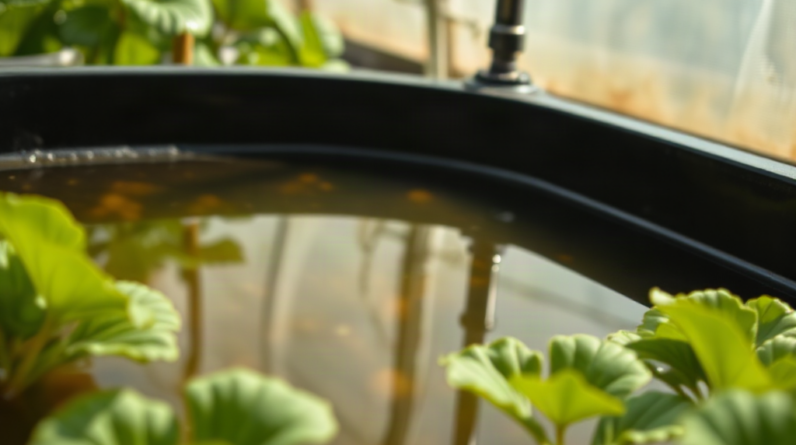
Passive control should come before expensive equipment because it reduces the amount of heating or cooling required. Place the reservoir away from direct light, warm drivers, exhaust discharge, radiators, and sunlit windows. Use an opaque lid that fits closely around plant sites and plumbing openings. Light exclusion can also limit algae growth, which otherwise adds biological demand to the root environment and complicates temperature-related diagnosis.
Insulation around the sides and bottom of a reservoir slows heat exchange with the room or floor. Foam board, purpose-made tank insulation, or another moisture-resistant material can help, provided it is secured safely and does not obstruct inspection or create a difficult-to-clean surface. Do not seal a reservoir so completely that routine access, aeration, or spill management becomes awkward.
Reservoir volume changes the rate of temperature movement. A small tank may heat quickly under a lamp and cool quickly after lights out; a larger, well-covered tank generally changes more slowly. Increasing volume is not automatically better, since more solution requires more nutrients and cleaning effort. The practical choice is a reservoir sized for stable operation and manageable maintenance, not simply the largest container available.
Equipment placement also matters. Submersible pumps transfer some motor heat into the solution, and warm return lines can raise the temperature before liquid reaches the tank. External pumps may reduce direct heat transfer, but they introduce plumbing, leak, and priming considerations. Compare the complete setup rather than assuming one pump style is universally preferable.
For a small indoor system, moving the reservoir into a shaded cabinet, adding a reflective cover, and separating it from the light driver may reduce the daily swing enough that active cooling is unnecessary. In a hot room, those steps may only delay warming. Watch for failure signs such as a steady afternoon rise despite insulation, condensation around cooling equipment, or a temperature difference between the tank and the return stream. Passive measures are low-cost tools, not substitutes for capacity when the surrounding room is far outside the desired range.
Choosing Heating And Cooling Equipment
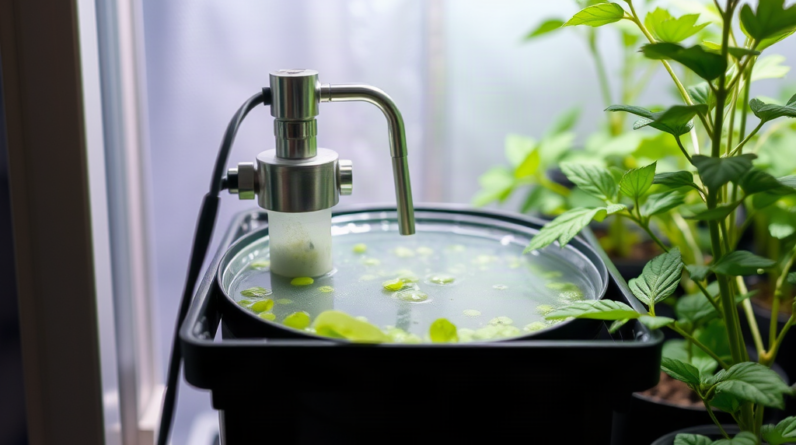
Active equipment is appropriate when passive measures cannot keep the reservoir within a suitable, repeatable range. An aquarium-style submersible heater can raise a cold solution, but it should be paired with a thermostat or controller rather than left to run continuously without verification. Protect the heater from direct contact with plastic, keep it fully submerged according to its instructions, and allow circulation to distribute heat.
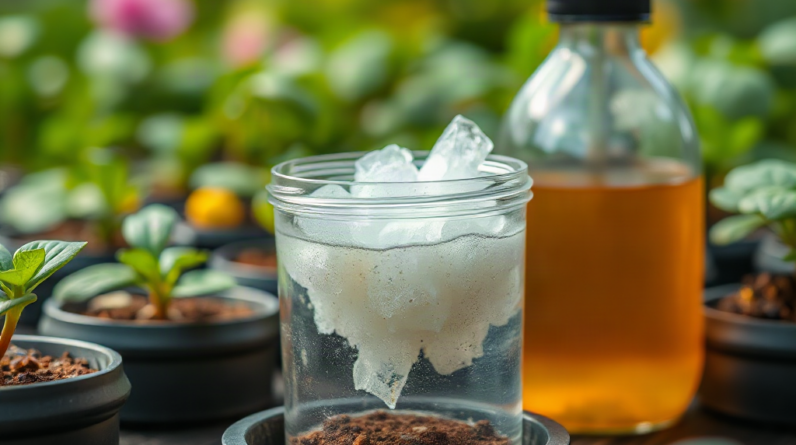
Cooling is more demanding. A fan blowing across an open reservoir may lower temperature through evaporation, but it also changes humidity, concentrates dissolved minerals as water leaves, and increases contamination exposure. Frozen bottles offer temporary relief for a small tank, yet they create sharp local changes and require repeated handling. A purpose-built water chiller costs more and consumes energy, but it provides steadier control when room heat is persistent.
Match equipment capacity to the reservoir and the heat load. Oversized equipment may cycle too aggressively, while an undersized unit may run continuously without reaching the set point. A controller with a reasonable differential can prevent rapid on-off cycling. Place the temperature sensor in a well-mixed area and verify the actual liquid temperature independently after installation.
Heating and cooling can work against each other when equipment is poorly positioned. A chiller in a confined cabinet may discharge warm air back into the same space, causing longer run times. A heater near a sensor may satisfy the controller while the opposite side of the tank remains cold. Circulation, sensor placement, ventilation, and electrical safety deserve as much attention as the equipment label.
Do not correct a large temperature difference abruptly unless plant safety requires immediate intervention. Replace a portion of the solution with water closer to the target, allow circulation to mix it, and recheck gradually. When a persistent problem appears, identify the heat source first. Adding a stronger chiller to a reservoir exposed to direct light may treat the symptom while increasing energy use and maintenance.
A Practical Temperature-Management Routine
A repeatable routine makes temperature control easier than reacting to symptoms. Establish the normal reading for your reservoir during lights-off and lights-on periods, then define a warning point based on the crop, system design, and the equipment manufacturer’s guidance. Avoid presenting one universal target as suitable for every plant; root oxygen demand, room conditions, and system type change the consequences of a temperature shift.
Use this order when investigating an unstable reading:
- Confirm the thermometer or probe with a second reading.
- Inspect the reservoir lid, light exposure, insulation, and nearby heat sources.
- Check pump operation, aeration, return-line routing, and equipment ventilation.
- Review the day-night temperature pattern rather than one isolated value.
- Make one adjustment, allow the system to mix, and measure again.
Plants may signal that the root environment is struggling through reduced vigor, unusual root appearance, unstable pH, or a mismatch between expected water use and observed uptake. None of these signs proves temperature is the cause. Check dissolved oxygen, cleanliness, nutrient strength, water level, and root health at the same time. A temperature correction cannot compensate for stagnant solution or an obstructed air line.
Routine maintenance should include cleaning the probe, inspecting insulation for moisture damage, checking heater and chiller operation, and confirming that the reservoir remains light-tight. Keep a backup thermometer available during equipment failure. If cooling stops in a warm room, reduce unnecessary heat input, increase safe room ventilation, and avoid repeated additions of ice that create unstable conditions.
Consistent records also make seasonal changes manageable. A setup that needs no cooling in winter may require shading and active control in summer. Revisit the arrangement when lights, pumps, or room ventilation change. The best next step for a grower is often not a new device but a short log that identifies when and where the temperature moves.
For related planning, use how to maintain consistent nutrient solution temperatures alongside reservoir cleaning and aeration procedures. Temperature control works best as part of a coordinated root-zone routine, not as an isolated adjustment.
Frequently Asked Questions
Should I measure room temperature or reservoir temperature?
Measure both, but use the reservoir reading to judge the root environment. Air temperature can remain steady while lights, pumps, or plumbing change the liquid temperature.
Can insulation keep a nutrient reservoir cool?
Insulation slows heat exchange but does not remove heat already entering the tank. Combine it with light exclusion, better equipment placement, and active cooling when the room remains hot.
Are frozen bottles safe for lowering solution temperature?
They can provide temporary relief in a small reservoir, but they may create uneven cooling and dilute the solution as condensation or meltwater enters. Use sealed bottles and recheck the reading after mixing.
Where should a temperature probe sit?
Place it fully submerged in a well-mixed part of the reservoir, away from a heater, chiller outlet, pump motor, direct light, and the tank wall.
What should I check if temperature keeps rising?
Confirm the probe, then inspect light exposure, pump heat, return lines, room ventilation, insulation, and chiller airflow. Track the timing of the rise to identify the active heat source.
Conclusion
Stable nutrient solution temperature comes from controlling heat transfer, measuring the liquid directly, and responding to patterns rather than isolated readings. Begin with a clean, verified probe and a short lights-on/lights-off log. Then block light, separate the reservoir from warm equipment, improve insulation, and confirm that circulation and aeration distribute conditions evenly. Add a heater, chiller, or controller only when the room’s heat load exceeds what passive measures can manage. Make changes gradually and assess temperature alongside oxygenation, pH, EC, water level, and root appearance. That sequence limits wasted equipment purchases and makes failures easier to diagnose. A reservoir that stays within a predictable range gives the root zone a more consistent operating environment and makes the rest of the growing routine easier to interpret.
Further Reading
Authoritative Sources
- Smart Nutrient Solution Temperature Control System for ...
mdpi.comThe temperature of the nutrient solution directly influences root-zone temperature, enabling precise regulation through heating or cooling. Although nutrient ...
- Effect of Cooling Water Temperature on Nutrient Solution ...
bjas.journals.ekb.egIn arid regions, maintaining an optimal RZT is particularly challenging due to high ambient temperatures that can lead to excessive heating of the nutrient ...
- Effects of Nutrient Solution Management and Environment ...
journals.ashs.orgIn commercial and research hydroponic systems, maintaining a balanced nutrient solution ... room, set at a constant temperature of 21 °C. Plants ...
- Keep Your Hydroponic System Running Smoothly With ...
generalhydroponics.comA good maintenance routine protects the root zone by keeping the nutrient solution clean, the reservoir covered, the water temperature stable, and the system ...