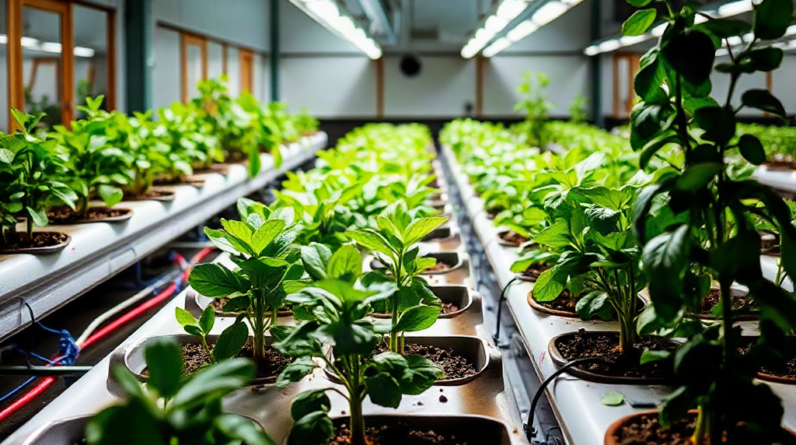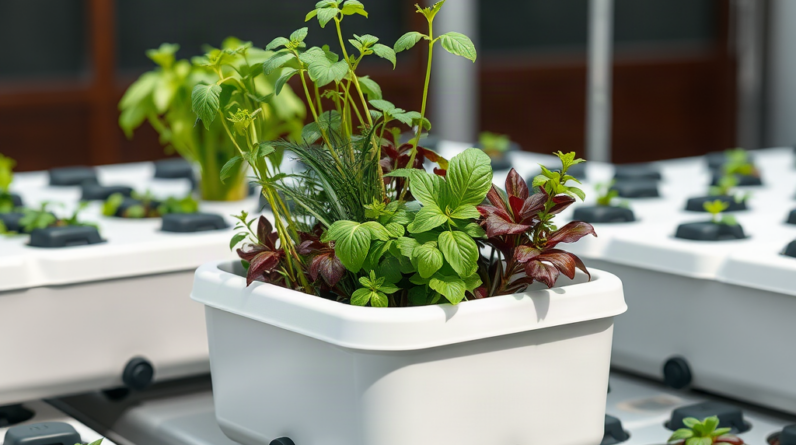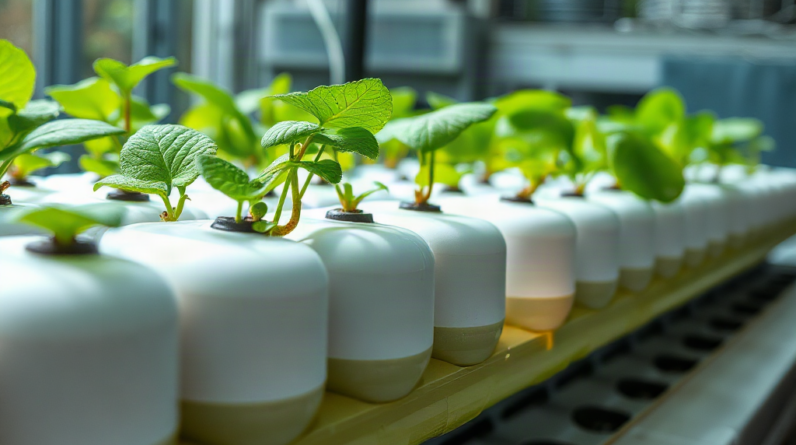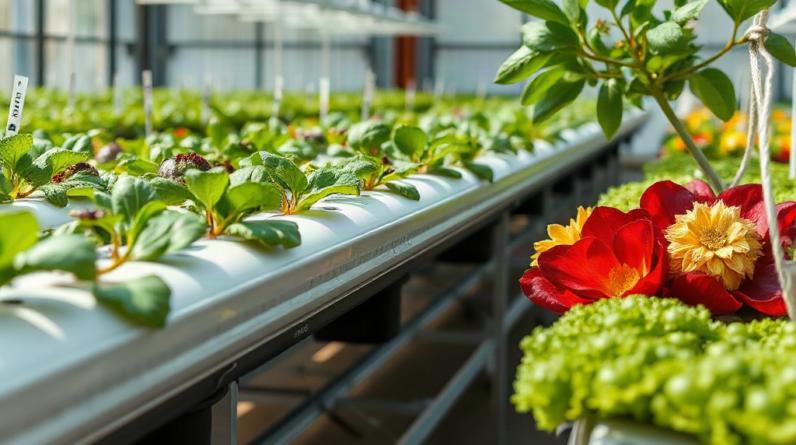
Optimize water usage in hydroponic gardening by recirculating the nutrient solution, covering exposed reservoirs and channels, repairing leaks, and replacing only the volume plants and evaporation remove. Measure reservoir loss at the same time each day, then distinguish normal crop uptake from abnormal losses caused by dripping fittings, overflowing return lines, or excess heat. Keep water quality stable by monitoring electrical conductivity, pH, temperature, and dissolved oxygen rather than automatically discarding the reservoir on a fixed schedule. The most efficient setup conserves water without allowing salts, pathogens, or root debris to accumulate beyond manageable levels.
Measure Where the Water Actually Goes
Water efficiency begins with a reservoir record, not an equipment purchase. Mark the operating level on the reservoir, record how much replacement water is added, and take readings at roughly the same time each day. Consistent measurements reveal whether water is reaching plants, evaporating from exposed surfaces, or escaping through the system. A single observation after several hot days cannot separate those causes.
Plant uptake should generally rise as leaf area and root mass increase. Temperature, airflow, humidity, crop type, and fruiting stage also affect consumption. A mature tomato crop under bright lights may remove substantially more solution than a tray of young lettuce, so a rising top-off requirement is not automatically waste. Concern is warranted when the reservoir drops faster without a corresponding change in crop size or growing conditions.
Inspect the system while the pump is operating because pressure-dependent leaks may disappear when it stops. Run a dry hand or paper towel around tubing joints, bulkhead fittings, valves, drippers, and pump connections. Check beneath channels and plant sites for slow seepage. A small leak near electrical equipment deserves immediate attention even when its contribution to total water loss appears minor.
Return-flow behavior provides another useful clue. Water entering the reservoir in surges may indicate a partially blocked drain, an uneven channel, or roots obstructing an outlet. When the obstruction clears, accumulated solution can arrive faster than the reservoir can contain it. Conversely, a weak return combined with a falling level can indicate water pooling elsewhere in the system.
Create a simple baseline over seven ordinary operating days. Record the starting level, top-off volume, room temperature, visible leaks, and any maintenance performed. This turns how to optimize water usage in hydroponic gardening into a measurable operating task. The common mistake is chasing the lowest possible daily consumption; the better target is predictable use with no unexplained loss and no plant stress.
Reduce Evaporation, Leaks, and Overflow
Exposed nutrient solution loses water while leaving dissolved fertilizer behind. Reservoir lids, fitted covers over unused planting sites, and opaque channel surfaces limit that evaporation while also reducing light exposure that encourages algae. Covers should fit closely without sealing pumps, air lines, or access points so tightly that inspection and ventilation become difficult.
Solution temperature deserves attention because warm water evaporates faster and holds less dissolved oxygen than cooler water. Position reservoirs away from direct sunlight, hot walls, and lighting ballasts. Insulating an exposed container may be more economical than installing active chilling in a small garden. Active cooling becomes more defensible when room conditions remain warm and root-zone temperature cannot be controlled through placement, shading, or ventilation.
Overflow prevention requires enough unused reservoir capacity to receive water held in channels and plumbing. Before setting the maximum fill line, switch off the pump and watch how much solution drains back. The final resting level must remain safely below the rim. Filling a running system to the top is a frequent mistake: when power stops, return water can spill onto the floor even though the system appeared stable during operation.
Use fittings sized for the pump flow rather than relying on valves to force excess output through narrow lines. Excess pressure can loosen tubing, produce mist at drippers, and turn a minor connection weakness into a persistent leak. Where practical, secure flexible tubing with suitable clamps and provide strain relief so the weight of a hose does not pull against a reservoir wall fitting.
Evaporation and transpiration should not be confused. Raising room humidity solely to reduce reservoir loss can weaken plant transpiration and increase condensation or disease pressure if airflow is inadequate. Covering water surfaces is usually a more targeted intervention than changing the entire growing climate. Signs that loss control is working include steadier top-off volumes, less salt concentration between checks, dry surfaces beneath fittings, and no change in plant posture. Condensation inside electrical enclosures, slimy covered channels, or persistently warm solution signals that conservation measures have introduced a different problem.
Recirculate Without Letting Solution Quality Decline
Recirculation saves water only when the returned solution remains suitable for the crop. Plants remove water and individual ions at different rates, so topping up a reservoir does not restore its original nutrient balance. Electrical conductivity can indicate the total concentration of dissolved salts, but it cannot show whether one element has accumulated while another has been depleted.
Use pH and electrical conductivity trends together with top-off volume and plant appearance. If the water level falls while conductivity climbs, plants may be removing proportionally more water than dissolved minerals; add plain source water gradually and recheck. If both the level and conductivity fall, a carefully measured nutrient addition may be appropriate. Repeatedly adding full-strength solution to replace every lost litre can drive salts upward and eventually damage roots.
A fixed weekly reservoir dump is simple but may waste usable water. Keeping the same solution indefinitely creates the opposite risk: ion imbalance, organic debris, root exudates, and microorganisms can accumulate even when headline readings look acceptable. A condition-based approach is more efficient. Replace or substantially refresh solution when pH or conductivity becomes difficult to stabilize, plants show unexplained stress, the solution develops persistent odor or cloudiness, root disease is suspected, or crop requirements change.
Filtration and sanitation extend useful solution life but serve different purposes. A screen or inline filter captures root fragments and growing-medium particles that could block emitters. Cleaning exposed surfaces and removing dead roots reduces the organic load entering the reservoir. Neither practice makes contaminated water automatically safe to reuse. If several plants develop brown, soft roots or a foul smell, maximizing water retention should give way to isolating the problem, cleaning the system, and protecting unaffected plants.
Source-water quality sets the limits of reuse. Water with substantial background mineral content gives growers less room to add fertilizer before conductivity becomes excessive. Collecting rainwater may reduce reliance on treated supply where collection is lawful and the roof, storage vessel, and local air conditions do not introduce contaminants. Test unfamiliar water before mixing a full reservoir. Efficient water management in hydroponic gardening protects nutrient stability rather than treating every discarded litre as failure.
Match Irrigation Delivery to Roots and Growing Media
Irrigation should wet the active root zone without sending unnecessary solution past it. Delivery requirements differ among deep-water culture, nutrient film technique, ebb-and-flow beds, and drip systems. Trying to apply one timer schedule across these designs can either waste pumping capacity and water or leave roots inadequately supplied.
In a drip system, place each emitter where solution spreads through the root-bearing portion of the medium. A dripper pressed against the container wall may create a narrow wet path that drains immediately while much of the root zone stays dry. Test distribution by inspecting several containers shortly after irrigation rather than assuming equal flow because all emitters look alike. Catching emitter output in identical cups for a timed interval can expose partial blockages and pressure differences.
Media alter the decision. Coco coir retains more moisture than coarse clay pebbles, so it may tolerate longer gaps between events, although crop size and container volume still matter. Clay pebbles drain quickly and may need shorter, more frequent cycles. Extending every event to be safe often increases return volume without improving root hydration. The better adjustment is to change one variable at a time—event length or frequency—and observe root-zone moisture, runoff, and plant response.
Nutrient film channels need a continuous, shallow flow that reaches every root mat. Increasing pump output cannot reliably correct a channel that is poorly leveled or obstructed. Excess flow may deepen the stream, reduce aeration around roots, and overwhelm drains. In ebb-and-flow systems, trays should fill evenly and drain fully; low spots that retain solution increase stagnant volume and complicate sanitation.
Watch plants near the far end of a line because they often reveal distribution problems first. Wilting during the light period, dry media below an apparently wet surface, uneven crop size, or emitters that continue dripping long after shutdown indicate delivery needs attention. A successful adjustment produces more uniform moisture and growth without a rising top-off requirement. The mistake to avoid is shortening irrigation solely to save water: insufficient delivery can reduce growth and concentrate salts around roots, undermining the purpose of the system.
Use a Weekly Water-Efficiency Checklist
A short weekly inspection catches small losses before they distort nutrient management or damage the growing area. Perform it with the system running, then repeat the overflow check during a controlled shutdown. Keep observations with the reservoir log so maintenance decisions reflect trends rather than memory.
- Confirm the baseline: Compare this week’s top-off volume with crop size, temperature, humidity, and the previous week.
- Trace the full circuit: Inspect the reservoir, pump, supply tubing, emitters, channels, drains, and return connections for moisture or pooling.
- Test shutdown capacity: Stop the pump and verify that all returning solution remains below the reservoir’s safe fill line.
- Check delivery uniformity: Compare flow at the first, middle, and last outlets, and clear filters or emitters when output differs.
- Review solution condition: Record pH, electrical conductivity, temperature, odor, clarity, and visible root condition before deciding to top up or replace.
- Inspect covers: Close unused planting holes and gaps while preserving access, airflow, and safe routing for cables and tubing.
- Make one correction: Repair the largest confirmed source of loss, then measure long enough to verify the effect before changing another variable.
Prioritization matters. An active leak or overflow risk comes before small evaporation savings because it can empty a reservoir rapidly and create electrical or structural hazards. Unstable solution chemistry comes next because conserving degraded solution threatens the crop. Once those risks are controlled, refine irrigation duration, insulation, and covers to capture incremental savings.
For a small home system, a marked reservoir and written log may be sufficient. Larger gardens benefit from float switches, leak sensors, flow monitoring, or automated dosing, but automation does not remove the need for inspection. A stuck float valve can waste more water than manual topping up, and a sensor can report normal reservoir depth while solution leaks into a tray elsewhere. Anyone applying how to optimize water usage in hydroponic gardening should verify automation against physical measurements.
Judge progress over comparable crop periods. Lower use during the seedling stage does not prove that a change will remain efficient after the canopy expands. The strongest result is a stable ratio between water added and healthy crop development, accompanied by fewer unexplained level changes, consistent outlet flow, and manageable nutrient readings.
Frequently Asked Questions
How often should a hydroponic reservoir be topped up?
Check the level daily and add water when needed, especially with mature crops or warm conditions. Record the amount added and avoid automatically replacing lost volume with full-strength nutrient solution.
Does covering a hydroponic reservoir reduce water use?
Yes. An opaque, fitted cover limits evaporation and light exposure while keeping debris out. Leave suitable openings for air lines, cables, inspection, and equipment ventilation.
Should old hydroponic nutrient solution be reused indefinitely?
No. Recirculation extends solution life, but pH instability, persistent cloudiness or odor, root problems, and difficult conductivity control are reasons to refresh it and inspect the system.
Why does reservoir conductivity rise after adding water?
Conductivity normally falls after plain water is added. A rising reading may reflect incomplete mixing, an inaccurate meter, temperature effects, or continued evaporation, so mix thoroughly and verify calibration before adding anything else.
Can automated top-off systems conserve water?
They can maintain a stable level and prevent pump exposure, but they may hide leaks or waste water if a float valve sticks. Pair automation with a safe overflow route, shutoff protection, and manual volume checks.
Conclusion
Efficient hydroponic water use is demonstrated by stable records, uniform delivery, and healthy roots—not by minimizing every refill. Establish a daily top-off baseline, inspect the circuit under pressure, and verify that the reservoir can hold drain-back during shutdown. Then limit avoidable evaporation with covers and sensible temperature control while monitoring pH, electrical conductivity, and solution condition.
Repair active leaks and overflow risks before fine-tuning timers or buying automation. Adjust irrigation according to the system design and growing medium, changing one setting at a time so its effect is visible. During the next week, mark the reservoir, measure each addition, compare outlets, and document one corrective action. Those observations will show whether water is supporting crop growth, accumulating in the wrong place, or leaving the system unnecessarily.
Further Reading
Authoritative Sources
- How Much Water Does a Hydroponic System Use?
dosatron.comHydroponic systems are known for being very water-efficient. They often use up to 90% less water than traditional farming. This is due to their design that ...
- Optimizing Nutrient Compensation Intervals Based on Ionic ...
mdpi.comClosed hydroponics (recirculating) is increasingly recognized as a sustainable approach for conserving water and fertilizer resources.
- Monitoring Runoff in Recirculating Hydroponic Systems
emeraldharvest.coThis blog post addresses when to collect runoff samples, what to test for and how to adjust your nutrient solution based on the analysis. If ...