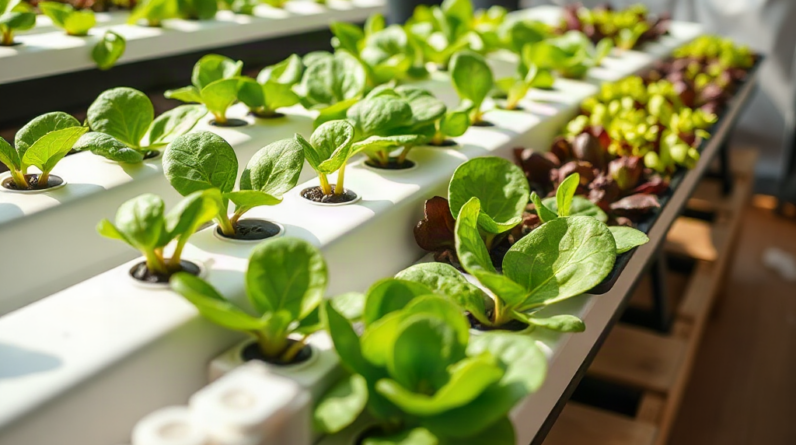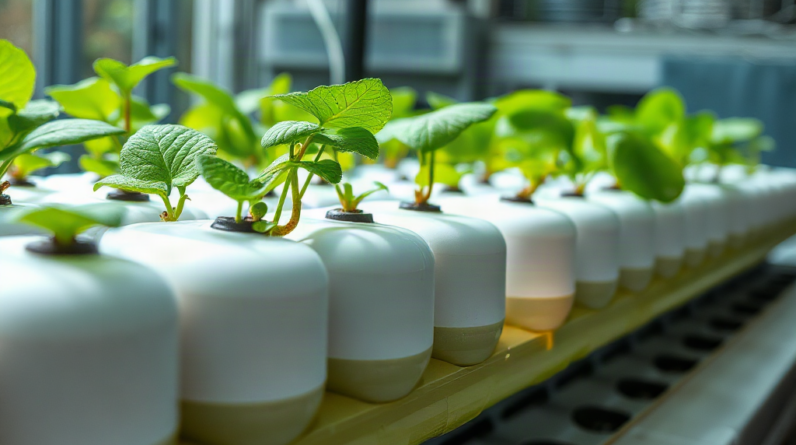
Hydroponic gardening water loss from evaporation is controlled most effectively by covering exposed nutrient solution, limiting unnecessary airflow across the reservoir, moderating solution temperature, and measuring daily level changes. Evaporation removes water but leaves dissolved fertilizer behind, so electrical conductivity can rise even when plants have not consumed more nutrients. Mark the operating level, record top-up volume at the same time each day, and compare readings with plant size, room humidity, and temperature. A sudden increase may indicate a leak, plant transpiration, or equipment splash rather than evaporation alone, so identify the source before changing nutrient strength.
Where Reservoir Water Actually Goes
A falling reservoir level does not reveal how much water evaporated. The missing volume may have left through open liquid surfaces, plant transpiration, leaks, splashing, drainage, or a combination of these routes. Separating them matters because each calls for a different response. Covering a reservoir will reduce direct evaporation, for example, but it will not stop mature tomato plants from moving substantial water through their leaves.
Direct evaporation occurs wherever nutrient solution or wet growing media meet moving air. An uncovered reservoir is the most obvious surface, but net pots, return channels, exposed plumbing openings, damp rockwool, and gaps around plant sites can also contribute. Warm solution and dry air increase the vapor-pressure difference between the liquid surface and the room, while fans continually replace the humid boundary layer immediately above that surface. A fan aimed across an open tote can therefore accelerate loss even if the room temperature remains unchanged.
Transpiration is different: roots take up water, the plant transports it upward, and leaves release much of it through stomata. As a crop develops a larger canopy, reservoir demand commonly rises even when the equipment and room conditions remain stable. That water movement is part of normal plant function, not waste that should be suppressed indiscriminately. Aggressively raising humidity or reducing all air movement to save water can weaken evaporative cooling at the leaf surface and create stagnant conditions around foliage.
Consider two identical reservoirs in the same room. One supports newly transplanted lettuce and the other supports nearly harvest-sized plants. If the mature crop loses more water while both covered reservoirs remain dry externally, transpiration is the likely difference. If an empty covered reservoir also drops noticeably, inspect for a plumbing leak, a poorly seated drain fitting, spray reaching outside the channel, or an air stone creating droplets near a lid gap.
The practical priority is to classify the loss before trying to control it. Check the floor, tubing joints, return line, and container walls first; leaks can damage a room and alter nutrient concentration unpredictably. Then distinguish exposed-surface evaporation from crop use. Treating every level decline as hydroponic gardening water loss from evaporation can lead to unnecessary environmental changes and incorrect fertilizer additions.
How to Measure Evaporation Accurately
Consistent measurements are more useful than a single reservoir reading. Mark a normal operating line on the container and record how much plain water is required to restore that level at the same time each day. Measure before routine draining, sampling, or plant work so those activities do not distort the result. A calibrated jug is usually more reliable than estimating volume from the distance between two marks on a tapered container.
Record solution temperature, room temperature, relative humidity, crop stage, and any change in fan operation alongside the top-up volume. These observations create context. A higher top-up requirement after the canopy doubles in size is not equivalent to the same increase after a reservoir lid is removed. Electrical conductivity and pH readings provide further clues, although they cannot independently identify the route of water loss.
A simple comparison test can isolate direct reservoir evaporation. Place a shallow, measured container of plain water near the system, with a similar exposed surface and airflow, but keep it physically separate from nutrients and electrical equipment. Weighing the container before and after a fixed period gives a cleaner measurement than reading a shallow waterline; one gram of mass loss is approximately one milliliter of water under ordinary growing-room conditions. This test represents exposed water, not plant transpiration, and should be treated as a diagnostic comparison rather than a perfect model of the reservoir.
Use this compact check when the level drops faster than expected:
- Inspect for escape: Look beneath fittings, around pumps, along return channels, and near aeration openings.
- Restore a fixed level: Add measured plain water and note the volume, EC, pH, and time.
- Review the environment: Record humidity, solution temperature, fan direction, and whether a lid or access panel was moved.
- Compare crop demand: Note canopy growth, recent pruning, unusually bright lighting, or wilting.
- Repeat under the same conditions: A short series of comparable readings is more informative than one unusual day.
The method is working when readings become explainable and repeatable. Failure signs include large unexplained swings, wet surfaces outside the system, a pump that intermittently sprays the lid, or reservoir loss continuing after plants and exposed openings have been removed from the test. Avoid using a universal acceptable-loss percentage: system area, crop type, plant maturity, climate, and operating temperature vary too widely for one threshold to be meaningful.
Ways to Reduce Unnecessary Water Loss
Covering exposed nutrient solution offers the most direct control because it reduces the liquid area in contact with room air. Use an opaque, fitted reservoir lid with openings only for tubing, cables, top-up access, and ventilation required by the equipment. Flexible collars around plant sites can cover gaps without gripping stems. In channels or deep-water-culture containers, unused net-pot positions should be capped rather than left as open windows to the solution.
Opacity serves two purposes: it slows evaporation and blocks light that could encourage algae. The cover should not seal the system so tightly that cables are pinched, return flow is restricted, or heat becomes trapped. Check the underside for heavy condensation and confirm that pumps and air lines still operate normally. Condensation remaining inside the reservoir is largely returned water; droplets escaping through openings or running down the exterior are actual system losses.
Airflow requires more judgment. Plants need circulation around leaves, but a fan does not need to sweep directly across an uncovered reservoir or wet growing bed. Redirect the fan above the container and across the canopy, then check for leaf movement throughout the growing area. This preserves circulation while reducing air exchange at the liquid surface. Lower fan speed may save some water, but weak canopy airflow can leave humid pockets around dense foliage, so direction is often a better adjustment than simply turning the fan down.
Solution temperature should be managed for root-zone suitability rather than evaporation alone. Moving a reservoir away from hot lights, sunlit windows, furnace outlets, or warm equipment can reduce heat gain without forcing an unnaturally cold root zone. Insulating the container may stabilize temperature, but insulation cannot remove heat generated by a submerged pump. If temperature rises while the pump runs, inspect pump sizing, ventilation around the reservoir, and heat sources before buying a chiller solely to reduce water use.
Media surfaces deserve attention as well. Exposed rockwool or coco at the top of a net pot can stay wet and lose moisture directly to the room. A purpose-made opaque cover can reduce that surface loss, provided it does not hold the stem continuously wet or obstruct inspection. In drip systems, repair emitters that spray beyond the root zone and route runoff back cleanly if the design is recirculating.
Choose changes by consequence and cost: stop leaks first, cover large open surfaces second, redirect excessive airflow third, and address heat sources after confirming them with measurements. Readers tracking hydroponic gardening water loss from evaporation should expect reduction rather than zero loss. Plants will continue using and transpiring water, and a well-covered system may still need frequent top-ups during rapid growth.
How Evaporation Changes Nutrient Management
Evaporation removes water while most dissolved mineral ions remain in the reservoir. As water volume falls, those ions become more concentrated, which can increase electrical conductivity. Adding a full-strength nutrient solution merely because the level dropped may raise concentration further. Restoring volume with plain source water is generally the first correction when evaporation is the dominant loss, followed by mixing and a fresh EC and pH reading.
Plant uptake complicates that rule. Plants remove both water and nutrients, but not in fixed proportions, and the balance changes with species, growth stage, light, temperature, and the existing root-zone chemistry. An EC increase while the level falls suggests water is disappearing faster than dissolved salts are being removed. A declining EC may indicate that plants are taking up nutrients faster relative to water. A stable EC does not prove perfect balance; different ions may be depleted or accumulated even while the combined conductivity appears unchanged.
For example, suppose a small reservoir falls below its mark during a warm afternoon and EC rises from its usual range. Top up gradually with source water, circulate the solution thoroughly, and measure again before adding fertilizer. By contrast, if the level falls over several days and EC also trends downward in a vigorous crop, the system may eventually need a properly mixed nutrient adjustment rather than water alone. Base that decision on the nutrient manufacturer’s crop-appropriate target and the system’s established baseline, not on the missing volume by itself.
Source water must be considered because it is not chemically empty. Repeated top-ups with hard water can add alkalinity and dissolved minerals even when no fertilizer is included. That can shift pH behavior and contribute to rising conductivity over time. Reverse-osmosis water adds fewer dissolved solids but may require a nutrient program designed for low-mineral source water. Neither option should be chosen solely as an evaporation remedy.
Small reservoirs experience faster concentration changes because each liter lost represents a larger share of the working volume. They need more frequent checks or an automatic top-off reservoir. A float valve can stabilize the operating level, but it can also hide a leak by continuously replacing escaped water. Pair automatic top-off with a marked supply container or usage log so an unusual increase remains visible.
Watch for concentration stress rather than relying on the waterline alone. Unexpected EC rise, leaf-edge damage, slowed growth, unstable pH, or deposits around wet surfaces warrant closer review, though none proves evaporation by itself. Regular partial or complete solution replacement may still be necessary to correct ion imbalance that EC cannot reveal. Sound management links hydroponic gardening water loss from evaporation with measured top-ups, nutrient trends, source-water quality, and scheduled reservoir maintenance.
Frequently Asked Questions
How can I tell evaporation from plant water use?
Compare a covered operating reservoir with an empty-system or separate-water test under similar conditions. Increasing loss as the canopy grows usually points toward transpiration, while loss from an exposed plant-free container indicates direct evaporation.
Should I replace evaporated reservoir water with nutrients?
Usually restore the operating level with plain source water first, mix thoroughly, and recheck EC and pH. Add nutrients only when measurements and the crop’s established target show that concentration is too low.
Does a reservoir lid stop all evaporation?
No. A fitted lid greatly reduces direct surface exposure, but moisture can still escape around net pots, tubing, channels, wet media, and ventilation gaps. Plants also continue losing water through transpiration.
Can an automatic top-off system hide water loss?
Yes. A float valve maintains level whether water was consumed normally or lost through a leak. Mark the top-off supply and record its use so abrupt changes remain detectable.
Why does EC rise when the reservoir level falls?
Water may be leaving faster than dissolved fertilizer ions. Because evaporation leaves most salts behind, the remaining solution becomes more concentrated. Confirm the reading after restoring volume and mixing the reservoir.
Conclusion
Reservoir decline becomes manageable when it is measured as a process rather than treated as proof of evaporation. Establish a fixed operating line, log top-up volume with EC and pH, and relate changes to canopy size, humidity, solution temperature, and airflow. Eliminate leaks and splash before modifying the growing climate. Then cover exposed solution, cap unused openings, redirect fans away from liquid surfaces, and reduce avoidable heat gain without compromising canopy circulation or root-zone conditions. Replace missing volume cautiously: plain source water is the usual starting point when concentration has risen, but crop uptake and source-water minerals can change the correct response. A repeatable record is the best next step because it reveals whether a modification reduced waste, whether plant demand simply increased, or whether an equipment fault still needs attention.
Further Reading
Authoritative Sources
- soil evaporation – how much water is lost from northern ...
researchgate.netMeasuring evaporation directly. There are significant interactions between soil water, climate and rainfall that influence this rate of evaporation.
- [PDF] Chapter 11 Irrigation control in hydroponics
semanticscholar.org1995. Hydroponics, the method of growing plants without soil, presents a feasible alternative to conventional farming in areas which are short on water ...
- hydroponics and water conservation
houzz.comI have read several times that hydroponics conserves water. I've read it on the web. I've read it in magazines. I've been told this at the ...
- Hydroponic Farming: Water Efficiency, Year-Round ...
medium.comPlants only absorb the water they need; any excess is captured and returned to the system. This allows hydroponic systems to use up to 90% less ...