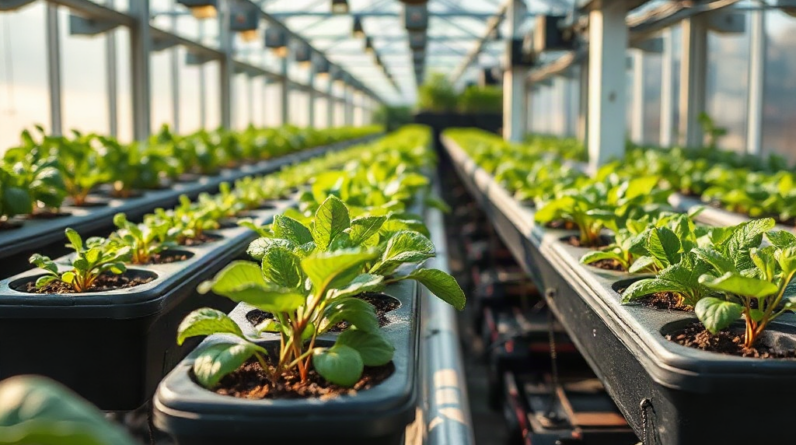
Organic hydroponic certification requires a certifier to verify the farm’s production methods, approved inputs, crop records, handling procedures, and separation from prohibited materials. The central issue is not whether plants grow without soil, but whether the entire operation complies with the applicable organic standards and whether every claim can be documented. Applicants generally submit an organic system plan, identify seeds and amendments, document nutrient and pest-management decisions, maintain harvest and sales records, and pass an on-site inspection. Because rules differ by jurisdiction and certification program, growers should confirm hydroponic eligibility with an accredited certifier before investing in infrastructure or labeling products as organic.
What Certification Actually Evaluates
Organic certification evaluates the complete production system rather than a single nutrient bottle, growing medium, or crop. A certifier reviews how plants are propagated, fed, protected, harvested, stored, and represented to buyers. For a hydroponic operation, that means the nutrient solution and circulation equipment matter, but so do seed purchasing, sanitation, pest control, water management, employee practices, packaging, and records.
The first decision is jurisdictional. In the United States, the USDA National Organic Program establishes the federal framework, while accredited certifiers apply the standards to individual operations. Hydroponic production has been treated differently across organic programs and markets, so a grower should not assume that a certification used for field production automatically covers a soilless system. A certifier can explain whether the proposed crops and production method are eligible before an application is submitted.
Certification is also different from making an informal claim that a farm uses “natural” materials. Organic standards rely on defined requirements, allowed and prohibited substances, traceability, and documented controls. A fertilizer marketed as organic may still be unacceptable for a particular certified use, and a biologically derived product may require review of its ingredients and processing aids.
A useful way to think about the evaluation is to follow the product backward. If a retailer asks where a packaged herb came from, the operation should be able to connect that lot to a growing area, planting date, inputs, harvest record, storage location, and sale. The system earns credibility through a chain of evidence, not through the appearance of the growing room.
Organic System Plans, Inputs, And Records
The organic system plan is the operating blueprint submitted to the certifier. It normally describes the facility, crops, production methods, input controls, pest-management program, sanitation procedures, harvest handling, storage, transportation, and recordkeeping. A strong plan explains what happens in ordinary production and what happens when something goes wrong, such as a nutrient mistake, equipment leak, pest outbreak, or accidental contact with a prohibited substance.
Input documentation deserves early attention because substitutions can create compliance problems. Keep product labels, ingredient statements, supplier documentation, invoices, and any certifier decisions together. Review nutrients, pH-adjustment products, cleaning agents, biological controls, seed treatments, substrates, and packaging materials. “Organic,” “natural,” or “plant-based” on a label does not by itself establish approval. The certifier may need to evaluate the complete formulation and how the product is used.
Records should be created during production rather than reconstructed before an inspection. Useful records may include seed lots, transplant dates, nutrient additions, reservoir changes, pest observations, biological-control releases, cleaning logs, harvest quantities, losses, inventory movements, and sales. For example, if basil from two rooms is harvested on the same day, lot identification should show which room produced each quantity and where it was shipped.
A small home-scale operation and a commercial greenhouse may use different record systems, but neither should depend on memory. A spreadsheet can work for a modest farm if entries are dated, backed up, and linked to receipts. A larger business may need inventory software and written employee procedures. The tradeoff is administrative effort versus traceability: a simple system is cheaper, but it becomes risky when multiple workers, rooms, crops, or sales channels are involved.
Growers often focus on finding an acceptable nutrient while neglecting records for routine cleaning or pest control. That failure can make an otherwise compliant operation difficult to verify. Build the documentation process into daily work, and ask the certifier which records must be retained and for how long.
Why Hydroponic Eligibility Can Be Complicated
Hydroponic certification can be complicated because organic rules are written around a specific legal and program framework, not around a general promise that a crop was grown sustainably. Some programs or markets may restrict, permit, or interpret soilless production differently. The answer can also depend on the product category, labeling claim, location, and certification body. A grower who sees another indoor farm selling certified produce should not treat that example as proof that every hydroponic method qualifies.
The production method needs to be described precisely. “Hydroponic” can mean nutrient-film channels, deep-water culture, drip irrigation into a substrate, or another system. Explain where roots develop, how nutrients reach them, what the substrate contains, how fertility is managed, and how the crop is harvested. A vague description can delay review because the certifier cannot determine which requirements apply.
Consider two hypothetical operations. One grows leafy greens in recirculating channels, uses listed inputs, keeps dedicated harvest bins, and has clear lot records. Another grows tomatoes in bags of substrate but changes nutrient products frequently, stores conventional and proposed organic supplies together, and lacks purchase documentation. The first may present a more reviewable system, but neither should assume approval without a formal determination. The second faces both input uncertainty and traceability weakness.
Organic certification also does not equal pesticide-free, chemical-free, or automatically more sustainable. Approved substances can still require careful use, and organic production may involve substantial energy, water treatment, plastics, and climate-control demands. Certification answers a defined production and labeling question; it does not validate every environmental or nutritional claim a marketer might attach to the crop.
The practical priority is to obtain a written, method-specific response from an accredited certifier before construction or a major crop change. Send a system diagram, proposed crop list, substrate details, input labels, and planned records. Early clarification may reveal that a different claim, market, or production design is more realistic than pursuing certification after the facility is already committed.
Inspection, Corrective Actions, And Ongoing Compliance
An inspection tests whether the written plan matches actual practice. The inspector may examine growing areas, reservoirs, storage rooms, chemical or input cabinets, harvest spaces, equipment, labels, records, and product flow. Questions often concern how workers identify materials, prevent commingling, respond to contamination, and document changes. Clean facilities help, but visible tidiness cannot replace accurate records or approved inputs.
Prepare by walking through the operation as an unfamiliar reviewer would. Can every nutrient container be matched to a purchase record? Are organic and non-organic materials clearly separated? Do harvest labels connect finished packages with production lots? Can staff explain what they do after discovering an unapproved product was used? Written answers should reflect actual procedures rather than idealized practices that employees do not follow.
An inspection does not necessarily end with immediate approval. The certifier may issue a request for clarification or a noncompliance notice. The response should address the specific deficiency, identify the cause, provide evidence of correction, and explain how recurrence will be prevented. Replacing a questionable input may not be enough if the underlying purchasing process allows another unreviewed substitute to enter the facility.
Ongoing certification generally requires continued recordkeeping, annual review or inspection processes, fees, and disclosure of material changes. Adding a crop, changing a substrate, moving production, introducing a new cleaning agent, or altering packaging may require advance notice. Treat certification as a management system rather than a one-time badge.
A common mistake is to wait until the scheduled inspection to organize evidence. That approach creates missing dates, unexplained inventory differences, and staff uncertainty. Monthly internal reviews are more useful: compare input purchases with application logs, reconcile harvested quantities with sales, and check that posted procedures still match the equipment in use.
A Practical Pre-Application Checklist
Before applying, assemble a concise evidence package and ask the certifier to identify gaps. The goal is not to produce impressive paperwork; it is to make the operation understandable, auditable, and consistent. A clear application can also expose design problems while they are still inexpensive to fix.
- Confirm program eligibility: identify the country, intended label, crops, markets, and exact hydroponic method.
- Map the facility: show growing zones, storage, mixing areas, harvest handling, sanitation points, and routes for organic and conventional materials.
- Screen every input: retain labels and supplier records for nutrients, amendments, pest controls, cleaners, substrates, seed treatments, and packaging.
- Write operating procedures: cover purchasing, nutrient preparation, pest response, equipment cleaning, spill response, harvest identification, and product separation.
- Test traceability: choose one recent harvest and trace it from seed or transplant through production, packaging, inventory, and sale.
- Train staff: make sure workers know which products are authorized, where they are stored, and whom to contact before making a substitution.
Keep the checklist proportionate to the business. A single-room grower may use dated forms and labeled binders, while a multi-site company needs controlled documents and centralized purchasing. The right system is the one workers can use accurately every day. Excessive complexity creates abandoned forms; insufficient detail leaves important decisions undocumented.
Use the organic hydroponic certification requirements as a planning question, not as a marketing shortcut. If certification proves impractical, the operation should avoid wording that implies certified organic status and instead describe verifiable practices such as recirculation, integrated pest management, or reduced pesticide use where those claims are accurate. Clear labeling protects both buyers and the farm.
For a deeper review of system design and documentation, compare the proposed process with hydroponic production records and approved input procedures before submitting materials.
Frequently Asked Questions
Can every hydroponic farm become certified organic?
No. Eligibility depends on the applicable organic program, jurisdiction, crop, labeling claim, and production method. Ask an accredited certifier for a method-specific determination before applying.
Does an organic nutrient label prove that a fertilizer is allowed?
No. The complete formulation, ingredients, use pattern, and certification program matter. Keep the label and supplier documentation, then submit the product to the certifier for review.
What records should a certified hydroponic grower keep?
Maintain input purchases and applications, seed or transplant information, crop and harvest lots, pest and sanitation logs, inventory movements, sales, and records of corrective actions.
What happens if a prohibited input is used accidentally?
Stop and document the event, isolate affected material when appropriate, notify the certifier, and follow its instructions. Do not decide independently that rinsing or waiting makes the product eligible.
Is organic certification the same as sustainable hydroponic production?
No. Certification addresses defined organic production and labeling requirements. Energy use, plastic consumption, water treatment, and other sustainability questions require separate evaluation.
Further Reading
Authoritative Sources
- USDA Agricultural Marketing Service Organic Regulations
ams.usda.govProvides the federal organic standards and certification framework relevant to operations seeking USDA organic status
- USDA Organic Certification
ams.usda.govExplains the certification process, accredited certifiers, applications, inspections, and operator responsibilities
- Organic Materials Review Institute
omri.orgOffers an input-review resource that can help growers investigate whether products are listed for organic production, subject to certifier confirmation
Conclusion
Organic hydroponic certification is primarily a question of verified compliance, not the visual appearance of a soil-free farm. Confirm eligibility with the appropriate certifier, describe the exact system, screen inputs before purchase, and build records that connect each harvest to its production history. Facility separation, staff training, sanitation, labeling, and change control deserve the same attention as nutrient management. A grower who waits until inspection to assemble evidence may face avoidable delays or corrective actions. Before making an organic claim, submit the proposed method and documentation plan for review, then use the certifier’s written requirements to guide construction, purchasing, and daily operations.