Manage nutrient solution recycling effectively by collecting return water in a clean reservoir, measuring electrical conductivity and pH, removing debris and pathogens, and correcting the solution before it reaches the crop again. Track source-water quality and reservoir additions because plants remove individual ions at different rates even when total conductivity appears acceptable. Maintain oxygenation, control solution temperature, and inspect roots for early signs of biological trouble. Periodic laboratory analysis and scheduled partial or complete replacement prevent sodium, chloride, and nutrient imbalances from accumulating beyond what ordinary meters can reveal.
Build a Controlled Recycling Loop
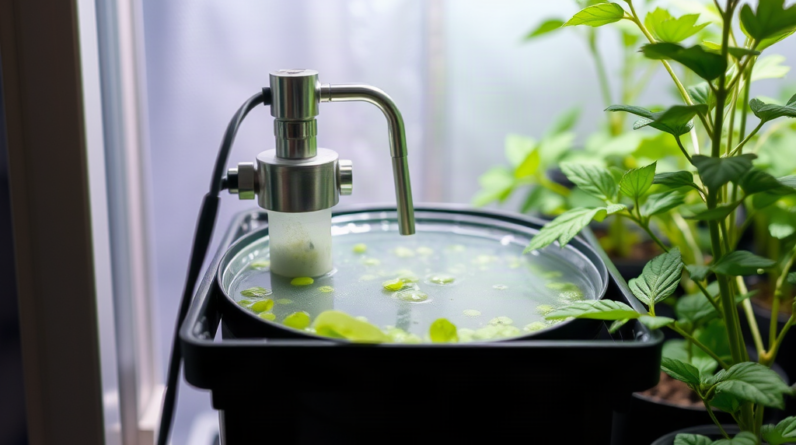
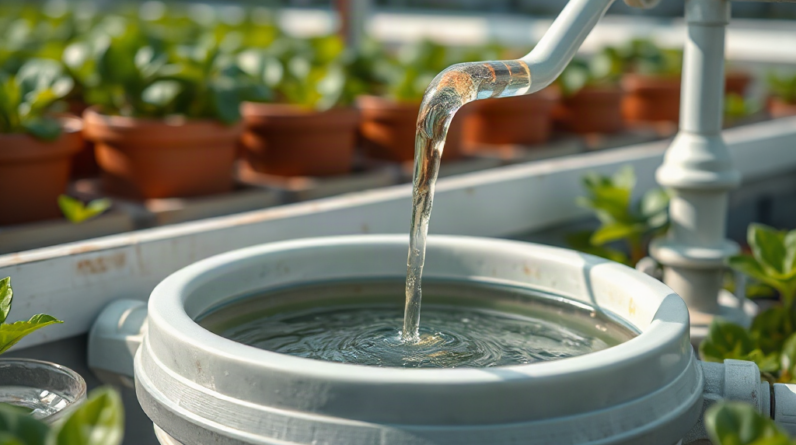
A reliable recycling loop keeps runoff contained, identifiable, and isolated from contamination until it has been evaluated. In a recirculating deep-water, nutrient film, or flood-and-drain system, this usually means returning the solution to a covered reservoir. In a drain-to-waste drip installation converted for recovery, runoff should first enter a separate collection tank rather than flowing directly back to the crop.
The separate collection stage creates a useful control point. Root fragments, growing-medium particles, algae, and precipitated fertilizer can settle or be filtered before the water reaches pumps and emitters. It also gives the grower time to test the return water. Sending untreated drainage immediately into the main tank may save equipment, but it allows a contaminated batch to circulate through every plant before symptoms become visible.
Reservoir capacity should account for normal operating volume plus the solution that returns after a pump stops. An undersized tank can overflow during drain-back, while a nearly empty tank produces rapid shifts in concentration and temperature. Keep the tank opaque and covered to limit light-driven algae growth, but allow safe access for cleaning and sampling. Pumps should circulate the contents well enough that a sample represents the whole tank rather than a concentrated pocket near a fertilizer inlet.
The plumbing layout matters as much as the reservoir. Eliminate dead legs where warm, low-oxygen water can remain stagnant. Fit an accessible screen or pre-filter before narrow emitters, and provide drain points at the lowest sections of pipe. A bypass or isolation valve is useful when a suspect solution must be diverted rather than returned.
For a small home installation, a coarse intake screen, a covered collection container, and a clean mixing reservoir may be sufficient. A larger operation with many channels may need staged filtration, automated dosing, sanitation equipment, and separate irrigation zones. The mistake is assuming that a bigger pump makes a poorly designed loop safe. Effective nutrient solution recycling begins with controlled collection and the ability to stop, inspect, and drain the flow.
Monitor More Than pH and Conductivity
Electrical conductivity and pH are essential operational measurements, but neither identifies which dissolved substances are present. Conductivity indicates the combined ability of dissolved ions to carry an electrical current. A normal reading can therefore hide an unfavorable balance: nitrate or potassium may have fallen while sodium, chloride, sulfate, or another ion has accumulated.
Measure the main reservoir at a consistent point in the irrigation cycle and compare it with the source water and returned drainage. A return EC that rises steadily above the supplied solution suggests that plants and evaporation are removing water faster than dissolved salts. A falling value may reflect rapid nutrient uptake, dilution, leakage, or an incorrect dosing calculation. These patterns become more useful when interpreted alongside reservoir volume and the amount of water added.
PH drift also carries information. Plant uptake can shift the balance of charged ions, while alkalinity in the source water can repeatedly push pH upward. Constantly adding acid without examining source-water alkalinity treats the visible reading but not the underlying load. Conversely, unstable pH in a low-alkalinity supply may result from an inadequately buffered solution or a reservoir that is too small for the crop.
Temperature and dissolved oxygen deserve routine attention because warm solution generally holds less oxygen and encourages faster biological activity. Roots that remain pale or cream-colored and firm are a better sign than roots becoming brown, soft, or odorous. Root color alone is not definitive because some fertilizers and organic inputs can stain tissue, so assess texture, smell, growth, and water conditions together.
A practical monitoring routine includes:
- Daily: record reservoir volume, pH, EC, temperature, water additions, and visible root or solution changes.
- At regular intervals: compare supply and drainage readings, calibrate meters, and inspect filters, emitters, and tank surfaces.
- Periodically: obtain water or solution analysis when crops are valuable, source water is mineral-heavy, or unexplained imbalance persists.
Meter probes should be cleaned, stored, and calibrated according to their manufacturer’s instructions. A stable but inaccurate probe is more dangerous than an obviously failed one because it can support repeated dosing errors. Do not add concentrated fertilizer or pH adjuster next to a probe and act on the temporary spike; mix the reservoir completely, wait for the reading to settle, and then reassess.
Clean and Treat the Returned Solution
Treatment should match the contaminants present and the risk of distributing them through the shared root zone. Filtration removes suspended material but does not reliably make biologically contaminated water safe. Sanitation can reduce microbial risk, yet it works poorly when particles and organic material shield organisms or consume the treatment.
Start with physical removal. A coarse screen catches roots and large pieces, while finer filtration protects narrow drippers and prepares water for subsequent treatment. Filters create a pressure loss and require cleaning; choosing extremely fine filtration without considering pump performance can reduce flow at distant emitters. Monitor pressure or discharge patterns rather than assuming that a filter is working because it looks clean externally.
Treatment options include ultraviolet systems, heat treatment, ozone, and carefully controlled oxidizing products. Each has constraints. UV performance depends on adequate clarity, exposure, flow rate, lamp condition, and a clean sleeve. Heat can treat the full water stream when correctly engineered, but it uses energy and the solution must be cooled before irrigation. Ozone and chemical oxidizers require compatible equipment, accurate control, and attention to worker and crop safety. Product labels and equipment documentation should govern their use; improvised concentrations can injure roots or fail to control the target organism.
Biologically managed reservoirs use a different operating philosophy from strongly sanitized ones. Growers using beneficial microbial products should verify whether their sanitation method will deactivate those organisms. Combining microbial inoculants with residual oxidizers without a compatible plan wastes inputs and produces uncertain conditions. Mineral-only formulations are generally easier to filter and analyze than solutions containing molasses, compost extracts, or other organic materials that increase biological demand and leave residues.
Cleaning the equipment between crop cycles remains necessary even when water treatment operates continuously. Drain tanks and lines, remove deposits physically, clean filters, and sanitize compatible surfaces according to product directions. Fertilizer scale and biofilm protect contamination from superficial rinsing. Avoid mixing cleaning chemicals, and rinse equipment sufficiently before preparing a new crop solution.
A home grower should not assume that every reservoir requires elaborate sterilization. Clean inputs, covered tanks, cool operating conditions, healthy roots, and routine equipment washing may provide a workable baseline for a modest system. Once plants share a large solution volume or disease has appeared, treatment becomes a higher-stakes decision. At that point, replacing questionable water and cleaning the loop may be safer than repeatedly adjusting a deteriorating batch.
Correct, Reuse, or Replace the Solution
Correction should be based on measured water use and the probable composition of the remaining solution. Topping up with water restores volume but does not replace nutrients selectively removed by the crop. Adding a full-strength fertilizer dose based only on the water added can produce the opposite problem by concentrating ions that plants have not consumed at the same rate.
A cautious sequence is to restore the reservoir toward its operating volume with suitable source water, circulate thoroughly, and then measure pH and EC. Add nutrients in small calculated increments, mix again, and retest. Keep concentrated stock solutions separate until diluted into the tank; direct contact between incompatible concentrates can form precipitates that plants cannot use and that may block irrigation hardware.
EC-based correction is most dependable over shorter intervals when the crop, water source, fertilizer program, and environmental conditions are stable. It becomes less informative as selective uptake and repeated top-ups change the ionic profile. For example, a leafy crop may continue growing while an unwanted source-water ion accumulates slowly. The total EC can remain near the target because desired nutrients are declining at the same time. Laboratory analysis is the clearer choice when deficiencies appear despite acceptable readings or when a solution is intended for prolonged reuse.
Partial replacement lowers accumulated compounds while preserving some water and fertilizer. It can be a practical middle ground when readings are becoming difficult to correct but the solution has no sign of serious contamination. Complete replacement is more appropriate after a suspected root disease, a dosing error, chemical contamination, severe pH instability, or an analytical result that shows the nutrient balance is no longer recoverable.
Use these decision signals rather than a rigid calendar:
- Continue recycling when growth is uniform, roots appear sound, readings respond predictably, and solution composition remains within the crop plan.
- Partially replace when unwanted salts are trending upward, correction demands are increasing, or minor imbalance persists without disease indicators.
- Discard and reset when contamination is suspected, roots deteriorate across the shared loop, dosing history is uncertain, or safe correction would require guesswork.
Disposal should follow local requirements and protect surface water and drains. Recycled water reduces discharge, but indefinite reuse is not automatically more sustainable if it causes crop loss or requires excessive treatment. The sound approach to how to manage nutrient solution recycling effectively balances conservation with the point at which a controlled reset uses fewer resources than continued correction.
Keep Records and Detect Failure Early
A recycling program becomes manageable when each adjustment can be traced. Record the date, crop stage, reservoir volume, source-water volume, fertilizer additions, pH corrections, EC, temperature, cleaning work, and unusual plant observations. The value comes from trends rather than isolated numbers. A gradual increase in daily acid demand or top-up volume may reveal a developing issue before leaves show obvious injury.
Set operating limits for the specific crop and system rather than copying a single universal target. Seedlings, mature fruiting plants, and leafy greens do not place the same demand on a solution. Hot, bright conditions may increase water uptake faster than nutrient uptake, while cooler periods can change that relationship. Compare zones separately when possible; an average reservoir reading cannot reveal a blocked emitter or poor return flow affecting one bench.
When a trend changes, verify the measurement before changing the recipe. Check probe calibration, sample a well-mixed tank, inspect water level, and confirm that dosing equipment delivered the recorded amount. Then examine filters, pump flow, root condition, and recent environmental changes. This order reduces the chance of creating a second problem in response to a faulty reading.
Signs that the program is working include predictable pH and EC movement, consistent emitter output, clean reservoir surfaces, firm roots, and uniform growth within each crop stage. Warning signs include recurring slime, odors, unexplained turbidity, rapidly clogging filters, increasing correction demand, uneven wilting, or several plants declining along the same return path. A shared pattern points toward water movement or solution quality more strongly than a symptom confined to one plant.
Automation can improve consistency, but dosing controllers and sensors still require calibration and human review. A controller may maintain its programmed EC while an undesirable ion accumulates because it measures total conductivity, not individual nutrients. Alarms for high temperature, low tank level, or extreme pH are valuable safeguards, yet they should not replace visual inspection and periodic analysis.
Begin with a simple operating sheet and refine it after a full crop cycle. Note which measurements predicted trouble and which created noise. That crop-specific history is more useful than frequent unstructured testing, and it gives anyone maintaining the system clear evidence for deciding whether to adjust, treat, isolate, or reset the solution.
Frequently Asked Questions
Can recycled nutrient solution be reused indefinitely?
No. Selective nutrient uptake and the accumulation of unwanted ions eventually make EC and pH insufficient for reliable correction. Analysis, partial replacement, or a complete reset is needed when the composition becomes uncertain.
Is filtration enough to make returned solution safe?
Filtration removes particles and protects equipment, but it does not reliably control waterborne pathogens. Higher-risk systems may also require a validated sanitation process and strict cleaning.
Should the reservoir be topped up with water or nutrient solution?
Restore volume with suitable water first, mix, and measure before adding nutrients. The final correction should reflect current EC, crop demand, dosing history, and, where needed, solution analysis.
When should a recycled solution be completely replaced?
Replace it after suspected disease, chemical contamination, a major dosing error, persistent instability, or evidence that accumulated ions and depleted nutrients cannot be corrected confidently.
Why does pH keep rising in a recycling reservoir?
Possible causes include source-water alkalinity, crop ion uptake, biological activity, or inaccurate measurement. Test the source water, verify the meter, review additions, and examine the trend before repeatedly adding acid.
Conclusion
Successful recycling depends on retaining control over both water quality and the decisions made between irrigation cycles. Build a loop that can collect, filter, sample, isolate, and drain the return flow. Use pH and EC as daily indicators, while recognizing that they cannot reveal individual ion concentrations or confirm biological safety. Match treatment to the actual contamination risk, keep source water and equipment cleanliness in the plan, and document every addition.
The next step is to establish baseline readings for the source water, fresh recipe, and drainage from a healthy crop. Set clear triggers for inspection, partial replacement, and a full reset. If meter trends stop matching plant and root condition, verify the instruments and obtain a more detailed analysis rather than compensating with repeated fertilizer or acid additions.
Related Content
- Indoor Vertical Hydroponic Kit: Essential Components for Efficient Indoor Gardening
- How to Use Drip Systems in Hydroponic Farming
- How to Enhance Flavor in Hydroponic Vegetables: Proven Methods and Techniques
- The Ultimate Guide to 10 Effective Hydroponic Systems for Herbs in 2025
- Impact of Humidity on Hydroponic Plant Growth: Key Factors and Practical Effects