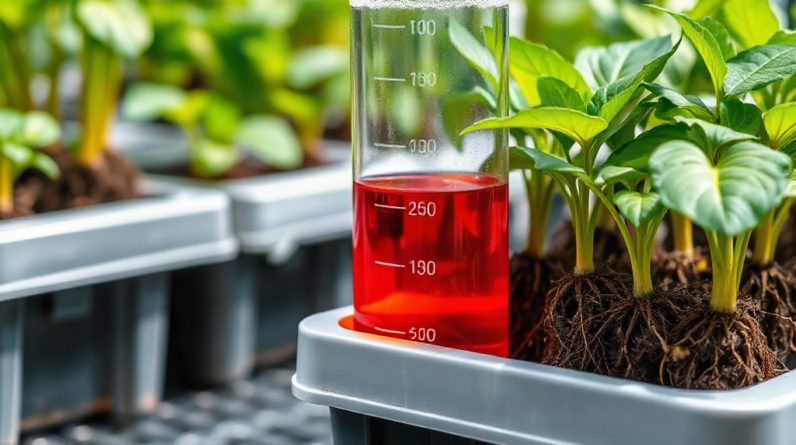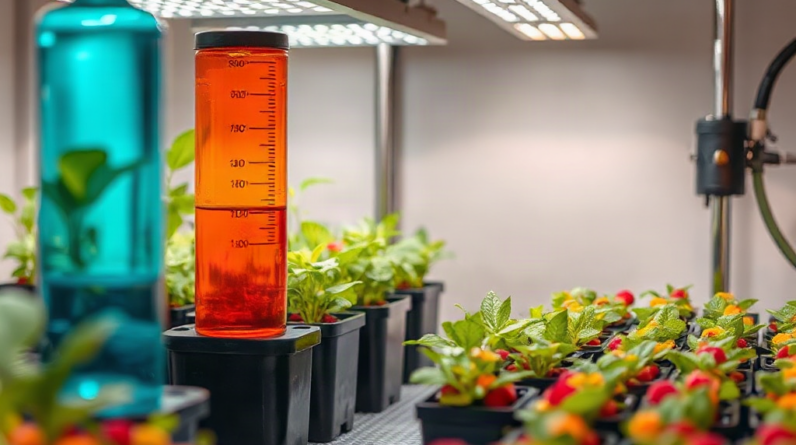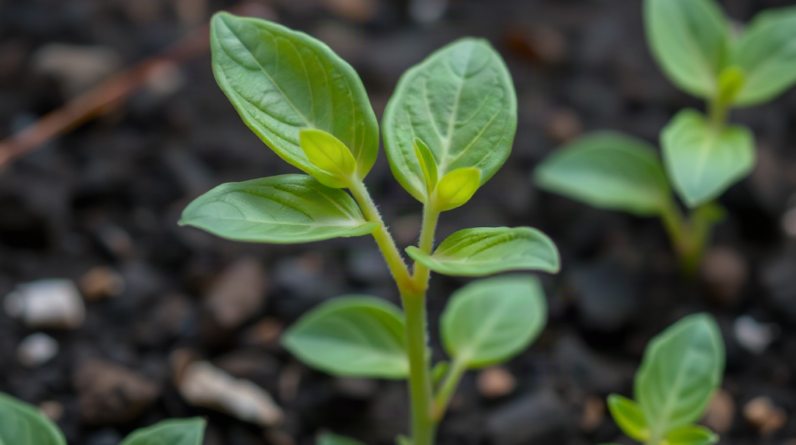
Identify nutrient deficiency in seedlings by examining where discoloration begins, how it spreads, and whether roots and new leaves are developing normally. Yellowing on older leaves can indicate a mobile-nutrient shortage such as nitrogen, while distorted or pale new growth points more toward calcium, iron, or another poorly mobile element. Before adding fertilizer, measure nutrient-solution pH and electrical conductivity, inspect root color and moisture, and compare affected seedlings with healthy plants from the same batch. Light stress, overwatering, temperature extremes, and root disease can produce similar symptoms, so correct environmental or root-zone faults before increasing nutrient strength.
Read the Location and Pattern of Leaf Symptoms
The position of the first damaged leaves often provides more useful evidence than color alone. Seedlings redistribute mobile nutrients from older tissue to actively developing leaves when supplies are limited. Nitrogen, magnesium, and potassium problems therefore tend to appear first on the lower or older leaves. Nutrients that move poorly within a plant, including calcium and iron, are more likely to affect the newest leaves or growing tip.
Uniform pale green growth that begins low on a seedling may be consistent with insufficient nitrogen, especially when the entire plant is growing slowly and stems remain thin. By comparison, magnesium shortage more often produces interveinal chlorosis: tissue between the veins becomes pale while the veins remain greener. Potassium stress may begin as marginal yellowing or small damaged areas near the edges of older leaves. These visual distinctions are clues rather than laboratory diagnoses because young leaves are small, symptoms overlap, and several root-zone problems can restrict multiple elements simultaneously.
New growth deserves separate attention. Iron unavailability commonly produces pale young leaves with relatively greener veins, whereas calcium-related injury may leave emerging leaves misshapen, hooked, spotted, or unable to expand cleanly. A damaged growing point is more urgent than the loss of one cotyledon because it can disrupt all subsequent development. Seed leaves naturally fade after true leaves take over, however, so yellow cotyledons on an otherwise vigorous seedling do not automatically justify more fertilizer.
Use a simple observation sequence before changing the reservoir:
- Locate the first symptom: older leaves, new leaves, margins, tissue between veins, or the growing tip.
- Describe its shape: uniform paling, interveinal yellowing, edge burn, spots, curling, or distorted growth.
- Compare development: check leaf size, stem extension, root growth, and differences among seedlings.
- Record progression: photograph the same plant under neutral light for two or three days.
A pattern affecting every seedling at a similar stage points toward a shared solution, water, or environmental condition. One abnormal plant among many healthy plants may instead have root damage, a blocked irrigation point, seed weakness, or localized disease. That distinction prevents a common mistake: altering the entire reservoir to treat a single plant. A detailed symptom record also makes how to identify signs of nutrient deficiency in seedlings a repeatable process rather than a judgment based on one yellow leaf.
Separate Nutrient Shortages From Look-Alike Problems
Leaf discoloration does not prove that the nutrient solution lacks fertilizer. A seedling can sit in a solution containing every required element and still show deficiency-like growth when pH, oxygen, temperature, moisture, or root health prevents uptake. Treating every pale leaf with a stronger mix can raise salinity and injure roots that were already struggling.
Overwatering is a frequent look-alike during propagation. A saturated plug with little air space slows root respiration, leaving leaves pale, soft, or drooping even though the nutrient concentration is adequate. Underwatering can also cause edge damage and wilting, but the plug will feel lighter and the seedling often recovers soon after moisture is restored. Examine the rooting medium rather than interpreting the canopy in isolation. Algae, a sour odor, or continuously wet lower surfaces suggest that irrigation frequency or drainage deserves attention.
Light and temperature produce their own recognizable context. Excessively intense light can bleach upper leaves or create dry patches on surfaces facing the fixture, while inadequate light usually causes elongated stems, small pale leaves, and seedlings leaning toward the source. Cold roots slow nutrient uptake and growth; excessive root-zone heat reduces dissolved oxygen and can favor root decline. If symptoms began after moving a tray closer to a lamp, changing a heat mat, or adjusting ventilation, that timing may be more informative than a deficiency chart.
Root inspection provides another decisive comparison. Healthy young hydroponic roots are generally light colored and actively extending, though nutrient dyes and media particles can alter their appearance. Brown, slippery, collapsing, or foul-smelling roots point toward root-zone damage rather than a simple shortage in the formula. A dry plug core, pinched root, or emitter that misses one cube explains why a single seedling may lag behind its neighbors.
Consider the crop and stage as well. Newly germinated seedlings initially draw from seed reserves and are vulnerable to concentrated fertilizer. Some species naturally produce purple stems or pigmentation under strong light or cool conditions, so purple coloring alone does not confirm phosphorus deficiency. Likewise, leaf-edge burn can result from high salt concentration, direct airflow, heat, or potassium imbalance. The useful question is not merely which deficiency resembles the leaf, but whether the symptom location, recent changes, root condition, and measurements support the same explanation.
The common failure mode is confirmation bias: a grower selects the closest image from a chart and immediately adds that element. A better diagnosis requires at least two independent signals, such as older-leaf interveinal chlorosis plus an unsuitable pH reading, or damaged new growth plus evidence of weak water movement around the roots. This approach narrows the cause without pretending that appearance alone is conclusive.
Check pH, EC, Roots, and Solution Conditions
Measurements reveal whether the reservoir can deliver nutrients in the form and concentration seedlings can use. Start by testing pH with a calibrated meter or a suitable test kit. An out-of-range reading can reduce the availability of particular elements even when the fertilizer recipe is complete. Avoid diagnosing from an old measurement because plant uptake, water additions, microbial activity, and media residues can shift pH after mixing.
Electrical conductivity, or EC, estimates the dissolved ionic concentration of the solution. It does not identify individual nutrients, but it helps distinguish an overly weak solution from accumulated salts. A low EC combined with broad paling and slow growth may support an underfeeding hypothesis. A high EC accompanied by scorched margins, wilting despite wet media, or stalled roots suggests excessive concentration instead. Seedlings tolerate less dissolved fertilizer than established plants, and the appropriate range varies by crop, cultivar, water composition, fertilizer, and developmental stage. Follow the nutrient manufacturer’s seedling guidance rather than applying a mature-plant target.
Source water complicates interpretation. Hard water can contribute calcium, magnesium, and alkalinity, while very pure or reverse-osmosis water contributes little buffering or mineral content. EC from source water is not automatically plant nutrition; bicarbonates and other dissolved substances may raise the reading without supplying a balanced formula. Measure the water before fertilizer is added and again after mixing so the change is visible. If pH repeatedly rises soon after adjustment, water alkalinity may be influencing the reservoir.
Inspect the delivery path at the same time. Confirm that pumps run, emitters deliver evenly, channels are not obstructed, and roots receive moisture without remaining suffocated. In a tray, compare plug weight and moisture at the center and edges. In a recirculating setup, check whether the weakest seedlings occupy a slow-flow or warmer section. Uneven distribution can create a localized deficiency pattern even when reservoir numbers look acceptable.
A practical diagnostic record should include the crop and age, nutrient product and dilution, source-water EC, mixed-solution EC, pH, root appearance, solution temperature if available, recent reservoir changes, and the location of the first leaf symptoms. Trends matter more than isolated readings. For example, rapidly rising EC while the water level falls can mean plants are taking up proportionally more water than dissolved nutrients; repeatedly topping up with full-strength solution may then worsen salt accumulation.
Calibrate meters according to their instructions and rinse probes after use. Chasing tiny fluctuations with repeated additions creates instability and increases the chance of dosing errors. The purpose of testing is to find a meaningful mismatch, not to force every reading to remain perfectly fixed. Readers comparing symptoms and measurements can use how to identify signs of nutrient deficiency in seedlings as a working checklist while preserving records for the next crop.
Correct the Cause Without Overfeeding Seedlings
Corrections should be conservative, documented, and matched to the evidence. If pH is unsuitable, adjust it gradually using products intended for nutrient solutions, following label directions and allowing the reservoir to circulate before retesting. If EC is excessive, dilution or replacement with a correctly mixed seedling solution is usually more controlled than adding individual products. If the mix is genuinely too weak, increase it toward the fertilizer manufacturer’s seedling rate rather than jumping to a mature crop concentration.
A fresh reservoir is often preferable when the solution history is uncertain. Mixing several corrective additives into an old reservoir can create an unbalanced formula without revealing which change worked. Prepare nutrients in the order specified by the manufacturer, measure accurately, and never combine concentrated stock solutions directly unless their instructions explicitly permit it. Concentrates can react with each other and form precipitates, making elements unavailable even though they were added.
Correct root-zone faults alongside the solution. Reduce irrigation frequency if plugs remain waterlogged, restore aeration or flow where roots lack oxygen, remove dead plant material, and clean malfunctioning delivery components. A seedling with severely decayed roots may not recover simply because the reservoir numbers improve. Separating a badly affected plant can protect the rest of the tray and makes it easier to inspect progression.
Judge recovery by new growth, not by expecting damaged tissue to become perfect. Yellow or necrotic leaves may retain their discoloration after the cause is corrected. Encouraging signs include normally shaped emerging leaves, renewed root extension, stable color, and growth rates that begin approaching unaffected seedlings. Continued distortion, spreading chlorosis, worsening root discoloration, or rising edge burn indicates that the intervention has not addressed the cause or has introduced additional stress.
Change one major variable at a time when the plants are stable enough to allow it. Replacing the nutrient mix, changing lamp height, increasing airflow, and altering irrigation on the same day makes the result impossible to interpret. An exception is an acute root-zone failure, such as a stopped pump or dangerously dry propagation plug, which warrants immediate correction. After restoring the basic condition, hold other settings steady and monitor the newest leaves.
Foliar feeding is not the default solution for hydroponic seedlings. It may obscure the root cause, young leaves can be sensitive to concentrated sprays, and wet foliage may create additional problems under poor airflow. A balanced root-zone correction offers clearer feedback. Adding a single nutrient based only on color is similarly risky because excesses can compete with other elements or raise salinity.
The strongest practical sequence is to document symptoms, verify irrigation and roots, measure pH and EC, compare the formula with stage-specific directions, make the smallest justified correction, and watch new growth. That process is slower than guessing from a photograph but much less likely to turn a mild uptake issue into fertilizer injury.
Frequently Asked Questions
What is usually the first visible sign of a nutrient deficiency in seedlings?
Slower growth or a change in leaf color is often noticed first, but the symptom’s location matters most. Record whether paling begins on older leaves, emerging leaves, margins, or tissue between veins.
Do yellow seed leaves mean a seedling needs more fertilizer?
Not necessarily. Cotyledons commonly fade after true leaves develop. Increase nutrition only when true leaves, growth rate, root condition, and solution measurements also indicate a problem.
Can nutrient deficiency occur when the reservoir contains enough fertilizer?
Yes. Unsuitable pH, damaged roots, low oxygen, temperature stress, or uneven irrigation can restrict uptake even when the formula contains the required elements.
How quickly should seedlings improve after a correction?
Look for healthier new leaves and renewed root extension over the following growth period rather than expecting damaged leaves to regain their original color. Continued deterioration calls for another root-zone and measurement check.
Should an individual nutrient be added when leaves match a deficiency chart?
Not from appearance alone. Confirm the pattern with pH, EC, formula, root, and irrigation evidence; otherwise, adding one element may increase salinity or create a new imbalance.
Conclusion
Reliable diagnosis comes from combining leaf evidence with root-zone measurements. Note whether symptoms begin on old or new tissue, distinguish natural cotyledon decline from damage to true leaves, and inspect roots before changing the reservoir. Then check pH, EC, source water, irrigation coverage, temperature, and recent equipment or lighting changes.
Make the smallest correction supported by those observations. A properly mixed fresh solution, restored flow, or better moisture control is safer than stacking supplements onto an uncertain reservoir. Photograph the seedlings and evaluate emerging leaves and root tips rather than waiting for damaged foliage to look normal. If symptoms continue spreading, revisit the diagnosis instead of repeatedly increasing fertilizer strength.