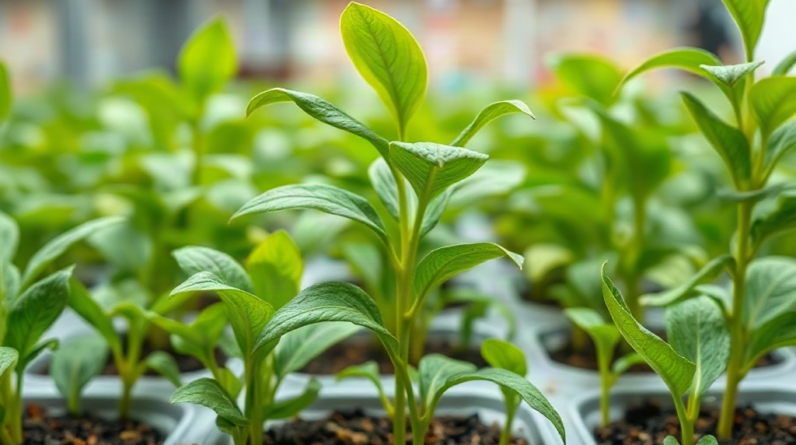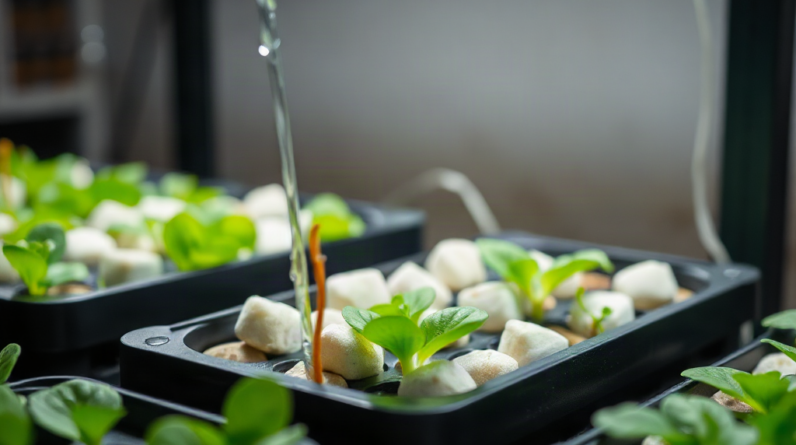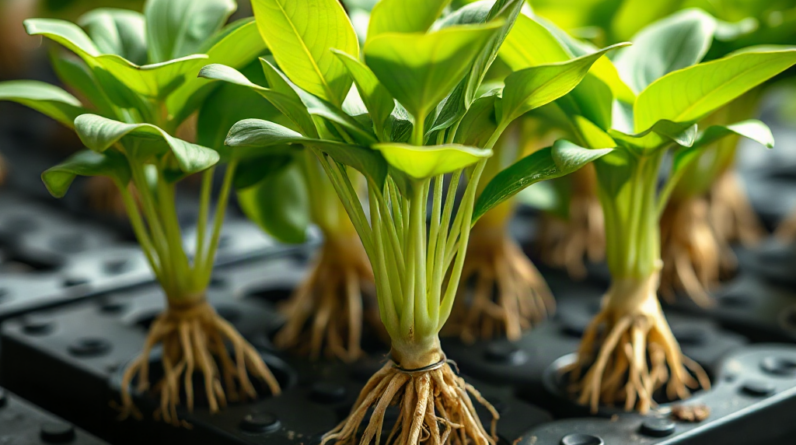
Choose edible hydroponic roots and shoots by matching each crop’s harvest stage to the system depth, growing medium, and available light. Radishes, baby turnips, pea shoots, sunflower shoots, and young beet greens are practical options, while full-size carrots and storage roots usually need deeper, carefully managed media. Favor untreated seed sold for food growing, provide enough root-zone oxygen, and harvest shoots before stems become fibrous or crowded. Keep edible roots covered from light, avoid waterlogged crowns, and discard crops with slime, foul odors, persistent mold, or damaged tissue rather than trying to salvage questionable produce.
Decide Whether You Want Roots, Shoots, or Both
Edible roots and edible shoots place different demands on a hydroponic setup. Shoots are harvested shortly after germination, so their success depends heavily on seed quality, uniform moisture, airflow, and timely cutting. Root crops remain in the system longer and must develop a marketable storage root without hitting a shallow container, receiving light, or sitting in saturated media. A crop that performs well as a shoot is not automatically a sensible choice for its mature root.
Peas and sunflowers are primarily shoot choices in small indoor systems. Their seedlings produce a substantial harvest quickly, but neither is selected for an edible storage root. Radish is more flexible: it can be cut young for shoots or grown longer for its swollen root and edible leaves. Beets offer edible young tops, although producing a rounded beet below them requires more room and time. Turnips can follow a similar pattern, particularly when harvested at baby size rather than held for large roots.
The intended harvest stage should therefore come before variety selection. Shoots suit shallow trays and short production cycles, making them useful where shelf height is limited. Baby roots need greater media volume and more patient nutrient management, but they provide a different texture and kitchen use. A grower seeking frequent salad additions may prefer pea, radish, or beet shoots. Someone wanting compact whole vegetables may devote deeper containers to small radishes or baby turnips.
Leaf, stem, and root edibility must be checked crop by crop rather than assumed from a familiar vegetable name. Radish and beet foliage are commonly eaten, for example, but the edible root of a crop does not establish that every above-ground part is appropriate for food. Seed supplier information and reliable horticultural references should settle uncertainty before planting.
A useful first decision is to classify each candidate by its actual harvest target:
- Shoot crop: selected for tender stems and young leaves, then cut before crowding reduces quality.
- Baby-root crop: harvested before full size to fit a moderate media depth and shorter schedule.
- Dual-purpose crop: capable of supplying edible foliage and a usable root without one harvest undermining the other.
A common mistake is choosing from photographs of mature soil-grown vegetables and expecting the same shape in a shallow hydroponic channel. For a more dependable crop list, use Choose edible hydroponic roots and shoots as a planning question tied to the part you intend to eat, not merely the species you want to grow.
Match Crops to System Depth and Support
Root form determines whether a crop belongs in a tray, channel, raft, or media-filled container. Shoots can grow in shallow mats because they rely largely on seed reserves during their brief production period. Swollen roots need physical space, darkness, moisture, and oxygen at the same time. That combination is easier to maintain in a loose, well-aerated substrate than in a narrow opening designed for lettuce roots.
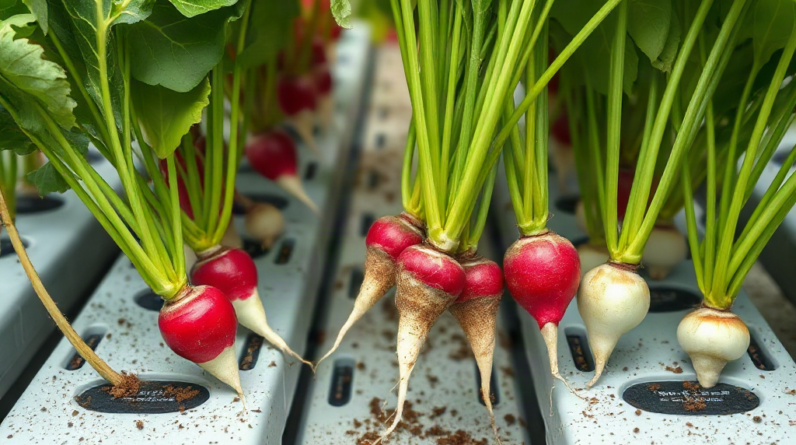
Round and short-rooted vegetables are generally more manageable than long taproots. Small globe radishes and baby turnips can expand within a modest media bed if plants are spaced so their shoulders do not collide. Long carrots are much less forgiving: hard container bottoms, compacted substrate, inconsistent moisture, or root-tip damage can produce forked and misshapen roots. A short or round carrot variety may be attempted in a deep medium, but it remains a more advanced choice than radish.
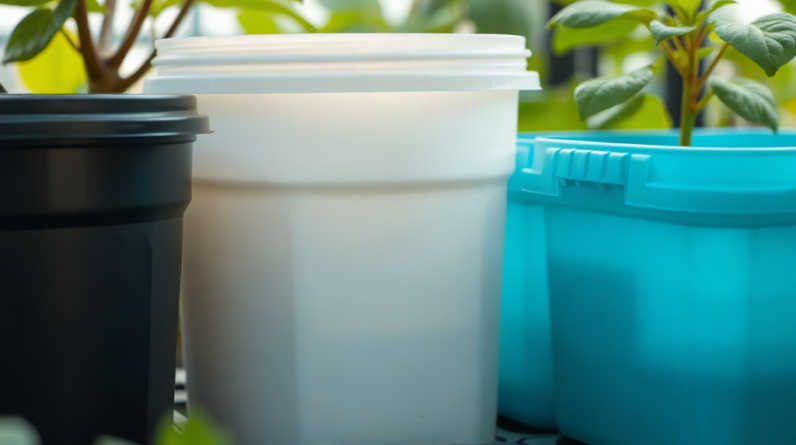
Deep-water culture and nutrient film systems can keep fibrous feeding roots supplied with solution, yet they do not automatically provide the stable support required by a storage root. A radish suspended in an undersized net cup may develop foliage while the edible bulb remains pinched, exposed to light, or poorly shaped. In a media-based drip or subirrigated container, the root has more uniform support, provided the crown is not continually soaked. Shoots have the opposite constraint: excessive media depth adds cost and holds unnecessary water around dense stems.
Reservoir capacity also affects the decision. Root crops occupy a system for longer than shoots, so they experience more changes in nutrient concentration, pH, temperature, and dissolved oxygen. Strong leaf growth does not guarantee that the storage root is enlarging. Excessively lush tops can accompany disappointing roots when spacing, variety, temperature, or nutrient balance favors foliage. Avoid reacting by increasing fertilizer concentration without first inspecting the physical root zone.
Before sowing, check four crop-to-system matches:
- Confirm that the container is deeper than the expected edible root, with extra room for drainage and feeding roots.
- Choose a substrate that stays evenly moist without collapsing into an airless mass.
- Space root crops by their harvest diameter rather than by seed size.
- Block light from the reservoir and developing root while keeping the seedling crown ventilated.
Signs of a suitable setup include upright growth, pale healthy feeder roots, steady swelling below the crown, and media that drains rather than remaining glossy-wet. Repeated wilting despite a wet substrate, brown root tips, algae on exposed media, or roots pressed against the container indicate that the physical design needs correction. Changing crops may be more sensible than repeatedly modifying a system built for leafy greens.
Select Seed and Plan a Safe Harvest
Seed intended for edible shoot production deserves closer scrutiny because the crop is eaten young and may receive little or no cooking. Use untreated seed from a supplier that identifies it as suitable for food growing or sprouting and shoot production. Do not use seed coated with fungicides, insecticides, colorants, or other treatments unless the label clearly supports the intended edible use. Garden seed packets may be appropriate for mature crops, but their small quantity and treatment status can make them a poor fit for densely sown shoots.
Shoots and sprouts are not interchangeable production methods. Sprouts are commonly grown with the seed, root, and stem kept in a continuously moist environment and may be eaten whole. Shoots are normally grown under light in a substrate or supported mat and cut above the root zone. The distinction matters because warm, wet, densely seeded conditions can favor microbial growth. Hydroponics does not make raw young plants sterile, and a clean-looking tray does not prove that it is free from contamination.
Start with clean trays, potable water, clean hands, and seed from a traceable source. Remove cracked, discolored, or foul-smelling seed before sowing. Provide airflow after emergence and avoid leaving a heavy cover on once stems begin lifting it. Bottom watering can keep foliage drier, but the root mat must not sit in stagnant water. Recirculating runoff from a questionable shoot tray through other food crops spreads risk rather than conserving useful solution.
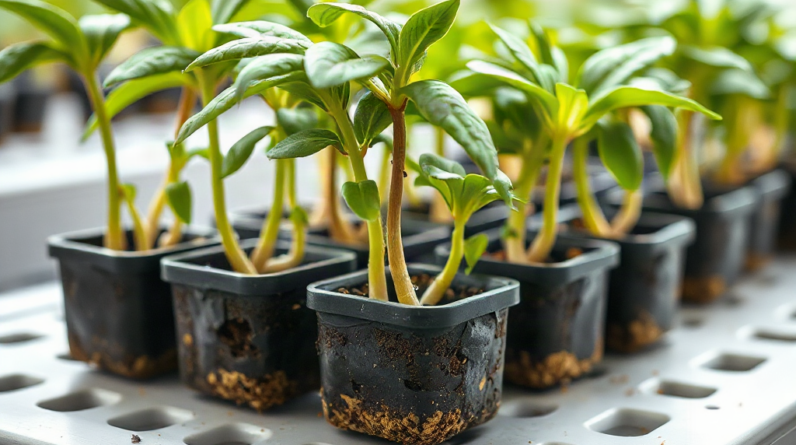
Harvest timing affects both texture and cleanliness. Pea shoots are usually cut while stems remain tender and before crowded growth becomes tangled and fibrous. Sunflower shoots are commonly harvested after the first seed leaves have expanded and hulls can be removed, rather than after mature leaves and tougher stems dominate. Radish shoots develop stronger flavor as they age, but dense canopies can also trap moisture. Use crop appearance and tenderness rather than relying on a fixed day count, because light, temperature, variety, and sowing density change growth speed.
For roots, harvest when the edible portion reaches a useful size but before splitting, pithiness, or crowding reduces quality. Brush media away gently to inspect one representative plant instead of pulling repeatedly at several crowns. Wash harvested produce under clean running water and refrigerate it promptly when it will not be used at once. Hydroponic nutrient solution is not a produce wash.
The safest interpretation of Choose edible hydroponic roots and shoots includes the entire route from packet to plate. The common failure is treating seed choice as a germination issue only. For crops eaten raw and young, seed handling, tray hygiene, airflow, harvesting tools, and storage are part of crop selection because they determine whether a fast-growing option is practical in the available space.
Use Crop Signals to Correct Problems Early
Crop appearance reveals whether the chosen species and system are compatible, but each symptom must be read in context. Tall, pale shoots often indicate insufficient light or excessive time under a cover. Short, scorched seedlings may be too close to intense lighting or exposed to an overly concentrated solution. Patchy emergence can come from uneven contact with moisture, old seed, crowded seed clumps, or sections of a tray drying faster than others.
Mold-like growth requires careful identification and a conservative response. Fine root hairs often form evenly along fresh white roots and disappear or flatten when wet. Fungal growth is more likely to spread across seed coats, debris, or damaged plants and may accompany decay or odor. Improve airflow and reduce standing moisture at the first warning, but discard trays with persistent fuzzy growth, slime, or sour smells. Cutting apparently clean shoots from above a deteriorating root mat is not a reliable salvage method.
Root crops present different diagnostic clues. A large canopy with a thin root suggests that the plant has not shifted resources into the storage organ or lacks room to expand. Exposed shoulders may turn green or develop a coarse surface when light reaches them. Cracking can follow abrupt moisture changes, while distorted roots may reflect compacted media, physical obstruction, close spacing, or early root-tip injury. Those faults cannot usually be reversed late in the crop; they should inform the next sowing.
Use a simple correction sequence rather than changing light, nutrients, pH, and watering simultaneously. First inspect the root zone for available space, odor, color, temperature, and saturation. Next verify that irrigation reaches the whole planting area without leaving standing solution around crowns. Then assess canopy density and airflow. Only after those physical checks should nutrient strength or pH be adjusted according to the needs of the crop and the measurements from the reservoir.
A successful crop shows more than rapid top growth. Shoots should emerge evenly, remain upright, smell fresh, and cut cleanly without slimy stems. Root vegetables should produce healthy foliage while the edible organ expands predictably within the medium. Reservoir conditions should remain stable enough that corrections are small rather than frequent. If several cycles produce foliage but no usable roots, the limitation is likely structural or varietal, not a lack of fertilizer.
Beginners gain more from one shallow shoot tray and one separate media container for small radishes than from mixing crops with incompatible harvest dates in a single loop. Separate units make it easier to observe water demand, isolate hygiene problems, and harvest without disturbing neighboring plants. Once those crops behave consistently, Choose edible hydroponic roots and shoots can expand to baby turnips, beet tops, or short-rooted experimental varieties without sacrificing the dependable harvest.
Frequently Asked Questions
Which edible root crop is easiest for a small hydroponic setup?
Small, round radishes are usually more manageable than long taproots because they mature quickly and need less depth. Give each plant enough lateral room and use an aerated medium that supports the swelling root.
Can carrots be grown hydroponically?
They can be grown in a sufficiently deep, loose medium, but long carrots are prone to forking and distortion. Short or round varieties are more practical for experimentation, especially in containers rather than narrow channels.
Are hydroponic shoots the same as sprouts?
No. Shoots are generally grown under light and cut above their root zone, while sprouts are produced in a moist environment and may be eaten with seed and root attached. The methods have different handling and hygiene concerns.
Do shoots need full-strength hydroponic nutrients?
Many shoots use substantial energy stored in the seed during their short growth period, so a strong nutrient solution is unnecessary and may injure seedlings. Crop type, substrate, water quality, and planned harvest age determine whether mild feeding is useful.
When should a tray of shoots be discarded?
Discard it if the root mat develops slime, persistent fungal growth, widespread decay, or an unpleasant odor. Do not rely on rinsing or cutting above visibly damaged tissue to make a questionable tray suitable for eating.
Conclusion
Begin with the part of the crop you plan to eat and the space that part needs. Shallow trays favor fast-cut shoots, while compact radishes and baby turnips need a darker, deeper, oxygenated medium that will not restrict expansion. Untreated, traceable seed and clean handling deserve extra attention when young stems will be eaten raw.
Run shoots and root vegetables in separate containers at first. That separation makes moisture, airflow, spacing, and harvest timing easier to judge, and it prevents one crop’s failing root zone from affecting another. Inspect growth below the canopy rather than using leaf size as the sole measure of success. Fresh odor, even emergence, healthy feeder roots, and steady root swelling support the choice; slime, crowding, distortion, or repeated failure to form an edible root signal that the crop, variety, or container should change before the next sowing.
Related Content
- 10 Effective Best Hydroponic Setup Tips for 2025: Ultimate Guide
- Hydroponic System Noise Reduction for Indoor Rooms — Pumps, Vibration, and Water Flow Fixes
- The Ultimate Guide to the 10 Best Indoor Hydroponic Garden Tower Systems for 2025
- Hydroponic Seed Starting Techniques: Methods for Successful Germination
- Hydroponic Salad Garden: Essential Steps for Thriving Leafy Greens