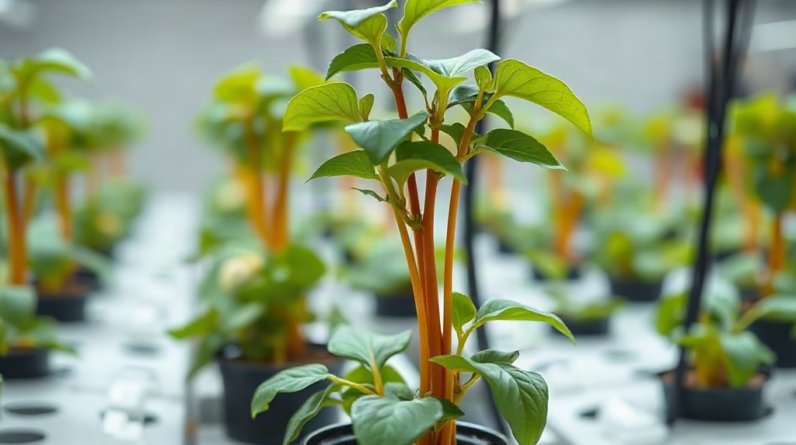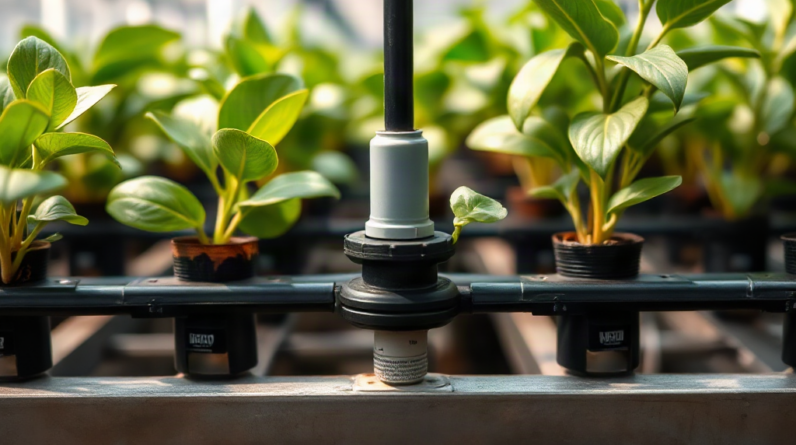
Hydroponic drip irrigation system flow balancing requires measuring emitter output, correcting pressure differences, and removing restrictions so every plant receives a comparable nutrient volume during each cycle. Collect discharge from representative drippers for a fixed time, compare the volumes, and inspect low-flow outlets for mineral deposits, root intrusion, kinked tubing, or undersized supply lines. Regulated emitters can reduce variation, but they still need adequate inlet pressure and routine cleaning. Balance the irrigation system before changing cycle duration, because extending runtime may overwater nearby plants while failing to correct a blocked or poorly supplied dripper at the far end.
Why Dripper Output Becomes Uneven
Uneven delivery usually develops because pressure and resistance are not identical at every outlet. Nutrient solution loses pressure as it moves through tubing, fittings, filters, elevation changes, and emitters. A short branch near the pump may consequently discharge more than a long branch at the opposite end of a bench. The difference becomes more pronounced when the main supply line is narrow, lateral tubes vary in length, or too many outlets share one zone.
Emitter condition adds another layer of variation. Dissolved minerals can precipitate inside small passages, while nutrient residue, algae, and fine root material may partially obstruct an outlet. A restricted dripper might still release visible drops, yet deliver much less solution than its neighbors. Judging performance by sight is therefore unreliable. A fast drip beside a slow drip is easy to notice, but smaller differences can remain hidden until plant size, substrate moisture, or drainage volume begins to diverge.
System geometry matters as much as pump capacity. A powerful pump does not automatically produce uniform irrigation if the first outlets consume most of the available flow or if the return path creates uneven backpressure. Raising pump pressure without checking component ratings can disconnect tubing, distort adjustable emitters, or increase leakage. Conversely, reducing pressure to protect fittings may leave pressure-compensating drippers below their specified operating range.
Consider a row of eight containers fed from one narrow lateral. The first two pots drain after each event, while the final two remain comparatively dry. Longer watering cycles appear to help the distant pots, but they also increase runoff and root-zone saturation near the inlet. Dividing the row into two shorter, similarly sized branches addresses the hydraulic imbalance more directly than extending the timer.
Plant demand can resemble a flow problem without being one. A large fruiting plant may dry its substrate faster than a smaller plant receiving the same volume. Before rebuilding the distribution network, distinguish unequal emitter output from unequal crop demand. The practical goal of Hydroponic drip irrigation system flow balancing is consistent delivery at the outlet; irrigation scheduling and crop grouping then account for differences in water use.
Measure Flow Before Adjusting the Layout
A timed collection test turns an apparent imbalance into usable measurements. Place identical containers beneath selected drippers, run the complete irrigation zone for a fixed interval, and compare the collected volumes. Test at least the outlets nearest the supply, farthest from it, and located around fittings or elevation changes. For a small installation, collecting from every dripper provides a clearer baseline and usually takes less time than repeated guesswork.
Use the same operating state the plants experience. The reservoir should contain its normal solution level, all intended outlets should be connected, and filters should be installed. Testing a single detached branch can produce misleadingly strong flow because the pump is serving fewer restrictions. Likewise, a test performed immediately after topping up a gravity-fed reservoir may not represent delivery when the liquid level is lower.
A compact measurement sequence keeps the diagnosis controlled:
- Label each outlet. Number drippers according to branch and position so results can be traced to the layout.
- Prime the network. Run it briefly to fill empty lines and release trapped air before collecting.
- Collect for one fixed interval. Choose enough time to produce an easily measurable volume without overflowing the containers.
- Record output and location. Note branch length, emitter type, elevation, and any visible pulsing or delayed startup.
- Repeat questionable readings. A tipped cup, trapped air pocket, or emitter that was not seated correctly can distort one result.
Patterns are more informative than one low number. A gradual decline from the first outlet to the last points toward pressure loss or an undersized lateral. One weak outlet among otherwise similar readings suggests a localized clog, damaged connector, or pinched microtube. An entire weak branch directs attention to its valve, manifold connection, or supply tube. Irregular pulsing across every outlet may indicate air intake, an unstable pump supply, or a clogged inlet filter.
Do not chase perfect laboratory equality. Small collection differences can result from measurement error and emitter tolerances. Prioritize repeatable outliers and patterns that could change root-zone moisture. After each correction, repeat the same test rather than relying on the visual appearance of dripping. Comparable methods are necessary for determining whether an adjustment worked.
Correct Pressure, Tubing, and Emitter Problems
Corrections should address the source of variation rather than conceal it with longer irrigation events. Begin with the simplest restriction: clean the reservoir pickup, filter, manifold, and accessible line ends. Flush laterals with emitters removed or end caps open when the equipment permits it. Replace an outlet if cleaning does not restore its measured flow; forcing a sharp object into a small emitter passage can enlarge it and create a permanent high-flow point.
When output steadily falls along a branch, reduce hydraulic resistance. A larger main line, shorter laterals, fewer emitters per zone, or a looped manifold can supply outlets more evenly. Keeping branch lengths and emitter counts similar makes adjustment easier. A layout with one two-foot lateral and one twelve-foot lateral on the same manifold may remain difficult to balance even when both serve the same number of plants.
Pressure-compensating emitters are useful where branches are moderately long or elevations differ. Within their rated pressure range, they are designed to limit output changes as inlet pressure varies. They cannot compensate for a clogged passage, inadequate minimum pressure, or a pump that cannot maintain flow while the whole zone operates. Non-compensating drippers are simpler and may suit a compact, level bench, but their output is generally more sensitive to pressure differences.
Adjustable drippers allow individual correction, although they introduce a maintenance tradeoff. Their settings can shift during cleaning, and using them to throttle every high-flow outlet can hide an undersized distribution line. Fixed-output emitters make testing more repeatable. Select an emitter approach according to layout complexity, filtration, and the amount of routine calibration the grower can realistically perform.
Pressure regulators and zone valves can help, but they should be chosen using the operating requirements of the pump and emitters. A regulator set below the emitter’s working range will not create uniformity. Closing a valve to restrict a high-flow branch can be appropriate when separate zones differ slightly, provided the setting remains stable and pressure is checked downstream. It is not a substitute for clearing an obstructed low-flow branch.
For a mixed bench, grouping plants by irrigation demand can be more effective than making every emitter adjustable. Seedlings in small blocks, mature leafy crops, and large fruiting plants seldom need identical timing or volume. Balance outlet flow within each zone, then schedule the zones separately. This preserves the distinction between hydraulic uniformity and crop-specific irrigation management.
Confirm Balance Under Normal Operating Conditions
A corrected network is not balanced until it performs consistently through a full irrigation event. Repeat the collection test with every emitter installed and compare startup behavior as well as final volume. Long lines may take longer to fill, causing distant drippers to begin late during short cycles. Two outlets can show similar one-minute totals yet deliver different amounts during a twenty-second pulse because one spends much of that period filling and venting air.
Short-cycle systems benefit from anti-drain emitters or a layout that remains primed between events, where compatible with the equipment. Without anti-drain behavior, elevated lines may empty through the lowest outlets after the pump stops. Those plants receive extra solution while upper outlets experience delayed startup at the next cycle. Check for continued dripping after shutdown and compare low and high points rather than assuming all post-pump discharge is harmless.
Root-zone observations provide a second layer of verification. Similar emitter output should produce broadly comparable wetting when containers use the same substrate volume, plant size, and drainage design. A channel formed in coarse media can direct solution straight to the drain even when the dripper volume is correct. Repositioning the stake, using two lower-flow outlets around a large container, or improving media contact may produce more even wetting than increasing total volume.
A practical confirmation should examine:
- measured output from representative near, middle, and far outlets;
- startup delay and continued drainage after pump shutdown;
- leaks at barbed fittings, caps, valves, and manifold joints;
- consistent wetting patterns and drainage timing among comparable containers;
- stable pump sound and flow with the complete zone operating.
Signs of failure include a branch that changes output between repeated tests, emitters that stop after brief idle periods, and growing differences in container weight before irrigation. Wilting at the end of a row is a late indicator and should not be the primary monitoring method. Plant symptoms can also reflect root damage, salinity, disease, or heat load, so confirm delivery mechanically before attributing every weak plant to irrigation flow.
Document the final layout and readings once the system is stable. A simple branch diagram with outlet numbers creates a reference for later Hydroponic drip irrigation system flow balancing. Future tests can then reveal whether a low reading is new, persistent, or associated with a known long branch.
Maintain Stable Flow Between Crop Cycles
Flow balance changes as deposits accumulate, roots expand, tubing shifts, and filters load with debris. Routine checks should focus on components most likely to alter resistance. Inspect the filter, line ends, dripper stakes, and microtubes before changing pump settings. A filter that appears only mildly dirty can reduce pressure throughout the network, while one pinched tube affects a single plant and demands a different response.
Use water quality and fertilizer behavior to set cleaning frequency rather than relying on a universal calendar. Visible scale, recurring crystalline deposits, or rapidly slowing emitters justify more frequent inspection. Cleaning chemicals must be compatible with the pump, tubing, fittings, emitters, crop, and recirculating arrangement. Never mix cleaning products, and do not send concentrated cleaner into occupied root zones unless the equipment and product instructions explicitly support that procedure.
Between crops, open flush points and examine replaceable emitters under good light. Check flexible tubing for flattened bends, brittle sections, and loose barbs. Reassemble the network in its documented configuration, then perform a clean-water collection test before adding plants. This catches reversed valves, missing end caps, and incorrectly connected branches without wasting nutrient solution.
During production, sample enough outlets to represent the entire zone. A near, middle, and far check can detect broad pressure loss, but rotate additional test locations so isolated restrictions are not missed. Any plant showing unexpectedly dry media should prompt an immediate outlet test. Conversely, persistent runoff from one pot can indicate a high-flow emitter, post-shutdown drainage, poor media wetting, or lower plant demand.
A stable system should produce repeatable measurements, begin dripping without excessive delay, and maintain comparable container moisture among similarly sized plants. Repeatedly opening individual adjustable emitters, extending the timer, or increasing pump pressure without measurement are warning signs that diagnosis has been replaced by compensation. Keep irrigation duration tied to crop and substrate needs; use cleaning, layout changes, zoning, and suitable emitters to maintain hydraulic balance.
Frequently Asked Questions
How do I test whether hydroponic drippers have equal flow?
Collect solution from labeled drippers in identical containers for the same timed interval. Test near, middle, and far outlets with the full zone operating, then repeat any unusual result before making adjustments.
Why do drippers at the end of a line deliver less water?
Pressure can decline through narrow or long tubing, numerous fittings, and upstream outlets. A partially blocked branch connection or an excessive number of emitters on one lateral can make the drop more severe.
Will a larger pump fix uneven dripper flow?
Not necessarily. A larger pump cannot correct a clogged emitter or poor branch geometry and may exceed tubing or emitter pressure limits. Measure outlet flow and inspect restrictions before changing the pump.
Are pressure-compensating emitters always the best choice?
They are helpful on longer branches and layouts with elevation changes, but only within their specified pressure range. Compact, level systems may work well with fixed non-compensating emitters if tubing and branch lengths are consistent.
Should every hydroponic plant receive the same drip volume?
Comparable plants in the same substrate and growth stage often benefit from consistent delivery. Plants with different sizes, crops, or root-zone volumes may need separate zones or schedules rather than deliberately unbalanced outlets.
Conclusion
Reliable balancing comes from separating hydraulic faults from differences in plant demand. Measure outlet volumes under normal operating conditions, interpret the pattern across each branch, and correct restrictions or layout weaknesses before altering irrigation duration. Clean blocked components, keep laterals reasonably similar, and use regulated emitters only where their pressure requirements can be met.
After making changes, verify startup delay, post-shutdown drainage, substrate wetting, and repeated collection results. Record the final readings and branch arrangement so later tests have a useful baseline. The next practical step is a labeled timed collection test across the complete zone; its pattern will show whether attention belongs on one emitter, an entire branch, or the supply network.
Related Content
- Why Hydroponic Farming Is a Sustainable Choice
- Sustainable Living with Home-Based Hydroponics
- The Ultimate Guide to Hydroponic Farming in 2025: 7 Effective Strategies to Maximize Yield
- Common Failures in Hydroponic Plant Propagation: Identifying Mistakes and Improving Success Rates
- Hydroponic vs. Traditional Gardening: Which Is Better?