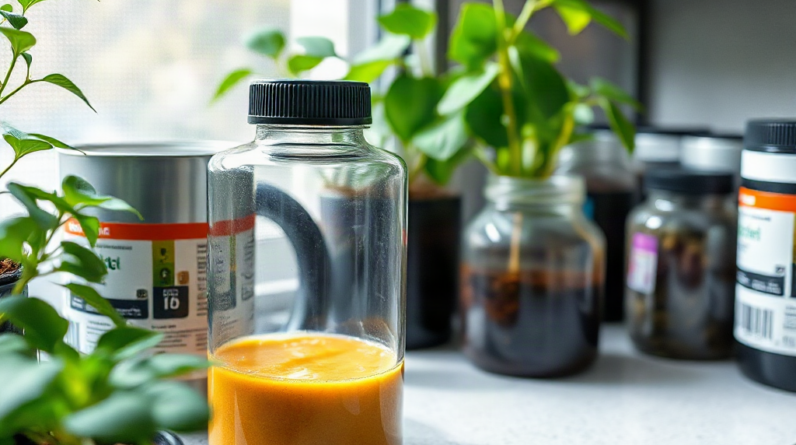
Opened hydroponic nutrients should be stored tightly sealed, upright, and out of direct light in a dry location with a stable temperature that remains within the manufacturer’s labeled range. Protect liquid concentrates from freezing and prolonged heat, because temperature extremes can cause separation, crystallization, container damage, or reduced formula stability. Keep caps, measuring tools, and bottle mouths clean to avoid introducing water, organic matter, or incompatible concentrates. Date each container when opened, inspect it before use, and never pour unused product back into the original bottle.
Control Temperature, Light, and Moisture
Stable storage conditions matter more than finding the coldest available location. A closed cabinet in a temperature-controlled room is usually preferable to a greenhouse shelf, outdoor shed, garage, or windowsill, where daily heat and cold cycles can be severe. The product label remains the controlling instruction because formulations differ, but most opened concentrates benefit from moderate, consistent conditions away from direct sunlight, heaters, grow lights, and freezing drafts.
Heat can accelerate chemical changes and place pressure on plastic containers. Cold conditions may cause some dissolved salts to crystallize or separate, while freezing can expand the liquid and damage the cap, seal, or bottle. A concentrate that has spent a cold night in a shed may therefore look cloudy or contain crystals even though it previously poured clearly. Warming it gradually to the labeled storage range and mixing it as directed may restore some products, but persistent solids require manufacturer guidance rather than guesswork.
Light exposure deserves attention even when the bottle is opaque. Direct sun heats the container, and repeated heating and cooling can be more disruptive than a stable room temperature. Some nutrient products also contain iron chelates, vitamins, biological ingredients, or other components with storage needs that differ from basic mineral salts. An opaque cabinet reduces both light and accidental temperature swings without creating the condensation risks associated with unsuitable refrigeration.
Refrigeration is not a universal upgrade. A refrigerator may expose a concentrate to temperatures below its recommended range, encourage crystallization, and create a food-contact concern if the container leaks. Use refrigerated storage only when the manufacturer expressly calls for it. Similarly, do not assume that a basement floor is ideal merely because it is cool; damp floors can degrade labels, hide small leaks, and expose containers to contamination.
For practical storage conditions for opened hydroponic nutrients, place bottles upright on a washable tray in a dark cabinet, separated from food, animal feed, pesticides, and household chemicals. Choose a shelf that can support the weight and is inaccessible to children and pets. The common mistake is optimizing for convenience beside the mixing tank while ignoring the heat, humidity, splashes, and intense light found in that location.
Prevent Contamination After Opening
Container hygiene determines whether a stable product stays usable after its factory seal is broken. Every transfer creates an opportunity to introduce tap water, reservoir solution, plant debris, dust, or traces of another concentrate. Even a small amount of foreign material can alter a concentrated formula, create precipitates, or support unwanted biological activity in products containing organic ingredients.
Use a clean, dry measuring vessel for each component. If a multipart nutrient line has separate Part A and Part B concentrates, never use a wet cup carrying one part to measure the other. The concentrated products can react before adequate dilution, producing insoluble material that may no longer contribute nutrients as intended. Rinsing a measuring cup between products is not enough if droplets remain; dedicated, clearly marked syringes or cups reduce that risk.
Never pour excess concentrate from a measuring vessel back into its bottle. The small saving is not worth contaminating the entire container. Measure over a tray rather than over the open bottle, wipe drips from the outside, and replace the original cap promptly. Avoid substituting an unmarked cap, because cap materials and liners may differ. If concentrate enters the cap threads, clean the exterior according to label precautions without adding cleaning water to the bottle.
Transferring product to a smaller bottle can reduce the air space above the liquid, but it introduces identification and compatibility risks. The replacement container must be chemically suitable, opaque when required, clean, dry, tightly closable, and labeled with the full product name, opening or transfer date, and relevant safety information. Beverage bottles are a poor choice because they invite dangerous misidentification. Keeping the concentrate in its original packaging is generally the safer option unless the manufacturer provides compatible storage instructions.
A compact handling routine limits preventable failures:
- Read the label before opening: confirm temperature limits, agitation directions, and any product-specific precautions.
- Prepare dry tools: assign separate measuring equipment to incompatible concentrates.
- Pour without contact: do not dip a used tool into the bottle or rest the cap on a dirty surface.
- Seal immediately: check that the cap and neck are clean and the closure is secure.
- Record the date: mark when the bottle was opened and note any unusual exposure event.
Good handling is working when caps remain clean, labels remain readable, and each concentrate retains its expected appearance between uses. Sticky necks, damaged threads, cross-used measuring tools, or unidentified decanted bottles signal that the storage process needs correction before the next nutrient batch is mixed.
Check Condition Before Measuring a Dose
Visual inspection should distinguish a normal formulation trait from a meaningful change. Some products naturally contain fine suspended material, develop harmless settling, or require shaking before use. Others are expected to remain clear. Compare the bottle with the manufacturer’s description and your own dated observations rather than assuming that every sediment layer means spoilage—or that every unusual appearance is harmless.
Start with the container. Look for a bulging bottle, leaking seam, cracked neck, loose closure, severe discoloration, or a label damaged beyond identification. A swollen or actively venting container should not be opened casually. Isolate it from the growing area and contact the manufacturer for handling and disposal instructions. Do not smell an unknown product directly or perform an improvised taste, skin, or plant test.
Next, inspect the concentrate through the container or during a careful pour. Warning signs include an odor that differs markedly from the product’s established smell, unexpected gas release, mold-like growth, stringy material, or separation that does not reverse after label-approved mixing and temperature normalization. Crystals can arise from cold exposure or evaporation around a poorly sealed cap, but adding water directly to the concentrate is not a safe correction unless the manufacturer specifically authorizes it. Unmeasured water changes concentration and may introduce contaminants.
A practical scenario illustrates the decision. Suppose a mineral Part B bottle stored in a cold garage contains crystals at the bottom. The weak response is to increase the reservoir dose to compensate, because the amount and identity of material outside solution are unknown. A better response is to move the sealed bottle into an approved temperature range, follow its agitation instructions, and see whether it returns to its documented appearance. If crystals remain, pause use and ask the supplier whether the batch is recoverable.
Do not rely on reservoir electrical conductivity or pH alone to validate a questionable bottle. EC indicates the solution’s overall ionic conductivity, not whether each nutrient remains in the intended form or proportion. A contaminated or partially precipitated concentrate can still raise EC. Likewise, a normal pH reading does not prove product integrity. The history of the bottle, physical inspection, label directions, and manufacturer support provide a stronger basis for deciding whether to use it.
Readers organizing storage conditions for opened hydroponic nutrients can keep a simple log with the opening date, batch or lot code, storage location, and any heat, freezing, or contamination incident. That record turns a vague suspicion into specific information a manufacturer can use when advising whether a product should be mixed, monitored, or discarded.
Manage Shelf Life and Stored Working Solutions
An opened date is useful only when paired with the manufacturer’s shelf-life instructions. There is no reliable universal expiration period for all hydroponic nutrients. Concentrated mineral formulas, organic blends, microbial inoculants, enzymes, pH adjusters, and supplements can have very different stability requirements. A printed expiration or best-use date should not be extended simply because the liquid still looks normal.
Write the opening date directly on the bottle with a durable marker or removable label, while preserving the product name, lot code, hazard information, and directions. Rotate stock so older suitable containers are used first, and avoid buying a package far larger than the amount your garden consumes within the labeled period. A large bottle may cost less per unit, but the saving disappears if repeated opening, poor pouring control, or long storage compromises the remaining concentrate.
Concentrates and prepared nutrient solutions are not interchangeable storage cases. Once concentrate is diluted into water, the solution has a different chemistry and a greater opportunity for microbial growth, pH drift, precipitation, and oxygen loss. A premixed watering solution or stock solution should therefore follow the nutrient maker’s directions for concentration, container type, aeration, circulation, light exclusion, temperature, and holding time. Never assume that the shelf life printed on the concentrate also applies after dilution.
Stock solutions require special caution. Mixing calcium-rich and sulfate- or phosphate-rich ingredients together at high concentration can form insoluble compounds, which is why compatible products are often kept in separate stock tanks. The fact that ingredients coexist after dilution in a reservoir does not mean they can share a concentrated storage bottle. If the label does not provide stock-solution instructions, prepare only the working volume needed rather than inventing a concentrated blend.
When a product reaches its labeled date or fails inspection, disposal should follow its label and local waste guidance. Do not pour concentrated nutrients into a hydroponic reservoir merely to avoid waste, and do not discharge them into a storm drain or onto soil without confirming that disposal method is permitted and appropriate. Original packaging and an intact label make disposal decisions easier.
A monthly cabinet check is usually more useful than relying on memory. Confirm that bottles are upright, caps are secure, trays are dry, labels are readable, and older containers are positioned for first use. Review how quickly each product is being consumed before placing the next order. This inventory approach makes storage conditions for opened hydroponic nutrients part of nutrient management rather than an afterthought after a bottle has already changed.
Frequently Asked Questions
Should opened hydroponic nutrients be refrigerated?
Not unless the manufacturer specifies refrigeration. Unnecessary chilling may cause crystallization or separation, while shared food storage creates an avoidable leak and handling risk.
How long do liquid hydroponic nutrients last after opening?
Use the opening period and expiration guidance printed by the manufacturer. Formula type, packaging, contamination, and exposure history make a universal shelf-life estimate unreliable.
Are crystals in a nutrient bottle a sign that it must be discarded?
Not necessarily. Cold exposure can produce crystals in some formulas, but the product should only be warmed and mixed within label directions. Contact the manufacturer if solids persist.
Can Part A and Part B bottles be stored beside each other?
They may share a suitable cabinet if both remain sealed, upright, and clearly identified. Use separate measuring tools and a containment tray so a leak or spill cannot mix the concentrates.
Can diluted nutrient solution be stored like the concentrate?
No. Dilution changes stability and increases exposure to microbes, precipitation, pH drift, and oxygen changes. Follow product-specific holding instructions or mix only the amount needed.
Conclusion
A dependable storage setup is a dark, temperature-stable cabinet with upright original containers, secure caps, readable labels, and a tray capable of containing drips. Clean, dry, product-specific measuring tools protect the contents each time a bottle is opened, while dated labels and an inventory log keep shelf-life decisions grounded in product instructions rather than memory.
Inspect the package and concentrate before every use, especially after freezing, heat exposure, a loose cap, or suspected cross-contamination. Do not correct unexplained crystals or separation by adding water or increasing the dose. Isolate questionable products and give the manufacturer the product name, lot code, storage history, and observed changes. Finally, treat diluted solutions and concentrated stock mixtures as separate storage problems; their stability cannot be inferred from the unopened or opened shelf life of the original nutrient bottle.