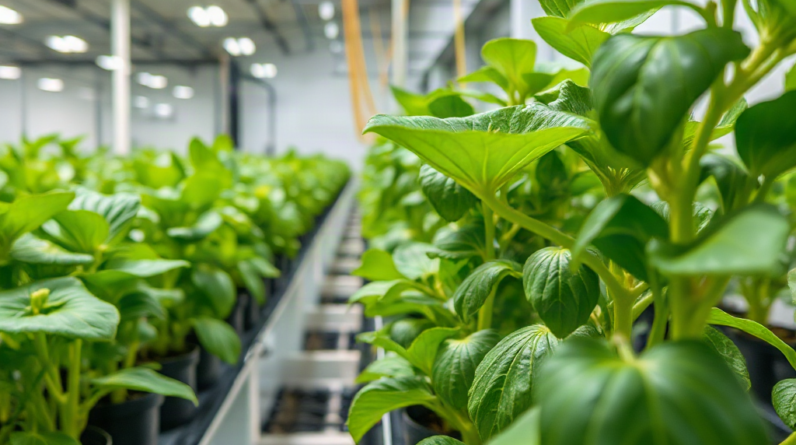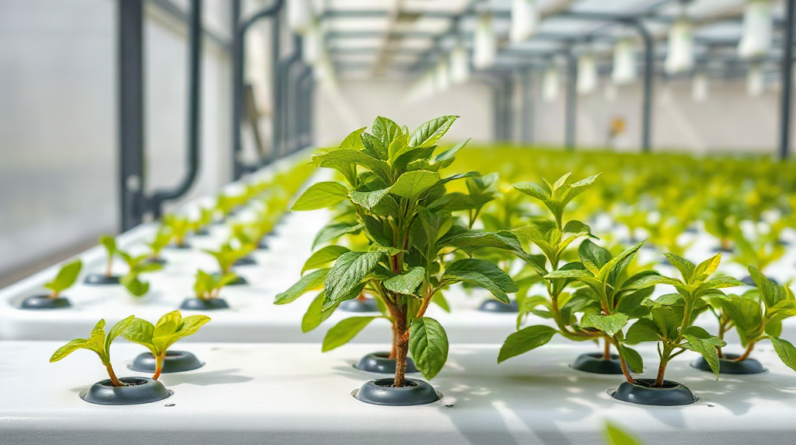
Calculate reservoir capacity by multiplying the number of hydroponic plants by a crop-appropriate water allowance, then increase that result by 20% to 30% for operating reserve. Small leafy greens often need less solution volume per plant than fruiting crops, while mature tomatoes, cucumbers, and peppers create higher daily water demand and faster EC changes. The final reservoir must also retain enough working depth for the pump after accounting for plumbing, channels, buckets, and minimum pump submergence. Treat the formula as a starting size, then confirm it against peak daily drawdown, refill frequency, nutrient stability, and the actual volume circulating outside the tank.
The Plant-Count Sizing Formula
A useful plant-count calculation begins with three values: the number of plant sites, a working-volume allowance for each site, and a reserve percentage. Expressed as a formula, reservoir capacity equals plant count multiplied by the per-plant allowance, with the result multiplied again by 1.2 to 1.3. The reserve protects the system from exposing a pump or producing an abrupt nutrient concentration change as plants consume water.
For example, suppose a 24-site leafy-green system uses a preliminary allowance of 0.75 gallon per plant. The base volume is 18 gallons. Adding a 25% reserve produces a target working capacity of 22.5 gallons, which would normally justify selecting a reservoir that can hold at least 25 gallons without being filled to its rim. The extra headspace matters because return flow, aeration, maintenance, and accidental overfilling can all cause splashing or overflow.
The selected container size and usable working volume are not identical. A tank sold as 25 gallons may provide less than 25 gallons in normal service if its pump must remain covered, its lid or fittings limit the fill line, or its shape leaves inaccessible water below the outlet. Measure the volume between the safe maximum fill line and the lowest acceptable operating level. That range is the system’s usable buffer.
A per-plant formula is more informative than choosing a tank solely from floor space, but it should not be treated as a universal engineering rule. Plant size, crop stage, room temperature, airflow, humidity, lighting intensity, and root-zone design alter demand. Seedlings occupying 24 sites do not use water like 24 mature heads of lettuce, and mature fruiting plants can draw down a small tank rapidly under bright lights. Use reservoir capacity calculations by hydroponic plant count to establish the first estimate, then test that estimate under the crop’s most demanding expected conditions.
The common failure is sizing around newly transplanted plants. The tank appears generous during the first weeks, so the grower adds sites or delays refilling. As leaf area expands, daily drawdown accelerates while the reservoir’s capacity remains fixed. Base a permanent installation on mature plant demand, not the low consumption seen immediately after transplanting.
Water Allowances for Different Crop Types
Crop category determines whether plant count is a useful shortcut or only a rough starting point. Compact greens generally permit a lower volume per site because each plant has limited canopy and a relatively short production cycle. Large fruiting crops need a larger buffer because their leaf area, transpiration, root mass, and production period create greater water use and more pronounced changes in nutrient concentration.
Practical preliminary ranges can be used for planning rather than as fixed consumption claims. Seedlings and small herbs may be planned around roughly 0.25 to 0.5 gallon of working solution per site. Lettuce, basil, and similar compact crops often fit an initial range of about 0.5 to 1 gallon per plant. Larger herbs and medium-sized plants may justify 1 to 2 gallons. Mature tomatoes, cucumbers, peppers, and other fruiting crops often warrant 2 to 5 gallons per plant, especially where the grower cannot inspect or top up the reservoir every day.
Consider two systems with 12 sites. A lettuce installation using 0.75 gallon per site starts at 9 gallons and reaches 11.25 gallons after a 25% reserve. A 15-gallon nominal tank may be workable if its pump and return plumbing leave at least that much usable volume. Twelve mature tomato plants calculated at 3 gallons each start at 36 gallons and reach 45 gallons after the same reserve. Choosing one small tank for both systems merely because the site count matches ignores the crops’ very different water demand.
Plant spacing provides another clue. A dense raft carrying many small lettuce plants may have a high plant count but moderate demand per site. A drip system with only six mature cucumbers may have fewer plants yet consume water faster. Counting sites without classifying the crop can therefore produce a misleading answer. Mixed reservoirs require particular caution: calculate each crop group separately, add the subtotals, and apply the reserve to the combined amount.
Oversizing has tradeoffs as well. A larger solution mass usually changes temperature, EC, and pH more slowly, but it costs more to fill with nutrients and may be cumbersome to drain or sanitize. Oversized tanks can also encourage growers to leave old solution in service simply because replacement is inconvenient. The appropriate target is enough volume to limit abrupt changes and cover peak drawdown, not the largest container that fits the room.
Adjusting for System Design and Operating Volume
The reservoir is only one place where solution resides while a hydroponic system is operating. Channels, grow beds, buckets, pipework, filters, chillers, and supply lines can temporarily hold a meaningful share of the total. Capacity planning must distinguish total system volume from the amount remaining in the reservoir while the pump runs.
In nutrient film technique, much of the solution normally returns quickly, so the external operating volume may be modest. Deep-water or recirculating bucket systems retain considerably more water outside the central tank. Flood-and-drain beds create a different problem: the reservoir reaches its lowest level while beds are flooded and may rise sharply when they drain. A tank that looks adequate while the pump is off can uncover the pump during a flood cycle, while a tank filled too high during operation can overflow when all beds empty.
Measure external volume rather than guessing where possible. Fill an empty system with a known amount of plain water to the intended operating level, run every circuit, and note the reservoir level after flow stabilizes. For cyclic systems, record both the lowest level during pumping and the highest level after drainage. The pump must remain safely submerged at the low point, and the tank needs headspace at the high point.
For a recirculating bucket example, eight plant modules might hold 3 gallons each at operating depth, placing 24 gallons outside the main reservoir before pipe volume is counted. If the plant-based target calls for a 30-gallon working buffer, a nominal 30-gallon tank will not create a 30-gallon reservoir reserve once the system is circulating. The installation may need roughly 54 gallons of total solution plus suitable headspace, with the exact tank size determined by how much stays in the modules.
Pump placement can reduce usable capacity further. A submersible pump mounted several inches above the bottom may stop moving water long before the tank is empty. Sediment clearance can justify that position, but the inaccessible water below the intake should not be counted as available reserve. The same applies to float-valve placement and side outlets. Anyone applying reservoir capacity calculations by hydroponic plant count should use measured operating volume, not the molded capacity printed on the container.
Checking Capacity Against Peak Water Use
Observed drawdown is the strongest test of a reservoir estimate once the crop approaches mature size. Mark the solution level at the same time on consecutive days, replace only the measured water loss, and record the amount added. Repeat the check during warm weather or under the brightest normal lighting period, because a cool or cloudy interval can understate peak demand.
Daily drawdown affects more than the risk of running dry. As plants remove water and nutrients at different rates, EC may rise, fall, or remain relatively stable. A small reservoir magnifies those changes because every gallon consumed represents a larger portion of the solution. If a 10-gallon working volume loses 2 gallons, the system has lost one-fifth of its water. The same 2-gallon loss from a 40-gallon working volume represents a much smaller proportional change.
A practical capacity target should leave the grower with a manageable refill interval. If the system must operate unattended for two days, measured peak daily use should be multiplied by at least two and kept above the pump’s minimum level, with an additional margin for unexpectedly high demand. An automatic top-off reservoir can extend the interval, but it does not excuse an undersized nutrient tank. A stuck valve, empty top-off container, or power interruption can expose the original limitation.
Signs of adequate capacity include modest level changes between inspections, a continuously submerged pump, enough headspace for return flow, and EC or pH movement that can be corrected without large emergency adjustments. Warning signs include the pump drawing air, roots losing circulation before the next planned check, concentrated readings after rapid water loss, repeated large pH corrections, or overflow when the pump stops.
Do not respond to every EC change by enlarging the tank. Poor nutrient mixing, inaccurate meters, excessive evaporation, unbalanced feed strength, or crop uptake patterns can produce similar readings. Capacity is implicated when changes closely track a large percentage loss of reservoir water or when the operating level repeatedly approaches the pump minimum. Confirm meter calibration and inspect flow before buying a larger container.
A Practical Reservoir-Sizing Checklist
A reliable sizing decision combines calculated plant demand with measured hydraulic limits. Complete the calculation before purchasing a reservoir, then validate the installed system with plain water. Retrofitting a larger tank after roots fill the channels is usually more disruptive than allowing sensible capacity at the design stage.
- Count mature production sites: Exclude unused holes, but include every site expected to operate from the reservoir at one time.
- Group plants by crop size: Calculate compact greens, medium plants, and large fruiting crops separately rather than applying one allowance to a mixed planting.
- Calculate the base volume: Multiply each group by its chosen per-plant planning allowance and add the results.
- Add 20% to 30% reserve: Use the higher end when inspection is infrequent, conditions are warm, or crops have large canopies.
- Add solution held outside the tank: Include buckets, beds, channels, filters, chillers, and plumbing at normal operating depth.
- Protect minimum and maximum levels: Verify pump submergence during maximum drawdown and headspace when all return flow reaches the tank.
- Measure mature-crop drawdown: Compare observed peak use with the planned refill interval and revise capacity if the margin is too narrow.
Suppose 16 lettuce plants at 0.75 gallon each and four pepper plants at 3 gallons each share a reservoir. Each group contributes 12 gallons, producing a 24-gallon base. A 25% reserve raises the desired working volume to 30 gallons. If channels and plumbing hold another 5 gallons during operation, the system needs about 35 gallons of total circulating solution. The selected tank may need to be larger than 35 gallons so it can retain the required working volume without filling to the rim.
Budget-limited growers should prioritize usable water volume and safe pump operation over cosmetic reservoir features. Two connected tanks can provide more capacity, but only if the connecting line is large enough to equalize levels at the system’s flow rate and cannot be blocked by roots or debris. A single appropriately sized tank is simpler to drain, mix, and inspect.
Recalculate after adding plant sites, changing from greens to fruiting crops, extending plumbing, or increasing the interval between inspections. The calculation is working when mature plants can complete the expected operating period without approaching the pump minimum or forcing frequent emergency corrections. It is failing when routine water loss consumes most of the usable range before the next scheduled visit.
Frequently Asked Questions
How many gallons should a hydroponic reservoir hold per plant?
A planning range may run from about 0.25 gallon for seedlings to 0.5–1 gallon for compact greens and 2–5 gallons for mature fruiting crops. Add an operating reserve and verify the result against actual drawdown.
Can a hydroponic reservoir be too large?
Yes. Extra volume improves stability but increases nutrient cost, water weight, cleaning effort, and solution-replacement time. Choose enough capacity for stable operation rather than maximizing tank size without a reason.
Does water in buckets and channels count toward reservoir capacity?
It counts toward total system volume, but not necessarily the usable reserve remaining in the tank. Measure the reservoir level while the system is running and include external operating volume separately.
Should reservoir size be based on seedlings or mature plants?
Size a permanent system for mature plants. Seedling demand can make an undersized tank appear adequate during early growth, only for drawdown and nutrient swings to increase as the canopy expands.
Does an automatic top-off allow a smaller nutrient reservoir?
A top-off system can extend the refill interval, but the main reservoir must still keep the pump submerged and provide stable circulation if the top-off supply runs out or its valve fails.
Conclusion
Reservoir selection should end with a measured operating test, not a label on a storage tank. Calculate mature plant requirements by crop group, add a realistic reserve, and account for every gallon held in beds, buckets, channels, and plumbing. Then confirm the lowest pump-on level, the highest drain-back level, and the crop’s peak daily drawdown.
A larger tank is worthwhile when it reduces excessive percentage drawdown and gives EC, pH, and temperature more inertia. It is unnecessary when added volume only increases nutrient expense and cleaning work. Record water additions as plants mature, especially after crop changes or system expansion. Those records turn an initial estimate into a capacity decision matched to the installation’s actual demand.