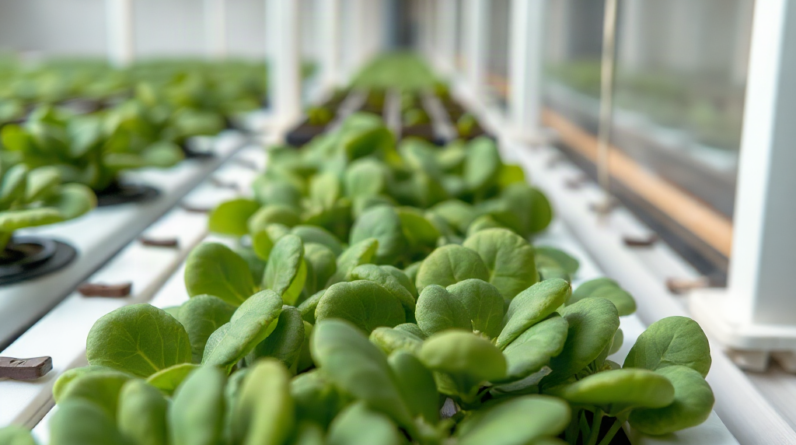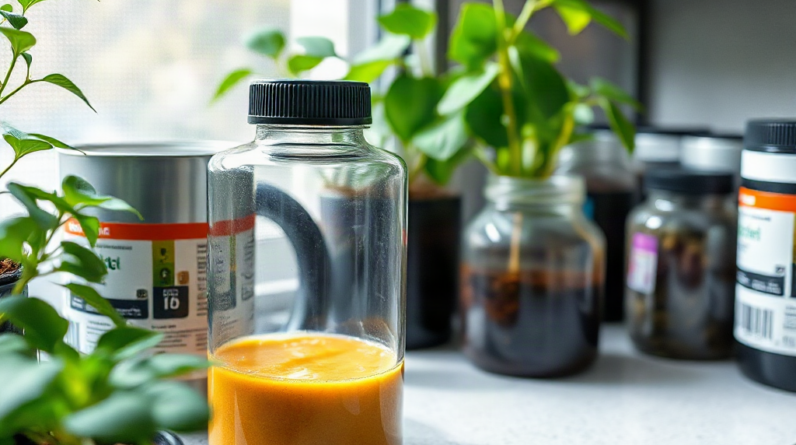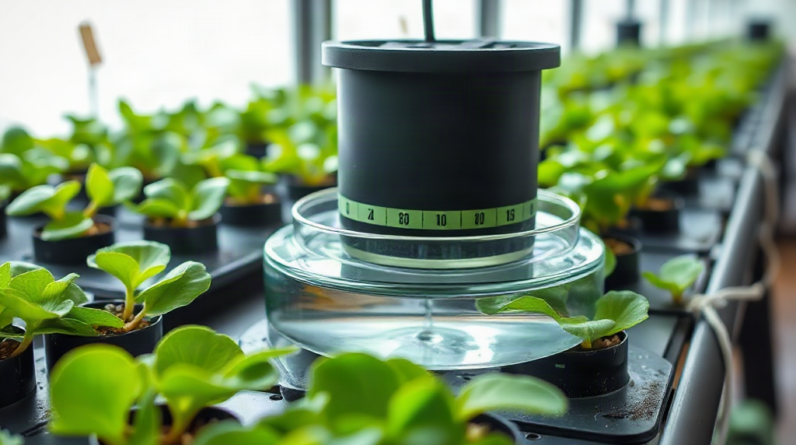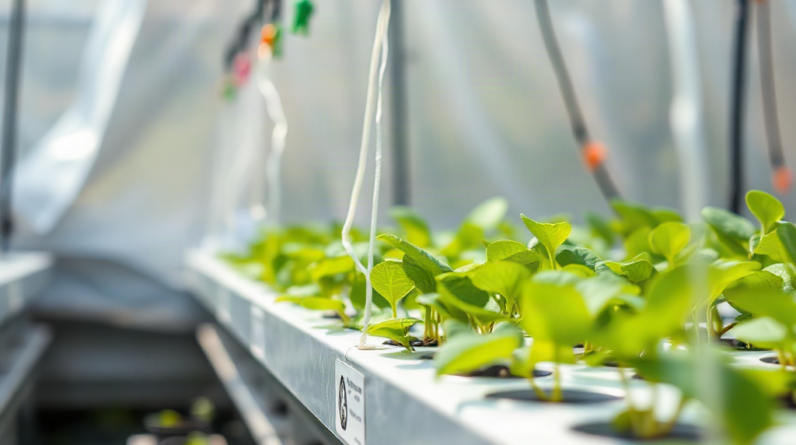
Correct calcium deficiency in fast-growing hydroponic crops by restoring calcium delivery to new tissue, not simply by pouring more calcium into the reservoir. Confirm symptoms on young leaves or developing fruit, then check root-zone pH, nutrient concentration, solution temperature, root health, humidity, and airflow because calcium travels mainly with the transpiration stream. Replace or rebalance the solution if calcium is genuinely low, using a compatible calcium-containing fertilizer without exceeding the crop’s total nitrogen or EC needs. Improvement appears in healthy new growth; damaged leaf tips, distorted leaves, blossom-end rot, and tip burn will not repair themselves.
Confirm That the Damage Is a Calcium Problem
Calcium disorders first affect rapidly expanding tissue because calcium is poorly redistributed from older leaves to newer growth. Lettuce may develop brown margins on inner leaves, basil can produce crinkled or hooked growing points, and fruiting crops may show dark, sunken tissue at the blossom end of young fruit. The shared pattern is damage where cells are developing fastest, while established leaves can remain comparatively normal.
Location matters more than the presence of a brown spot. A uniform yellowing that begins on older foliage points away from calcium. Dry outer margins caused by excessive nutrient concentration can resemble tip burn, but salt stress often affects a broader portion of the canopy and may be accompanied by slowed water uptake. Root disease can create several deficiencies at once because damaged roots cannot absorb water and ions normally. Before changing the formula, inspect the newest leaves, the root system, and the distribution of symptoms across the crop.
Physical injury and environmental stress also deserve attention. A lettuce head exposed to a stagnant pocket of humid air may develop localized inner-leaf tip burn even when neighboring plants receive the same solution. Tomato blossom-end rot can follow an abrupt shift from a wet root zone to high evaporative demand. In both cases, a laboratory analysis might show adequate calcium in the reservoir; the failure lies in transport to the affected tissue rather than total supply.
A useful diagnosis combines plant evidence with measurements taken from the system. Record reservoir pH and electrical conductivity, compare the reading with the crop and fertilizer manufacturer’s target range, and check whether the meter has been calibrated recently. Examine roots for a pale, firm appearance rather than browning, slime, or a sour smell. Note recent changes in humidity, airflow, solution temperature, water level, fertilizer brand, or dilution procedure. This evidence keeps Calcium deficiency correction in fast-growing hydroponic crops from becoming an unnecessary calcium overdose.
The common mistake is diagnosing from one damaged leaf. Calcium injury is permanent, so old symptoms cannot show whether current conditions are adequate. Mark affected leaves or photograph the growing point, then evaluate tissue that emerges after corrective work. If new growth remains misshapen, broaden the investigation rather than repeatedly increasing the dose.
Find What Is Interrupting Calcium Delivery
Calcium reaches shoots primarily through water movement in the xylem, making root uptake and transpiration central to the diagnosis. A reservoir can contain the intended calcium concentration while tender leaves receive too little. Fast growth magnifies the mismatch: new cells require a steady supply, but the plant has little ability to move stored calcium out of mature tissue when delivery briefly falls behind.
Start at the roots. Low dissolved oxygen, excessive solution temperature, root-zone pathogens, blocked channels, intermittent pump operation, or poorly wetted media can reduce water uptake. In a recirculating system, inspect flow at the farthest plant rather than assuming pump noise proves adequate circulation. In drip-grown coco or other media, compare emitter output and examine whether salts have accumulated in the root zone. A healthy reservoir reading does not describe conditions inside a dry or concentrated slab.
Next, consider the canopy environment. Very high humidity and weak air movement can suppress transpiration around dense growing points, which is a familiar route to lettuce tip burn. At the opposite extreme, intense light, hot dry air, or sudden increases in vapor demand may make leaves lose water faster than roots can replace it. The goal is not maximum transpiration; it is stable water movement that roots can sustain. Airflow should gently exchange air within the canopy without blasting tender foliage or rapidly drying the root medium.
Nutrient competition can further restrict uptake. Excess potassium, magnesium, or ammonium may interfere with the plant’s calcium acquisition, especially when total solution strength is already high. A grower who treats every brown margin with calcium nitrate may raise both calcium and nitrate nitrogen, accelerating soft growth or pushing EC beyond the intended range. Hard source water presents the opposite complication: it may already contribute substantial calcium and alkalinity, making a standard formula unsuitable even though the label assumes low-mineral water.
Use this compact diagnostic order before reformulating:
- Verify measurements: Calibrate pH and EC instruments and test a representative solution sample.
- Inspect delivery: Confirm pump operation, channel flow, emitter output, water level, and media moisture.
- Assess roots: Look for heat stress, oxygen limitation, discoloration, odor, or physical damage.
- Review climate: Check canopy humidity, airflow, light intensity, and recent environmental swings.
- Audit the formula: Calculate source-water and fertilizer contributions rather than relying on product names.
The weak assumption is that calcium concentration alone controls the outcome. When roots are failing or transpiration is unstable, adding more fertilizer leaves the transport bottleneck in place and may increase osmotic stress. Correct delivery conditions before making a large nutrient adjustment.
Correct the Reservoir Without Creating a New Imbalance
Reservoir correction should preserve the intended balance among calcium, nitrogen, potassium, magnesium, sulfur, and total dissolved salts. If records show that the solution was mixed incorrectly or diluted beyond its target, the cleanest response is often to prepare a fresh batch according to a crop-appropriate formula. This is more predictable than repeatedly adding concentrates to an aging solution whose individual ions have been consumed at different rates.
Measure source water before choosing the amendment. Water with meaningful calcium may need less calcium fertilizer than reverse-osmosis water. Alkalinity also affects how much acid is required to hold pH in range, and pH drift can alter the availability of several nutrients. There is no universal calcium dose for every crop, growth stage, water supply, and fertilizer program. Use the fertilizer manufacturer’s analysis, water test, reservoir volume, and crop-specific production information to calculate a complete formula.
Calcium nitrate is commonly used when both calcium and nitrate nitrogen are needed. A calcium supplement with little or no nitrogen may fit better when the nitrogen target has already been met, but its accompanying ions still need to be counted. Calcium chloride can add chloride, for example, and is not an interchangeable default for every recirculating crop. Foliar calcium products may have limited value for accessible leaves, yet they do not reliably correct poor root function or deliver calcium uniformly into enclosed lettuce heads and developing fruit. Avoid treating a foliar spray as a substitute for a functional root zone.
Concentrated calcium must not be mixed directly with concentrated sulfate- or phosphate-containing stock solutions. High local concentrations can form insoluble precipitates, removing nutrients from the solution and potentially clogging equipment. Keep incompatible stock concentrates separate, dilute each into the reservoir water as directed, and allow mixing between additions. Cloudiness or sediment after preparation is a warning to stop and review water chemistry, stock concentration, and mixing order.
For a small system with uncertain nutrient history, draining and remixing is usually safer than chasing EC with multiple additives. For a large, well-instrumented reservoir, a calculated correction may conserve water and fertilizer, but only if the grower knows the water analysis and current nutrient composition. EC cannot identify calcium specifically; it reports combined ionic conductivity. A normal EC therefore cannot prove that calcium is adequate, while a high EC does not justify adding another salt.
After adjustment, document the amount added, final pH, final EC, solution temperature, and reservoir volume. Recheck after the solution has circulated instead of trusting a sample taken beside the dosing point. The practical aim of Calcium deficiency correction in fast-growing hydroponic crops is a stable, balanced solution—not the highest calcium number the plants can tolerate.
Restore Transpiration and Judge the Recovery
Recovery must be evaluated in tissue produced after the root-zone and environmental changes. Brown margins, collapsed growing points, and blossom-end lesions are dead or structurally damaged tissue; they will not turn green again. Depending on crop growth rate and severity, the first useful evidence may be a new leaf expanding normally, a lettuce center remaining free of fresh edge necrosis, or newly set fruit developing without an enlarging dark patch.
Stabilize the canopy rather than forcing a rapid climate change. Improve circulation through dense leaves, maintain ventilation or dehumidification appropriate to the room, and avoid abrupt light or temperature increases after a low-transpiration period. Where crops are crowded, spacing may matter more than adding another fan because leaves physically block air exchange around growing points. Fans should mix air across and within the canopy without causing constant leaf flutter, wind injury, or uneven drying.
Irrigation also needs continuity. A short pump failure during a bright period can interrupt calcium delivery even if plants do not visibly wilt. In media systems, long gaps between irrigations may produce large swings in root-zone concentration; excessive irrigation can create oxygen-poor conditions. Compare root-zone moisture and drainage across the crop, including end plants and high-flow or low-flow emitters. Correcting uniformity often produces a better result than raising the reservoir concentration for every plant.
Monitor progress with dated photographs and a fixed set of observations. Check the growing point, newly expanding leaves, root appearance, water use, pH drift, and EC trend at the same time each day. If fresh symptoms stop while normal tissue expands, the intervention is working. If damage advances despite stable measurements, reconsider the diagnosis, inspect roots more closely, and verify the nutrient recipe or source-water analysis. A persistent problem in a commercial or high-value crop may justify laboratory testing of water, nutrient solution, or plant tissue.
Removing severely damaged leaves can improve airflow and sanitation, but aggressive pruning reduces photosynthetic area and may expose inner tissue to sudden light. Remove decaying material first and retain functional leaves when they are not obstructing the canopy. Fruit already affected by blossom-end rot will not recover, so judge the correction by later fruit rather than by waiting for existing lesions to disappear.
A frequent failure is making several large changes at once—adding calcium, lowering EC, increasing airflow, and altering irrigation—without records. That approach may save an urgently declining crop, but it prevents the grower from identifying the dominant cause. When plants are stable enough, change the highest-priority constraint first, record the response, and make the next adjustment only when measurements support it.
Frequently Asked Questions
Can a plant recover from calcium deficiency?
New tissue can resume normal development once calcium delivery is restored, but existing tip burn, distorted leaves, and damaged fruit will not repair themselves.
Should I add Cal-Mag as soon as brown leaf edges appear?
No. Confirm that symptoms affect young tissue and check pH, EC, roots, irrigation, humidity, and airflow first. Cal-Mag can raise magnesium and nitrogen as well as calcium, depending on the product.
Can high humidity cause calcium deficiency symptoms?
Yes. High humidity and stagnant air can reduce transpiration around rapidly expanding leaves, limiting calcium transport even when the reservoir contains enough calcium.
Does a normal EC mean calcium is adequate?
No. EC reflects the combined conductivity of dissolved ions and cannot show the concentration of calcium or reveal whether roots are transporting it effectively.
How quickly should new calcium damage stop?
The response depends on crop speed, severity, and the underlying cause. Watch newly formed tissue over the following growth cycle rather than expecting old lesions to fade.
Conclusion
Successful correction depends on separating low calcium supply from failed calcium transport. Begin with symptom location and new growth, then verify instruments, root health, irrigation delivery, canopy airflow, and environmental stability. If the formulation is genuinely short of calcium, rebalance or replace it with full awareness of nitrogen, magnesium, potassium, source-water minerals, and total EC. Keep concentrated calcium away from incompatible phosphate and sulfate stocks.
Track the next leaves or fruit rather than waiting for damaged tissue to recover. Healthy new growth, stable water uptake, and no fresh lesions indicate progress. Continuing injury calls for a renewed diagnosis, not another unmeasured dose. That measured sequence protects fast-growing crops from both the original disorder and the salt or nutrient imbalance created by overcorrection.