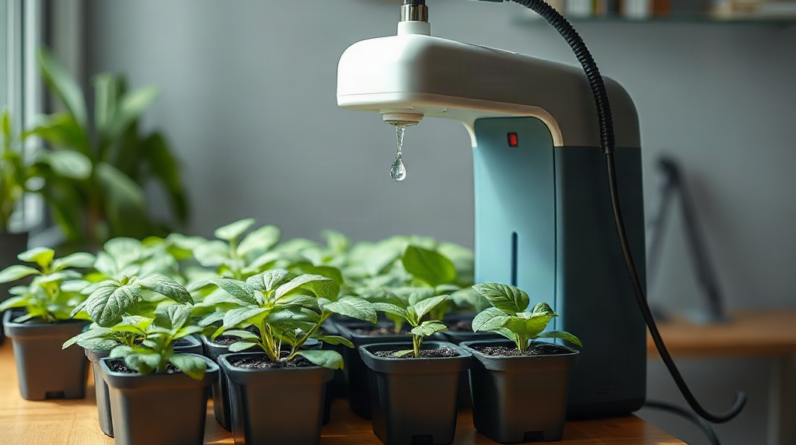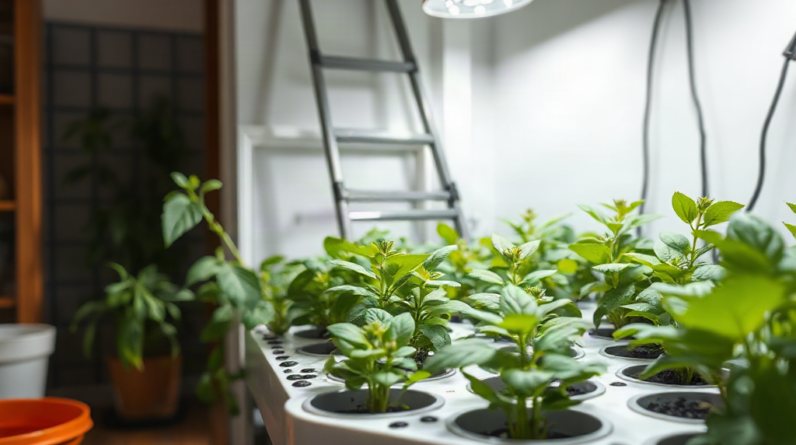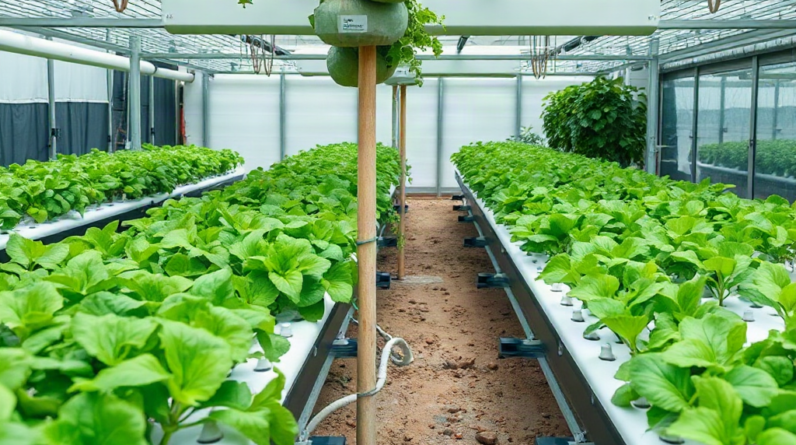
Approach hydroponic vegetable breeding by defining a measurable target, selecting genetically distinct parents, making controlled crosses, and evaluating offspring under the same root-zone and climate conditions in which the final variety will grow. Record parentage, germination, yield, flavor, flowering time, disease symptoms, and tolerance to pH, electrical conductivity, heat, or low light. Advance only plants that repeat desirable traits across multiple cycles rather than selecting a single impressive specimen. Keep seed from each plant separate, prevent stray pollination, and compare every generation with an unchanged reference variety so environmental improvements are not mistaken for genetic progress.
Define a Breeding Target for the Growing System
A useful breeding project begins with a narrowly defined trait that can be measured under a specified production setup. “Better lettuce” is too vague. “A compact butterhead lettuce that resists tipburn at the usual nutrient concentration and reaches marketable size under limited vertical clearance” gives the breeder observable criteria. The target connects plant genetics to channel spacing, lighting, airflow, root-zone temperature, nutrient delivery, and harvest expectations.
Hydroponics does not create a separate form of plant genetics, but it changes which traits carry practical value. A tomato selected outdoors may tolerate irregular soil moisture yet develop excessive foliage under constant nutrient access. A cucumber with strong field performance may have roots that clog a small channel or require more trellis height than an indoor room provides. Conversely, a compact pepper that sets fruit reliably in a controlled environment may be valuable even if it is not suited to open-field machinery.
Write a breeding objective with one primary trait and no more than two secondary traits for the first selection cycle. Trying to improve yield, flavor, compactness, disease tolerance, nutrient efficiency, shelf life, and maturity simultaneously makes selection inconsistent. Each added requirement also reduces the number of offspring likely to meet the entire specification.
- Primary trait: the non-negotiable outcome, such as delayed bolting or compact growth.
- Secondary traits: qualities such as leaf texture, color, or uniform harvest timing.
- Disqualifying faults: poor germination, weak roots, sterility, severe bitterness, or malformed produce.
- Test environment: the system type, planting density, light schedule, temperature range, and nutrient program.
A practical objective must also recognize system limits. Selecting for tolerance to dangerously high nutrient concentration is less useful than correcting nutrient management. Likewise, breeding around chronically hot solution cannot replace cooling or better reservoir placement. Genetics can widen an operating margin, but it should not be used to excuse a defective growing environment. Readers deciding how to approach hydroponic vegetable breeding should first separate traits worth inheriting from problems better solved through equipment or operating changes.
Choose Parents With Complementary Traits
Parent selection determines which genetic variation will be available in the offspring. Choose plants that contribute different, documented strengths rather than crossing two varieties simply because both grow well. For example, one lettuce parent might have compact architecture and clean leaf margins, while another remains slow to bolt during warm production cycles. The proposed cross has a clear purpose: combine space efficiency with heat-related harvest stability.
Open-pollinated varieties and stable breeding lines are generally easier starting material because their characteristics can be observed and reproduced with less uncertainty. Commercial F1 hybrids may still be used as breeding material where legally permitted, but their offspring often separate into a wide range of forms. That variation can be useful to an experienced breeder, although it demands larger populations and more generations of selection. Plant variety protections, patents, licenses, and seed-use terms should be checked before using commercial material in a breeding program.
Parent plants should be evaluated in the target hydroponic system before crossing. A catalog description cannot reveal how a cultivar behaves under a particular combination of root volume, light intensity, humidity, and planting density. Grow several plants of each candidate alongside a familiar reference cultivar. Reject a proposed parent if its apparent strength occurs in only one plant or disappears during a repeat crop.
Genetic diversity and predictable performance create a real tradeoff. Closely related parents may produce uniform offspring but offer little new variation. Highly distinct parents can generate novel combinations, yet many descendants may be unsuitable. A home breeder with room for 20 plants should favor a focused cross between well-characterized parents. A larger program capable of screening hundreds of seedlings can accept a broader, less predictable population.
Inspect reproductive compatibility as well. Lettuce and tomatoes are largely self-pollinating, whereas cucurbits produce separate male and female flowers and rely more heavily on pollen transfer. Crops also differ in flowering schedule, seed maturation, and susceptibility to unintended crosses. Before committing space, confirm that the parents belong to compatible species or cross-compatible groups and that viable seed can realistically be produced. A common failure is choosing visually attractive parents without accounting for flowering overlap, fertility, or the number of offspring needed to find the intended trait combination.
Control Pollination and Preserve Seed Identity
Controlled pollination must establish which plant supplied the ovule, which supplied the pollen, and when the cross occurred. The exact technique depends on flower biology. With a self-pollinating tomato, the breeder may remove immature anthers from the chosen female flower before pollen release, protect the flower, apply pollen from the selected male, and label it. With squash or cucumber, unopened female and male flowers can be isolated, hand-pollinated after opening, and secured against additional pollen transfer.
Timing matters because a flower manipulated too early may be unreceptive, while one handled after its own pollen is released may already be self-fertilized. Practice on spare flowers before using the best parents. Tools should be clean, and pollen from different crosses should not share unclean containers or brushes. Bags or other barriers must allow the flower to remain dry enough to avoid decay while excluding insects and stray pollen.
Every pollinated flower needs a durable identifier linked to a written or digital record. Record the female parent first, the male parent, pollination date, plant number, and location. A label such as “A3 × B2, 14 June” is more useful than a variety name alone because individual plants within an open-pollinated population may differ. Mark unsuccessful flowers rather than silently reusing their identities.
Seed handling deserves the same discipline. Harvest seed only after the crop-specific seed structure reaches physiological maturity; edible maturity and seed maturity are often different. Tomato seed is taken from fully ripe fruit and commonly cleaned through a short fermentation process, while lettuce seed is collected after flower heads mature and dry. Cucumbers retained for seed remain on the plant well beyond the usual eating stage. Dry cleaned seed adequately, store each cross separately, and label the packet before it leaves the work area.
Run a small germination test before allocating an entire channel or raft to the offspring. Low germination can reflect immature seed, poor drying, storage damage, or an unsuccessful cross. It does not automatically prove incompatibility. Keeping a portion of the original seed in reserve protects the project from pump failures, pathogens, labeling errors, and other losses. The most damaging mistake at this stage is pooled seed: once seeds from different parent plants or crosses are mixed, later performance can no longer be tied confidently to a pedigree.
Evaluate Offspring With Repeatable Trials
Offspring should be tested under uniform conditions with enough replication to distinguish inherited performance from a favorable position in the system. Hydroponic channels, rafts, and drip lines develop location effects. Plants near an inlet may receive different oxygen, temperature, or nutrient conditions from those at the far end; edge plants may receive more light and airflow. Randomizing positions or rotating containers reduces the chance of selecting a plant because it occupied the best location.
Include the parents and an unchanged reference variety in the trial whenever space permits. Suppose a new basil family appears compact during a low-light winter cycle. If the reference cultivar is equally compact, the environment—not the cross—may explain the result. If selected offspring remain compact while the parents stretch, the evidence for inherited architecture becomes more persuasive. References do not prove genetic control, but they reveal whether the test was unusually easy or difficult.
Use measurements tied to the breeding objective. For leafy vegetables, these may include days to harvest, fresh mass, head diameter, stem length, leaf defects, bolting date, and taste at a consistent harvest age. Fruiting crops may require records of flowering date, fruit number, marketable mass, cracking, malformed fruit, internode length, and pollination success. Root observations should use a consistent scale for color, branching, density, and damage rather than impressions such as “strong roots.”
Environmental records are necessary for interpretation. Track solution temperature, pH, electrical conductivity, air temperature, humidity, light schedule, and major nutrient adjustments. Do not deliberately impose extreme stress in the first screen unless stress tolerance is the stated objective. First identify plants with sound growth under normal production; then test selected families under a carefully controlled challenge beside a normal-condition group.
Signs of progress include the target characteristic appearing in several related plants, ranking above the reference in repeated crops, and persisting without unacceptable losses in flavor, vigor, or fertility. Warning signs include one exceptional plant surrounded by weak siblings, performance that vanishes after relocation, or apparent tolerance created by slower growth. A tiny plant may consume fewer nutrients, for example, but that does not make it nutrient-efficient if harvest mass falls sharply. A disciplined account of how to approach hydroponic vegetable breeding therefore treats yield, quality, and resource use as linked measurements rather than isolated claims.
Stabilize the Line and Confirm Its Value
A promising first-generation plant is the beginning of selection, not a finished variety. Offspring from a cross may be uniform initially and then separate into diverse forms in later generations. Self-pollinating selected plants over successive generations increases the chance that their descendants will reproduce the chosen traits consistently. Keep seed from each selected plant as a separate family so weak and strong lineages can be compared rather than blended.
Selection pressure should become more precise as the line advances. Early generations can be screened for obvious architecture, maturity, and defects. Later generations should receive replicated comparisons for yield, eating quality, stress response, and uniformity. Selecting too few plants early risks losing useful genes through chance. Saving nearly every plant has the opposite problem: undesirable variation remains, and the project consumes space without moving toward the stated objective.
Hydroponic adaptation should be confirmed across more than one production cycle and, ideally, more than one representative setup. A lettuce line developed in deep-water culture may behave differently in nutrient film technique because root support, solution depth, oxygen patterns, and interruption risks differ. That does not make the line unsuccessful; it limits the claim that can be made for it. Describe performance in the environment actually tested.
Flavor and postharvest behavior also need direct assessment. Harvest candidates and reference plants at comparable maturity, code samples to reduce expectation bias, and evaluate texture, bitterness, aroma, and visible deterioration under the same handling conditions. A high-yield line that tastes poor or wilts rapidly may have little practical value. For fruiting crops, retained seed should come from plants that meet the breeding target, not merely from the largest individual fruit.
Before naming or distributing a line, verify germination, plant-to-plant uniformity, fertility, and freedom from seedborne contamination as far as the available process allows. Maintain original notes and reserve seed from earlier generations in case a later selection narrows the line too aggressively. The central lesson in how to approach hydroponic vegetable breeding is that repeatability outranks novelty: a modest improvement that breeds true and survives realistic production variation is more useful than a spectacular plant that cannot be reproduced.
Frequently Asked Questions
Can a home grower breed vegetables in a small hydroponic setup?
Yes, particularly with compact, self-pollinating crops such as lettuce or dwarf tomatoes. Limited space favors one narrow target, carefully chosen parents, separate seed families, and repeated small trials rather than large exploratory crosses.
Which vegetables are easiest for a first breeding project?
Lettuce, peas, beans, and tomatoes can be approachable because their pollination is comparatively manageable. Crop choice should also reflect available height, generation time, seed-maturation requirements, and the number of offspring the system can hold.
How many offspring should be grown from a cross?
The required population rises with the number and complexity of desired traits. Grow as many plants as can be measured and labeled reliably; a small, well-controlled population is more informative than a larger group with uncertain identities or uneven conditions.
Can hydroponic stress tests speed up selection?
Controlled stress tests can expose differences, but severe pH, salinity, heat, or oxygen stress may select for survival rather than productive performance. Compare challenged plants with a normal-condition group and retain yield and quality standards.
When is a new vegetable line stable?
A line is practically stable when separate plants repeatedly produce offspring matching the target traits with little unacceptable variation across repeated cycles. The number of generations varies with crop biology, parentage, and the traits being selected.
Conclusion
Successful breeding depends on records and repeatable comparisons more than on finding a single unusual plant. Define one measurable improvement for a specific production environment, verify the parents under that environment, and control every cross closely enough to preserve its pedigree. During selection, compare related families with their parents and a reference variety while recording both plant performance and growing conditions. Keep seed lots separate, reject gains that carry unacceptable penalties, and repeat trials before attributing a result to genetics. The sensible next step is a small pilot: choose one compatible crop, write a trait scorecard, grow prospective parents side by side, and cross only those whose complementary strengths appear in more than one plant.
Related Content
- Leah Merritt
- The Ultimate Guide to the Best Hydroponic Tower Systems for 2025
- Indoor Hydroponic Grow Kit: Essential Components for Thriving Plants
- Easy Hydroponic Gardening Ideas: Creative Methods for Thriving Indoor Gardens
- Impact of Humidity on Hydroponic Plant Growth: Key Factors and Practical Effects
Further Reading
Authoritative Sources
- Toward an art of genomic selection in vegetable breeding
acsess.onlinelibrary.wiley.comThis review explains how GS works and explores its potential to address key challenges in vegetable breeding, including difficult-to-measure ...
- Optimising parent selection in plant breeding - PMC - NIH
pmc.ncbi.nlm.nih.govThe GB approaches optimise the selection of founder parents by identifying the best possible combinations of chromosome segments across the ...
- How three-parent breeding improves efficiency in crop breeding
cordis.europa.euTwo gene targets and a three-parent crossing method accelerate breeding by enabling resilience trait combinations beyond the reach of...
- Optimizing the selection of quantitative traits in plant ...
frontiersin.orgThis review summarizes findings from simulation studies on quantitative traits in plant breeding and translates these insights into practical ...