Enhance root structure in hydroponic plants by maintaining dissolved oxygen, steady nutrient flow, suitable solution temperature, crop-appropriate EC and pH, and enough physical space for new roots. Keep the reservoir shaded and aerated, prevent channels and emitters from becoming obstructed, and inspect roots before changing additives. Healthy new growth is usually pale, firm, finely branched, and free from sour odors or easily detached tissue. If roots are brown or stunted, correct low oxygen, excessive warmth, salt stress, or crown saturation first; stimulants cannot compensate for an unstable root zone.
Recognize Productive Root Development
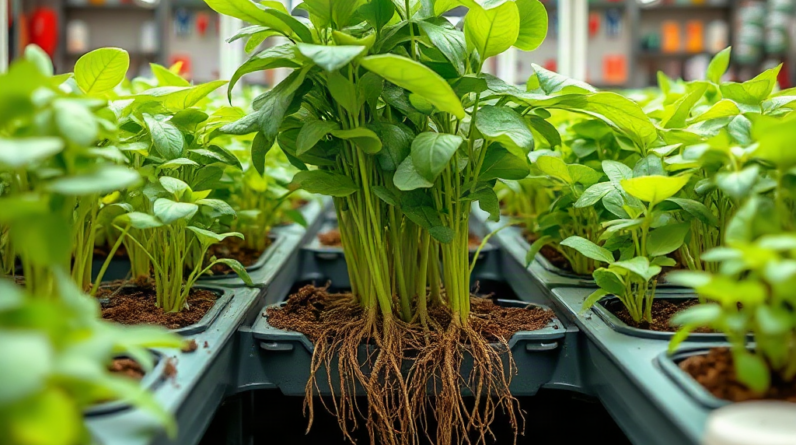
Productive hydroponic roots combine active growing tips, fine lateral branching, firm tissue, and unobstructed contact with oxygenated solution. Root mass alone is a poor measure. A dense bundle can look impressive while its center receives little oxygen, whereas a smaller network with many fresh branch roots may support the crop more effectively.
Color provides useful context but not a diagnosis by itself. New roots are commonly white or cream, yet nutrients, growing media, and plant pigments can produce tan staining without decay. Texture and smell are more revealing. Healthy tissue generally feels firm and remains attached when handled gently. Declining tissue may become slippery, translucent, hollow, or easy to pull away, often accompanied by a swampy or sour odor. Inspect under neutral light because colored grow lights distort both root and leaf appearance.
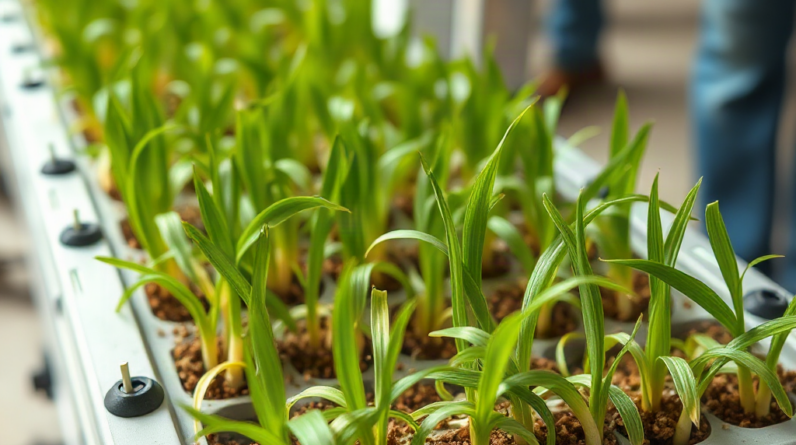
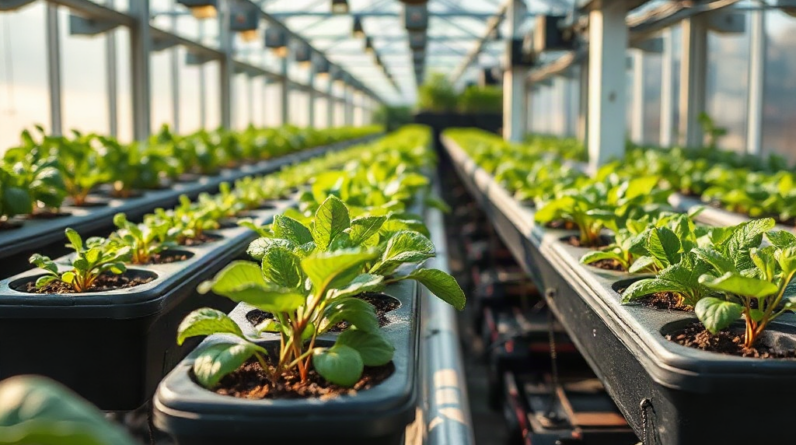
Architecture should also match the system. In deep-water culture, roots can form a suspended curtain, but tightly matted areas around air stones may trap debris and restrict circulation. Nutrient film technique favors a shallower, spreading network along the channel; roots that fill the channel can dam the nutrient film and leave downstream plants short of water. In drip-fed media, roots should occupy the moist substrate without remaining continuously saturated around the stem base.
Compare current plants with their own recent growth rather than relying on an idealized photograph. Mark the solution level, photograph the root zone under the same lighting, and note whether fresh tips appear over several days. Pair those observations with leaf expansion and water use. A plant that produces fine roots and new foliage while maintaining stable uptake is giving stronger evidence than root color alone.
Do not repeatedly lift, comb, or trim roots merely to make them look orderly. Handling damages delicate root hairs and can spread contaminated solution between sites. Remove only clearly dead, detached material when access is safe, and never cut healthy roots to fit an undersized channel. If crowding returns, the lasting correction is more root-zone volume, wider plumbing, fewer plants, or an earlier harvest schedule. That distinction is central to how to enhance root structure in hydroponic plants without treating appearance as the goal.
Balance Oxygen, Temperature, and Water Movement
Oxygen availability sets a practical ceiling on root performance because submerged tissue must respire while taking up water and mineral ions. Warm solution holds less dissolved oxygen than cool solution, and biological activity consumes oxygen faster as conditions warm. A reservoir can therefore appear well aerated at the air stone while stagnant corners, thick root mats, or return lines remain oxygen-poor.
Start with circulation across the entire root zone. Deep-water systems need bubbles and water movement distributed among plant sites, not concentrated beneath one bucket. Recirculating channels need an even film or stream that reaches every plant without deep pooling. Drip systems require reliable delivery plus enough drainage for air to return to pore spaces between irrigations. An air pump adds gas exchange, but it does not correct a kinked return hose, clogged channel, submerged crown, or decomposing material consuming oxygen.
Solution temperature should be stable and appropriate for the crop rather than driven toward one universal number. Lettuce and many leafy greens generally tolerate a cooler root zone than warm-season crops, but abrupt chilling can slow uptake. Place the reservoir away from direct light, hot ballasts, and warm exhaust. Insulate exposed containers where room temperatures swing. If mechanical chilling is necessary, compare its operating cost and heat output with simpler measures such as enlarging the reservoir, shading plumbing, or relocating heat-producing equipment.
A useful oxygen-and-flow check includes four observations:
- Confirm that every outlet, channel, and return line is moving water as intended.
- Look for roots wrapped around drains, pump inlets, emitters, or air stones.
- Measure solution temperature at the roots, not only the surrounding room.
- Check for foam, sediment, odor, slime, and light entering the reservoir.
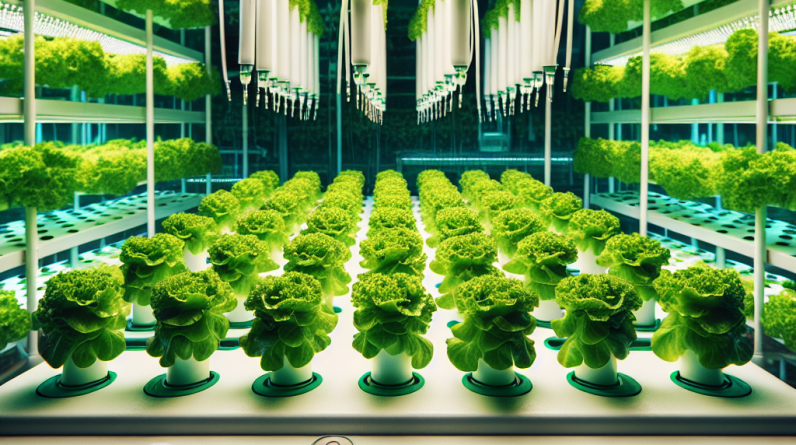
Consider a recirculating lettuce channel in which plants nearest the inlet thrive while downstream roots become beige and compact. Adding fertilizer would increase osmotic pressure without restoring delivery. The better sequence is to clear the root dam, verify channel slope and flow, remove loose organic debris, and then confirm that the reservoir remains aerated. Signs of improvement include firm new root tips, resumed leaf expansion, and more even water use. Continued odor, rapid discoloration, or renewed blockage means the physical cause remains unresolved.
Manage EC, pH, and Irrigation Without Stressing Roots
Stable chemistry encourages branching more reliably than aggressive feeding. Electrical conductivity indicates the total ionic strength of the solution, not whether every nutrient is present in the correct proportion. When EC becomes excessive for the crop or growth stage, roots must work against greater osmotic pressure to take up water. Tender tips may stall even while the reservoir appears nutrient-rich.
Track EC together with solution level and plant demand. If water falls while EC rises, plants may be removing proportionally more water than minerals, or evaporation may be concentrating the reservoir. Replacing the missing volume with full-strength nutrient can compound the problem. Top up according to measured conditions and the nutrient manufacturer’s mixing instructions, then reassess after the solution has circulated. A meter is useful only when its probe is clean, calibrated as directed, and given time to stabilize.
Root-zone pH affects nutrient availability, but constant small corrections can create sharper chemical swings than modest natural drift. Measure at a consistent time and location after circulation. Add diluted adjustment products to the reservoir rather than pouring concentrate onto roots or into a plant site. If pH moves rapidly after every correction, investigate source-water alkalinity, microbial activity, depleted solution, media interactions, and reservoir size instead of repeatedly chasing the reading.
Irrigation frequency requires similar restraint. In an inert medium such as expanded clay, frequent pulses may work because drainage restores air quickly. A water-retentive plug or coir-filled container can remain saturated much longer. Running both on an identical timer may deprive the wetter root zone of air. Check moisture below the surface, container weight, drainage speed, and whether the crown stays wet before extending runtime. Seedlings also use less water than mature plants, so schedules should change as canopy size and environmental demand increase.
Nutrient additions marketed for root development deserve a secondary role. Some inoculants or supplements may fit a particular production method, but mixing incompatible biological and sterilizing approaches can defeat their purpose. Organic inputs can also raise biological oxygen demand or leave residues in narrow lines. Follow labels, confirm system compatibility, and trial one change on a small group. The practical foundation of how to enhance root structure in hydroponic plants remains stable water chemistry, adequate oxygen, and irrigation matched to the medium—not a longer additive list.
Correct Weak Roots in the Right Order
Root recovery begins by separating an environmental limitation from active tissue decline. Pale but firm roots with slow growth may point toward cool conditions, weak light, transplant stress, or unsuitable nutrition. Brown, soft, odorous roots require faster attention to oxygen loss, excessive warmth, contamination, and dead material. Treating every discoloration as the same problem wastes time and can expose already stressed roots to unnecessary chemicals.
Use a controlled correction sequence. First, protect healthy plants from shared contamination by avoiding tool and solution transfer between questionable and unaffected units. Second, verify pump operation, flow paths, aeration, temperature, solution level, EC, and pH. Third, remove fallen leaves and loose decaying debris without stripping firm tissue. Fourth, restore the operating conditions before replacing or adjusting the solution. Finally, monitor new growth rather than expecting damaged roots to become white again.
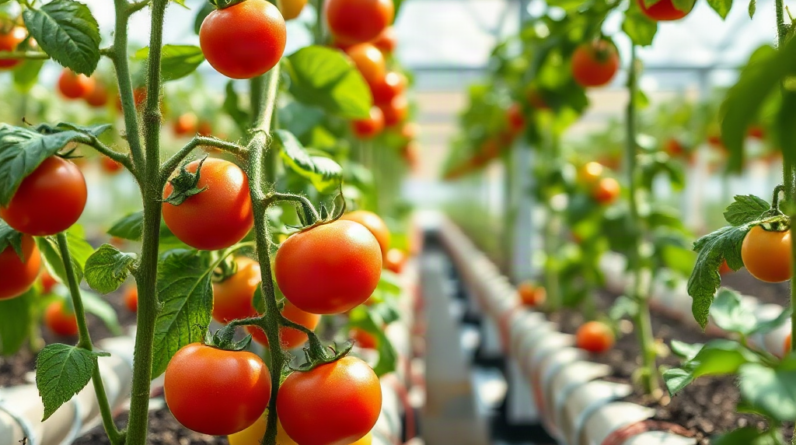
For example, a tomato in a drip bucket may wilt in the afternoon even though the medium is constantly wet. Increasing irrigation seems logical, but a blocked drain can create a saturated lower zone with little air. Opening the drain, checking emitter output, and allowing appropriate drainage addresses the mechanism. By contrast, a plant that wilts because its emitter has stopped needs restored delivery promptly. The same visible symptom leads to opposite irrigation decisions, which is why checking the root environment comes before changing the timer.
Sanitation should reduce organic load without becoming a source of plant injury. Keep light out of reservoirs, clean equipment between crops, remove dead roots from plumbing, and maintain filters where the design calls for them. If using a disinfectant or treatment product, follow its label and equipment compatibility requirements; do not improvise concentrations or combine products. Some approaches intentionally maintain beneficial microbial populations, while others maintain a cleaner, low-organic-input solution. Switching casually between the two can create unstable conditions.
Judge recovery over the plant’s next growth cycle. Fresh, firm tips, stronger lateral branching, normal water use, and renewed shoot growth indicate progress. Persistent slime, recurring odor, blocked lines, falling uptake, or rapid wilting signals that the source is still active. Severely compromised plants may not justify extended rescue efforts in a shared recirculating system because declining tissue can burden the reservoir and neighboring plants. Replacing one plant, cleaning the site, and correcting system capacity may be safer than repeatedly dosing the entire crop.
Frequently Asked Questions
What do healthy hydroponic roots look like?
Healthy roots usually have firm tissue, fresh pale tips, fine branches, and no sour odor. Nutrients or media may stain them tan, so assess texture, smell, new growth, and plant performance together.
Should hydroponic roots always be submerged?
No. Deep-water systems submerge much of the root mass while leaving the crown above solution, whereas film, drip, and media systems combine moisture with exposed air spaces. Follow the intended wetting pattern for the system.
Does more air from an air pump always produce better roots?
More aeration may help when oxygen is limiting, but it cannot fix blocked flow, excessive heat, decaying debris, or undersized plumbing. Vigorous bubbling can also splash and keep the crown too wet.
Should brown hydroponic roots be cut off?
Do not cut roots based on color alone. Remove only loose or clearly dead tissue when it can be done safely, then correct the oxygen, flow, temperature, or sanitation problem responsible for the decline.
How quickly can damaged roots recover?
Recovery depends on crop age, damage severity, and whether the cause has been removed. Look for firm new tips and resumed shoot growth; old stained or damaged tissue may never regain its original appearance.
Conclusion
Strong hydroponic roots come from a root zone that remains physically open, chemically steady, and appropriately oxygenated for the crop and system. Begin by examining new tips, texture, odor, flow, and drainage rather than reacting to color alone. Correct blocked circulation, warm solution, crown saturation, and excessive EC before considering supplements.
Record temperature, EC, pH, solution level, and visible root changes under consistent conditions. That short history makes it easier to distinguish normal staining from progressive decline and to identify whether a correction actually worked. If problems persist, inspect system capacity: narrow channels, small reservoirs, crowded sites, and poorly draining media cannot be solved indefinitely through dosing. Prioritize healthy new growth and reliable operation instead of trying to restore every old root to a spotless appearance.
Further Reading
Authoritative Sources
- Root Trimming in Hydroponics: The Simple Trick That ...
hopeinnovation.caOxygen availability improves because water is able to move through the entire root zone instead of sitting in slow moving pockets. In a dense ...
- Why Plant Roots Need Oxygen in Hydroponics (2026)
aquagertech.comYes, plant roots need oxygen even in water. See why oxygen powers root respiration and how hydroponic systems deliver it.
- Hydroponics: current trends in sustainable crop production
pmc.ncbi.nlm.nih.govPlant roots require stability and efficient oxygen exchange, which specific structures can facilitate. The water-holding capacity of these materials is limited,
- How to Prevent Root Rot in Hydroponics
epmearth.comAn air pump can increase the oxygen levels in your hydroponic system, and it keeps it moving to prevent stagnation. If you have a Deep Water ...