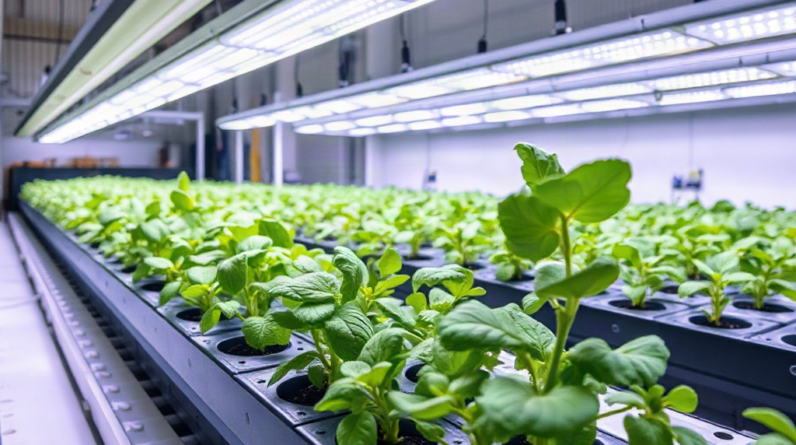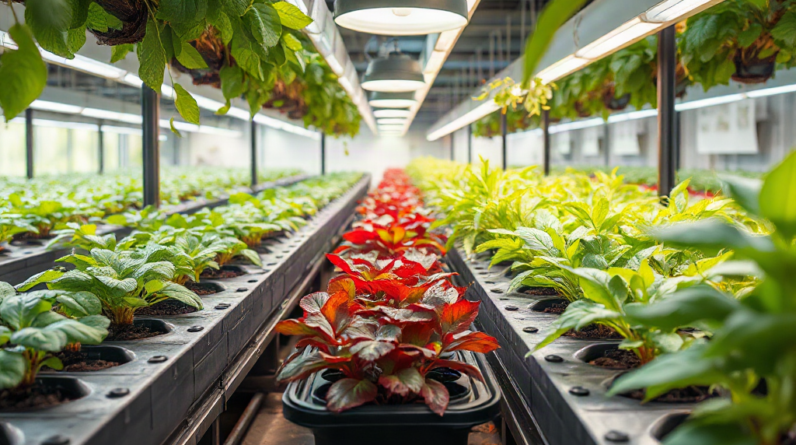
Maintain optimal humidity for hydroponic growth by measuring relative humidity at canopy height, pairing it with room temperature, and adjusting ventilation, air movement, and dehumidification so leaves can transpire without staying wet. Young seedlings generally tolerate more moisture, while mature plants usually need drier air as foliage thickens and disease risk rises. A hygrometer placed near the leaves is more useful than a reading across the room, and vapor pressure deficit (VPD) gives better context than humidity alone because warm air holds more moisture. Watch for condensation, curling leaves, slow drying, and persistent wet surfaces; these signals show that airflow or moisture removal needs attention.
Choose Humidity Targets By Plant Stage
Humidity should be adjusted according to plant age, leaf density, room temperature, and the crop’s ability to move water through its roots and leaves. A practical starting range for many indoor hydroponic crops is about 65–75% relative humidity for seedlings, 55–70% for vigorous vegetative growth, and 45–60% for dense, mature canopies. These are working ranges rather than universal rules. Lettuce, basil, and other soft-leaved crops may perform acceptably at higher humidity than a crowded fruiting canopy, where slow-drying foliage creates more opportunity for fungal problems.
Relative humidity describes how much water vapor the air holds compared with the maximum it could hold at that temperature. The same humidity reading behaves differently in a cool room and a warm one. Air at 70% humidity near cool leaves may leave surfaces damp, while warmer air at the same reading may produce faster evaporation. That is why how to maintain optimal humidity for hydroponic growth cannot be reduced to one number on a controller.
Plant stage changes the risk balance. Small seedlings have limited roots and can dry quickly, so moderately moist air may reduce water loss while roots establish. Mature plants have larger leaves and release more vapor, particularly under strong lighting. If that vapor accumulates in a poorly ventilated enclosure, the humidity reading may remain high after lights switch off. Nighttime deserves special attention because cooler air holds less moisture, increasing the chance of condensation.
A common mistake is keeping the entire crop at a seedling humidity level. The result may look acceptable for a short time, yet dense foliage can remain wet overnight and lower leaves may receive little air movement. Reduce humidity gradually as the canopy expands, and prioritize surface dryness and consistent plant growth over chasing a precise target.
Measure Canopy Conditions And Interpret VPD
Accurate measurement begins with a reliable hygrometer positioned where the leaves are growing. A sensor mounted beside the floor, outside the grow tent, or directly under a light may report conditions that do not represent the plant canopy. Place the probe at leaf height, shield it from direct spray and strong light, and compare it periodically with a second meter. Cheap sensors can drift, so unexplained readings should be checked before changing the entire room climate.
Vapor pressure deficit, or VPD, adds temperature to the humidity reading. It estimates how strongly the surrounding air can draw moisture from leaves. A warm room with moderate humidity can have a stronger drying effect than a cool room with the same relative humidity. Excessively high VPD may cause rapid water loss, leaf-edge stress, or greater demand on the root system. Very low VPD can slow transpiration and leave foliage or growing media wet for too long.
For many hydroponic crops, growers often use a broad VPD range around 0.8–1.2 kPa during active growth, with lower values sometimes useful for young plants and higher values considered later when the canopy and roots are established. Crop type, light intensity, air temperature, and cultivar response all matter, so treat a VPD chart as a reference rather than a command. A plant that is wilting under a theoretically moderate reading may have a hot leaf surface, restricted roots, or excessive light instead.
Consider a tent reading 62% relative humidity at 26°C. That may be reasonable for a leafy crop, but if the sensor is above the canopy while leaves sit in a stagnant pocket, the plants may experience a different environment. Check the upper and lower canopy, especially after lights-out. Condensation on tent walls, wet leaf tips, and unusually slow drying are more actionable clues than a single display value. Avoid placing a fan so close that it distorts the sensor or blasts one plant while leaving the rest still.
Control Moisture With Ventilation And Air Movement
Humidity falls when moisture-laden air leaves the growing space and is replaced with air that can accept more vapor. Exhaust ventilation is therefore the first control to examine, but it works only when the replacement air is drier or cooler in a useful way. An exhaust fan running against a closed, poorly sized intake may create weak exchange, while an open room with already humid air may require dehumidification instead.
Air movement inside the canopy serves a different purpose. An oscillating fan helps prevent still pockets, encourages leaves to exchange air with the surrounding space, and reduces the time that droplets or condensation remain on surfaces. It should create gentle leaf movement rather than constant force. Strong, direct airflow can increase water loss, dry leaf margins, and cause plants to lean without fixing the room’s moisture content.
Dehumidifiers are more useful when outdoor or household air is already damp, when the grow space is sealed, or when humidity rises sharply during the dark period. They add heat and consume power, so a small unit inside a warm tent may create a new temperature problem. A larger unit serving the room may be quieter and easier to drain. Air conditioners can remove moisture while cooling, but their performance depends on operating conditions and they should not be selected solely because they lower temperature.
Water sources deserve inspection before buying equipment. Open reservoirs, wet floors, saturated propagation media, plant transpiration, and humidifiers can all raise the vapor load. Covering a reservoir may reduce unnecessary evaporation, but it does not replace canopy ventilation. Likewise, adding a humidifier because leaves look dry can worsen a root or lighting problem. Improve exchange and circulation first, then make smaller equipment changes.
A useful arrangement combines an exhaust path near the warm upper part of the space, a passive or powered intake, and gentle circulation through the foliage. Keep electrical equipment protected from splashes, route drainage safely, and use a controller that responds to both humidity and temperature when possible. The practical goal is stable conditions, not rapid swings between an overpowered fan and a humidifier.
Correct Humidity Problems Without Stressing Plants
High humidity usually appears as persistent condensation, slow evaporation from leaves, soft or curling foliage, or a room that becomes noticeably wetter after lights turn off. Lower the moisture load gradually by improving exhaust, increasing safe air exchange, covering exposed water, or using a dehumidifier. Removing several sources at once can make the room too dry, so change one major variable and observe the canopy over the next lighting cycle.
Low humidity may show as rapid wilting between irrigation events, crisp leaf edges, excessive water demand, or a large difference between daytime and nighttime readings. First check temperature, light intensity, root health, and irrigation performance. A plant can look dry because roots are oxygen-starved or damaged, not because the air needs more moisture. Raising humidity without confirming the cause may encourage disease while leaving the real problem untouched.
When using a humidifier, place it so mist does not settle on leaves, electrical fittings, or nearby walls. Ultrasonic units can disperse minerals from untreated water as fine dust, so follow the manufacturer’s cleaning and water guidance. Sanitize the reservoir regularly according to its instructions. A humidity controller should have a sensible differential so it does not switch equipment on and off every few seconds.
When lowering humidity, avoid the assumption that drier is always safer. Excessively dry air can increase transpiration faster than roots can replace water, particularly under intense lighting. Plants may respond with curled leaves even though the reservoir is full. Conversely, high humidity is not automatically harmful if the canopy is sparse, air is moving, and surfaces dry quickly. The better decision comes from combining the meter reading with plant behavior and condensation checks.
Use this priority order when the room is unstable:
- Confirm the sensor location and compare it with a second meter.
- Check temperature and humidity during both light and dark periods.
- Remove unnecessary moisture sources and improve gentle canopy airflow.
- Adjust exhaust or dehumidification before adding a humidifier.
- Review leaf condition, drying time, and new growth before making another change.
Build A Daily Climate-Checking Routine
Consistent monitoring is more dependable than occasional emergency adjustments. Record temperature and humidity at the canopy shortly after lights turn on, during the warmest part of the cycle, and near the end of the dark period. Note the crop stage, fan settings, reservoir cover, and any changes to lighting or irrigation. A short log can reveal that humidity spikes only after sunset or that one corner of the tent remains consistently wetter.
Use the readings to identify trends rather than reacting to every small fluctuation. A brief rise after watering may be normal, while several hours of high humidity with wet leaves indicates inadequate moisture removal. A stable daytime reading paired with a sharp nighttime increase points toward temperature drop, plant transpiration, or insufficient dark-period dehumidification. This interpretation is more useful than simply lowering the set point.
Real rooms impose limits. A basement may have damp incoming air; a small apartment may not allow a large exhaust duct; a sealed setup may need heat management as well as moisture control. In those situations, choose the least disruptive correction that addresses the main source. For example, covering a reservoir and running a properly placed exhaust fan may be more effective than operating a humidifier and dehumidifier in opposition.
Plants provide a second monitoring system. Healthy new growth, leaves that dry normally after handling, and no overnight condensation suggest that the climate is reasonably balanced. Persistent droop, brittle margins, wet inner foliage, or recurring spots indicate that the target needs reassessment. Avoid changing humidity, light, nutrients, and irrigation simultaneously; otherwise the response cannot be attributed to one adjustment. Readers comparing climate with other environmental decisions can use how to maintain optimal humidity for hydroponic growth alongside a crop-specific humidity monitoring routine.
Frequently Asked Questions
What humidity is best for hydroponic plants?
Many crops tolerate roughly 55–70% relative humidity during active vegetative growth, while seedlings may suit higher humidity and dense mature canopies often benefit from drier air. Temperature and crop type should influence the final target.
Should humidity be lower when the lights are off?
Usually, yes. Cooler nighttime air can reach condensation more easily, and leaves may stay wet longer. Use ventilation or dehumidification to prevent a sharp overnight rise rather than making the daytime room excessively dry.
Is VPD better than relative humidity?
VPD is often more informative because it includes temperature, but it does not replace direct observation. Use VPD with canopy measurements, leaf condition, airflow, and condensation checks.
Can a fan lower humidity?
A fan redistributes air and dries leaf surfaces, but it does not remove water vapor from the room. Exhaust ventilation or dehumidification is needed to reduce the total moisture content.
Why does humidity rise after the lights turn off?
Plants may continue releasing moisture while cooler air holds less vapor, and reduced heat can slow evaporation. Check dark-period temperature, exhaust settings, open water, and condensation near the canopy.
Conclusion
Reliable humidity management comes from balancing relative humidity, temperature, plant stage, and air movement rather than pursuing a fixed display value. Measure at canopy height, inspect conditions during the dark period, and use VPD as context when temperature changes make humidity readings misleading. Address moisture sources and ventilation before adding equipment, then make gradual adjustments while watching leaf behavior and condensation. Young plants may need more moisture in the air, but mature, dense canopies usually require stronger moisture removal and better internal circulation. Keep a simple climate log, verify questionable sensors, and change one major variable at a time. That process gives hydroponic plants a steadier transpiration environment without creating avoidable heat, dryness, or disease pressure.
For deeper climate decisions, consult university extension publications, controlled-environment agriculture research, and manufacturer documentation for hygrometers, dehumidifiers, humidifiers, and environmental controllers. These sources can help interpret crop-specific responses and equipment limits without treating a single humidity number as universal.
Further Reading
Authoritative Sources
- Mold Prevention - Simply Hydroponics
simplyhydro.comMake sure your humidity is less than 60% during dark cycles humidity is usually the highest. Wire a dehumidistat to your vent fan or dehumidifier. Ensure that ...
- 7 Tips to Control Humidity, Moisture, and Mold in a Greenhouse
plantagreenhouses.euMonitor your greenhouse's humidity levels with a hygrometer. Ideally, you want to aim for a range between 50% to 70%. This range is best for healthy plant ...
- Why Should You Care About VPD?
inside-grower.comIn a controlled environment, growers have the advantage to control the vapor pressure of the air by managing the temperature and humidity, while ...
- Greenhouse Humidity Control for Commercial Production
moisturecurecommercial.com.auMaster greenhouse humidity control with VPD science, disease prevention, and precision equipment solutions for commercial Australian growers.