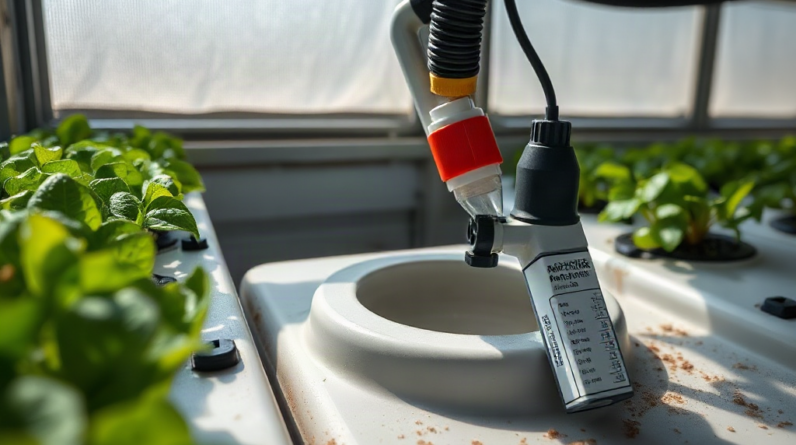
To manage nutrient solution temperature effectively, keep it within the optimal range of 65°F to 75°F (18°C to 24°C). Regularly monitor the temperature using a digital thermometer or temperature probe to ensure accuracy. If the solution is too warm, consider using chillers or ice packs to cool it down, while heaters can be employed if it’s too cold. Proper aeration is also vital, as it helps maintain oxygen levels and prevents overheating. Watch for signs of temperature stress in your plants, such as wilting or nutrient deficiencies, which can indicate that adjustments are necessary.
Importance of Nutrient Solution Temperature
Managing nutrient solution temperature is crucial in hydroponic gardening because it directly influences plant health and nutrient uptake. The optimal temperature range for nutrient solutions is typically between 65°F and 75°F (18°C to 24°C). Within this range, plants can absorb nutrients efficiently, promoting robust growth and minimizing stress.
When temperatures are too high, it can lead to decreased oxygen levels in the solution, which may result in root rot and other diseases. Conversely, excessively low temperatures can slow down nutrient uptake, causing deficiencies and stunted growth. Understanding the importance of temperature management helps gardeners create a stable environment for their plants, ultimately enhancing yield and quality.
Methods to Monitor Temperature
Regular monitoring of nutrient solution temperature is essential for effective management. There are several methods to achieve this. The most straightforward approach is to use a digital thermometer or a temperature probe designed for hydroponic systems. These devices provide accurate readings and can be placed directly in the nutrient solution for real-time data.
Another effective method is to use temperature sensors connected to a monitoring system that alerts you if the temperature falls outside the desired range. This technology can be particularly beneficial for larger systems or those with automated nutrient delivery. By consistently monitoring temperature, you can identify trends and make proactive adjustments to maintain optimal conditions.
Adjusting Temperature Effectively
To adjust nutrient solution temperature, consider both heating and cooling methods. If the solution is too cold, using a water heater or heating pad specifically designed for aquaponics can raise the temperature. Ensure the heater is submerged correctly and monitored to avoid overheating.
For cooling, especially in warmer climates, consider using a chiller or adding ice packs to the nutrient reservoir. Additionally, maintaining proper aeration can help regulate temperature by increasing oxygen levels and promoting evaporation, which cools the solution. It’s essential to make these adjustments gradually to avoid shocking the plants.
Common Mistakes to Avoid
Many gardeners overlook the significance of nutrient solution temperature until they notice problems with their plants. A common mistake is failing to monitor temperature regularly, leading to undetected fluctuations that can stress plants. Another issue is making drastic temperature changes, which can shock the root system and hinder growth.
Additionally, some gardeners may rely solely on ambient temperature without considering the specific conditions of the nutrient solution. It’s crucial to remember that water temperature can vary significantly from air temperature, especially in insulated or uninsulated systems. Avoiding these common pitfalls will help maintain a stable environment for optimal plant health.
Frequently Asked Questions
What is the ideal nutrient solution temperature for hydroponics?
The ideal nutrient solution temperature for hydroponics is between 65°F and 75°F (18°C to 24°C) to ensure optimal nutrient absorption and plant growth.
How can I monitor the temperature of my nutrient solution?
You can monitor the temperature of your nutrient solution using a digital thermometer or temperature probe, which provides accurate readings directly from the solution.
What happens if the nutrient solution temperature is too high?
If the nutrient solution temperature is too high, it can lead to decreased oxygen levels, resulting in root rot and other plant diseases.
How can I cool my nutrient solution if it gets too warm?
You can cool your nutrient solution by using a chiller, adding ice packs, or improving aeration to promote evaporation and lower the temperature.
What are common mistakes in managing nutrient solution temperature?
Common mistakes include failing to monitor temperature regularly, making drastic temperature changes, and relying on ambient temperature rather than measuring the solution temperature directly.
Further Reading
Authoritative Sources
- USDA National Institute of Food and Agriculture
nifa.usda.govResearch and extension resources related to agriculture, plants, soil, and food systems
- Extension Foundation Gardening Resources
extension.orgUniversity extension education resources for practical gardening and home agriculture topics
- USDA Natural Resources Conservation Service
nrcs.usda.govSoil, water, conservation, and land management resources for practical growing decisions
Conclusion
Effectively managing nutrient solution temperature is vital for successful hydroponic gardening. By maintaining the optimal temperature range, regularly monitoring conditions, and adjusting as necessary, you can significantly enhance plant health and growth. Avoid common mistakes to ensure a stable environment, and always remain proactive in your approach to temperature management. Ultimately, the effort you invest in maintaining ideal conditions will pay off in healthier plants and better yields.