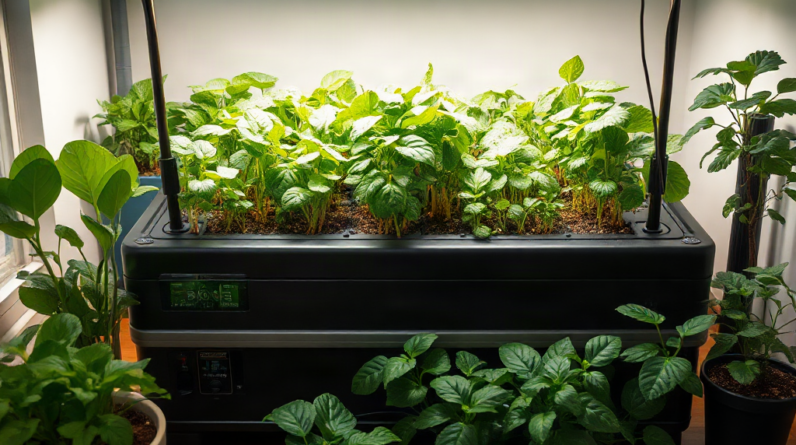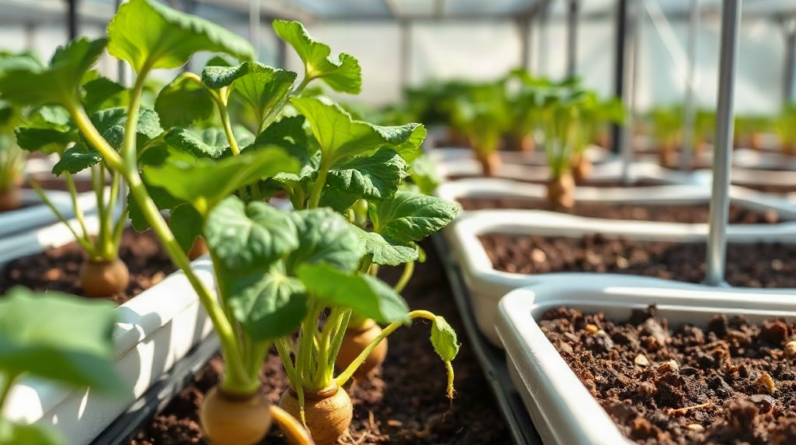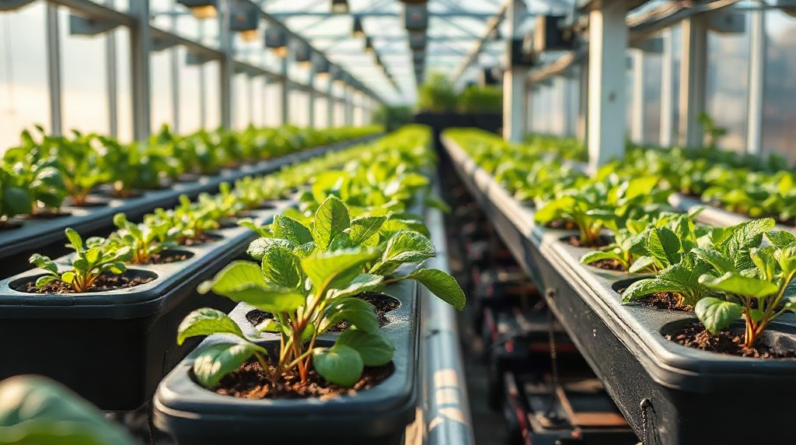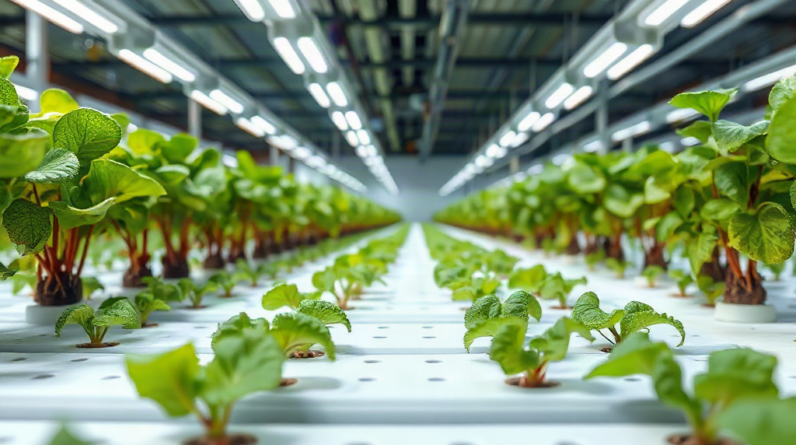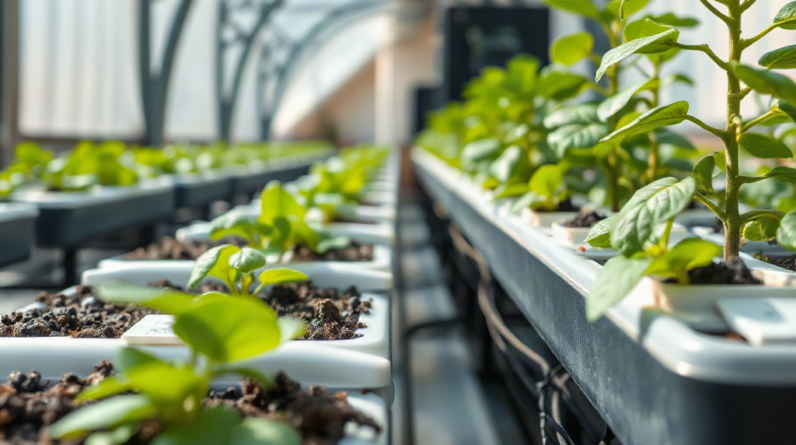
Hydroponic systems using ebb and flow beds grow plants by periodically pumping nutrient solution into a media-filled bed and then draining it back into a reservoir. Reliable operation depends on uniform flooding, complete drainage, stable nutrient strength, and irrigation intervals matched to the crop, root mass, growing medium, and room conditions. Expanded clay usually needs more frequent cycles than moisture-retentive media, while blocked drains or an undersized reservoir can leave roots unevenly supplied or chronically saturated. A sound setup pairs an overflow fitting with a low drain point, tests each cycle before planting, and adjusts timing according to root-zone moisture rather than a fixed universal schedule.
How Flood-and-Drain Beds Work
An ebb and flow bed alternates between two root-zone conditions: temporary contact with nutrient solution and a drained period in which air returns to the pore spaces around the roots. A pump moves solution from a reservoir into the grow bed. An overflow fitting limits the maximum water level, and the solution returns through a drain when the pump stops. This repeating exchange supplies water and dissolved minerals without keeping the entire root zone continuously submerged.
The drained phase is as important as the flood. As solution leaves the bed, fresh air is drawn into spaces within the growing medium. Roots use that oxygen for respiration, which supports normal root function and nutrient uptake. If the bed remains flooded because a drain is restricted or the outlet sits too high, the medium can stay saturated and oxygen availability can fall. Conversely, a bed that drains well but goes too long between cycles may allow young plants or exposed upper roots to dry.
This design differs from deep-water culture, where roots remain in aerated solution, and from drip irrigation, where emitters deliver water to individual plants. Ebb and flow is especially useful when numerous pots or propagation blocks need to be watered from below on one level surface. A nursery bench holding several small herb pots, for example, can flood them together without a separate emitter at every container. The tradeoff is that all plants on the bed share the same nutrient solution and irrigation schedule.
A common misconception is that the flood must reach the top of every pot. The target is usually the active root zone, not the stem base or crown. Flooding too high can keep surface material wet, encourage algae where light reaches the bed, and expose sensitive stems to prolonged moisture. Flooding too shallow may leave newly transplanted root blocks above the wetting zone. Before adding plants, run the system with its intended media and observe how high moisture rises through capillary action.
Growers comparing Hydroponic systems using ebb and flow beds should focus first on drainage reliability and bed uniformity. Decorative features and elaborate controllers cannot compensate for a tilted tray, a narrow return line, or media that stays wet far longer than the timer schedule assumes.
Bed, Reservoir, Pump, and Plumbing Design
A dependable installation begins with enough reservoir capacity to flood the bed without uncovering the pump. The working volume includes the solution needed to raise the bed to its intended depth, the solution retained by pots and media, and a reserve that keeps the pump submerged. A reservoir sized only to the bed’s apparent empty volume can run dangerously low during a cycle, particularly after roots and media displace water or evaporation lowers the starting level.
The grow bed should be rigid, opaque, chemically suitable for its intended use, and supported across its base. Water is heavy, so a broad tray that looks stable when empty may bow when flooded. Bowing creates low points that retain stagnant solution after the rest of the bed drains. Check the support structure and level the tray before finalizing the plumbing. A slight planned slope toward the outlet may assist drainage, but an accidental side-to-side slope causes unequal flood depth across the crop.
Pump selection should account for vertical lift and plumbing resistance rather than relying only on the flow rating printed for zero lift. The pump must raise solution from the reservoir to the bed and reach the overflow level within a practical portion of the irrigation period. Excessive flow is not automatically better: a powerful pump can overwhelm a small overflow, create turbulence, or force fittings to leak. A valve in the supply line can provide adjustment, but it should not be used to disguise badly undersized return plumbing.
Two drainage arrangements are common. A flood fitting paired with a separate overflow gives the water a defined maximum depth and lets the bed empty when the pump stops. A bell siphon can trigger rapid automatic drainage once a threshold is reached, although it adds tuning requirements and can become unreliable when flow changes. Timer-controlled beds are generally easier for a new grower to inspect because filling and draining correspond directly to pump operation.
Before planting, complete a wet test using the following sequence:
- Fill the reservoir to the marked operating level and run the pump while watching every fitting.
- Confirm that the farthest corner reaches the intended depth without the bed approaching its rim.
- Stop the pump and time the drain-down, checking for puddles around pots and low spots.
- Repeat the cycle after partially lowering the reservoir to simulate normal water use.
- Mark minimum and maximum reservoir levels so later top-ups remain consistent.
The weak assumption that a leak-free first cycle proves the design is finished often causes trouble later. Roots, stray media, and mineral deposits can restrict an outlet over time. Accessible fittings, a removable screen, and enough clearance to inspect the reservoir make routine maintenance far easier than sealed or tightly packed plumbing.
Growing Media and Suitable Crops
Growing media determine how quickly an ebb and flow bed wets, drains, and dries between pump cycles. Expanded clay pebbles provide large air spaces and drain rapidly, making them reusable after proper cleaning but relatively unforgiving during hot, dry periods or early transplant establishment. Coco coir retains much more moisture and can bridge longer intervals, yet fine particles may migrate into plumbing unless containers or filters contain them. Rockwool blocks hold moisture effectively but require attention to placement and flood height because their lower portions can remain much wetter than their upper surfaces.
Mixed media can balance water retention and aeration, but adding components without understanding their behavior may produce an uneven root zone. Perlite can float during deep flooding and escape from open pots. Very fine material can settle into the bed, slow drainage, or enter the reservoir. Media should remain structurally stable through repeated wetting, permit rapid drainage, and avoid introducing particles that obstruct the return path.
Leaf lettuce, basil, many culinary herbs, and young transplants fit this system well because their containers can be arranged across a common bed and moved as spacing needs change. Compact fruiting plants may also be grown, but mature tomatoes or peppers create heavier root systems, greater water demand, and a need for independent physical support. A shallow tray that performs well for small greens may not provide adequate root volume or stability for a full-size fruiting crop.
Crop uniformity matters because every plant on one bed receives the same flood schedule and reservoir formula. Combining newly rooted basil with a large, established pepper plant creates competing requirements: the small transplant may need dependable moisture near the top of its block, while the mature plant consumes solution quickly and may shade its neighbor. Separate beds or crop groups are easier to manage when plant size, maturity, or nutrient demand differs substantially.
Container design also changes performance. Pots with generous lower openings admit solution readily and drain faster than containers with only a few small holes. Set a sample pot in the operating bed, then inspect the media after flooding and again near the end of the dry interval. Moisture should reach active roots without leaving the entire pot waterlogged. This direct check is more useful than selecting a schedule solely from the name of the medium.
When planning Hydroponic systems using ebb and flow beds, match bed depth, pot size, and crop support before purchasing a timer. The timer can alter frequency, but it cannot add root space, stop floating media, or stabilize a top-heavy plant.
Setting Flood Depth, Duration, and Frequency
Irrigation timing should be established by observing the root zone rather than copying a universal number of daily floods. The correct interval changes with media retention, plant size, air movement, temperature, humidity, and light intensity. Small plants in moisture-holding blocks may use solution slowly, while mature herbs in clay pebbles under strong lighting can dry much faster. Nighttime demand is commonly lower, so an unchanged around-the-clock schedule may leave media wetter than necessary after lights go off.
Set flood depth first. The solution should reach enough of the container to wet the root-bearing media through direct contact and capillary rise, while staying below vulnerable crowns and avoiding unnecessary saturation of the surface. Next, set a pump duration long enough for the bed to reach the overflow and wet all containers. Keeping the pump on long after that point usually adds little because excess solution simply returns through the overflow.
Drain time provides useful diagnostic information. A bed that fills evenly but takes a long time to empty may have a restricted outlet, insufficient slope, or excessively fine media around the drain. Rapid drainage is generally desirable, provided containers retain enough moisture for the interval ahead. If plants wilt before the next flood while the reservoir remains adequate, shorten the interval or reassess whether the medium and flood height are wetting the active roots. If leaves remain limp while pots stay saturated, increasing frequency is likely to worsen the root-zone condition.
A practical adjustment process is to begin conservatively and inspect conditions at two points: shortly after drainage and just before the next scheduled flood. Look below the surface rather than judging by the dry appearance of the top layer. Increase frequency in small increments when the root zone is drying too far, and reduce it when lower media remains persistently saturated. Make one change at a time so the result can be attributed to that change.
Reservoir management affects every cycle. Track solution level, pH, nutrient concentration, temperature, odor, and visible debris on a consistent routine. Top-up practices can gradually alter nutrient balance even when the measured concentration appears acceptable, because plants do not consume every dissolved ion at the same rate. Periodic solution replacement and reservoir cleaning may therefore be needed according to crop behavior, water quality, and the nutrient product’s directions.
Signs of a workable schedule include resilient plants through the full interval, fresh light-colored root growth, predictable drain-down, and similar growth across the bed. Repeated wilting, dark or soft roots, algae at the media surface, large differences between corners, or a pump drawing air indicate that the operating pattern or hardware needs correction.
Troubleshooting Uneven Growth and System Failures
Uneven growth across one bed usually points to differences in water level, root-zone wetting, light exposure, or drainage rather than a reservoir-wide nutrient shortage. Compare the strongest and weakest plant locations. If poor plants cluster at the high side of a tilted bed, they may receive a shallower flood. If they cluster near a low corner that remains wet, incomplete drainage may be limiting root-zone aeration. Swapping plant positions can help separate a location problem from an individual plant problem.
A bed that will not fill should be checked from the reservoir outward. Confirm that the pump remains submerged, the intake is clear, the supply hose is not kinked, and the lift is within the pump’s working ability. Then inspect for an outlet that is returning solution faster than the pump can supply it. A bed that fills too high requires immediate attention to the overflow, return line, and pump flow; relying on the tray rim as emergency protection risks a spill if roots or media obstruct the outlet.
Failure during a power outage is a defining tradeoff of active flood-and-drain irrigation. Fast-draining media may dry sooner than coco or rockwool, especially around small root systems in warm airflow. The reservoir should sit below the bed so solution returns by gravity rather than remaining trapped when power stops. For valuable crops, consider outage duration, pump replacement availability, and whether the chosen medium provides a reasonable moisture buffer. Backup power may protect short interruptions, but it does not replace a drainage-safe layout.
Algae develops where nutrient solution, light, and a wet surface coincide. Lowering an unnecessarily high flood level, covering exposed wet media, and blocking light from the reservoir and tubing addresses the conditions that support it. Merely scraping away visible growth leaves the cause in place. Likewise, unpleasant reservoir odor or discolored roots should prompt checks of solution temperature, aeration, sanitation, drainage, and decaying plant material rather than an automatic increase in nutrient strength.
Keep a simple operating record for any Hydroponic systems using ebb and flow beds. Note flood times, reservoir readings, top-ups, crop stage, and changes in root or leaf condition. Patterns become easier to identify when observations are tied to specific adjustments. The most costly mistake is changing nutrient concentration, flood frequency, and lighting simultaneously; even if plants improve, the useful correction remains unknown.
Frequently Asked Questions
How deep should an ebb and flow bed flood?
Flood high enough to wet the active root zone through direct contact and capillary rise, but normally below the plant crown and media surface. Test the actual pots and medium because bed depth alone does not show how far moisture rises.
How often should an ebb and flow pump run?
Frequency depends on media, crop size, temperature, airflow, and light. Inspect moisture just before the next cycle, then shorten or lengthen the interval gradually rather than adopting a fixed schedule from another setup.
Can an ebb and flow system run at night?
It can, but nighttime irrigation may need to be less frequent because water use usually falls when lights are off. A very fast-draining medium or warm environment may still require a night cycle.
What is the best medium for an ebb and flow bed?
Expanded clay suits growers who want rapid drainage, while coco and rockwool retain more moisture. The best choice matches the crop, container, irrigation interval, and ability to prevent fine particles from entering the plumbing.
Why does water remain in the bed after draining?
Common causes include an unlevel or bowed tray, a raised drain fitting, blocked plumbing, and low spots around containers. Clean the outlet and check the empty bed with a level before changing the pump schedule.
Conclusion
A productive ebb and flow bed is built around predictable water movement, not timer complexity. Level and support the tray, provide enough reservoir volume, size the pump for its actual lift, and make every drain fitting accessible for inspection. Choose media according to how quickly it releases water, then group plants with compatible root space and irrigation needs.
Commission the system with repeated wet tests before planting and mark safe reservoir levels. Once crops are installed, inspect moisture near active roots, observe drain-down, and adjust only one operating variable at a time. Uniform growth and clean, healthy roots indicate that flood depth and timing are close to the crop’s needs. Persistent puddles, corner-to-corner differences, surface algae, or recurring wilt call for a physical system check before adding nutrients or more irrigation cycles.