Prevent leaf curl in hydroponic plants by checking the root zone before changing the nutrient formula: verify solution pH and EC, confirm strong aeration and drainage, and inspect roots for heat damage or decay. Then evaluate leaf temperature, airflow, humidity, and pest activity because curled foliage often reflects water stress rather than a simple deficiency. Correct one likely cause at a time and watch healthy new growth instead of expecting damaged leaves to flatten. Avoid adding extra fertilizer automatically; an overly concentrated solution can worsen root water uptake and produce more curling.
Read the Curl Pattern Before Adjusting the Reservoir
Leaf position provides useful evidence when it is interpreted alongside plant age, root condition, and recent system changes. Upward-cupped edges near the brightest part of the canopy often point toward excessive leaf temperature, intense light, or dry moving air. Downward-curled tips can accompany an overly concentrated solution, persistently wet and oxygen-poor roots, or excessive nitrogen. Twisted young leaves deserve closer inspection for pests, micronutrient availability, or damage to the growing point.
Location matters as much as shape. Symptoms confined to older leaves suggest a different process from deformation that begins in new growth. Mobile nutrients can be relocated from older tissue, so related symptoms often appear low on the plant first. Calcium-related distortion tends to affect developing tissue because calcium movement depends heavily on water flow through the plant. That does not mean every curled new leaf needs more calcium; high humidity, damaged roots, unsuitable pH, or excessive salinity may interfere with delivery even when calcium is present in the reservoir.
Timing narrows the possibilities further. Curling that develops within hours of lowering a light, after a hot afternoon, or immediately after increasing circulation is more consistent with environmental stress than a slowly developing mineral imbalance. If symptoms appeared after a reservoir refill, check the recorded pH, electrical conductivity, water temperature, and mixing sequence. A dosing error or abrupt concentration change is more plausible than a deficiency that coincidentally began at the same moment.
Do not judge recovery by whether old leaves become perfectly flat. Tissue that has hardened in a distorted form may remain curled even after the cause is corrected. Photograph the growing tip from the same angle each day and mark the newest affected leaf. Improvement appears as normally shaped emerging foliage, steady root growth, and the absence of expanding damage. Removing every curled leaf too early erases the symptom history and reduces photosynthetic area.
A useful first distinction is whether the entire crop changed together. Uniform curling across plants sharing one reservoir points toward solution chemistry, root-zone temperature, light, or room climate. One isolated plant is more likely to have a blocked emitter, pinched root mass, localized pest colony, or damaged stem. That crop-level comparison is a more reliable starting point for how to prevent leaf curl in hydroponic plants than selecting a supplement from leaf appearance alone.
Stabilize pH, EC, Temperature, and Oxygen
The root zone controls whether a plant can take up water and dissolved minerals at the rate demanded by its leaves. Measure pH and EC with calibrated meters, but interpret them as trends rather than isolated numbers. Suitable targets vary by crop, cultivar, growth stage, water source, and nutrient product. Use the range specified for the crop and formula, then log readings at the same time each day so movement becomes visible.
A rising EC often means plants are taking up proportionally more water than minerals, leaving the reservoir concentrated. This can happen during hot, bright conditions and may make roots work harder to absorb water, even when the tank looks full. A falling EC can indicate that mineral uptake is outpacing water use or that the starting solution was mild. Topping up repeatedly with full-strength nutrients without measuring EC is a common route to salt accumulation and downward curling.
Rapid pH correction causes its own problems. Large additions of concentrated acid or base can create extreme local conditions before mixing is complete. Dilute adjustment products according to their labels, add them gradually to a circulating reservoir, and recheck after the solution has mixed. Never combine concentrated stock solutions directly with one another. If pH drifts unusually fast, investigate reservoir size, alkalinity of the source water, microbial activity, root health, and the condition of the nutrient solution rather than chasing the reading several times a day.
Warm solution holds less dissolved oxygen while root and microbial respiration increase. The combination can turn midday wilting or curling into a chronic root problem. Roots should generally look firm and crop-appropriate, without a spreading slimy coating or foul odor. Nutrient dyes can stain healthy roots, so color alone is not a diagnosis. Confirm that air stones are producing vigorous bubbles, return lines are moving water, channels are not backing up, and drain cycles leave adequate air around roots.
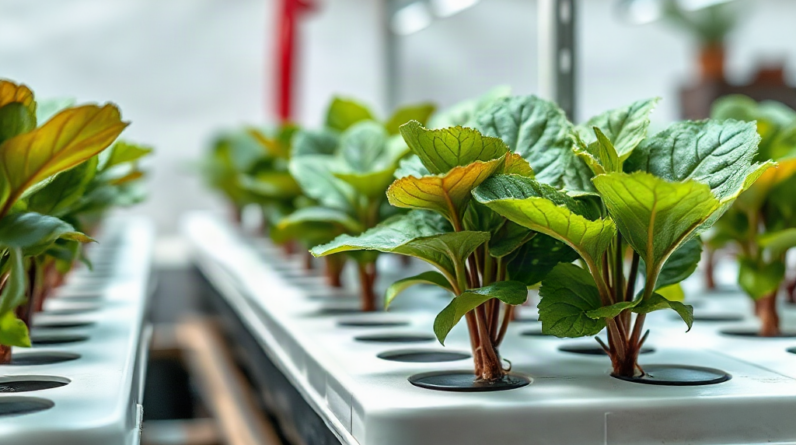
System design changes the response. In deep-water culture, aeration failure can affect plants quickly because roots remain submerged. In drip media, a blocked emitter may curl one plant while neighboring plants remain normal. In nutrient film systems, an uneven channel or interrupted pump can leave roots partly dry. Before replacing the reservoir, verify actual delivery at each plant site. A fresh nutrient mix cannot correct a failed pump, clogged line, or root mass obstructing flow.
When records show an extreme EC, questionable mixing, or badly drifting chemistry, replacing the solution may be cleaner than stacking repeated corrections. Match the fresh solution reasonably closely to the root-zone temperature and avoid an abrupt concentration swing. The objective is stability, not constant adjustment. Stable measurements and fresh white root tips are stronger signs of progress than an old leaf temporarily changing angle.
Balance Light, Heat, Humidity, and Airflow
Leaves curl when water loss and root water supply fall out of balance. Strong light raises leaf energy load, while warm, dry, fast-moving air accelerates transpiration. A plant may therefore cup its edges even though the reservoir contains enough solution. Air temperature alone can hide the problem because foliage under an intense fixture may be warmer than the surrounding room.
Compare symptoms by canopy position. If the highest leaves curl while shaded leaves remain flat, raise or dim the fixture according to its manufacturer guidance and the crop’s stage. Check for a failed exhaust fan, a heater pointed toward the bench, or a reflective surface concentrating light. Moving the light dramatically farther away can stop stress but may also reduce compact growth, so make a measured adjustment and evaluate new leaves over several days.
Airflow should move foliage gently rather than hold leaves in a constant stream. A fan aimed directly at one plant can create localized edge curl that resembles light stress. Redirect it across the growing area or use oscillation to remove humid boundary air without continuously drying one section of the canopy. Conversely, stagnant air leaves pockets of high humidity around crowded foliage and can limit transpiration from young tissue. That may contribute to distorted growth even when the reservoir contains an adequate mineral profile.
Humidity decisions should account for crop maturity and room temperature rather than a universal set point. Very dry air can push water loss beyond root delivery, while persistently high humidity can slow transpiration and keep surfaces wet. Use a dependable temperature and humidity sensor at canopy height, not on a distant wall or directly beneath a humidifier outlet. Dense mature plants also release more moisture than seedlings, so a room that was stable early in the cycle may become humid after the canopy closes.
A practical environmental test changes one variable without disrupting the rest of the system. For example, if upper leaves curl after the lights have been on for several hours, record canopy conditions, reduce intensity modestly or increase fixture distance, and redirect harsh airflow. If new growth improves while reservoir trends remain normal, the evidence favors canopy stress. Lowering EC, adding calcium, changing pH, and moving the lamp simultaneously may produce improvement, but it prevents you from knowing which change mattered.
Place sensors where plants experience the environment and check them during the hottest part of the light cycle. Nighttime readings alone miss peak leaf demand. This canopy-to-root comparison is central to how to prevent leaf curl in hydroponic plants because environmental demand and root supply must be assessed together.
Separate Nutrient Problems From Pests and Disease
Nutrient deficiency should be diagnosed from a pattern, not from curling alone. Look for accompanying chlorosis, spotting, scorched margins, weak stems, affected leaf age, and changes in root growth. Review the nutrient label and mixing record before adding a separate element. A complete hydroponic formula may already contain what the plant needs, while unsuitable pH, high EC, antagonism between ions, or unhealthy roots may be restricting uptake.
More fertilizer is especially risky when leaf tips are burned, foliage is unusually dark, or EC has been climbing. Increasing concentration can reduce the plant’s ability to take up water and intensify the curl. Dilution or a carefully prepared reservoir change may be more appropriate when measurements confirm excessive strength. By contrast, a low EC paired with pale growth and a verified underfeeding history supports gradual correction according to the crop and product instructions. Visual symptoms alone cannot determine an exact dose.
Pests frequently distort tender growth before the whole plant declines. Inspect the undersides of leaves, veins, petioles, and growing tips with a hand lens. Aphids may cluster around soft tissue, thrips can leave pale feeding scars and dark specks, and mites may produce stippling or fine webbing. Sticky cards help reveal winged insects but do not replace direct plant inspection. Check nearby plants as well, because early infestations are often patchy rather than evenly distributed through a shared reservoir.
Isolate affected plants when practical and identify the pest before selecting a control. Any pesticide or biological control must be labeled and suitable for the crop, growing location, and pest; edible crops require particular attention to label directions and harvest restrictions. Spraying an unidentified problem can damage foliage, interfere with beneficial organisms, or hide evidence without controlling the cause. Physical removal and sanitation may be useful for a small, early colony, but severe infestations require a crop-appropriate control plan.
Root disease becomes more plausible when curling accompanies persistent wilting, stalled growth, damaged root texture, odor, or rapid spread under warm, low-oxygen conditions. Disinfecting equipment without addressing heat, oxygen, dead root material, and shared-water movement invites recurrence. Avoid applying sterilants or improvised treatments directly to roots without reliable product guidance; concentrations that suppress microbes may also injure root tissue.
The common failure is treating a resemblance as proof. Calcium products do not repair heat-stressed leaves, and lowering light does not clear mites. Confirm the strongest evidence first: measurements for solution problems, canopy patterns for environmental stress, magnified inspection for pests, and root examination for delivery or disease issues.
Use a Daily Leaf-Curl Diagnosis Checklist
A consistent inspection routine catches drift before curled foliage becomes widespread. Perform checks at a similar point in the light cycle because plant posture naturally changes between early morning, peak light, and darkness. Keep notes by reservoir and plant position so an isolated irrigation fault is not mistaken for a room-wide nutrient problem.
- Map the symptom. Record whether curling is upward, downward, twisted, localized, and present on old or new leaves.
- Inspect delivery and roots. Confirm pump operation, emitter output, drainage, aeration, solution level, root texture, and odor.
- Measure the reservoir. Log pH, EC, and solution temperature after confirming that meters are clean and calibrated.
- Check the canopy. Measure temperature and humidity at leaf height, compare exposed and shaded growth, and identify direct fan blast.
- Search for organisms. Examine growing tips and leaf undersides with magnification before assuming a mineral shortage.
- Change one primary variable. Correct the clearest fault, document the action, and monitor emerging leaves.
Prioritize failures that can damage roots quickly. A stopped pump, dry channel, severely warm reservoir, or absent aeration deserves attention before a minor pH deviation. Next correct confirmed extremes in solution concentration or canopy climate. Supplements belong later in the sequence and only when the formula, measurements, and symptom distribution support their use.
Successful correction produces stable reservoir trends, active root tips, normal plant posture through the peak light period, and better-shaped new leaves. Failure is indicated by curling that advances into fresh growth, spreading discoloration, continued wilting despite available solution, deteriorating roots, or increasing pest signs. At that point, reconsider the diagnosis rather than applying more of the same correction.
Preventive records make future decisions faster. Note nutrient batches, reservoir changes, cleaning dates, light-height adjustments, and unusual room conditions. The practical value of a routine for how to prevent leaf curl in hydroponic plants lies in detecting deviations from that specific crop’s normal behavior, not forcing every plant toward a single generic number.
Frequently Asked Questions
Can curled hydroponic leaves become flat again?
Young, mildly stressed leaves may relax, but mature tissue often keeps its distorted shape. Judge recovery by healthy emerging leaves, stable posture, and renewed root growth.
Does leaf curl always mean a nutrient deficiency?
No. Excess solution strength, root oxygen loss, intense light, dry airflow, high humidity, pests, and irrigation faults can all cause curling. Check measurements and symptom distribution before supplementing.
Should I change the reservoir when leaves begin curling?
Change it when EC is excessive, mixing is uncertain, contamination is suspected, or chemistry cannot be stabilized. A reservoir change will not fix blocked irrigation, poor aeration, pests, or excessive light.
Why are only the top leaves curling upward?
Upper-canopy curling commonly points toward high leaf temperature, strong light, or dry fan exposure. Compare exposed leaves with shaded foliage and measure conditions at canopy height.
How quickly should new growth improve after a correction?
Environmental posture may improve quickly, while visibly better new tissue can take several days or longer depending on crop and growth rate. Worsening fresh growth means the cause remains active or was misidentified.
Conclusion
Leaf curl is most useful as an early warning, not as a stand-alone diagnosis. Map where and when it appears, compare affected plants with healthy neighbors, and then verify root delivery, pH, EC, solution temperature, aeration, canopy conditions, and pest activity. Correct urgent mechanical failures first, especially interrupted flow or oxygen loss, before making small nutrient refinements.
Keep each adjustment measurable and limited enough to evaluate. New leaves, root tips, and logged trends provide better evidence than waiting for damaged foliage to look normal. If distortion continues into fresh growth, revisit the original diagnosis and inspect the system from reservoir to canopy. That disciplined sequence reduces unnecessary additives, prevents overlapping corrections, and makes recurring problems easier to trace.