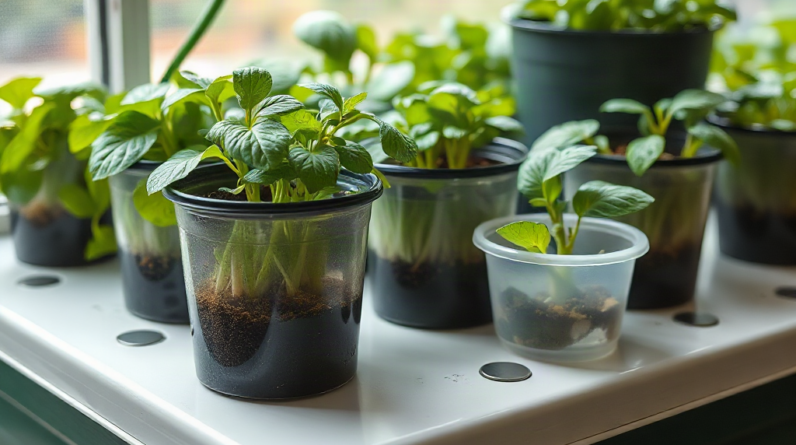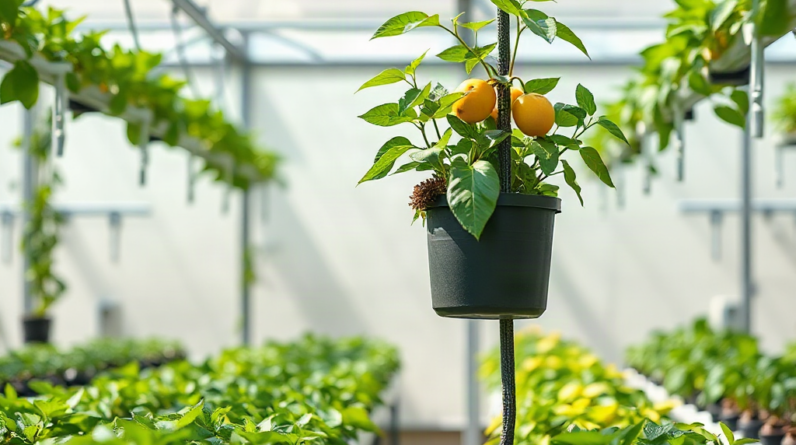
Anchor tall plants in hydroponic gardens by supporting the stem and fruit load from an independent overhead frame, trellis, stake, or cage rather than asking the net pot and roots to hold the plant upright. Install the main support before stems become heavy, secure growth with soft adjustable ties, and keep every anchor clear of nutrient lines, reservoir lids, and vulnerable roots. Tomatoes and cucumbers usually need vertical strings or trellis netting, while peppers often suit stakes or cages. Check ties weekly, distribute weight across several attachment points, and reinforce the base if the net pot shifts or the growing medium lifts.
Separate Plant Support From Root Support
A tall hydroponic plant places leverage on a relatively small base. As its stem lengthens and leaves or fruit move farther from the net pot, a modest lean at the canopy can exert substantial force on the crown. Unlike soil, which surrounds a broad root mass with dense material, a hydroponic channel, bucket lid, or raft may provide little resistance to that sideways load.
The growing site should stabilize the crown, but the support frame should carry the upper plant. Treating those as separate jobs prevents a common failure: packing extra clay pebbles around the stem and assuming the heavier pot will control a mature tomato or cucumber. Aggregate can limit early movement, yet it cannot safely carry a fruit-laden vine several feet above the lid. Excess pressure at the crown can also trap moisture against stem tissue or force the net pot deeper into its opening.
Begin by checking where movement originates. If the entire net pot rocks, improve its fit with a compatible collar, insert, or securely seated lid opening. If the pot stays still while the stem bends, add an above-canopy support. If the bucket, channel, or reservoir moves with the plant, stabilize the system stand before tying the crop more tightly. A tie attached to an unstable reservoir merely transfers the same motion to another point.
Crop structure changes the load. An indeterminate tomato continues producing a long, heavy leader and usually needs a hanging string or trellis connected to a rigid frame. A cucumber climbs readily but still needs clips or gentle training until its tendrils grip the support. A tall pepper has a woody central stem and several fruit-bearing branches, making a stake, cage, or horizontal grid more useful than a single overhead string. For a deeper setup reference, How to anchor tall plants in hydroponic gardens should be considered alongside the crop’s mature height and branching habit.
Do not anchor a mature plant solely to flexible tubing, a light fixture, a suspended electrical cord, or a removable reservoir lid. These components are not designed for changing lateral loads. A sound frame should remain steady when gently pulled from the direction in which the canopy is likely to lean. It should also allow reservoir access without releasing the plant or dragging roots through the lid.
Match the Anchor to the Hydroponic Setup
The best anchor is the one that transfers plant weight to a fixed structure without obstructing circulation, maintenance, or harvest. System type determines where that structure can safely stand. Deep-water culture buckets, nutrient film technique channels, Dutch buckets, and indoor towers each present different access points and failure risks.
For an individual bucket, a freestanding frame spanning the bucket row is more dependable than a thin stake pushed through the lid. A stake inside the bucket can enter the root mass, interfere with an air stone, and move whenever the lid is lifted. If a compact pepper needs only moderate support, a cage secured outside the bucket or attached to a rigid bucket frame can work. Long-vining tomatoes are better carried by strings descending from a stable crossbar.
Channels and rails should not bear heavy side loads unless their manufacturer or construction explicitly accommodates them. A separate trellis positioned behind an NFT channel lets stems rise without twisting the channel or disturbing its slope. Use horizontal netting for branching plants and vertical lines for crops trained to one or two leaders. Leave enough space to inspect emitters, remove channel covers, and reach roots without cutting the support network.
In Dutch bucket rows, posts at the ends with a tensioned top line can support vertical strings, but long spans may sag as fruit accumulates. Add intermediate uprights where necessary and inspect connectors rather than assuming a taut empty line will remain level under harvest weight. Outdoors or near strong ventilation, diagonal bracing matters because moving foliage repeatedly pushes against the frame. Wind load can exceed the static weight that seemed manageable during installation.
A practical selection order is:
- Identify the final load: account for stems, leaves, wet foliage, and several developing fruit clusters.
- Choose an independent load path: direct that weight into a wall-rated bracket, ceiling joist, greenhouse frame, or freestanding trellis built for the purpose.
- Preserve service access: confirm that lids, pumps, drains, lights, and channels remain reachable.
- Plan for adjustment: include clips, slack, or movable ties so the support can follow growth.
A wall or ceiling attachment is useful only when its fastener suits the underlying material and anticipated load. Drywall alone is not a dependable anchor for a row of mature fruiting plants. Renters or growers uncertain about hidden wiring and framing should favor a weighted freestanding structure. The tradeoff is floor space, but the system can be moved and inspected without altering the building.
Install Ties, Strings, and Trellises Without Stem Damage
Plant ties should guide growth without becoming rigid choke points. Stems expand throughout the season, and a narrow wire, fishing line, or tight plastic zip tie can cut into tissue as diameter increases. Use soft plant tape, broad reusable ties, purpose-made clips, or loose fabric strips, then leave room for thickening and movement.
Place the first attachment low enough to control leaning but above the tender crown where the stem emerges from the medium. Add support at intervals as the leader rises, keeping each tie close to a node or sturdy stem section rather than around a leaf stalk. A loose figure-eight tie is useful with a stake: one loop surrounds the support, the other surrounds the stem, and the crossing section reduces rubbing. The tie should restrain excessive movement without clamping the stem against the stake.
Vertical string training works differently. Secure the upper end to a strong crossbar, then connect the lower end with a loose plant clip near the stem base or to a system-specific support point that does not squeeze the crown. Wind the growing leader gently around the string as it elongates, or add clips instead of twisting brittle growth. Never fasten the bottom string to exposed roots. Roots move, thicken, and must remain accessible; pressure or abrasion can damage them and complicate removal at the end of the cycle.
Trellis netting is well suited to cucumbers and multi-branching tomatoes because several squares distribute canopy weight. Guide shoots through openings while they remain flexible. Forcing an older branch backward through a small square can split it at the junction. Fixed netting also makes plants harder to remove individually, so separate vertical strings are often more practical in a small indoor garden where crops are replaced at different times.
Install support early, but do not tension it aggressively. Seedlings need slight natural movement, while mature vines need controlled load distribution. The useful middle ground is a stable line with enough give to avoid pulling the crown sideways. After installation, observe the plant while fans are running and after irrigation equipment has been serviced. A successful anchor limits swaying, keeps the main stem upright, and does not tilt the lid or lift the net pot.
Fruit placement deserves separate attention. Heavy tomato trusses or large cucumbers may need slings or clips even when the main leader is secure. Support the branch or truss without pinching its vascular tissue, and attach the added support to the frame rather than hanging every fruit load from one stem tie. Readers comparing attachment options can use How to anchor tall plants in hydroponic gardens as a planning reference before dense foliage hides the safest tie points.
Inspect and Adjust the Support as Plants Mature
An anchor is a working component, not a one-time installation. Hydroponic crops can add canopy mass quickly under warm temperatures, strong light, and ample nutrition. A frame that felt rigid during vegetative growth may bow once fruit develops, while ties that looked loose can constrict a thickening stem.
Inspect the support at least weekly and after pruning, harvesting, moving lights, servicing the reservoir, or experiencing strong outdoor wind. Follow the load from the plant to the final anchor point. Check the stem beneath every tie, the string above the canopy, clips at branch junctions, frame fasteners, and the growing site at the lid. Fraying cord, deep tie marks, a leaning crossbar, or a net pot lifting on one side indicates that the load is not being shared correctly.
Correct small problems before adding more restraints. If a plant leans because all fruit is on one side, redistribute branches across the trellis or add a second support line. If the top frame sags, reinforce the structure rather than tightening the plant string until the stem is pulled straight. If roots have displaced the net pot, do not push the pot down forcefully; support the canopy, inspect the opening, and reposition only when roots and plumbing can be seen.
Pruning affects balance as well as airflow. Removing a large side shoot suddenly shifts weight to the remaining leader, while harvesting a heavy cluster can cause a tensioned vine to spring upward. Hold the stem during these tasks and retension strings gradually. Lower-and-lean tomato training requires particular care: release the line in small increments, keep the bare lower stem from kinking, and ensure it cannot fall into wet walkways or block access to buckets.
Warning signs call for different responses. Stem abrasion calls for a broader or looser tie. Repeated frame movement calls for bracing or a stronger base. Wilting above a tight tie suggests constriction and requires immediate release. Cracking near a branch union requires unloading that branch before attempting gentle stabilization. A plant that remains upright but pulls its bucket lid upward needs support transferred away from the growing site.
Keep sanitation in the inspection routine. Reusable clips, string hardware, cages, and trellises can retain plant residue between cycles. Remove debris and clean reusable components with a material-appropriate method before supporting a new crop. Discard frayed ties that cannot be cleaned or adjusted reliably. This maintenance makes How to anchor tall plants in hydroponic gardens an ongoing management task rather than an emergency response to a collapsing canopy.
Frequently Asked Questions
Can I put a stake directly into a hydroponic net pot?
A short stake may steady a young plant if it fits without crushing the stem or roots, but it should not carry a mature fruiting canopy. Transfer long-term weight to an external frame, cage, or overhead support.
When should I begin supporting a tall hydroponic plant?
Install the frame before rapid vertical growth and attach the plant while its stems are still flexible. Waiting until fruit forms increases breakage risk and makes safe tie placement harder.
What type of tie is safest for hydroponic tomatoes?
Broad, adjustable plant tape, reusable clips, or soft ties are preferable to wire and narrow cord. Leave expansion room and inspect contact points weekly as the stem thickens.
Can grow lights be used as overhead anchor points?
No. Light fixtures and their hanging hardware should remain independent so plant weight cannot alter light height, damage electrical equipment, or pull the fixture down.
How can I support plants without blocking reservoir access?
Use a freestanding frame that spans the reservoir and route strings beside removable lids. Test pump, nutrient, and root access before attaching the plant permanently.
Conclusion
Reliable plant support begins with a clear load path: the crown stays steady in its growing site while a separate frame carries the canopy and fruit. Select that frame around the hydroponic layout, mature crop form, maintenance access, and expected movement from fans or wind. Add soft ties or clips while stems remain flexible, distribute heavy branches across multiple points, and keep anchors away from roots, tubing, lights, and removable lids.
Before the next growth surge, gently test the frame, open every service point, and inspect each stem contact. Continue checking ties and fasteners as fruit develops. If the lid rises, the frame bows, or tissue becomes marked, shift the load instead of adding tighter restraints. Early adjustments are simpler and safer than trying to rebuild support around a fully developed canopy.