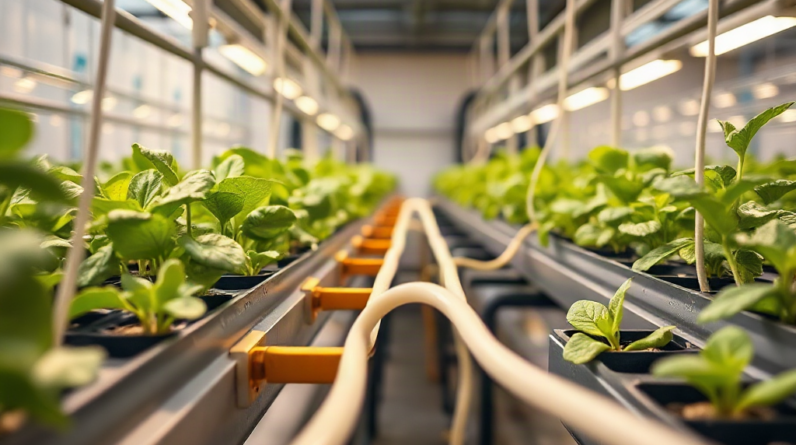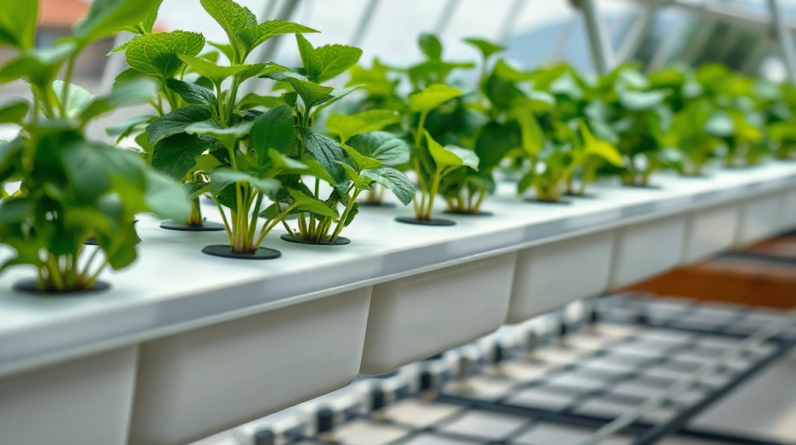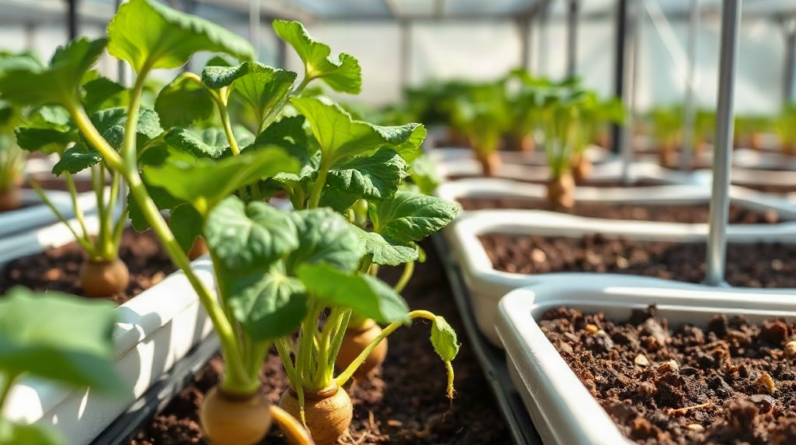
Hydroponic systems for growing root vegetables work best when they provide deep, loose media, steady moisture, ample oxygen, and enough unobstructed space for each storage root to expand. Media beds and Dutch buckets generally suit radishes, turnips, beets, and compact carrots better than narrow channels, where restricted depth can distort roots. Keep crowns above persistently wet media, avoid excessive nitrogen that favors leaves over roots, and prevent large swings in water availability. Success should be judged by root shape and internal quality as well as foliage, because vigorous tops can conceal branching, cracking, rot, or undersized roots.
Which Hydroponic Designs Give Roots Enough Room?
Root-zone geometry matters more than visual complexity when selecting a system. A storage root needs sufficient depth, lateral room, oxygen, and gentle physical resistance. The system must hold the plant upright without squeezing the edible portion or leaving it continuously submerged. A setup that grows excellent lettuce may perform poorly with carrots because a shallow channel supports leaves but does not provide a deep, stable zone for straight root development.
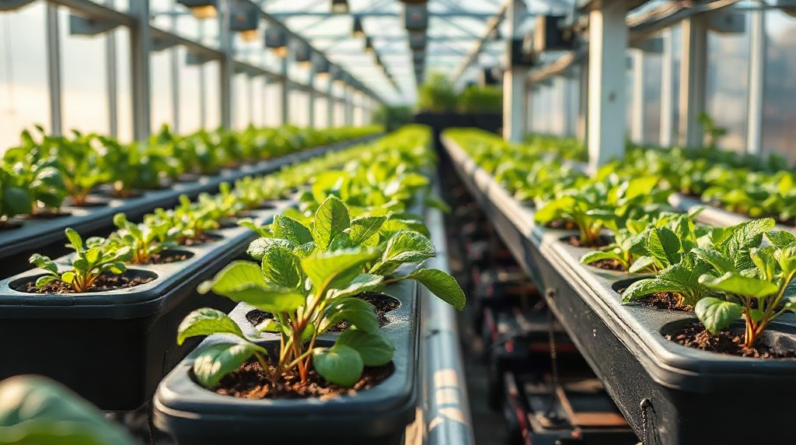
Media beds are usually the most forgiving choice. A bed filled with a loose, inert substrate can accommodate several root shapes while buffering short interruptions in irrigation. Beds approximately deep enough for the expected mature root allow carrots to elongate and give beets or turnips space to swell near the surface. Drip irrigation is easier to control than constant flooding because the upper root zone can remain aerated while moisture reaches lower layers. The tradeoff is volume: deep beds require more substrate, stronger supports, and careful drainage.
Dutch buckets or similar individual containers are useful when plants need separation. One compact carrot group, beet, turnip, or radish planting can be inspected or removed without disturbing an entire bed. Containers also make it easier to change spacing between varieties. Their disadvantages are additional tubing, more emitters that can clog, and uneven watering if pressure differs across the irrigation line.
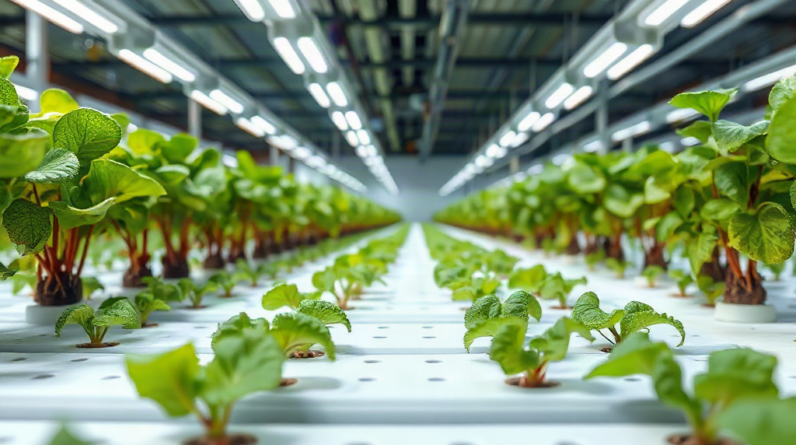
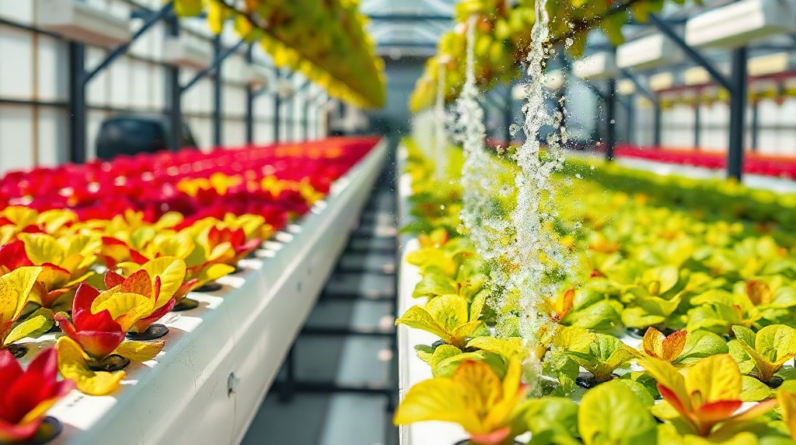
Deep-water culture and nutrient film technique are weaker matches for most storage roots. A radish may mature in a net pot if its swelling root remains above the solution and has room to expand, but carrots commonly encounter a cup, lid, or narrow channel that bends or forks them. Aeroponics can provide excellent oxygen and unrestricted hanging space, yet exposed roots depend on reliable misting. A failed nozzle or pump can dry delicate root surfaces quickly, making this an advanced rather than forgiving option.
Before building, place a mature specimen or a paper model of its expected root inside the proposed container. Check depth, opening width, spacing, access for harvest, and the location of the wettest zone. That simple fit test prevents the common mistake of choosing a system because it is labeled hydroponic rather than because its dimensions suit the crop.
Matching Root Vegetables to the System
Short-cycle, compact vegetables provide the clearest starting point. Radishes tolerate modest root-zone depth, mature quickly, and reveal spacing or moisture errors without tying up a system for months. Round beets and small turnips also fit media beds and buckets well, although their shoulders need room at the surface. These crops are more practical for a first trial than long carrots, potatoes, or large storage roots.
Variety descriptions deserve close attention. A round radish and a long daikon may share a crop name while demanding very different container dimensions. Similarly, ball-shaped or short carrots are better suited to modest beds than long tapered cultivars. Choose by mature length, diameter, and days to maturity rather than by familiarity alone. Published dimensions are approximate, so allow extra clearance for media settling and natural variation between plants.
Carrots are possible, but straight roots require a fine, uniform substrate with no hard chunks or compacted layers. When a young taproot hits a coarse particle, dense pocket, container floor, or damaged tip, it can bend or branch. Transplanting established carrot seedlings adds another risk because disturbing the taproot may produce forked roots. Direct sowing in the final bed, followed by careful thinning, is generally more dependable.
Potatoes and sweet potatoes are often grouped with root vegetables, but their growth habits require a separate decision. Potatoes form tubers on underground stems and benefit from substantial media volume plus room for those stems to spread. Sweet potatoes produce enlarged storage roots on a vigorous vining plant, creating both root-space and canopy-management demands. They can be grown without soil, but they are less space-efficient than radishes or beets in a small indoor installation.
A useful crop-selection sequence is:
- Measure the usable root zone: Exclude lids, drainage layers, and areas occupied by fittings.
- Choose a compact cultivar: Match mature dimensions to the available depth and width.
- Confirm canopy clearance: Root crops still need light and airflow above the bed.
- Run a small batch: Harvest several plants at different dates before filling the system.
This measured approach makes hydroponic systems for growing root vegetables easier to evaluate by edible yield and root quality, not merely by healthy-looking foliage.
Media, Nutrient, and Moisture Management
The substrate should combine low compaction with predictable water distribution. Fine particles can support smooth root surfaces, but material that packs tightly may exclude oxygen. Very coarse media drains well yet can create irregular resistance, dry pockets, and misshapen carrots. A blended inert medium is often more workable than using a single extreme texture. Whatever the material, it should be clean, stable during the crop cycle, and compatible with the irrigation and filtration equipment.
Moisture must remain available without saturating the crown. Repeated drying followed by heavy rewetting can stress developing roots and may contribute to splitting or uneven growth. Constant saturation produces a different failure: oxygen falls around the root, and soft or discolored tissue may appear. Drip emitters should wet a broad portion of the container rather than carve one permanently soaked channel. In a bed, inspect moisture near the emitter, between plants, and near the drain instead of assuming all locations behave alike.
Nutrient management should favor balanced development rather than maximum leaf size. Excessive nitrogen can produce lush tops while edible roots remain small or slow to bulk. That does not mean nitrogen should be removed; seedlings and mature foliage still require it. The better response is to use a complete hydroponic formulation appropriate for edible vegetables, monitor solution strength and pH with calibrated instruments, and avoid frequent unmeasured additions. Exact targets vary with crop, growth stage, source water, temperature, and fertilizer formulation, so the product instructions and crop-specific extension guidance are more dependable than a universal number.
Solution temperature and aeration influence oxygen availability. Warm, stagnant reservoirs hold less dissolved oxygen and encourage conditions in which root decline can accelerate. Shield reservoirs from direct light, circulate the solution, remove dead plant material, and clean deposits from lines between plantings. If leaves wilt while the media is wet, inspect root color, odor, emitter operation, and reservoir temperature before adding more water.
Watch the plant below and above the surface. Healthy foliage with undersized roots can signal excess spacing pressure, too much nitrogen, insufficient light, or harvest timing that is too early. Pale foliage may reflect nutrition or root dysfunction, while distorted roots point more directly to compaction, physical obstacles, crowding, or taproot injury. Keeping notes on irrigation frequency, solution adjustments, and harvested root shape turns each planting into usable evidence for refining hydroponic systems for growing root vegetables.
Planting, Monitoring, and Harvest Decisions
Direct sowing reduces handling damage for crops built around a taproot. Place seed at the depth recommended for that vegetable, maintain even surface moisture during germination, and thin before neighboring roots begin competing. Pulling an unwanted seedling can disturb the keeper, so cutting excess seedlings at media level is often safer once their roots have intertwined. Avoid dense sowing as a hedge against poor germination unless thinning can be completed promptly.
Spacing should account for the mature edible diameter, not the narrow seedling stem. Beets planted shoulder to shoulder may develop attractive leaves while their roots remain compressed or irregular. Radishes expose crowding quickly; carrots can conceal it for longer. Uniform spacing also improves airflow at the crown, where persistent moisture and packed foliage can encourage decay. If the system uses individual pots, confirm that the pot opening will release the mature root without damage.
Monitoring is most useful when it includes destructive sampling. Select one representative plant at intervals and inspect the entire root. A leafy canopy cannot reveal whether carrots are forking below the media or whether a beet is expanding normally. Record root diameter, shape, firmness, color, and any soft areas. Compare plants near irrigation inlets with those near drains because their moisture and nutrient exposure may differ.
A compact operating check includes:
- Daily: Verify pump operation, flow, leaks, reservoir level, and unusual wilting.
- Regularly: Check solution measurements with maintained meters and inspect several media locations for moisture.
- During bulking: Look for exposed shoulders, crowding, crown softness, cracking, or stalled enlargement.
- Before replanting: Remove roots and debris, clean wetted components, and correct drainage or emitter problems.
Harvest timing affects texture as much as size. Radishes left well beyond their useful window may become pithy or sharp, while oversized roots can become difficult to remove intact. Harvest a test plant once the expected maturity window approaches, then decide from actual diameter and eating quality rather than the calendar alone. For beets and turnips, brushing back a small amount of surface media can reveal shoulder size without uprooting the plant.
Failure is often misread as a fertilizer problem. Forking, flattening, and constriction usually justify checking container geometry and substrate structure first. Soft roots in wet media point toward oxygen, sanitation, temperature, or irrigation issues. Small but sound roots may simply need more time, light, or space. Matching the corrective action to the visible defect avoids making unnecessary nutrient changes that introduce a second problem.
Frequently Asked Questions
What is the easiest root vegetable to grow hydroponically?
Compact radishes are a practical first choice because they mature quickly, require less depth than long carrots, and make spacing or moisture problems visible early.
Can carrots grow in a hydroponic system?
Yes. Use a deep container, loose uniform media, direct sowing, and a short or round cultivar. Hard particles, shallow beds, crowding, and transplant damage commonly cause forked roots.
Can root vegetables grow in nutrient film technique channels?
Small radishes may work in suitably sized openings, but standard NFT channels usually provide too little depth and expansion room for carrots, beets, and turnips. Media beds are more forgiving.
Why do hydroponic root vegetables grow large leaves but small roots?
Possible causes include excessive nitrogen, insufficient light, crowding, limited root-zone volume, or harvesting too early. Inspect the root and growing conditions before changing the nutrient mix.
Should hydroponic root vegetables be transplanted?
Direct sowing is preferable for carrots and other taproot crops because root disturbance can cause branching. Beets and radishes may tolerate careful handling, but sowing in the final container removes that risk.
Conclusion
Productive root-vegetable culture begins with physical fit: the mature edible root must have enough depth, width, oxygen, and harvest access. Media beds and individual containers offer the broadest margin for error, while shallow channels and mist-dependent systems impose tighter limits. Begin with compact radishes, beets, turnips, or short carrots; sow them in their final positions and thin according to mature diameter.
During the crop cycle, judge performance below the foliage. Sample roots, compare wet and dry areas, and treat shape, firmness, color, and odor as diagnostic evidence. Correct obstruction or compaction before altering fertilizer, and correct saturation or poor circulation before increasing irrigation. A small trial with documented spacing, moisture, and harvest quality will provide a stronger basis for expansion than a full bed selected from healthy tops alone.