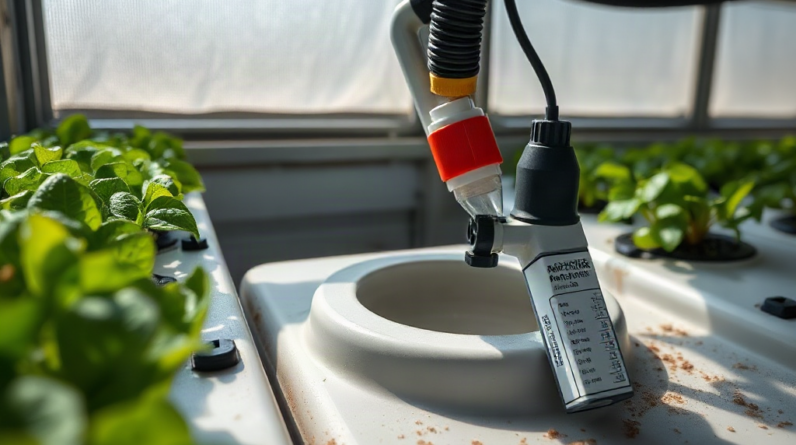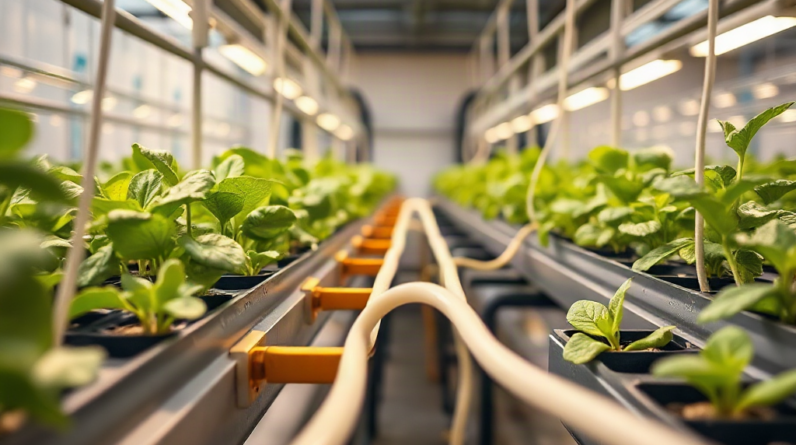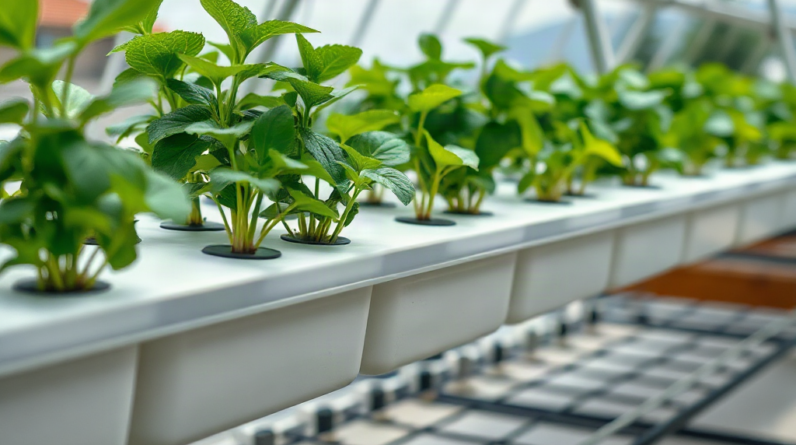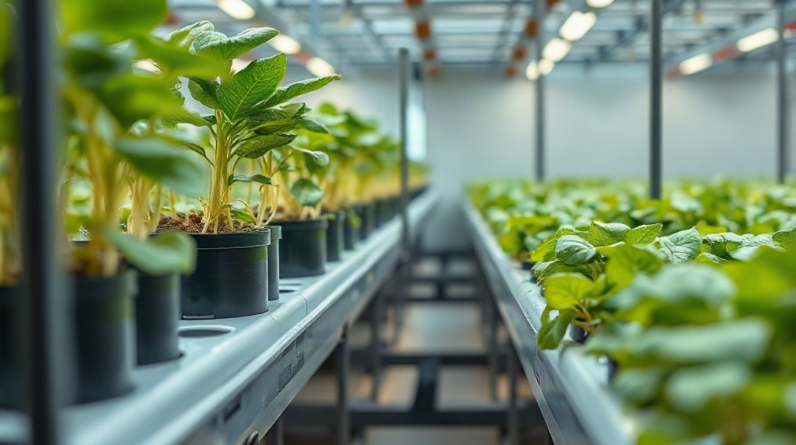
Manage water quality in closed hydroponic systems by measuring pH, electrical conductivity, solution temperature, water level, and root condition on a consistent schedule, then correcting changes gradually rather than chasing individual readings. Replenish consumed water before interpreting conductivity, because evaporation can concentrate salts without indicating that plants need more fertilizer. Keep the reservoir shielded from light, aerated, and free of decaying roots or debris. Track source-water alkalinity and crop response alongside meter readings, since acceptable targets vary by crop and growth stage.
Establish a Reliable Water-Quality Baseline
Source water determines how predictably a closed reservoir behaves after fertilizer is added. Two water supplies can show similar starting pH yet respond very differently because pH measures current acidity, while alkalinity reflects the water’s resistance to pH change. Water with substantial bicarbonate alkalinity may repeatedly push the reservoir upward. Very low-alkalinity water may swing quickly after small additions of acid, base, or fertilizer.
Test the untreated source for pH and electrical conductivity, commonly abbreviated EC, before mixing a fresh batch. If possible, obtain a water analysis covering alkalinity, calcium, magnesium, sodium, chloride, iron, and total dissolved minerals. A laboratory report is more useful than assuming that all of the starting EC represents plant-available calcium or magnesium. Sodium and chloride, for example, add to conductivity but can accumulate as water recirculates and plants selectively remove other ions.
Record the condition of a freshly mixed solution after the fertilizer has dissolved and the water has circulated. Useful baseline entries include date, crop and growth stage, water volume, source-water EC, final EC, pH, solution temperature, and the amount of each concentrate used. Readings taken immediately after mixing may not be stable, especially if concentrated fertilizer, acid, or alkaline adjuster has not dispersed throughout the tank. Circulate first, then measure at the same sampling point each time.
Meter quality matters less than disciplined calibration and storage. A sophisticated pH meter with a dry or contaminated probe can be less trustworthy than a modest meter checked with fresh calibration buffers. Calibrate according to the manufacturer’s instructions, rinse probes with clean water between samples, and never store a pH electrode dry unless its documentation specifically permits it. Check an EC meter against the correct conductivity standard rather than assuming that a plausible display is accurate.
A practical baseline separates water problems from dosing errors. Suppose a reservoir rises in pH every day despite repeated acid additions. Without source-water data, the grower may blame the fertilizer or roots. A high alkalinity result instead points toward bicarbonates entering with every top-up. Reverse-osmosis filtration or blending filtered and unfiltered water may then provide steadier control, although filtration creates reject water and may require calcium and magnesium to be supplied deliberately. Good water-quality management in a closed reservoir begins with knowing what enters the system, not merely what the display shows after feeding.
Monitor the Reservoir Without Misreading the Data
Trends reveal more than isolated measurements. Check pH, EC, water temperature, and reservoir level at roughly the same time each day so that irrigation timing and plant water use do not distort comparisons. Inspect root color, texture, odor, and new growth at the same visit. A number inside a preferred range does not overrule brown, sloughing roots, a sour smell, or rapidly wilting foliage.
Interpret EC together with water level. When the level falls and EC rises, plants may be taking up proportionally more water than minerals, or evaporation may be concentrating the solution. Restore the reservoir with appropriate source water, allow thorough mixing, and measure again before removing solution or adding fertilizer. If both water level and EC fall, plants are generally removing nutrients along with water; a crop-appropriate replenishment may be warranted. If EC falls while the water level changes little, check for leaks, dilution, a dosing mistake, or an inaccurate meter rather than automatically increasing feed strength.
PH movement is equally contextual. A slow upward drift can occur as plants take up ions and the chemistry of the solution changes. A rapid, recurring climb may reflect high source-water alkalinity. A sudden drop combined with cloudy water, unpleasant odor, or root deterioration can point toward biological activity or damaged roots. Continually forcing the display back to a precise decimal can add excessive acid or base and increase unwanted ions. Work within a crop-appropriate operating range and respond to the direction and speed of movement.
Use a compact daily record rather than relying on memory:
- Measure: reservoir level, pH, EC, and solution temperature.
- Observe: root appearance, odor, clarity, flow, aeration, and emitter performance.
- Record: top-up volume, amendments, meter calibration, and unusual weather or room-temperature changes.
- Compare: today’s values with the previous several readings, not only with a generic target chart.
Monitoring frequency should match risk. A small reservoir supporting mature, thirsty plants can change far faster than a large tank serving young plants. Such a system may need checks more than once per day during hot conditions. An automated controller can provide alarms and frequent data, but it does not inspect roots, identify a stuck float valve, or recognize a probe coated with biofilm. Manual confirmation remains necessary, particularly after dosing or calibration. The goal is not to collect the most numbers; it is to detect meaningful movement early enough to make a measured correction.
Correct pH, Conductivity, and Temperature Safely
Safe correction starts with one variable at a time and adequate circulation between adjustments. Top up lost water before correcting EC because water loss alone can make the nutrient concentration appear excessive. Mix the reservoir, wait for the solution to become uniform, and retest. Only then decide whether to add diluted nutrient concentrate, remove and replace part of the solution, or leave the reservoir unchanged.
Never pour concentrated fertilizer components together or apply strong pH adjuster directly onto roots. Calcium-containing concentrates can react with concentrated phosphates or sulfates and form precipitates that plants cannot use. Add each component separately to circulating water according to its label, allowing dispersion before the next addition. Diluting pH adjuster in a separate container of water can make small corrections easier, but acid or alkali must always be handled with the protective equipment and mixing sequence specified by its manufacturer.
EC is a measure of total ionic conductivity, not a report of individual nutrient balance. Adding a complete fertilizer because EC is low may be reasonable after normal crop uptake, but it cannot correct a reservoir that has accumulated sodium while becoming deficient in another ion. Likewise, lowering high EC through dilution reduces every dissolved ion; it does not selectively remove the one causing trouble. Persistent deficiencies at an apparently adequate EC call for a review of source water, recipe, pH history, root function, and solution age rather than progressively stronger feeding.
Temperature affects dissolved oxygen and root metabolism, so it belongs in every correction plan. Warm solution generally holds less oxygen and can place greater pressure on roots, particularly where channels are slow or the reservoir is poorly aerated. Reduce heat entry by using an opaque reservoir, insulating exposed plumbing, moving the tank away from lamps or hot equipment, and improving room ventilation. A chiller offers tighter control in warm facilities but adds expense, heat discharge, maintenance, and another potential failure point. Frozen bottles can create sharp local temperature changes and introduce contamination from their exterior, making them an unreliable routine control.
Signs that corrections are working include slower pH drift, EC movement consistent with water consumption, clean new roots, stable flow, and renewed growth without leaf-edge burn. Warning signs include increasingly frequent chemical additions, widening differences between duplicate meter readings, precipitate in the tank, worsening odor, or stress that continues despite acceptable displayed values. At that point, stop chasing the setpoint. Verify the instruments, inspect the entire circulation path, and consider a controlled solution exchange. For a broader operating routine, use a written closed-system water management plan that defines normal ranges and escalation triggers before trouble develops.
Control Contamination and Protect Root Health
Sanitation limits the organic material and light that allow algae, biofilms, and opportunistic microorganisms to gain a foothold. Cover reservoir openings, use opaque tubing where possible, remove fallen leaves promptly, and keep tools dedicated to the growing area. Algae consume oxygen during dark periods, alter pH, and leave organic residue when they die. Biofilm can shelter microorganisms, narrow emitters, coat probes, and make sensor readings slow or erratic.
Mechanical cleanliness comes before chemical treatment. Between crop cycles, drain the system, disassemble accessible filters and emitters, remove root fragments, scrub deposits, and use a system-compatible cleaning or sanitizing product exactly as labeled. Rinse where the product instructions require it. Adding sanitizer to dirty plumbing may not reach organisms protected beneath mineral scale and organic film. Mixing cleaning products is hazardous and can generate damaging reactions, so never improvise combinations or concentrations.
Management philosophy also matters. Some growers operate a low-organic, highly sanitary reservoir; others use biological inoculants intended to establish selected microorganisms. Neither approach excuses poor aeration, warm stagnant zones, or decomposing material. Combining oxidizing sanitizers with microbial inoculants can defeat the purpose of the inoculant and produce inconsistent results. Choose a compatible program based on the fertilizer, crop, equipment, and product directions rather than alternating methods whenever roots look stressed.
Root symptoms require careful interpretation. Healthy roots are commonly firm and light colored, but staining from certain nutrient ingredients does not automatically indicate disease. Texture, odor, plant response, and the speed of change provide better evidence than color alone. Slime, tissue that pulls away easily, sour odor, reduced water uptake, and wilting despite adequate moisture justify immediate investigation. Check dissolved oxygen or aeration performance, solution temperature, blocked returns, pump operation, and debris in the reservoir.
A dead pump illustrates why contamination control and equipment checks belong together. The reservoir may retain a normal pH and EC for hours while roots in a channel lose circulation and oxygen. Correcting the chemistry would miss the actual failure. Restore flow, evaluate root damage, remove decaying material, and decide whether the solution can be safely retained. Quarantine questionable plants where practical, and avoid moving wet tools between unaffected and affected systems. Successful control is indicated by clean surfaces, unobstructed delivery, stable odor, and firm new root growth—not by a temporarily clear tank immediately after treatment.
Know When to Replenish, Exchange, or Reset the Solution
Closed systems conserve water and fertilizer, but recirculation does not keep the nutrient formula balanced indefinitely. Plants absorb ions at different rates, water evaporates, roots release compounds, and every top-up can introduce more alkalinity or unwanted minerals. EC may remain stable while the proportions of nitrate, potassium, calcium, sodium, and other ions move away from the original recipe. That limitation makes scheduled evaluation more defensible than waiting for a dramatic meter reading.
Routine replenishment is appropriate when the solution remains clear, roots are sound, pH and EC behave predictably, and crop growth is normal. Replace consumed water first, then add a replenishment feed designed for the crop and system if needed. Blindly adding the original full-strength recipe after every top-up can drive accumulation. Conversely, topping up only with plain water for a long period can dilute nutrients that plants are actively removing.
A partial exchange can reduce accumulated salts or correct a moderate dosing error while conserving more water than a full reset. Its limitation is that the remaining solution still carries the old imbalance, and EC alone cannot quantify what remains. A full replacement becomes more reasonable after a serious mixing mistake, suspected contamination, persistent pH instability, unexplained crop stress, heavy debris, or repeated corrections that no longer produce a stable response. It is also useful between crops when cleaning and a known starting composition matter more than preserving the old solution.
Before discarding water, confirm meter calibration and inspect for a mechanical cause. A leaking dosing line, failed level valve, blocked emitter, or warm return channel can mimic a chemistry problem. If a reset is justified, prepare the replacement solution before leaving roots without circulation, drain according to local requirements, clean accessible surfaces, refill, circulate, and verify pH, EC, temperature, and flow. Record why the reset occurred so the same pattern can be recognized sooner.
No universal replacement calendar suits every reservoir. System volume, crop maturity, source-water quality, fertilizer formulation, environmental heat, and access to laboratory testing all affect the decision. Commercial operations may use water or tissue analysis to extend solution life with greater confidence. A home grower without those tools should use more conservative reset triggers rather than assuming that stable EC proves complete balance. A dependable approach to managing recirculating water quality combines resource efficiency with a clear point at which uncertainty outweighs the value of retaining the solution.
Frequently Asked Questions
How often should pH and EC be checked?
Check them at least daily in an active reservoir and more often when the tank is small, plants are mature, temperatures are high, or readings have begun changing rapidly. Measure at a consistent time and record water level as well.
Should the reservoir be topped up with plain water or nutrient solution?
Restore water lost through uptake and evaporation before interpreting EC. Whether the next addition should contain nutrients depends on the corrected EC trend, crop stage, source water, and observed plant performance.
Why does reservoir pH keep rising?
Likely causes include bicarbonate alkalinity in source water, crop ion uptake, low reservoir volume, or biological changes. Test source-water alkalinity and inspect roots before repeatedly adding more acid.
Does normal EC mean the nutrient solution is balanced?
No. EC shows total conductivity but cannot identify individual ions. Sodium or another mineral may accumulate while a required element becomes depleted, leaving total EC apparently acceptable.
When should a closed hydroponic reservoir be completely changed?
Consider a full change after contamination, a major dosing error, persistent instability, heavy organic debris, unexplained stress, or repeated corrections that fail to restore predictable behavior. Verify meters and equipment first.
Conclusion
Reliable reservoir control comes from comparing chemistry, water use, root condition, and equipment performance rather than managing pH or EC as isolated numbers. Establish the source-water baseline, calibrate meters, keep a dated log, and replenish water before judging concentration. Small, well-mixed corrections preserve more control than repeated large doses.
Protect the solution from light, heat, debris, stagnant flow, and incompatible treatments. When readings become difficult to stabilize, verify the instruments and circulation system before adding more chemicals. If imbalance or contamination remains likely, a partial exchange or complete reset is safer than preserving an uncertain solution merely to avoid waste. The next practical step is to document normal readings for the current crop and define specific inspection, correction, and reset thresholds for that reservoir.
Further Reading
Authoritative Sources
- How Often Do You Change Water in Hydroponic System
lyinegroup.comIt is important to monitor the pH and nutrient levels in the water regularly to ensure optimal conditions for the plants.
- The Importance of Water Purification for Hydroponics - SupaO²
supao2.comThere are several effective ways to purify water for hydroponic use. The choice of method depends on the size of your system, the quality of your source water, ...
- How To Keep Hydroponic Water Clean [Step By Step Guide]
gardenbloomvibes.comLearn how to keep hydroponic water clean with step-by-step routines for source water, filtration, oxygen, temperature, and sanitation.
- How often should hydroponic water be changed
opticlimatefarm.com1. Monitor Nutrient Levels: Regularly test the nutrient concentration in the water to assess if it's reaching depletion levels. Adjust the ...