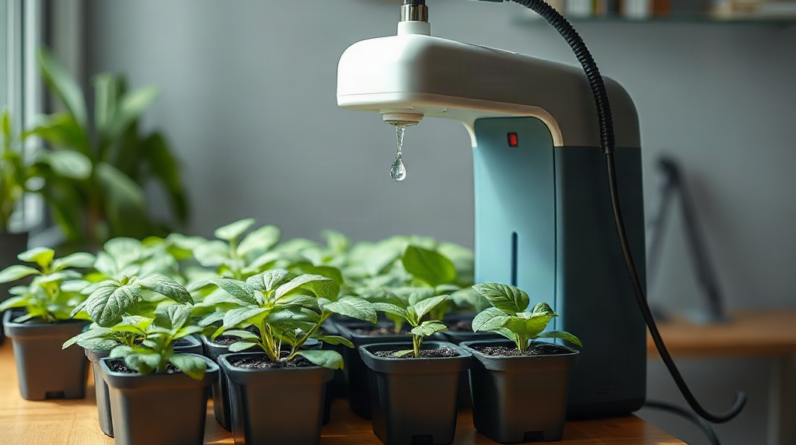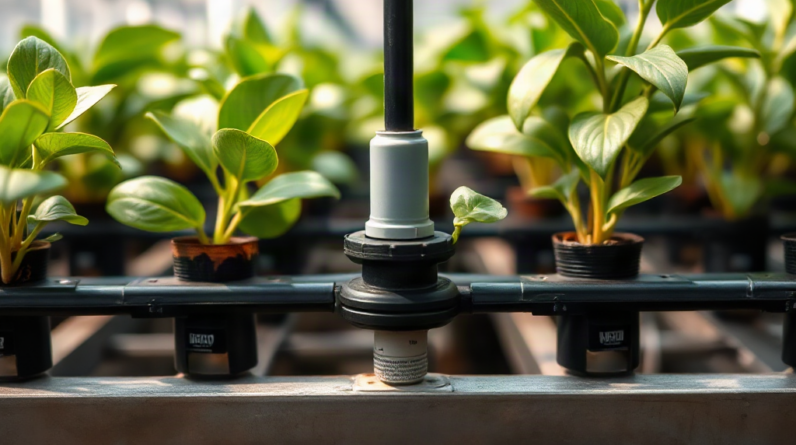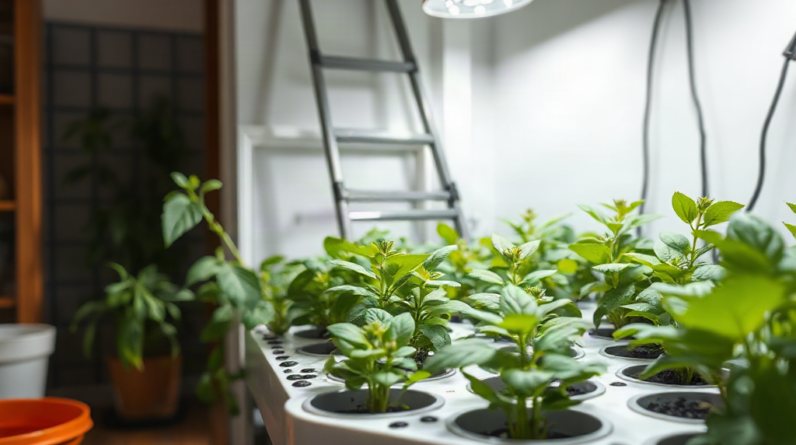
Using ground fault protection in hydroponics means placing properly rated GFCI or RCD protection between wet-area equipment and the electrical supply, then testing the protection and investigating every trip. Water, conductive nutrient solution, damaged insulation, and grounded metal can create a path for leakage current that ordinary overcurrent breakers may not detect quickly. Protection should cover pumps, air pumps, lighting, fans, and service outlets according to local electrical requirements, while cords, plugs, power strips, and connections remain elevated and dry. A GFCI reduces shock risk but does not make submerged equipment safe, replace grounding, or permit overloaded circuits. Persistent trips usually indicate moisture intrusion, failing equipment, wiring damage, or an installation problem that needs qualified inspection.
Why Ground Fault Protection Matters Around Nutrient Solution
Ground fault protection monitors the current leaving a circuit and compares it with the current returning through the intended conductors. If some electricity escapes through a person, wet surface, equipment casing, or grounding path, a GFCI or RCD can disconnect power rapidly. That function is different from an ordinary circuit breaker, which is mainly intended to respond to sustained overloads or short circuits.
Hydroponic rooms create several conditions that make leakage more plausible than in a dry living space. Reservoirs may splash during mixing, tubing can loosen above a power connection, condensation can form near lights, and nutrient solution conducts electricity better than purified water. A small leak into a pump terminal or a cracked cable jacket may not draw enough current to trip an overcurrent breaker, yet it can still create a dangerous touch voltage.
Consider a recirculating system with a submersible pump, air pump, LED fixture, and circulation fan. The pump may be functioning normally while a worn cord gradually allows moisture into its connection. Ground fault protection can interrupt the supply when leakage begins, but it cannot repair the cord or make continued operation acceptable. The useful outcome is an early warning and a reduced shock hazard, not permission to reset the device repeatedly.
Ground fault protection should be treated as one layer in a system that also includes intact equipment, proper grounding, dry connections, suitable enclosures, and sensible cord routing. Readers comparing Using ground fault protection in hydroponics with ordinary breaker protection should not regard the two as interchangeable: one addresses leakage, while the other addresses excessive current. Local electrical rules may require specific device types, placement, testing, and installation methods, so a licensed electrician should resolve questions about fixed wiring or unfamiliar equipment.
Choosing Protection for Pumps, Lighting, and Outlets
The best protection arrangement depends on whether the equipment is portable, permanently wired, indoors, exposed to spray, or connected to a circuit shared with other loads. A GFCI receptacle can protect downstream outlets when wired correctly, while a GFCI circuit breaker can protect an entire branch circuit. Portable inline devices may be useful for temporary setups, but they are not automatically a substitute for code-compliant fixed protection.
Map the equipment before selecting a device. A small propagation shelf may have a low-wattage LED, an air pump, and a timer. A larger room may add multiple high-output fixtures, dehumidification, heating, dosing equipment, and several pumps. Adding all of these to one protected circuit can create nuisance trips, overloads, or a complete shutdown when one component fails. Separating lighting from life-support equipment such as aeration or circulation may preserve some operation during troubleshooting, provided the arrangement complies with local requirements.
Amperage rating, voltage, environmental rating, grounding method, and compatibility with the load all matter. Motors can have startup characteristics that differ from their running demand, and electronic LED drivers can behave differently from resistive loads. A device that trips immediately with a particular pump may be revealing a fault, a wiring issue, or an incompatibility; replacing it with a less sensitive device is not a sound fix.
Protection at the receptacle is useful when the power supply is accessible and the downstream wiring is known. Protection at the breaker may be more appropriate when several outlets or fixed loads need coverage. Neither arrangement excuses daisy-chaining power strips, exceeding a device rating, or using indoor equipment in a damp location. A smart setup prioritizes the equipment closest to water, keeps critical loads identifiable, and leaves enough circuit capacity for startup and maintenance conditions.
Do not confuse a surge protector with ground fault protection. A surge protector helps manage transient voltage events; it does not detect current escaping through a wet person or equipment casing. Likewise, a timer can switch a load on and off but cannot provide shock protection. The labels and instructions for each product should be read together with the electrical requirements for the installation.
Installation Details That Reduce Electrical Risk
Placement is as important as the protective device itself. Keep receptacles, plugs, adapters, timers, and power strips outside splash zones and above likely spill levels. Route cords so water cannot run along the cable into a plug or enclosure. A downward loop, often called a drip loop, allows liquid to fall away before reaching the connection, although it is not a replacement for a suitable enclosure or required installation method.
Use equipment designed for its environment and inspect every cable before connecting it. Look for flattened sections, cuts, brittle insulation, discolored plugs, loose strain relief, corrosion, and damaged seals. Submersible pumps should be installed according to their instructions, with the cord and connection positioned as specified. Never handle a plug, switch, or receptacle with wet hands, and disconnect power before reaching into a reservoir or removing equipment from water.
A common failure occurs when a grower places a protected receptacle near the reservoir, then connects an unprotected extension cord or overloaded strip upstream. Another occurs when a plug is set on the floor beneath a drain fitting because it is convenient. If a fitting leaks, the electrical connection becomes the first point exposed. Elevating connections on a stable support and keeping tubing, drain lines, and electrical routes separate provides more protection than simply buying a higher-priced outlet.
Grounding and bonding require particular care. Ground fault devices can operate without correcting every grounding defect, and their presence does not guarantee that exposed metal is at a safe potential. Do not remove grounding pins, use improvised adapters, or alter equipment wiring. Fixed circuits, new receptacles, and installations in garages, basements, greenhouses, or other damp areas should be evaluated by someone qualified under the applicable local code.
Before operating a new arrangement, identify which device controls each load and label the outlet or breaker. That simple step matters when a pump must be disconnected quickly or when a trip occurs during an unattended lighting period. A reader using Using ground fault protection in hydroponics as a project checklist should prioritize dry connection placement and inspection before adding automation or extra equipment.
Testing Trips and Finding the Real Fault
Test the protective device according to the manufacturer’s instructions and the schedule required by local rules. The test button should cause the device to disconnect power, and the reset function should restore it only when the circuit is otherwise safe. If the button does not work, the device will not reset, or the protected outlets behave unexpectedly, stop using that circuit and seek qualified help.
A trip is information, not an inconvenience to defeat. First switch off or unplug the hydroponic loads, dry any spill, and inspect the area without touching questionable equipment. Resetting with everything disconnected can help distinguish a load problem from a supply or device problem, but only if the reset procedure is safe and permitted by the product instructions. Reconnect items one at a time while watching for moisture, unusual noise, heat, odor, or an immediate trip.
For example, if the protection trips only when a particular submersible pump starts, the pump, its cord, its plug, or the water-contact installation deserves attention. If it trips when the room humidifier or light driver starts, inspect that unit rather than assuming the reservoir is responsible. If it trips with every load removed, the protective device, receptacle wiring, upstream circuit, or moisture inside the box may be involved.
Do not repeatedly reset a device, bypass it, use a non-grounded adapter, or move the suspect equipment to an ordinary outlet. Those actions can conceal a deteriorating insulation fault. A qualified electrician may need to test insulation, grounding continuity, polarity, and circuit loading with appropriate instruments. Equipment that has been submerged, soaked internally, or exposed to corrosion may need replacement even if it appears to work after drying.
Keep a short fault log with the date, equipment running, recent maintenance, leaks, and conditions such as high humidity. Patterns can reveal that trips follow reservoir cleaning, a particular irrigation cycle, or the activation of a lighting channel. The log is not a substitute for electrical testing, but it gives a professional useful information and reduces guesswork.
A Practical Safety Routine for Hydroponic Rooms
A reliable routine combines electrical checks with normal crop maintenance. Before starting a system, confirm that the protected device is reset, the floor is dry, cords are supported, and no plug or power strip sits below a reservoir, drain, or fitting. During operation, watch for intermittent trips, flickering equipment, warm plugs, pump noise, condensation, or water collecting where it should not.
Use this compact priority order when arranging or reviewing a setup:
- Protect the supply: verify the correct GFCI or RCD arrangement and a sound grounding path.
- Control the environment: separate electrical connections from splash, leaks, mist, and condensate.
- Inspect the loads: check pump seals, cords, plugs, drivers, timers, and extension equipment.
- Control capacity: calculate connected loads and avoid overloaded strips or shared circuits.
- Document faults: identify the device that tripped and remove suspicious equipment from service.
Small home systems and commercial-style rooms have different constraints. A countertop unit may be manageable with a protected nearby receptacle and careful cord routing, while a room with multiple circuits, metal plumbing, automated dosing, and high humidity needs a deliberate electrical design. Lower voltage equipment can reduce some hazards, but it still requires suitable power supplies and protection because the mains side remains dangerous.
The most misleading assumption is that ground fault protection makes water and electricity compatible. It does not prevent a shock before disconnection in every circumstance, and it does not protect crops, pumps, or lights from every electrical failure. It also cannot compensate for damaged insulation, poor maintenance, or an installation that violates local requirements. Treat every trip as a reason to inspect, not as a reason to seek a device that trips less often.
For a new build, draw the reservoir, plumbing, outlets, lights, pumps, and likely spill paths on paper before installation. For an existing grow area, begin with the most exposed connection and the equipment that has shown heat, corrosion, noise, or inconsistent operation. The guidance in Using ground fault protection in hydroponics is most useful when converted into a written inspection routine rather than left as a one-time purchase decision.
Frequently Asked Questions
Is a GFCI the same as a circuit breaker?
No. A GFCI responds to current leakage and shock hazards, while a conventional breaker primarily responds to overloads and short circuits. Some breakers combine both functions, but the product labeling must be checked.
Should hydroponic pumps be connected to GFCI protection?
Equipment near water is commonly placed on ground fault protection, subject to local electrical requirements and the pump manufacturer’s instructions. The pump still needs intact insulation, proper grounding, and safe cord placement.
Why does the protection trip when a pump starts?
The trip may indicate moisture intrusion, damaged insulation, a failing motor, wiring trouble, or a device compatibility issue. Disconnect the pump and have the suspect equipment or circuit assessed rather than repeatedly resetting it.
Can a surge protector replace ground fault protection?
No. Surge protection addresses transient voltage events; it does not detect leakage current through a person, wet surface, or equipment casing.
Where should hydroponic power connections be placed?
Keep plugs, strips, timers, and receptacles outside splash zones and above likely spill levels, with cords routed to prevent water from running into connections. Fixed installations in damp areas should be reviewed by a qualified electrician.
Further Reading
Authoritative Sources
- Academy of Nutrition and Dietetics
eatright.orgProfessional nutrition guidance, healthy eating resources, and practical dietitian-reviewed advice.
- U.S. Department of Agriculture
usda.govOfficial food, nutrition, agriculture, and consumer guidance from the USDA.
- NIH Office of Dietary Supplements
ods.od.nih.govResearch-based fact sheets on nutrients, supplements, dietary intake, and safety considerations.
- International Society of Sports Nutrition
sportsnutritionsociety.orgEvidence-informed sports nutrition resources and position stands for active people and athletes.
Conclusion
Ground fault protection is most effective when it forms part of a complete hydroponic electrical plan. Use appropriately rated protection, preserve grounding, separate connections from reservoirs and plumbing, and inspect pumps, cords, plugs, timers, and lighting equipment before operation. A test button confirms device operation, but it does not prove that every load or connection is safe. When a trip occurs, isolate equipment and investigate the cause instead of bypassing the protection or moving the load to an ordinary outlet. Small systems may need only careful placement and circuit discipline, while larger rooms deserve professional design and inspection. The next practical step is to map every water source and electrical connection, then correct the most exposed route before adding more automation or equipment.
Related Content
- How Hydroponic Systems Revolutionize Modern Gardening
- Hydroponic Farming System at Home: Essential Techniques for Year-Round Fresh Produce
- Hydroponic Garden With Fish: Benefits, Methods, and Best Practices
- The Ultimate Guide to the Best Vertical Hydroponic System 2025: 7 Effective Tips
- Compact Hydroponic Grow Kit: Top Benefits and Essential Setup Steps