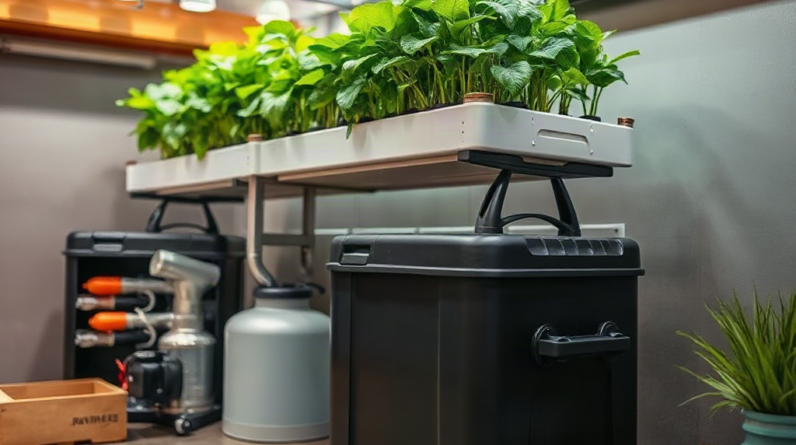
Choosing a reservoir size for hydroponic vegetables means matching usable solution volume to plant count, crop maturity, system design, room temperature, and how often you can inspect the tank. A larger reservoir changes pH and nutrient concentration more slowly, provides more buffer against plant uptake and evaporation, and reduces refill frequency. Size the tank by its lowest safe operating volume rather than its advertised capacity, then allow room for roots, plumbing, circulation, and maintenance. Leafy greens may work well with a modest tank, while fruiting crops and warm rooms usually need more reserve. An undersized reservoir demands frequent correction and can expose pumps or roots when levels fall.
Match Reservoir Volume to Crop Demand
Reservoir sizing begins with the plants, not the container sold with the system. A tank must hold enough solution for the crop’s daily water use while keeping the pump, return line, and root zone operating at their safe levels. Plant count, plant size, crop type, light intensity, temperature, and humidity all affect demand.
Young lettuce or basil plants may use little water, so a small reservoir can appear adequate during the first weeks. The same volume may become difficult to manage after the canopy expands. Mature tomatoes, cucumbers, and peppers have a larger leaf area and can remove water quickly, especially under strong lighting or warm, dry air. Fruiting plants also remain in the system longer, making a tank that works during establishment less suitable later.
A practical approach is to estimate the water each plant could remove during its busiest growth period, add the plants together, and then choose a volume that leaves a monitoring margin. The estimate does not need false precision. Its purpose is to reveal whether a five-gallon tank is serving two small greens or trying to support several mature fruiting plants.
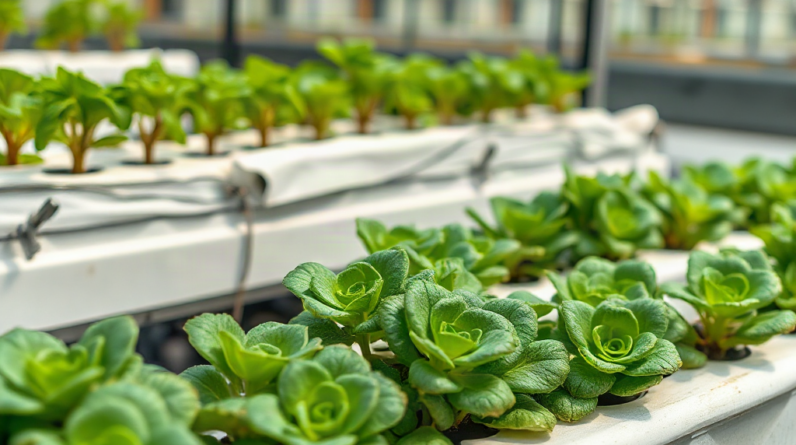
For example, a compact deep-water culture setup holding a few leafy greens may tolerate a smaller working volume because the plants are harvested relatively soon. A recirculating system carrying several mature tomatoes needs more reserve because rapid uptake can lower the tank level between checks. If the grower is away for a weekend, the same crop load needs more usable volume than a system inspected every morning.
Do not treat a manufacturer’s maximum capacity as the working capacity. The tank may need empty space for circulation, splash control, fittings, and root growth. Calculate from the lowest level at which the pump remains covered and the highest level that leaves adequate air space. That usable range, rather than the label on the container, should drive the decision.
Account for System Design and Usable Capacity
Hydroponic systems do not use reservoir volume in the same way. A deep-water culture bucket places the roots directly near the solution, while a nutrient film, drip, or ebb-and-flow system distributes solution through channels, tubing, trays, or media. The tank must therefore supply both plant demand and the system’s operating volume.
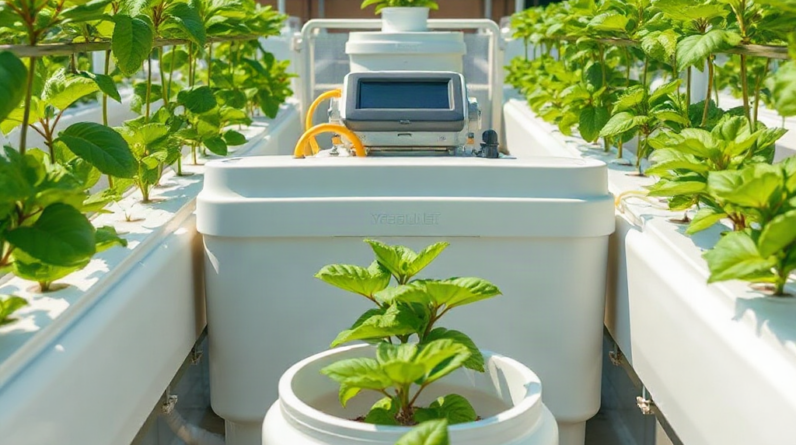
In a recirculating design, some liquid is always outside the reservoir. It may occupy feed lines, return pipes, grow channels, emitters, or a flood tray. A nominal 20-gallon tank connected to a long channel system may have substantially less free solution available for plant uptake than expected. Measure or estimate the volume held in the plumbing and growing area, then preserve enough tank depth for steady circulation.
System geometry also affects how quickly a small volume changes. A wide, shallow tank can lose a noticeable fraction of its depth from modest evaporation, while a tall tank may maintain pump coverage longer. A narrow vessel may be difficult to clean or inspect even if its capacity looks sufficient. Access matters because reservoir sizing is partly a maintenance decision.
Consider a drip system with several buckets of expanded clay or another inert medium. The reservoir does not need to contain the entire root-zone volume, but it must support reliable irrigation between checks and avoid running the pump dry. In contrast, a deep-water culture container needs enough depth to maintain contact with the intended root-zone arrangement while preserving an appropriate air space above the solution.
A common mistake is sizing only for the grow sites and ignoring plumbing volume. Another is adding a large tank without checking whether the pump can circulate it adequately. A larger reservoir may improve chemical stability, but stagnant corners, weak return flow, or poor aeration can introduce a different operational problem. Confirm pump capacity, return routing, access for cleaning, and the lowest safe level before increasing volume.
Useful system-specific questions include:
- How much solution remains in channels, trays, pipes, and media?
- At what level does the pump or air stone stop working properly?
- Can the entire tank be drained and scrubbed without dismantling the garden?
- Does the cover leave enough space for roots, fittings, and inspection?
Balance Stability, Cost, and Maintenance
A larger reservoir usually provides more chemical and operational buffer, but it is not automatically the best choice. More water dilutes changes caused by plant uptake, evaporation, and small dosing errors. That can make pH and electrical conductivity easier to monitor between adjustments. It also reduces the frequency of refilling, which is useful when the garden is not checked several times a day.
The tradeoff appears during cleaning and nutrient changes. A large tank takes more time to drain, move, sanitize, and refill. It also holds more nutrient solution that may need disposal when the solution is replaced. For a small indoor garden, the physical weight of a full reservoir can matter as much as its volume. Place it where leaks can be detected and where the container can be serviced safely.
Small reservoirs respond quickly to mistakes. A little extra nutrient concentrate can produce a sharper conductivity increase than the same dosing error in a larger volume. Evaporation can also concentrate dissolved salts, while plant uptake may remove water faster than nutrients and change the reading in the opposite direction. These effects do not mean a small tank is unusable; they mean it requires closer observation and smaller corrections.
Large reservoirs have limits too. A grower may assume that a high volume eliminates testing, but plants continue changing the solution every day. A tank can drift outside the preferred range even when its water level looks stable. Temperature is another concern: a large container may warm slowly but can retain heat once the room becomes hot. Covering the tank, limiting light exposure, and monitoring solution temperature remain necessary.
Match the reserve to your routine. A hands-on grower with a few greens may reasonably choose a compact, easy-to-clean tank. Someone growing fruiting vegetables under intense light, traveling regularly, or managing a larger crop may value extra volume and an automatic top-off arrangement. Automation adds failure points, so use it to extend monitoring intervals rather than to replace level, conductivity, pH, and equipment checks.
The internal link Choosing a reservoir size for hydroponic vegetables can sit beside a crop-planning reference, but the final choice should remain tied to the actual system and inspection schedule. A tank that is convenient to clean often performs better in practice than a larger one that is difficult to reach.
Size the Reservoir Before Planting
Make the sizing decision from a worst-normal-use scenario, not from the first week after transplanting. List the crop, expected mature plant count, growing duration, lighting conditions, room climate, and the longest interval between inspections. Then identify the minimum liquid level required for the pump, aeration, circulation, and root-zone arrangement.
Use this compact decision sequence:
- Estimate peak water demand from the mature crop load rather than seedling demand.
- Add the liquid held outside the tank in channels, pipes, trays, and media.
- Reserve operating space above the minimum pump level and below the maximum fill level.
- Choose a container that can be cleaned, lifted, covered, and monitored in its installed location.
- Record daily level, pH, conductivity, and solution temperature during the first growth cycle.
The first cycle supplies better information than a generic capacity chart. Mark the reservoir at the normal fill line and the lowest safe line. If the level repeatedly approaches the lower mark before the next inspection, increase usable volume, reduce the crop load, or shorten the checking interval. If the level barely changes and the container is cumbersome to service, a smaller tank may be more practical.
Watch the relationship between water loss and readings. A falling water level with rising conductivity suggests that water is leaving faster than dissolved nutrients. A stable level with drifting pH may point to root activity, nutrient chemistry, or inadequate monitoring rather than insufficient tank size. Reservoir volume can slow changes, but it cannot correct an unsuitable nutrient program, poor aeration, light reaching the solution, or a failing pump.
A useful comparison is a beginner system versus a production-style system. Beginners often benefit from moderate volume, clear level marks, easy access, and a small number of plants. Larger gardens may justify a centralized reservoir, but only when circulation, filtration, access, and backup planning are handled properly. More capacity increases the amount of solution affected if contamination or a dosing error occurs, so isolation and routine testing become more valuable.
For additional planning context, review Choosing a reservoir size for hydroponic vegetables alongside the manufacturer’s pump and system instructions. Treat capacity as a working range, verify it with measurements, and adjust after observing mature plants rather than locking the garden into an early estimate.
Frequently Asked Questions
Is a bigger reservoir always better for vegetables?
No. More volume can slow pH, conductivity, and level changes, but it also increases weight, cleaning effort, and the amount affected by a dosing or contamination mistake.
Should reservoir size be based on mature plants?
Yes. Seedlings use little water, so size for expected mature demand and then monitor the first crop cycle to refine the estimate.
How much empty space should a tank have?
Leave enough space to prevent splashing and accommodate fittings, circulation, and root growth. The exact allowance depends on the container and system design.
Can a small reservoir work for tomatoes?
It can, but mature tomatoes may lower the level quickly and require frequent testing and refilling. A larger working volume is often easier to manage in warm, brightly lit conditions.
What should be measured after choosing a tank?
Track solution level, pH, conductivity, temperature, and pump operation. Compare readings with plant size and inspection intervals rather than judging capacity by the container label alone.
Further Reading
Authoritative Sources
- Academy of Nutrition and Dietetics
eatright.orgProfessional nutrition guidance, healthy eating resources, and practical dietitian-reviewed advice.
- U.S. Department of Agriculture
usda.govOfficial food, nutrition, agriculture, and consumer guidance from the USDA.
- NIH Office of Dietary Supplements
ods.od.nih.govResearch-based fact sheets on nutrients, supplements, dietary intake, and safety considerations.
- International Society of Sports Nutrition
sportsnutritionsociety.orgEvidence-informed sports nutrition resources and position stands for active people and athletes.
Conclusion
Choose reservoir capacity around mature crop demand, usable liquid range, system plumbing, room climate, and your inspection routine. Leafy greens in a compact setup may need less reserve than tomatoes or cucumbers under strong light, but every design must preserve pump coverage, circulation, aeration, and cleaning access. The most reliable method is to mark the normal and minimum levels, measure the liquid held outside the tank, and record water loss and solution readings through a full growth cycle. Treat a larger reservoir as a buffer rather than a substitute for testing. If the level falls rapidly, increase volume or reduce plant load; if the tank is difficult to clean, simplify the setup. Practical measurements should refine the initial choice.