Safe electrical outlets for hydroponic gardens should use GFCI protection, remain outside splash and spill zones, and connect only to properly rated cords and equipment. Place the receptacle where water cannot run toward it, route cables with drip loops, and keep plugs off floors and reservoir lids. A GFCI can interrupt power when leakage occurs, but it does not correct damaged insulation, overloaded circuits, or poor cord placement. Inspect connections before each growing cycle, unplug equipment before handling water, and have a qualified electrician evaluate any circuit that lacks grounding, shows heat damage, or cannot support the pump, lights, fans, and controls together.
Why Water and Electricity Need Separate Zones
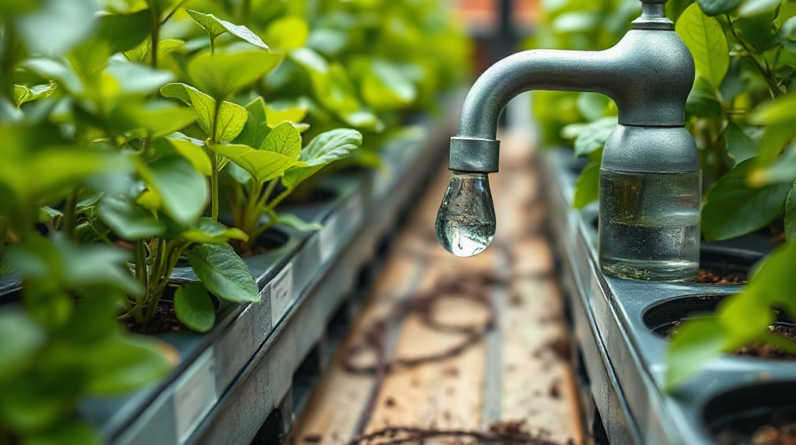
Hydroponic gardens combine reservoirs, pumps, air stones, nutrient solution, mist, and frequent cleaning with equipment that needs continuous power. The hazard is not limited to a submerged device. A loose hose, a tipped measuring cup, condensation, or water tracking along a cable can bring moisture to a plug or receptacle that appeared dry during installation.
Think of the growing area as several zones rather than one room. The wettest zone includes the reservoir, channels, pump connections, and floor directly below them. A transition zone includes the edges of a grow tent, shelving, and cable routes where splashes may travel. The outlet should be positioned in the driest practical location, with cables entering the wet area only after they have been arranged to shed water away from the plug.
A common weak assumption is that an outlet is safe because it is mounted above the reservoir. Water can move upward as spray, sideways from a loose fitting, or downward along a cord. Mounting height helps, but distance, shielding, and routing matter more than height alone. An indoor tent with a small recirculating system may need a different layout from a basement rack beside a floor drain, yet both benefit from keeping electrical connections out of the spill path.
Before installing equipment, identify every source of water movement. Mark the reservoir fill point, drain path, overflow route, pump discharge, humidifier, and likely location of a leak. Then select an outlet position that remains reachable for emergency disconnection without requiring a person to step into standing water. If that position cannot be achieved with the existing circuit, changing the layout or seeking electrical advice is safer than relying on a longer extension cord.
GFCI Protection and Outlet Placement
GFCI protection is the first electrical safeguard to prioritize near a hydroponic installation because it is designed to interrupt power when current takes an unintended path. Depending on the electrical layout, protection may come from a GFCI receptacle or a GFCI circuit breaker. The device must be installed and tested according to its instructions; pressing the test button periodically confirms that the protective mechanism trips, not that the entire garden is free of electrical faults.
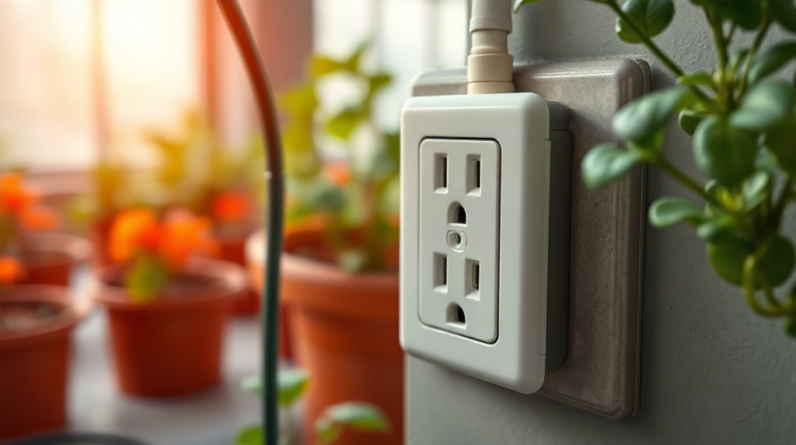
Place the receptacle in a location protected from direct spray and likely spills while preserving access to the reset and test controls. A sealed, listed cover may be appropriate where the installation requires additional environmental protection, but a cover is not permission to expose the connection to dripping water. Do not bury the outlet behind a reservoir, stack power strips in a dark corner, or place it where a tripped device cannot be reached quickly.
GFCI protection has limits. It may trip because of a failing pump seal, wet connector, damaged cord, or incompatible equipment. Repeated trips should be treated as a fault to investigate, not as an inconvenience to defeat. Never replace the device with an ordinary receptacle, hold the reset button, or continue resetting it until it stays on. Unplug equipment, keep the area dry, and have a qualified electrician or appropriately trained technician assess the cause when the source is unclear.
Outlet capacity also matters. A circuit serving grow lights, pumps, fans, heaters, and a dehumidifier may be asked to carry a substantial combined load, especially when motors start. Read the equipment labels and account for devices that run at the same time. A dedicated circuit may offer a cleaner solution than distributing a high load through multiple adapters, but circuit changes belong to a qualified electrician and must follow local requirements.
For a small shelf garden, a GFCI-protected receptacle outside the splash zone may be sufficient for listed equipment when the total load is modest. A multi-tier rack with several high-output lights and climate equipment deserves a circuit review before expansion. The practical goal is not to add more plugs; it is to create a predictable, protected power path with no overloaded points.
Cord Routing, Drip Loops, and Connection Protection
Safe cord routing prevents water from reaching a plug even when a spill occurs. A drip loop is formed by allowing the cord to descend below the receptacle or connection before rising toward it, so water traveling along the outer jacket falls from the low point instead of entering the outlet. The loop must be deliberate and supported; a loose coil on the floor creates a trip hazard and may sit in spilled nutrient solution.
Keep plugs, adapters, and power strips elevated and outside the reservoir cabinet whenever possible. Use mounting hardware or cable supports designed for the environment rather than pinching cables under shelves, sharp brackets, or tank lids. Do not create a sealed bundle around warm adapters, and do not run cords where they can be caught by a moving fan, compressed by a door, or pulled when a plant tray is removed.
Connections between a pump cord and an extension cord deserve special attention. The connection should remain dry, supported, and away from the floor; it should not hang directly over a reservoir where a drip could fall onto the plug. Outdoor-rated or wet-location equipment is not automatically safe when its connection is submerged or exposed beyond its listing. Follow the manufacturer’s instructions for every pump, light, timer, and controller.
Power strips are often misused in gardens. A strip with many sockets does not increase the circuit’s available capacity, and an inexpensive strip may lack the construction or protection needed for a damp growing area. Avoid daisy-chaining strips and extension cords. If equipment must be temporarily operated with an extension cord, use one rated for the load and environment, keep it as short as practical, and treat it as a temporary arrangement rather than a permanent installation.
Inspect the cable jacket for cuts, flattened sections, discoloration, stiffness, or softened insulation. Check that plug blades are clean and that the receptacle is not loose, warm, cracked, or stained. A cord that works intermittently is not a minor nuisance: movement, moisture, or internal damage may be changing the electrical path. Remove questionable equipment from service instead of covering damage with tape and returning it to a wet area.
Related planning for Safe electrical outlets for hydroponic gardens should include plumbing layout as well as power layout. A fitting that drips onto a cord can turn an otherwise sound electrical plan into a dangerous one. Recheck the route after the plants mature, because foliage and trellis supports can push cables into new contact points.
Load Planning, Inspection, and Safe Shutdowns
Electrical safety improves when the garden has a routine for starting, testing, and shutting down equipment. Before filling a reservoir, inspect the floor, outlet area, cord routes, and pump connection. Confirm that no plug rests on a wet surface and that every cable forms a useful water-shedding path. Test GFCI protection as directed by the device manufacturer, and investigate any failure to trip or reset.
Use an equipment list rather than estimating by the number of outlets. Record each device, its voltage and wattage or current rating, and whether it starts automatically. Pumps and fans can have different starting behavior from lights, while heaters and dehumidifiers may run for long periods. Timers and smart controls add convenience but do not remove the need to check the physical connections.
- Map the load: identify equipment that may operate simultaneously and avoid placing every device on one small strip.
- Separate water and power: keep connections above possible spill paths and secure cords so they cannot fall into a reservoir.
- Check protection: use properly installed GFCI protection and respond to trips by finding the fault.
- Inspect before contact with water: unplug pumps, lights, and other relevant equipment before cleaning, adjusting tubing, or reaching into a reservoir.
- Reassess after changes: adding a light, heater, humidifier, or second pump can change both load and spill exposure.
The shutdown sequence matters during maintenance. Do not reach into nutrient solution while equipment is energized, even if the device is designed for hydroponic use. Disconnect power before moving a pump, clearing an intake, tightening a fitting, or removing a tray. If standing water is present near an outlet, do not step into it to pull the plug; use a safe disconnect point away from the wet area and obtain qualified help when necessary.
Some growers prefer a master switch for convenience, while others use separate controls so a circulation pump can be isolated from lighting. A master switch can simplify an emergency shutdown, but it must itself be installed appropriately and remain accessible. Separate controls make troubleshooting easier, yet they can leave one device energized by mistake. Choose the arrangement that matches the garden’s complexity, then label controls clearly.
For additional system planning, the internal resource Safe electrical outlets for hydroponic gardens can be paired with a review of pump placement and reservoir access. The sign of a sound setup is not that nothing ever trips; it is that a trip, leak, or damaged cord leads to a controlled response rather than hurried contact with wet equipment.
When to Stop DIY Electrical Work
Replacing a damaged plug, adding a new receptacle, or extending a circuit can involve more than basic garden maintenance. Stop and seek qualified electrical help when wiring is exposed, grounding is uncertain, the breaker trips repeatedly, the outlet becomes warm, or the installation lacks a suitable disconnect. Rental properties, unfinished basements, garages, and outdoor-adjacent spaces may also have conditions that are not obvious from the grower’s viewpoint.
Do not assume that a breaker trip and a GFCI trip mean the same thing. A breaker generally responds to overcurrent, while GFCI protection responds to an imbalance that suggests current is leaving the intended path. Either event deserves attention, but the likely causes differ. A motor fault, overloaded circuit, wet connector, or damaged insulation may require different corrective action.
Professional evaluation is especially sensible before adding a high-demand heater, air conditioner, dehumidifier, or multiple lighting fixtures. The safest solution may involve relocating the garden, reducing simultaneous loads, or installing a properly designed circuit rather than adding adapters. A modest change in crop area can create a large change in electrical demand when climate control is included.
Electrical safety is part of system design, not a final accessory added after the reservoir and lights are installed. Keep the outlet dry, protect the circuit, route every cord to shed water, inspect equipment, and disconnect power before wet maintenance. Readers comparing layouts can also use Safe electrical outlets for hydroponic gardens as a planning reference before purchasing additional equipment.
For installation decisions, consult local electrical requirements, the instructions supplied with each device, and recognized electrical-safety organizations. Official guidance is more reliable than assuming that a particular power strip, cover, or online setup is suitable for every growing space.
Frequently Asked Questions
Should a hydroponic garden use a GFCI outlet?
GFCI protection is generally a prudent safeguard where electrical equipment operates near water. Installation and testing should follow local requirements and the device instructions.
Can a power strip sit beside the reservoir?
It should not sit where spills, spray, or water traveling along a cord can reach it. Keep the strip elevated, dry, accessible, and free from daisy-chained extensions.
Why does the GFCI keep tripping when the pump runs?
A wet connection, damaged cord, pump fault, or leakage may be involved. Unplug the equipment and investigate safely rather than repeatedly resetting the GFCI.
Are drip loops necessary for grow-light and pump cords?
A drip loop helps stop water traveling along a cord from reaching a plug or outlet. It must be supported and positioned so the low point does not rest in water.
When should an electrician inspect the garden circuit?
Arrange an inspection for repeated breaker or GFCI trips, heat or discoloration, uncertain grounding, exposed wiring, new high-load equipment, or any circuit modification.
Further Reading
Authoritative Sources
- Academy of Nutrition and Dietetics
eatright.orgProfessional nutrition guidance, healthy eating resources, and practical dietitian-reviewed advice.
- U.S. Department of Agriculture
usda.govOfficial food, nutrition, agriculture, and consumer guidance from the USDA.
- NIH Office of Dietary Supplements
ods.od.nih.govResearch-based fact sheets on nutrients, supplements, dietary intake, and safety considerations.
- International Society of Sports Nutrition
sportsnutritionsociety.orgEvidence-informed sports nutrition resources and position stands for active people and athletes.
Conclusion
A safe hydroponic power layout separates wet processes from electrical connections instead of relying on a single protective device. Put GFCI protection at the circuit level, keep receptacles and power strips outside splash paths, use supported drip loops, and prevent plugs from resting on floors or tank lids. Match the combined equipment load to the circuit, remembering that pumps, heaters, lights, and climate controls may operate together. Unplug before wet maintenance and treat repeated trips, heat, damaged insulation, or standing water as reasons to stop. Walk through the garden with its pumps running, inspect every route, and correct the most exposed connection first. When the circuit or wiring is uncertain, qualified electrical advice is the safer next step than improvising with another adapter.
Related Content
- Hydroponic Germination Techniques: Effective Methods for Healthy Seedling Growth
- Measuring Root Zone Moisture in Hydroponics: Sensor Methods, Timing, And Irrigation Decisions
- Hydroponic Farming: Growing Food Without Soil
- Hydroponic Gardening Water Loss From Evaporation: Causes, Measurement, and Control Methods
- Sustainable Agriculture with Hydroponic Growing