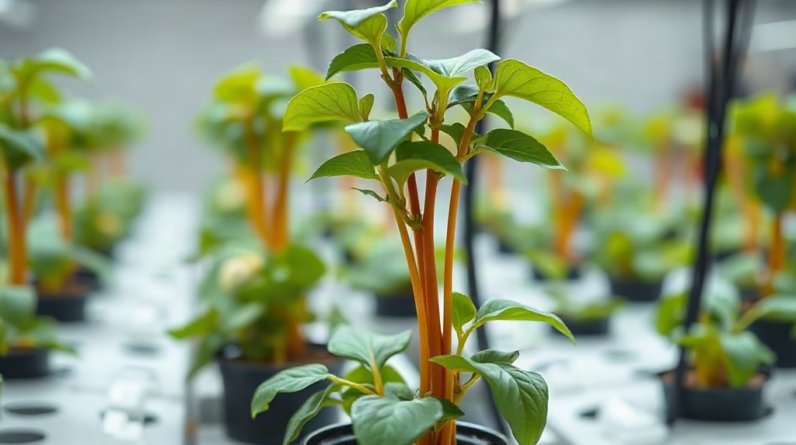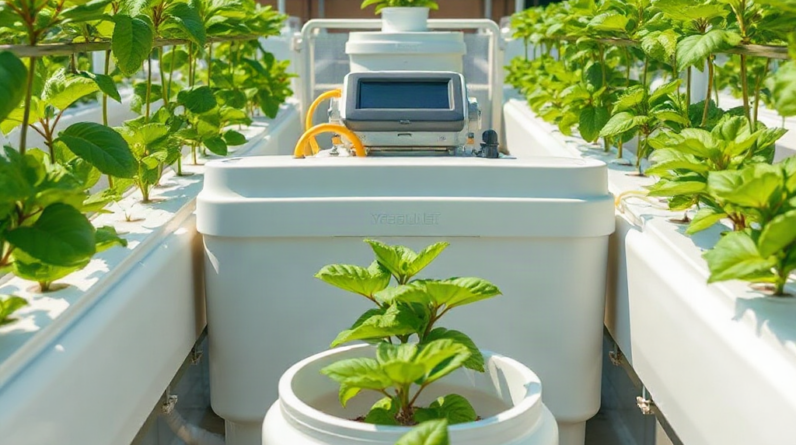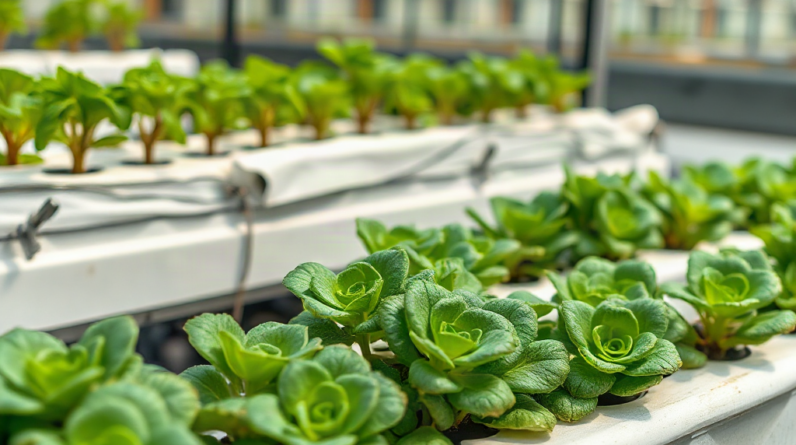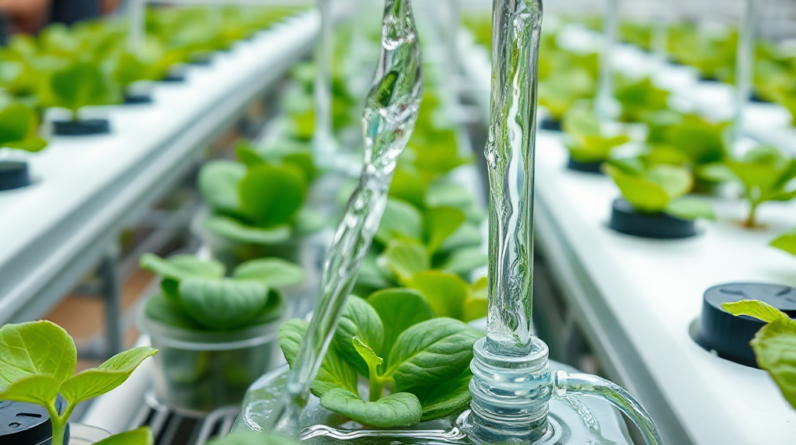
Hydroponic oxygenation without air stones works by increasing gas exchange at the water surface, creating turbulence, or repeatedly exposing nutrient solution to air through a waterfall, venturi, or recirculating return line. A submerged circulation pump can move oxygenated water, but it does not add much oxygen if the reservoir remains warm, sealed, and stagnant at the surface. Keep the return splashing modestly, prevent roots from blocking flow, and monitor temperature, odor, and dissolved oxygen when possible. The main risk is confusing water movement with adequate oxygenation: a strong pump may circulate depleted solution while stressing roots or damaging delicate plants.
How Oxygen Enters a Stone-Free System
Oxygen reaches hydroponic nutrient solution mainly where air contacts water. A system without an air stone therefore needs an alternative way to enlarge that contact, renew the surface, or expose a thin film of solution to the atmosphere. Simply placing a circulation pump in the reservoir may distribute oxygen already present, but circulation alone is not the same as oxygen transfer.
A return line that falls above the waterline creates a small waterfall and breaks the surface. A spray bar produces many moving streams, while a venturi fitting draws air into a water line as water passes through a narrowed section. Recirculating systems can also send solution through channels, over media, or across a shallow tray before it returns to the reservoir. Each method relies on the same physical principle: turbulence and surface renewal allow oxygen to move from air into water.
Plant demand changes the practical requirement. A small leafy-green system with a shallow reservoir and frequent circulation may tolerate simple surface agitation. A deep-water setup with a large root mass has less margin for error because roots remain submerged for long periods. Thick roots can obstruct an intake, form a mat at the surface, and reduce the circulation pattern that worked when the plants were young.
A useful distinction is between mixing and aeration. Mixing keeps nutrients and temperature more even; aeration increases the opportunity for oxygen transfer. A pump can do both, but only if its discharge disturbs the solution or passes it through an air-contacting device. Readers comparing this topic with Hydroponic oxygenation without air stones should judge the whole water path, not just the pump’s flow rating.
Reliable Oxygenation Methods Without Air Stones
The most accessible method is a circulation pump with a return outlet positioned just above the reservoir surface. The falling stream should create visible ripples and gentle turnover without throwing nutrient solution onto the lid, plants, or electrical equipment. A short return pipe can be angled toward the surface, or a spray bar can spread the discharge across a wider area. This arrangement is simple to clean and avoids the mineral deposits and clogged pores that can affect diffusers.
A waterfall return is not automatically effective. If the return pipe is fully submerged, surface exchange falls sharply. If the reservoir is tightly sealed except for a narrow tube opening, the air above the water may not refresh. Leave appropriate ventilation around the reservoir while protecting it from light, dust, and accidental contamination. The goal is controlled air contact, not an open container exposed to every source of debris.
Venturi injection is another option. A venturi fitting uses moving water to draw air into the stream, creating bubbles without a conventional air pump and stone. It can provide useful gas exchange, but it adds back pressure and may require a stronger pump than a basic return line. Fine roots, sediment, and salt buildup can obstruct the narrow passage, so a pre-filter and easy access for cleaning are valuable. The bubbles themselves are not the target; renewed contact between air and water is.
Thin-film and cascade designs can be effective in recirculating systems. Nutrient solution flowing down a shallow channel or over a textured return surface has more exposed area than a deep, still reservoir. These designs suit growers who already use a pump and can keep the return path clear. They are less suitable when a power interruption would leave roots drying quickly. For a modest home system, a raised return line is often easier to inspect than a complex oxygenation attachment.
- Choose a surface return for low cost, easy observation, and uncomplicated maintenance.
- Choose a venturi when the pump can tolerate added resistance and the fitting can be cleaned regularly.
- Choose a cascade or thin film when the layout already supports recirculation and backup planning.
Choosing Flow, Temperature, And Reservoir Design
Oxygenation depends on more than equipment. Warm water holds less dissolved oxygen than cool water, and intense plant growth can increase oxygen demand around the roots. A dark, insulated reservoir located away from heat-producing lights or direct sun gives a stone-free design a better operating margin. Avoid treating a larger pump as a complete solution; excessive flow can shear delicate roots, disturb seedlings, and increase noise while leaving the water too warm.
Set the pump to produce steady circulation through the entire reservoir. Look for a consistent return pattern, no dead corner, and an intake protected from roots. A valve on the discharge can make adjustment easier, although throttling the output may not reduce the pump’s electrical draw substantially. If the return splashes aggressively, use a wider outlet, lower the drop height, or redirect the stream rather than allowing constant spray and evaporation.
Reservoir geometry matters. A broad, shallow surface generally offers more air-contact area than a narrow, deep vessel holding the same volume. A lid can reduce light and algae but should not trap a stagnant pocket of air above the solution. Large root masses deserve extra clearance around the intake and return. In a deep-water culture bucket, for example, a pump returning through a submerged tube may circulate solution without adequately renewing the surface; raising the outlet can change the result without changing the pump.
Temperature management and oxygen transfer should be considered together. Chilling the solution may improve oxygen solubility, but an improvised cooling method can create condensation, unstable temperatures, or excessive energy use. Measure before modifying the system. If plants show stress only during the warmest part of the day, reservoir temperature and reduced oxygen capacity may be more informative than a pump upgrade.
Use this priority order when space, budget, or power is limited: prevent heat buildup, create a visible surface exchange point, keep the return and intake clear, then refine flow. A clean, well-ventilated reservoir with moderate circulation is usually more dependable than a powerful pump installed in a warm, sealed container.
Testing Performance And Correcting Failures
Performance should be checked through several signals rather than one dramatic symptom. A healthy setup usually has a clean-smelling solution, consistent movement, no persistent film on the surface, and roots that remain firm and appropriately colored for the crop. A dissolved-oxygen meter provides a more direct measurement, but it must be calibrated and used consistently; casual readings taken at different depths or temperatures can mislead.
Start with a visual flow check. Mark the water level, inspect the return while the pump runs, and confirm that the far side of the reservoir moves rather than remaining still. Examine the intake for root blockage and inspect tubing for kinks. Then check the solution temperature at the same time each day, especially after lights have been operating. If the system loses circulation during a timer cycle or power interruption, note how long roots remain submerged and whether a backup air-free flow path is possible.
Common failures have recognizable causes. A sour or stagnant odor may accompany poor circulation, decomposing material, or other root-zone problems, but odor alone cannot diagnose oxygen deficiency. Browning or soft roots can also reflect pathogens, excessive heat, nutrient imbalance, or contamination. Treat the symptom as a reason to inspect the system, not as proof that stronger agitation is needed.
Make one change at a time. Raise a submerged return above the surface, clear the intake, or reduce reservoir heat before replacing the pump. After the adjustment, compare movement, temperature, plant response, and maintenance burden over several observations. A system that oxygenates well but splashes nutrient solution onto electrical connections is not a sound design. Secure cables above the reservoir, use appropriate protection around electricity and water, and clean removable components on a schedule based on buildup rather than waiting for a blockage.
The most misleading assumption is that visible bubbles equal success. Bubbles can rise quickly without dissolving much oxygen, while a quiet cascade may transfer oxygen effectively. Judge the design by gas exchange, root access to moving solution, stable temperature, and resilience when roots mature. That same evaluation is useful when refining Hydroponic oxygenation without air stones for different crops or reservoir sizes.
A Practical Stone-Free Setup Plan
Build the simplest arrangement that matches the crop and failure risk. For a small recirculating reservoir, place a screened pump near the lowest point, route the discharge to the opposite side, and terminate it slightly above the surface. Add a broad outlet or short spillway if the stream is too forceful. Keep the lid dark and fitted, but provide enough ventilation for fresh air exchange. This layout makes the oxygenation mechanism visible and keeps key parts accessible.
Before adding plants, run the system and inspect every connection. Confirm that the pump remains covered at the lowest expected water level, the return does not drain the reservoir during a stoppage, and the intake cannot pull in roots. Test the system with the lights on because heat and evaporation can change conditions. Once plants are installed, recheck flow as roots expand; a design that worked for seedlings may become restricted later.
A compact maintenance checklist is more useful than a larger pump:
- Inspect return turbulence and dead spots during each reservoir check.
- Clear roots, biofilm, and mineral deposits from the intake and outlet.
- Record solution temperature and note changes during the light period.
- Check for odor, surface film, unusual root texture, and reduced plant vigor.
- Test the response after a brief power interruption and plan a safe backup.
Choose air stones instead when uniform fine bubbling, continuous deep-reservoir aeration, or an existing air-pump setup offers a simpler dependable arrangement. Avoid removing a working stone solely to reduce equipment count. The benefit of a stone-free approach is easier integration with a return line, not automatic superiority. Readers looking at Hydroponic oxygenation without air stones should select the method that remains observable, serviceable, and stable as the garden grows.
Frequently Asked Questions
Can a water pump replace an air stone?
A pump can replace the oxygenation function when its return creates surface turbulence, a cascade, or air injection. A fully submerged discharge may only circulate water.
Is a waterfall return enough for deep-water culture?
It may be enough for some small systems, but results depend on temperature, plant mass, reservoir shape, and circulation. Keep the return above the surface and monitor the root zone.
Does stronger flow always add more oxygen?
No. Higher flow can increase turbulence, but it can also warm the solution, stress roots, or create bypasses that leave stagnant areas. Effective surface exchange matters more than pump size alone.
What signs suggest poor oxygenation?
Stagnant odor, persistent surface film, weak circulation, and soft or declining roots warrant inspection. Those signs can have other causes, including heat, contamination, and nutrient problems.
How can oxygenation work during a power outage?
Design for safe drainage and consider a battery-backed circulation option if the crop is vulnerable to prolonged stagnation. Test the setup rather than assuming the reservoir will remain adequately oxygenated.
Further Reading
Authoritative Sources
- Academy of Nutrition and Dietetics
eatright.orgProfessional nutrition guidance, healthy eating resources, and practical dietitian-reviewed advice.
- U.S. Department of Agriculture
usda.govOfficial food, nutrition, agriculture, and consumer guidance from the USDA.
- NIH Office of Dietary Supplements
ods.od.nih.govResearch-based fact sheets on nutrients, supplements, dietary intake, and safety considerations.
- International Society of Sports Nutrition
sportsnutritionsociety.orgEvidence-informed sports nutrition resources and position stands for active people and athletes.
Conclusion
Stone-free oxygenation succeeds when the system deliberately renews air-to-water contact. A raised return, venturi fitting, cascade, or thin-film path can all work, provided the reservoir stays reasonably cool, the intake remains clear, and circulation reaches more than one small area. Prioritize a visible exchange point and reliable maintenance before buying a larger pump. Check temperature, flow, odor, surface condition, and root texture together because none of those observations proves oxygen deficiency by itself. If a simple return line provides stable movement and manageable upkeep, it may be the most practical choice. If the system remains warm, sealed, or difficult to inspect, an air stone may be the safer and simpler solution.
Related Content
- How to Integrate Hydroponics into Traditional Gardening: Practical Steps and Benefits
- Deciding on the Right Hydroponic System for Specific Crops: Key Factors and Effective Methods
- The Ultimate Guide to the Best Hydroponic Nutrients for 2025
- Composting Spent Hydroponic Plant Material: A Practical Breakdown Plan
- How to Optimize Yield in Small Hydroponic Systems