Hydroponic air stones need replacement when cleaning no longer restores a reasonably even bubble pattern, air output remains weak, or the stone shows cracks, crumbling, mineral blockage, or damaged fittings. A failing stone can reduce dissolved oxygen around the roots, strain the air pump, and leave quiet areas in the reservoir even when the pump is running. Inspect the stone after rinsing and soaking it, then compare its bubbles with a new or known-good stone on the same pump. Replace it immediately if it breaks apart or contaminates the reservoir; otherwise, replacement timing depends on water hardness, nutrient residue, cleaning frequency, and daily operating hours rather than a fixed calendar date.
Signs an Air Stone Is Worn Out
An air stone is ready for replacement when it no longer distributes air evenly after a sensible cleaning, not simply because it has reached a particular age. New stones generally produce a fine, consistent curtain of bubbles across much of their surface. A worn stone may release air through only a few areas, produce large irregular bubbles, or barely bubble despite a pump and airline that work correctly.
Physical damage is the clearest reason to discard one. Replace a stone that is cracked, soft, shedding grit, separating around its connector, or loose enough to expose the airline. Small fragments can enter the reservoir or clog nearby equipment. A deteriorated fitting can also allow air to escape before it reaches the diffuser, making the stone appear defective when the connector is the actual failure point.
Performance symptoms deserve closer interpretation. A quieter reservoir is not automatically a healthier reservoir; reduced bubbling may mean blocked pores rather than lower oxygen demand. Watch for a change from widespread fine bubbles to a concentrated stream, a pump that sounds strained, or an air pump that runs but creates little movement at the water surface. Roots that appear unusually dull, slimy, or short of oxygen can signal an aeration problem, although water temperature, root disease, pump capacity, and excessive organic residue may produce similar symptoms.
For example, a stone in a small deep-water culture bucket may work well for months in clean, soft water but clog much sooner in a reservoir that receives hard tap water and frequent nutrient additions. A stone used continuously in a warm, heavily fed system faces more exposure than one operated intermittently in a clean propagation setup. Use the internal reference When hydroponic air stones need replacement when comparing these symptoms with the rest of your aeration maintenance routine.
The common mistake is replacing the stone before checking the airline, check valve, and pump outlet. A kinked tube or wet airline can mimic a blocked diffuser. Confirm the air path first, then judge the stone by its bubble pattern and physical condition.
Why Bubble Output Declines
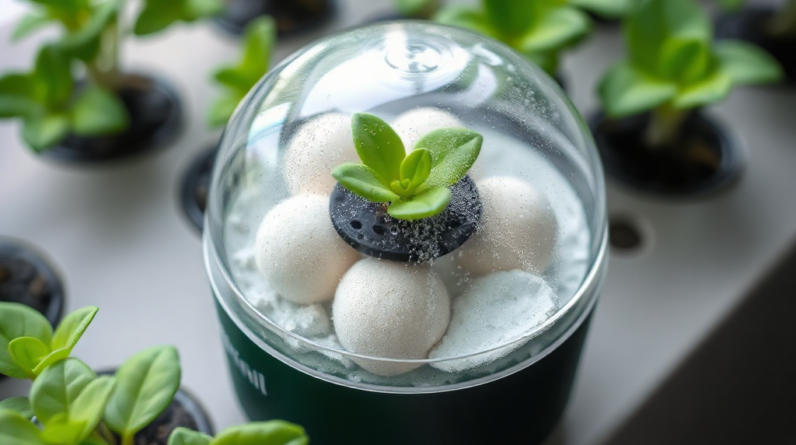
Air stones work by forcing air through many small pores in a porous material. Water, mineral deposits, nutrient residue, algae, and biological film can occupy those pores over time. The pump may still be moving air, but the diffuser offers greater resistance, so fewer pores release bubbles. The result is often a patchy pattern or larger bubbles that do not spread aeration as evenly through the reservoir.
Water chemistry changes the maintenance burden. Hard water can leave calcium or other mineral deposits on the stone as water evaporates and is replaced. Nutrient concentrates, organic additives, and poorly mixed solutions may add residue that dries inside the pores. Algae and biofilm are more likely where light reaches the reservoir or where plant debris enters the water. These conditions do not establish a universal replacement schedule, but they explain why two visually similar gardens can consume air stones at very different rates.
Depth and pump pressure also matter. A diffuser placed deeper in a reservoir requires the pump to overcome more water pressure. A small pump connected to a heavily clogged stone may produce very little visible bubbling, while a stronger pump may continue forcing air through a partly blocked stone and hide the developing restriction. That does not make the stone healthy; it may simply increase back pressure and shorten pump life.
Compare a cleanable blockage with permanent wear. A chalky surface and reduced bubbles may improve after soaking and rinsing. A cracked body, persistent dead zone, or crumbly texture will not be restored by cleaning. A larger stone is not automatically a solution either. It may require more pump capacity, and an oversized diffuser in a small container can create unnecessary turbulence without addressing a restricted airline.
A useful real-world check is to remove the stone from the reservoir while keeping it connected to the same airline. Briefly observe the outlet in a container of water, without letting the pump run dry for longer than its instructions allow. If the airline produces strong air away from the stone but weak output through it, the diffuser is suspect. If output remains weak, inspect the tubing, check valve, pump diaphragm, and electrical supply instead.
Do not assume that more bubbles always mean better aeration. Excessive turbulence can disturb seedlings, splash nutrient solution, or increase evaporation. The practical target is dependable circulation and oxygen transfer appropriate to the container, roots, and pump—not the loudest surface activity.
Cleaning, Testing, and Replacement Decisions
Cleaning is worthwhile when the stone is structurally sound and the problem appears to be surface or pore blockage. Remove it from the reservoir, disconnect the airline, and rinse away loose residue. A manufacturer-approved cleaning method is preferable because porous materials and connectors vary. After cleaning, rinse thoroughly so no cleaning residue enters the nutrient solution, then allow the stone to dry if the product instructions call for drying before reuse.
Do not scrape aggressively with tools that can fracture the diffuser or enlarge its pores. Do not treat a visibly crumbling stone as a cleaning project. Reusing a damaged diffuser saves little and introduces uncertainty into the root-zone environment. Hydrogen peroxide and other sanitation products may be suitable for some equipment, but concentration, contact time, compatibility, and rinsing requirements differ; avoid assuming that a method safe for a reservoir is appropriate for every air stone.
Use a short decision sequence rather than guessing:
- Check that the pump runs normally and that the airline is not kinked, wet, split, or loose.
- Inspect the check valve and fittings for a blocked or reversed installation.
- Rinse or clean an intact stone using instructions appropriate to its material.
- Run it again at the normal water depth and compare the bubble spread with its previous pattern.
- Replace it if output stays uneven, resistance remains high, or the body shows damage.
Testing at the correct depth matters because pressure changes with submersion. A stone that looks vigorous in a shallow bucket may perform poorly at the bottom of a deeper reservoir. Test with the same pump, tubing length, water depth, and connector whenever possible. That comparison separates a stone problem from a system problem.
Replacement becomes the better choice when cleaning produces only a temporary improvement. If the diffuser bubbles well for a day and then clogs again, investigate the source of the residue: hard-water buildup, exposed light, sediment, additives, or inadequate reservoir cleaning. A new stone may restore aeration, but it will not remove the condition that blocked the previous one.
Another common mistake is changing several aeration parts at once. Replacing the pump, tubing, stone, and check valve together may restore performance but leaves no useful diagnosis. Change the visibly failed part first unless plant roots are at immediate risk, then record the result. Keeping a simple note of installation date, cleaning dates, water source, and observed bubble pattern makes future replacement decisions more accurate.
Choosing and Installing the Replacement
The replacement must match the air pump, reservoir depth, airline diameter, and growing method. A stone designed for a small bucket may not provide adequate coverage in a long reservoir, while a large diffuser may overload a modest pump. Check the product’s recommended pump range when available, and confirm that the connector fits the airline securely. Matching the diffuser to the equipment is more useful than buying solely by exterior size.
Placement affects how well the new stone uses its output. Position it where bubbles can move through the reservoir without striking plant roots, float valves, heaters, or fragile fittings. In a broad container, two appropriately sized stones may distribute air more evenly than one powerful stone at one end. In a compact bucket, a single diffuser may be sufficient. The choice depends on geometry and circulation, not a fixed number of stones.
Install a check valve in the correct direction and keep it above the reservoir waterline where practical. This helps limit backflow toward the pump during a shutdown, but it does not compensate for a flooded or obstructed airline. Secure the stone so it remains submerged and does not rest against a sharp edge. After installation, look for fine bubbles across the intended surface and listen for a pump that operates without unusual strain.
Consider material and maintenance tradeoffs. Ceramic-style porous stones may provide fine bubbles but can be brittle. Flexible or alternative diffusers may tolerate handling better, yet their output pattern and cleaning instructions can differ. A low-cost stone is reasonable for a small, easy-to-monitor setup, while a more durable diffuser may be preferable when access is difficult or a failed stone could leave roots without adequate aeration for an extended period.
After replacement, observe the reservoir rather than judging success from bubbles alone. The pump should maintain its normal sound, the airline should remain dry, and circulation should reach areas that previously stayed quiet. If bubbling remains weak with a new stone, stop replacing diffusers and troubleshoot pump capacity, depth, tubing restriction, and check-valve condition. The internal resource When hydroponic air stones need replacement can serve as a maintenance reference, while air stone inspection notes can be kept with the garden’s equipment records.
For broader aeration and water-management decisions, consult university extension gardening resources and agricultural plant-science collections. These sources are useful for understanding root-zone oxygen, water quality, sanitation, and equipment choices without relying on a fixed replacement calendar.
Frequently Asked Questions
How often should hydroponic air stones be replaced?
Replace them when cleaning no longer restores even bubbling or when cracks, crumbling, blocked fittings, or persistent high resistance appear. Water hardness and residue can shorten service life.
Can a clogged air stone be cleaned instead of replaced?
Yes, if the stone is intact and the blockage is superficial. Rinse and use only a compatible manufacturer-approved method, then replace it if performance quickly declines again.
Why is my air stone producing large bubbles?
Large bubbles can result from clogged pores, a crack, a loose fitting, or a split airline. Check the entire air path before blaming the diffuser alone.
Can a bad air stone damage an air pump?
A blocked diffuser can increase back pressure and make a pump work under more strain. Persistent resistance is a reason to inspect or replace the stone and verify pump compatibility.
Should I replace the air stone when changing nutrient solution?
Not automatically. Replace it when its condition or output warrants replacement; otherwise, inspect and clean it during reservoir maintenance according to the diffuser’s instructions.
Further Reading
Authoritative Sources
- Academy of Nutrition and Dietetics
eatright.orgProfessional nutrition guidance, healthy eating resources, and practical dietitian-reviewed advice.
- U.S. Department of Agriculture
usda.govOfficial food, nutrition, agriculture, and consumer guidance from the USDA.
- NIH Office of Dietary Supplements
ods.od.nih.govResearch-based fact sheets on nutrients, supplements, dietary intake, and safety considerations.
- International Society of Sports Nutrition
sportsnutritionsociety.orgEvidence-informed sports nutrition resources and position stands for active people and athletes.
Conclusion
Air stone replacement should follow condition and performance, not an arbitrary calendar. Inspect the diffuser whenever bubbles become patchy, the pump sounds strained, or reservoir areas stop circulating. First rule out a kinked airline, wet tubing, reversed check valve, weak pump, or excessive depth. If the stone is cracked, shedding material, or still restricted after compatible cleaning, replace it with a diffuser suited to the pump and reservoir. After installation, confirm that bubbling is even, the pump sounds normal, and previously stagnant areas receive movement. Recording cleaning dates and changes in water quality will make the next decision easier. A clean, correctly matched diffuser provides more dependable aeration than simply increasing pump size or repeatedly washing a worn stone.
Related Content
- Cleaning Net Pots Between Hydroponic Crops: A 4-Step Sanitation Routine
- Efficient Hydroponic Watering System: Key Methods for Optimal Plant Health
- Start Your Own Hydroponic Food Supply
- Hydroponic Gardening: Perfect for Small Spaces
- How to Identify and Treat Common Hydroponic Diseases: Causes, Symptoms, and Recovery Methods