Match Vacation Watering to the Growing Method
The safest vacation arrangement usually preserves the watering pattern the plants already receive. Changing from a familiar schedule to a new pump, controller, or delivery method immediately before departure introduces untested flow rates, fittings, and failure points. Mature plants may also react poorly if root moisture, oxygen exposure, or nutrient concentration changes abruptly.
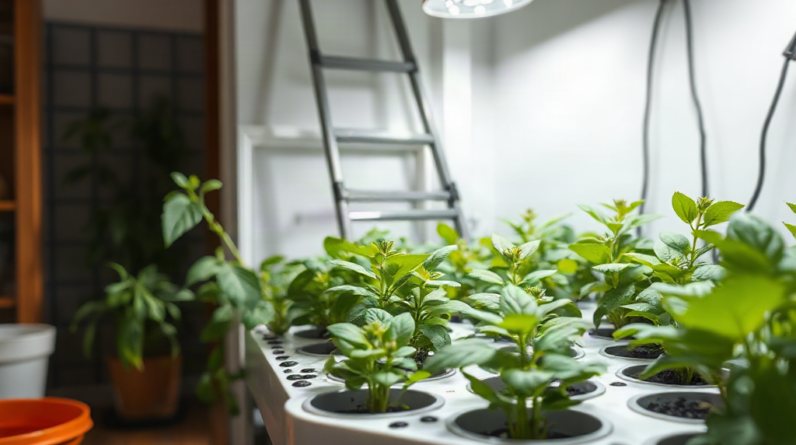
Deep-water culture has a different risk profile from drip irrigation. In deep-water culture, roots remain in aerated nutrient solution, so the central concerns are falling water level, air-pump failure, and rising solution temperature. A larger connected reservoir may slow changes in level and chemistry, but every new connection must be leak-tested. Merely placing extra water nearby does nothing unless it enters the culture vessel through a dependable top-off arrangement.
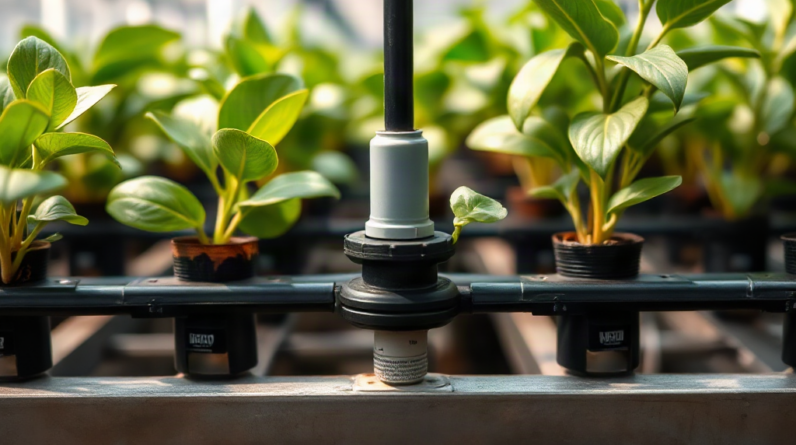
Drip-fed media such as coco coir, clay pebbles, or rockwool depend on timed delivery. The plants can deteriorate quickly if a pump fails, an emitter plugs, or tubing slips out of place. Pressure-compensating emitters may improve consistency where several plants share a manifold, although they still need clean solution and adequate pump pressure. Open-ended feeder tubes are easier to inspect and less prone to very small internal obstructions, but their higher flow can empty a reservoir rapidly if a line becomes displaced.
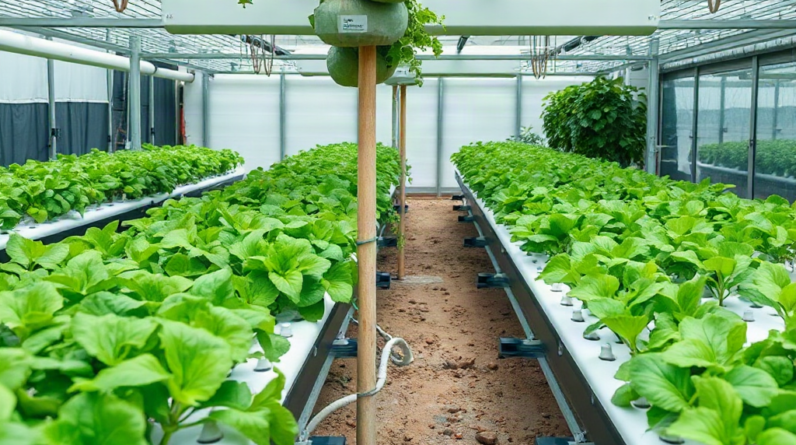
Nutrient film technique and aeroponic arrangements offer less moisture reserve around the roots. A power interruption or failed pump can leave roots without a protective water film sooner than in a moisture-retentive medium. These methods warrant stronger backup measures, such as a second pump on an independent timer or a responsible person able to respond to an alert. A passive wick is not an equivalent backup for a mature aeroponic plant because it cannot reproduce the required root coverage.
For ebb-and-flow trays, verify that the tray fills to its established height and drains completely after every cycle. A blocked return can overflow the tray, while a weak pump may leave upper root zones dry. Marking the normal flood height with removable tape makes an abnormal cycle easy to spot during a final inspection.
Choose Automatic plant watering for hydroponic vacation care around the crop’s current root environment rather than around whichever device promises the longest runtime. Lettuce in deep-water culture may tolerate gradual level loss, while fruiting tomatoes in coco can consume solution rapidly and depend on several irrigations each day. The crop, medium, and delivery method determine how much reserve time is actually available.
Calculate Reservoir Capacity and Protect Water Quality
Reservoir capacity should be based on measured consumption rather than a guess about container volume. Mark the solution level, operate the garden normally for several representative days, and record how much mixed solution is needed to restore that level. Use warm, bright days for planning because plant uptake and evaporation are often higher than during cool or cloudy conditions.
Usable capacity is smaller than the reservoir’s labeled size. A pump positioned above the bottom stops moving solution before the container is empty, and leaving sediment below the intake may be intentional. The planning figure is therefore the volume between the normal full mark and the lowest level at which the pump, air stone, and return line still function correctly. A container that holds 75 litres may provide considerably less dependable operating volume.
Add reserve capacity without creating a chemistry problem. A larger batch of fully mixed nutrient solution is usually more predictable than an improvised top-off container filled with concentrated fertilizer. If an automatic float valve supplies plain water, nutrient strength can fall as plants consume both water and minerals. If it supplies full-strength solution, dissolved salts may accumulate when plants take up proportionally more water. The correct refill composition depends on the garden’s observed electrical conductivity trend, not a universal formula.
Solution stability also matters during the unattended period. Start with a clean, opaque reservoir to limit light reaching the nutrient solution. Keep it away from direct sun and heat-producing equipment where practical. Warm solution contains less dissolved oxygen and can intensify root stress if circulation is already marginal. Avoid making aggressive pH or nutrient adjustments immediately before leaving; a conservative value within the crop’s established operating range is safer than chasing a precise reading with a large dose.
A compact capacity check should cover the following points:
- Daily demand: Measure actual replacement volume under conditions similar to the expected absence.
- Usable reserve: Confirm the lowest level at which pumps and returns still operate.
- Trip duration: Multiply observed demand by unattended days, then retain a margin for warmer weather and plant growth.
- Water quality: Mix, circulate, and verify pH and electrical conductivity before the departure test begins.
Do not fill beyond a reservoir’s safe operating mark merely to gain another day. An overfilled return reservoir can overflow when power stops and solution drains back from channels or trays. Simulate a power outage while present, let all lines drain, and confirm that the container can accept the returning volume. This single check distinguishes useful capacity from capacity that creates a flood risk.
Build Redundancy Around Pumps, Timers, and Plumbing
Redundancy is valuable only when the backup addresses a credible failure and does not share the same weak point. Two pumps connected to one overloaded power strip still depend on that strip. Likewise, a backup air pump cannot water media-based roots after the irrigation reservoir empties. Separate the functions of water delivery, oxygenation, containment, and notification when deciding where extra protection belongs.
Inspect the primary pump at its normal operating depth. Clean its intake and confirm that roots, loose media, or reservoir debris cannot reach it. A coarse prefilter can intercept debris, but an overly fine filter may clog and restrict flow during a long absence. The preferred filter is one that has already operated through the intended vacation interval without a noticeable reduction in delivery.
Timers deserve a full functional test rather than a quick display check. Verify that the pump switches on and off at the programmed times, that the schedule survives a brief power interruption, and that the timer’s current rating suits the connected equipment. Mechanical timers are simple but may lose time during an outage. Digital models may retain programming, although their behavior varies. Smart plugs add remote visibility, yet they depend on Wi-Fi, internet service, and a functioning app connection.
Plumbing failures often cause more damage than timer errors. Push each tube fully onto its fitting, use appropriate clamps where pressure could loosen a connection, and secure delivery ends so plant movement cannot pull them out. Route return lines without uphill sections that trap debris or air. Every outlet should discharge inside a tray or reservoir capable of containing a displaced stream long enough for someone to intervene.
For a drip garden, place the emitters into separate measuring cups and run a normal cycle. Large differences in collected volume indicate a restriction, pressure imbalance, or unsuitable manifold layout. Correct the imbalance before departure rather than extending the cycle, which may overwater the strongest outlets while barely helping the weakest. Guidance on Automatic plant watering for hydroponic vacation care should treat equal delivery as a measured result, not an assumption.
Backup priorities vary by setup. A battery-powered air pump can protect deep-water roots during a short outage, while a second irrigation pump may be more relevant for fast-drying coco or aeroponics. Leak sensors placed beside the reservoir and beneath vulnerable fittings can provide an early warning, but alerts have little value without a person who can enter the growing area. Redundancy should buy response time; it should not create confidence in equipment that has never been tested under load.
Run a Departure Test and Create an Emergency Plan
A vacation setup is ready only after operating unattended in practice while the grower is still close enough to correct it. Run the final configuration with the planned reservoir level, irrigation schedule, lighting, ventilation, and monitoring devices. A short manual activation proves that water moves; it does not reveal gradual leaks, drifting delivery rates, heat buildup, or a timer schedule entered for the wrong day.
Begin the trial several days before departure if possible. Record the reservoir level, pH, electrical conductivity, solution temperature, and visible plant condition at the same time each day. The goal is not perfectly fixed readings. The goal is a predictable rate of change that remains within the crop’s familiar range. Rapidly rising conductivity may indicate that plants are consuming water faster than nutrients, while an unexpected level drop may point to a leak or excessive delivery.
Test failure behavior deliberately. Unplug the main pump briefly and confirm what the timer does when power returns. Stop the return flow and observe whether the growing channel or tray can overflow. Lower the reservoir to its planned minimum and verify that the pump does not draw air. These controlled checks should be performed while supervising the equipment; they are not experiments to leave running.
Remote cameras and sensors are most useful when aimed at decisions. A camera should show the reservoir level mark, plant canopy, or return stream rather than a wide but uninformative room view. Configure high- and low-temperature, leak, or power-loss alerts at thresholds that warrant action. Too many routine notifications can hide the one message that signals a genuine failure.
A local helper needs short, bounded instructions. Label the correct electrical plug, premixed refill container, reservoir fill line, and shutoff valve. Provide photos of normal flow and normal plant posture. State which actions are safe, such as adding a labeled container of solution, and which are not, such as changing nutrient concentration or resetting several devices at once. Keep contact details near the garden rather than only in a phone message.
Finish with a departure-day inspection: clear drains, secure tubing, top up to the tested mark, confirm aeration, review timer time and day settings, empty nearby catch trays, and check that lights or curtains will not heat the reservoir. Avoid transplanting, pruning heavily, changing nutrients, or adding unfamiliar automation at this stage. The strongest Automatic plant watering for hydroponic vacation care plan is deliberately uneventful: established plants, known consumption, tested controls, and a clear response path if readings depart from normal.
Frequently Asked Questions
How long can a hydroponic garden run unattended?
The safe interval depends on measured solution use, usable reservoir volume, root moisture reserve, and equipment reliability. Test the complete setup for at least the intended interval when possible, rather than relying on the reservoir’s stated capacity.
Should the reservoir contain plain water or nutrient solution for vacation top-offs?
Use the garden’s electrical conductivity trend to decide. Plain water may dilute nutrients, while full-strength solution may raise salt concentration; either choice can be wrong without observing how the existing reservoir changes between refills.
Is a smart plug enough to control vacation watering?
A smart plug can provide scheduling and remote status, but it still depends on power, network access, correct programming, and a working pump. Test its behavior after an outage and retain a local response option.
What is the most useful backup for deep-water culture?
Backup aeration is often the first priority because roots remain submerged, but adequate solution volume and temperature control still matter. A battery air pump does not correct an empty, overheated, or badly imbalanced reservoir.
Should plants be heavily pruned before leaving?
Aggressive pruning can add stress and change water use unpredictably. Complete routine training and removal of damaged growth early enough to observe recovery, then leave the plants stable immediately before departure.
Conclusion
Reliable vacation watering comes from validating the garden’s normal operation under the exact conditions it will face while unattended. Measure solution demand, calculate usable rather than advertised reservoir capacity, and confirm that every pump, emitter, return, and timer functions at both full and low water levels. Match backup equipment to the likely consequence: aeration for submerged roots, irrigation continuity for fast-drying media, and leak containment wherever pumped water could escape.
Run the completed arrangement for several days, record how its readings change, and correct unexplained drift before leaving. Finish by labeling controls and premixed refills for a local helper, setting only actionable alerts, and avoiding last-minute hardware or nutrient changes. A stable, familiar setup with a tested emergency response is safer than a more elaborate arrangement assembled just before the trip.
Related Content
- How to Troubleshoot Nutrient Lockout in Hydroponics: Causes, Symptoms, and Solutions
- The Aesthetics of Hydroponic Indoor Gardens
- Sustainable Hydroponic Gardening: Techniques for Efficient Resource Use and Healthy Plants
- The Ultimate Guide to Hydroponic Gardening: 10 Proven Strategies for 2025
- Achieve Peak Growth Efficiency with Hydroponics