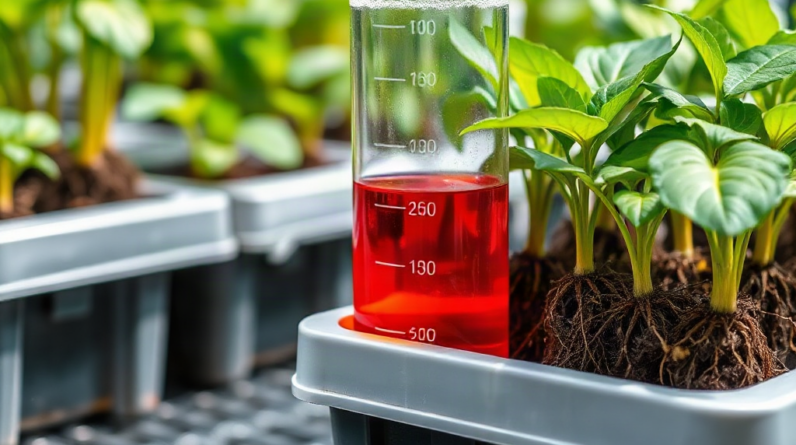
Balancing air and nutrient temperatures hydroponically means managing the root zone and canopy as related but separate environments rather than forcing both to one reading. Keep nutrient solution generally near 18–22°C (65–72°F), then adjust air temperature for the crop, growth stage, lighting period, and humidity. Warm solution holds less dissolved oxygen and can accelerate root stress, while an overly cold reservoir can slow nutrient uptake. Measure temperature at canopy height and inside the circulating solution, not beside a lamp or against a reservoir wall. Correct heat at its source with airflow, reservoir shading, insulation, equipment placement, and, when necessary, active water cooling.
Why Air and Solution Temperatures Must Be Managed Separately
Leaves and roots experience heat differently. The canopy exchanges heat and moisture with moving air, while submerged roots respond to the temperature, oxygen content, and circulation of the nutrient solution. A room reading that looks acceptable can therefore hide a reservoir that has warmed beyond the preferred root-zone range.
Solution temperature matters partly because warmer water holds less dissolved oxygen. Roots still require oxygen for respiration, and their demand can rise as biological activity increases in warm conditions. That combination leaves less margin for weak aeration, stagnant plumbing, dense root masses, or an interrupted pump. Warm, poorly oxygenated solution does not prove that root disease is present, but it creates conditions in which roots are less resilient and some unwanted microorganisms can become more troublesome.
Cold solution creates a different constraint. A reservoir located on a concrete floor in winter may remain substantially cooler than the leaves above it. Root activity and nutrient uptake can slow even when lamps keep the canopy comfortable. The grower may then misread slow growth or nutrient symptoms as an inadequate formula and raise the electrical conductivity, adding concentration when temperature is the underlying limitation.
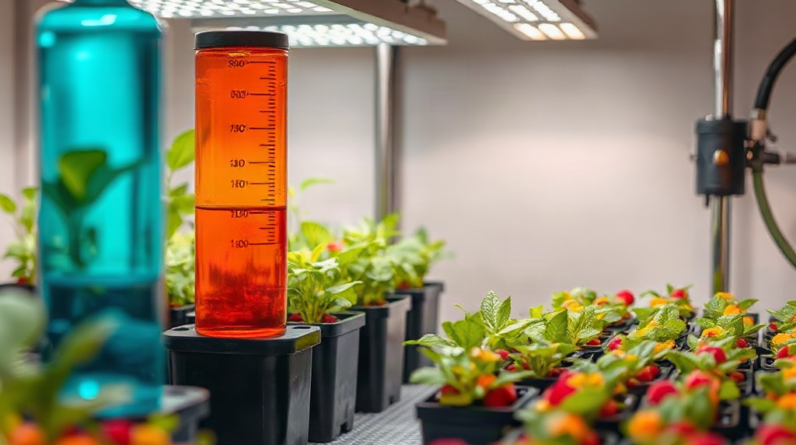
Consider a deep-water culture setup under powerful lights. The air may reach 26°C (79°F) during the light period while the reservoir climbs to 25°C (77°F) because pumps, lamp radiation, and room air continuously add heat. Increasing canopy ventilation can improve leaf conditions without removing enough heat from the water. Conversely, aggressively chilling the reservoir while leaving humid, stagnant air around the leaves solves only half of the environmental problem.
The practical aim is not identical air and water readings. It is a stable root zone with adequate aeration paired with a canopy temperature suitable for the plant. That distinction is central to Balancing air and nutrient temperatures hydroponically: diagnose each zone independently, then account for the heat moving between them.
Choosing Practical Temperature Targets
A useful starting range for many indoor leafy greens and herbs is about 18–22°C (65–72°F) in the nutrient solution, but it should not be treated as a universal prescription. Crop type, cultivar, growth stage, system design, oxygenation, and disease history affect how much deviation a planting can tolerate. Fruiting plants often accept warmer daytime air than cool-season lettuce, while seedlings and newly transplanted roots usually benefit from gentler fluctuations.
Air targets should be selected for the crop rather than copied from the reservoir setting. Many indoor gardens operate with daytime air in the low-to-mid 20s Celsius and somewhat cooler air during darkness, but lettuce may favor the cooler end while tomatoes or peppers often tolerate the warmer end. Leaf temperature can also differ from air temperature under intense lighting. A sensor reporting 24°C (75°F) does not guarantee that leaves directly beneath a fixture have the same temperature.
Humidity changes the meaning of an air-temperature number because temperature and moisture together influence transpiration. Hot, dry air can drive rapid water loss and increase nutrient concentration around roots as plants take up water. Warm, very humid air can suppress transpiration and favor condensation on cooler surfaces. Growers using vapor pressure deficit calculations can refine control, but basic systems still benefit from watching leaf posture, condensation, water use, and the difference between day and night conditions.
Prioritize targets in this order:
- Protect the root zone: avoid prolonged warm solution, maintain circulation, and provide dependable aeration where the system requires it.
- Match canopy conditions to the crop: set air temperature and humidity for the species and stage rather than using one room-wide default.
- Limit rapid swings: gradual movement is generally easier on plants than repeated heating and cooling caused by short equipment cycles.
- Accept controlled differences: air can be warmer than the solution without creating a problem when both remain stable and appropriate.
A common mistake is chasing a perfect number minute by minute. A brief rise after lights switch on is less informative than a repeated pattern of warm solution lasting through most of the photoperiod. Record daily minimums and maximums before buying more equipment. The pattern reveals whether the issue is a short peak, inadequate cooling capacity, nighttime cold, or gradual heat accumulation.
Measuring the Canopy and Root Zone Correctly
Reliable temperature control begins with sensors placed where plants actually experience conditions. Mount the air probe near canopy height, shaded from direct lamp radiation and separated from heater outlets, cooling vents, humidifiers, and exterior walls. A probe touching metal, sitting above a dehumidifier, or hanging under a fixture may report the equipment’s microclimate rather than the growing area.
Place the solution probe in moving nutrient solution at representative root depth. It should not rest against the reservoir wall, sit beside a submerged pump, or float at the warm surface if most roots occupy cooler water below. In recirculating systems, compare the main reservoir with the furthest channel or return line. Long runs, exposed pipes, and sunny sections can produce a meaningful temperature difference before the solution returns.
Cross-check inexpensive sensors before relying on them. Put two probes together under the same stable conditions and allow enough time for both to settle. A persistent disagreement does not identify which instrument is correct, but it warns against making narrow control decisions from either one. Periodic comparison with a known, dependable thermometer can reveal drift. Clean waterproof probes according to their instructions because mineral buildup may slow their response.
Logging is more valuable than isolated readings. Note the solution and canopy temperatures before lights start, near the warmest part of the light period, and near the end of darkness. Add observations about water level, pump operation, room humidity, and plant condition. Automated data loggers provide more detail, but a consistent manual record can still expose a reservoir warming by several degrees each afternoon.
For example, a grower may find acceptable readings every morning yet see curling leaves late in the day. Measurements at noon and late afternoon could show that air exhaust is adequate while the nutrient solution steadily absorbs pump and room heat. The correction should then focus on the reservoir rather than lowering the entire room overnight.
Sensor placement also prevents false corrections. If a radiant-heated air probe triggers excessive cooling, the room may become too cold while the reported value remains high. If a solution probe sits next to a warm pump, a chiller may short-cycle unnecessarily. Accurate monitoring is the least expensive part of Balancing air and nutrient temperatures hydroponically, and it should precede changes to nutrient strength or equipment capacity.
Correcting Heat and Cold Without Destabilizing the System
Temperature corrections work best when heat sources are reduced before cooling hardware is added. Keep reservoirs away from direct sun and hot exhaust streams, use opaque lids, and relocate external pumps or electrical components when the design permits. Insulation slows heat transfer through reservoir walls and exposed plumbing, although it cannot remove heat already being produced inside the solution.
Improve room airflow without directing a harsh fan continuously at one patch of foliage. Exhaust warm air from the upper growing area and provide a path for replacement air. Adjusting the light schedule so the lamps operate during cooler hours can reduce peak load, particularly where outdoor temperature affects the room. Raising or dimming a fixture may lower leaf and reservoir heat, but reduced light intensity can also reduce growth; temperature control should not quietly undermine the crop’s lighting requirement.
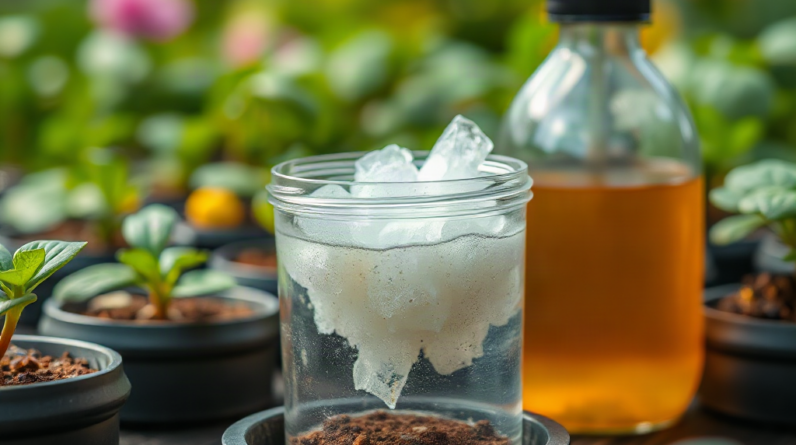
Frozen bottles offer temporary reservoir cooling for a small garden, but they are difficult to regulate and can produce sharp local cold spots. They also require strict cleaning to avoid introducing contamination. A properly sized water chiller provides more consistent control for large or heat-prone reservoirs, though it adds purchase cost, electricity use, noise, and heat that must be exhausted from the room. Installing a chiller inside the same sealed space without managing its rejected heat can make air cooling harder.
For cold solution, first isolate the reservoir from cold floors and drafts. An aquarium-style heater may suit some small reservoirs if it is compatible with the volume and nutrient environment, guarded from roots, and controlled by a trustworthy thermostat. Do not place a powerful heater where concentrated heat can contact roots or plastic surfaces. Warming the whole room may be preferable when both canopy and solution are cold, but it wastes energy if only an exposed reservoir needs protection.
Aeration is not a substitute for temperature control. Strong aeration may improve oxygen availability in suitable systems, yet air pumps drawing warm room air can also add heat. Increasing bubbles while allowing the solution to remain excessively warm treats a consequence without addressing the load. Likewise, replacing the reservoir with very cold water may create a rapid root-zone shift and alter pH and nutrient concentration.
Make one measured change, allow the system to stabilize, and inspect the next full light-dark cycle. Success looks like narrower daily variation, healthy pale-to-cream new roots, normal water use, and no worsening of leaf posture. Persistent odor, slimy roots, pump interruptions, or temperatures that rebound immediately indicate that sanitation, circulation, equipment capacity, or room heat still needs attention.
A Daily Temperature-Balancing Routine
A short routine prevents minor temperature drift from becoming a nutrient or root-zone emergency. Begin by checking canopy air and circulating solution at roughly the same times each day. Compare the current readings with recent minimums and maximums rather than judging them in isolation. A stable system with a modest air-water difference is usually easier to manage than one repeatedly forced across a narrow set point.
Next, inspect the causes that can change from day to day. A falling reservoir level heats faster because less water must absorb the same energy. Dense roots may restrict circulation around probes or drains. Dusty intake filters reduce ventilation, and a closed room door can change air exchange. Seasonal outdoor changes may also overwhelm settings that worked a month earlier.
Use the following compact check when readings move outside the intended range:
- Confirm the reading with another thermometer and inspect probe placement.
- Verify pump, air stone, fan, exhaust, heater, or chiller operation.
- Check water level, circulation, exposed plumbing, and direct light on the reservoir.
- Review the timing of lights and other heat-producing equipment.
- Correct gradually, then record the result through a complete day-night cycle.
Do not change temperature, nutrient concentration, and pH aggressively at the same time. Multiple simultaneous adjustments make it difficult to identify the cause of improvement or decline. If warm conditions increased water uptake and raised electrical conductivity, restore water level and verify temperature before reformulating the nutrient mix. If uptake slowed during cold conditions, warming the root zone may be more appropriate than immediately adding fertilizer.
The routine should become more intensive during heat waves, equipment changes, transplanting, and periods when roots nearly fill channels or buckets. Small reservoirs deserve closer attention because they change temperature quickly; larger volumes buffer short disturbances but require more cooling or heating energy when they do drift. The useful standard is not perfect uniformity but controlled movement, dependable oxygenation, and measurements that explain what the plants are experiencing.
Frequently Asked Questions
Should nutrient solution be cooler than the air?
Often, yes. Many indoor gardens perform well with solution near 18–22°C (65–72°F) while canopy air is somewhat warmer, provided the crop’s humidity, lighting, and daytime needs are also met.
What happens when hydroponic nutrient solution gets too warm?
Warm solution holds less dissolved oxygen and can increase root stress, especially with weak circulation or aeration. Watch for rising temperatures, drooping, unpleasant odor, discolored roots, or declining water uptake.
Can ice bottles safely cool a reservoir?
They can provide short-term cooling in a small setup, but they may create abrupt temperature changes and sanitation risks. Sealed, cleaned bottles should be rotated cautiously while monitoring the actual solution temperature.
Where should temperature probes be placed?
Keep the air probe shaded at canopy height and the water probe in representative, moving solution. Avoid direct lamp radiation, vents, reservoir walls, heaters, and submerged pumps that can distort readings.
Will more aeration fix a warm reservoir?
Extra aeration may support oxygen availability, but it does not remove the underlying heat and may add warm room air to the water. Reduce heat input or use controlled cooling when high temperature persists.
Conclusion
Stable management starts with two trustworthy measurements: shaded air temperature at canopy height and solution temperature where roots receive circulating nutrients. Use crop needs to set the air environment, keep the root zone within a defensible range, and judge trends across complete light-dark cycles rather than reacting to a single reading. When correction is needed, remove direct heat, restore airflow and circulation, shade or insulate the reservoir, and reserve active heating or chilling for loads passive measures cannot handle. Avoid abrupt water changes and simultaneous adjustments to temperature, pH, and nutrient strength. Record the result of each change, then inspect root appearance, plant water use, daily temperature swing, and equipment operation. Those observations show whether the system is stabilizing or whether a hidden heat source, cold surface, sensor error, or circulation problem remains.