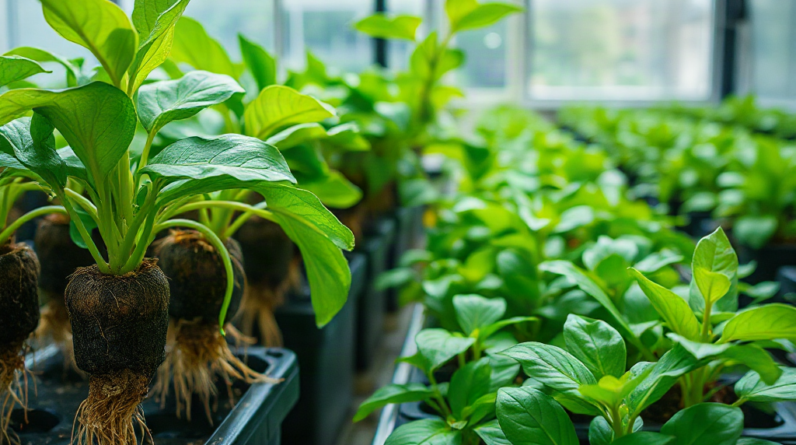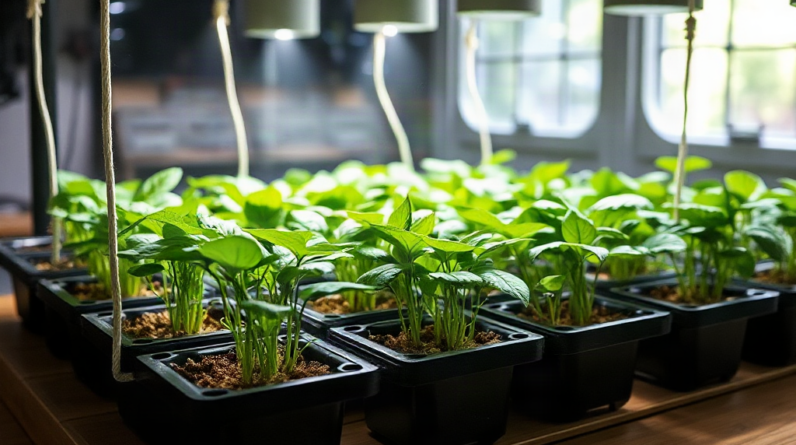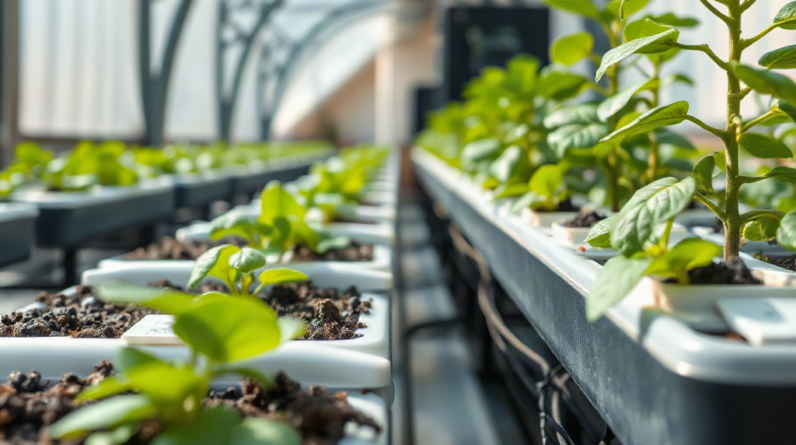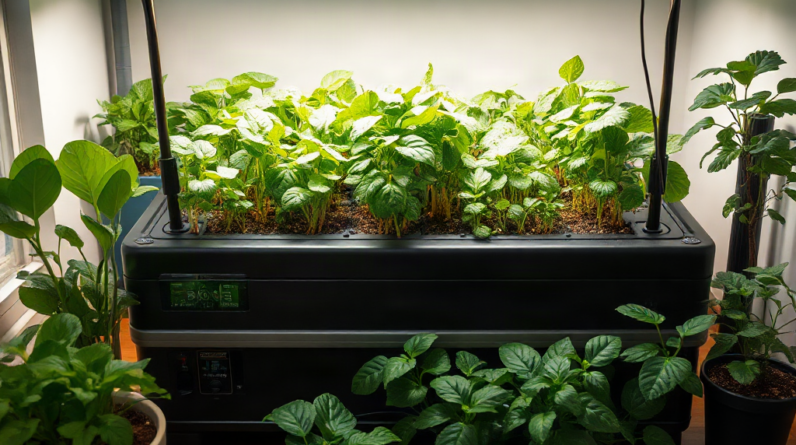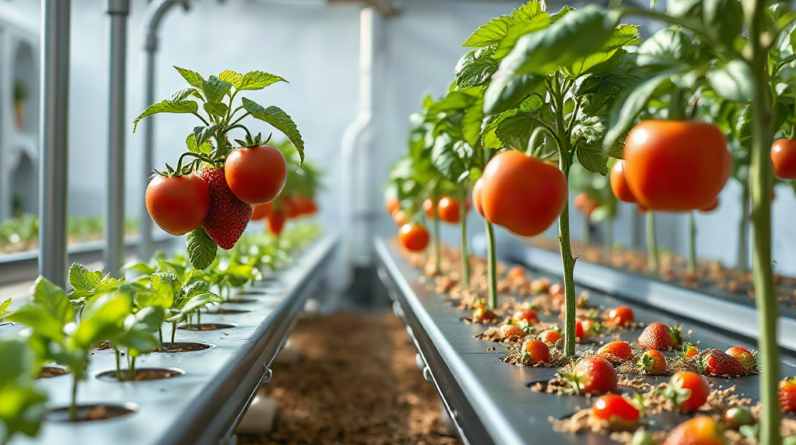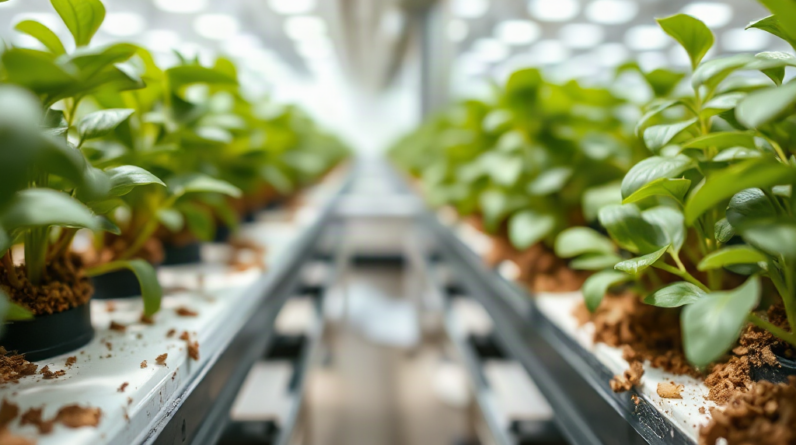
Hydroponic systems attract fungus gnats when adults find persistently damp growing media, algae, decaying roots, or organic debris suitable for egg laying and larval feeding. The nutrient solution itself is rarely the main breeding site; exposed rockwool, coco coir, peat plugs, drain channels, and wet floor residue are more common sources. Control begins by locating those moist zones, removing algae and dead material, adjusting irrigation so media surfaces can dry slightly, and trapping adults with yellow sticky cards. Where larvae persist, a labeled Bacillus thuringiensis israelensis product or beneficial nematodes may help, provided the treatment is compatible with the crop and hydroponic setup.
Why Fungus Gnats Settle in Hydroponic Growing Areas
Fungus gnats are drawn to wet, biologically active surfaces rather than to hydroponics as a growing method. Adult females search for protected places where larvae will have moisture and food. Seedling plugs, coco-filled net pots, exposed rockwool, peat-based propagation blocks, algae-coated channels, and decomposing roots can all meet those requirements.
A bubbling reservoir may appear to be the obvious source because adults often hover nearby, but open nutrient solution is usually less suitable for larvae than damp material at its edge. Condensation under a lid, sediment around tubing holes, or a wet collar holding a transplant can support breeding even when the main reservoir looks clean. Adults may also rest on reservoir walls without reproducing there, so flight activity alone does not identify the source.
The risk differs among system designs. Deep-water culture can develop trouble around wet starter plugs and poorly fitted net pots. Nutrient film technique channels may accumulate algae and root fragments where light enters. Ebb-and-flow trays can remain damp between floods if the tray does not drain fully or if media has high water retention. Drip systems using coco or peat behave more like container gardens: frequent irrigation can keep the upper layer continuously favorable to larvae.
Young plants face the greatest practical concern. Fungus gnat larvae mainly consume fungi, algae, and decaying organic matter, but they may also feed on fine roots and tender root hairs. A mature plant with a large root mass may tolerate limited feeding, while a recently rooted cutting can lose a meaningful share of its developing root tissue. Larval injury may also resemble nutrient imbalance, irrigation stress, or root disease, making visual diagnosis unreliable without inspecting the media.
A common mistake is treating every small flying insect as a fungus gnat. Adult fungus gnats are delicate, dark flies with long legs and threadlike antennae; they commonly run across damp surfaces or fly in short, weak bursts. Shore flies are stockier and are strongly associated with algae, while drain flies have fuzzy, moth-like wings. Correct identification matters because sanitation remains useful for all three, but larval habitats and treatment choices differ.
For a persistent case of Hydroponic systems attracting fungus gnats, separate attraction from reproduction. Open doors, houseplants, or new propagation material may introduce adults, but an ongoing population means that a moist development site is available somewhere in or near the grow area.
How to Find the Actual Breeding Site
Inspection should follow water and organic residue, not simply the places where adults are easiest to see. Begin at propagation trays and plant bases, then examine drainage points, channel ends, reservoir openings, floor seams, and any stored media. Larvae are translucent to whitish, legless, and typically have a distinct dark head capsule, although their small size makes a hand lens useful.
Place yellow sticky cards horizontally or vertically just above media level rather than only near lamps or doors. Cards reveal where adult activity is concentrated and provide a consistent way to compare one week with the next. They do not prove that larvae are directly beneath them, but a cluster around one propagation tray justifies a closer inspection of that tray. Label cards by location and installation date so a decline is not confused with an old, already crowded trap.
A simple media check can help confirm activity. Inspect the underside and edges of moist plugs under bright light, especially where algae or root fragments are visible. Clear or light-colored potato slices are sometimes placed cut-side down on damp media as a short-term monitoring lure; larvae may collect beneath them. This is a detection aid, not a control method, and it is less practical in small net cups or systems where added organic material could fall into the solution.
Use a compact inspection order to avoid missing hidden moisture:
- Check propagation material: Look beneath humidity domes, between closely packed blocks, and under liners that remain wet.
- Trace drainage: Inspect low points, blocked outlets, catch trays, and return lines for standing solution or sludge.
- Block light leaks: Examine translucent tubing, open channels, lid gaps, and unused net-pot holes for algae.
- Remove decaying material: Check for dropped leaves, dead root sections, spilled coco, and abandoned starter plugs.
- Inspect nearby sources: Include floor drains, wet mops, houseplants, open bags of media, and waste containers.
Root condition deserves separate attention. Healthy roots are generally firm and appropriately colored for the crop and nutrient formulation. Soft, sloughing roots, unpleasant odor, or accumulating debris indicate a broader root-zone problem that gnat control alone will not correct. Conversely, a few trapped adults do not establish that larvae caused poor growth; nutrient concentration, pH, oxygenation, temperature, and irrigation frequency still require independent checks.
The inspection is working when traps show a location-specific pattern and larval checks confirm the same area. It is failing when insecticide is applied repeatedly while wet waste, algae, or saturated propagation blocks remain untouched. Treating before finding the habitat may reduce adults briefly but leaves the next generation in place.
Control Methods for Adults and Larvae
Effective control targets adults and larvae at the same time. Sticky cards reduce and monitor flying adults, while sanitation, moisture correction, and an appropriate larval treatment interrupt development. Killing only visible flies creates a misleading short-term improvement because larvae and pupae already present can continue emerging.
Start by removing dropped leaves, dead roots, discarded plugs, and algae that can be cleaned away without damaging the system. Wipe spills promptly and correct trays or fittings that leave stagnant nutrient solution. Opaque covers can suppress algae by excluding light, but they should fit without crushing stems or creating a permanently wet pocket around the crown. Reservoir lids and channel covers should also preserve access for inspection rather than concealing residue indefinitely.
Irrigation changes require judgment. Coco, peat plugs, and rockwool surfaces can often be allowed to become less wet between cycles, but the root zone should not be dried so aggressively that plants wilt or salts concentrate. In an ebb-and-flow bed, improving drainage or reducing an unnecessary late cycle may be safer than sharply extending the interval between all floods. In deep-water culture, the starter plug can sometimes be positioned above the constant waterline while established roots remain in the aerated solution.
Biological larvicides containing Bacillus thuringiensis subsp. israelensis, commonly abbreviated Bti, are used against certain fly larvae. Product formulations and labels vary, so a product should be labeled for the intended site and applied according to its directions. Do not assume that every mosquito-control product is suitable for a food crop, recirculating nutrient solution, or a particular application method. Filtration, ultraviolet treatment, sanitation chemicals, and solution replacement may also shorten biological activity.
Beneficial nematodes, particularly products containing Steinernema feltiae, are another larval-control option for moist media. They are living organisms with storage, temperature, application, and shelf-life constraints. They are generally more relevant to coco, peat, or propagation blocks than to a bare, frequently sanitized reservoir. Compatibility should be checked before combining them with disinfectants, pesticides, or very concentrated stock solutions.
Hydrogen peroxide is often suggested as a universal hydroponic remedy, but indiscriminate dosing is a weak approach. Concentration, formulation, crop sensitivity, organic load, and contact time determine its effects, and it may harm roots or biological controls without reaching larvae hidden in media. Broad-spectrum sprays create similar tradeoffs: adults may be exposed, while larvae remain protected below the surface. Any pesticide used around edible crops must be labeled for the crop, site, pest, and application method.
The strongest sign of progress is a sustained decline in newly trapped adults combined with fewer larvae in inspected media. Emptying one sticky card is not evidence by itself. Continue monitoring through multiple emergence cycles, and replace cards before dust, moisture, or dense insect coverage makes counts difficult to compare.
Preventing a New Infestation Without Stressing the Crop
Prevention depends on denying fungus gnats stable breeding pockets while maintaining the moisture each crop actually needs. A sterile-looking reservoir does little if a propagation tray stays saturated, and letting every root zone dry hard can damage plants without addressing algae in a drain channel. The useful target is controlled moisture, clean surfaces, limited light exposure, and early detection.
New plants and media are common entry routes. Inspect purchased transplants before placing them beside established crops, and keep suspect plants separate long enough to monitor sticky cards and media. Store open bags of coco, peat, or potting mix dry and away from the growing area. Reused net pots, collars, trays, and domes should be cleaned of root fragments and algae before the next crop; a quick rinse that leaves a biofilm behind is not adequate sanitation.
System design can reduce recurring pressure. Cover unused planting holes, use opaque tubing where light promotes algae, provide enough slope for channels to drain, and eliminate low spots in catch trays. Air movement across foliage may make adults less comfortable, but a fan does not remove larvae and should not be treated as primary control. Screens can reduce entry in a protected grow room, although doors opened frequently and unscreened drains can still bypass them.
Watering records are especially useful in media-based hydroponics. Note irrigation times, runoff, block weight or moisture behavior, and visible surface wetness. If plugs remain glossy-wet until the next cycle, the schedule may be exceeding plant demand. Changes should be incremental because demand varies with plant size, light, temperature, airflow, and root development. A schedule suitable for mature tomatoes may keep newly transplanted herbs excessively wet.
Weekly monitoring is more efficient than waiting for adults to become conspicuous. Place a small number of dated cards at propagation height, near media-grown crops, and beside return points. Check plant bases for algae and clean spills during the same inspection. The purpose is not to achieve a permanently zero-insect environment at any cost; it is to detect a rising population before larvae threaten seedlings or repeated treatments become necessary.
Readers troubleshooting Hydroponic systems attracting fungus gnats should keep a short record of trap counts, affected locations, irrigation changes, and treatments. Improvement after sanitation and moisture correction supports the suspected source. If numbers remain level or rise, inspect overlooked drains, adjacent potted plants, stored media, and concealed leaks before escalating chemical control.
A failed prevention plan usually relies on a single product rather than routine exclusion and inspection. Sticky cards, Bti, or nematodes can each contribute, but none compensates for wet debris or an algae-filled channel. The durable approach combines clean crop turnover, system repairs, crop-appropriate irrigation, and location-based monitoring.
Frequently Asked Questions
Can fungus gnats live in a hydroponic reservoir?
They may occur around reservoir edges, openings, sediment, or floating debris, but damp media, algae, and decaying organic material are usually more favorable breeding sites than clean open solution.
Do yellow sticky traps eliminate fungus gnats?
No. They catch adults and help identify activity, but larvae remain in moist media or residue. Pair traps with habitat correction and, when appropriate, a labeled larval treatment.
Should hydroponic media be allowed to dry completely?
Usually not. Letting the surface become less wet may discourage egg laying, but severe drying can stress roots and concentrate salts. Adjust irrigation gradually according to the medium and crop.
Are fungus gnats proof that roots are rotting?
No. Gnats may feed around decaying roots, but they also breed in algae and consistently moist media. Inspect roots for softness, odor, discoloration, and tissue breakdown before blaming root decay.
How can growers tell whether control is working?
Use dated sticky cards in fixed locations and inspect media for larvae. A sustained drop in new adult captures and larval findings is more meaningful than a brief absence of visible flies.
Conclusion
Fungus gnat management improves when the grower stops chasing airborne adults and traces the moisture that supports their development. Inspect starter plugs, media surfaces, algae, drainage points, root debris, and nearby non-hydroponic sources before choosing a treatment. Correct standing water and excessive irrigation without depriving roots of the moisture they need, then use sticky cards to measure adult activity. If larvae remain, consider a crop- and site-appropriate Bti product or beneficial nematodes after checking label directions and system compatibility. Keep dated monitoring records after the visible flies decline; surviving immature stages can produce another wave. Clean crop turnover, opaque wet surfaces, sound drainage, and early inspection provide more durable control than repeated spraying around the reservoir.